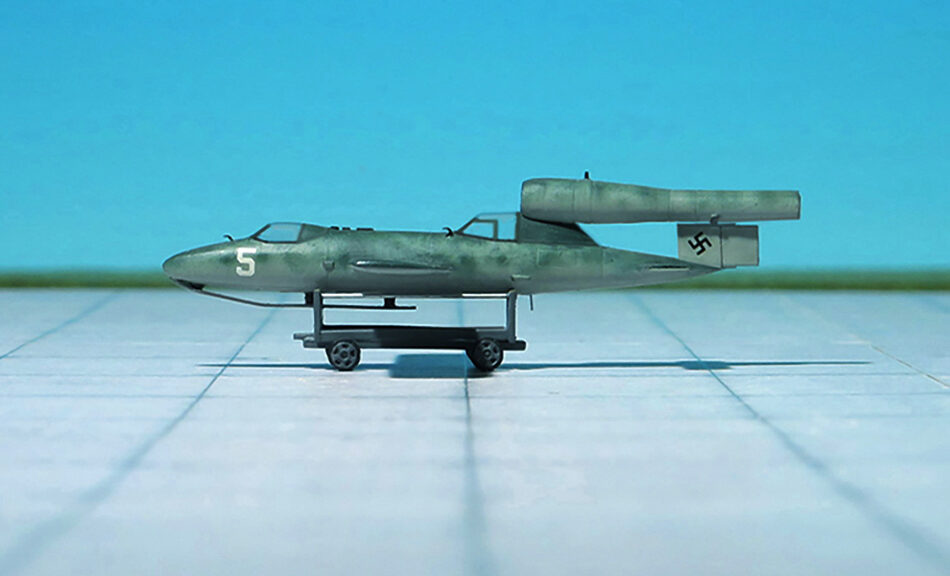
Category Archives: Trainer

Trainer

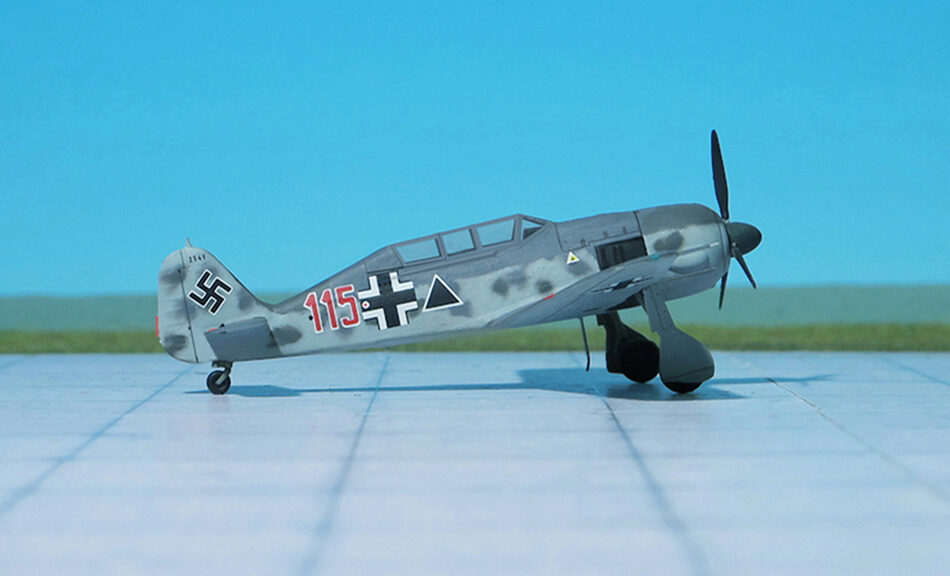
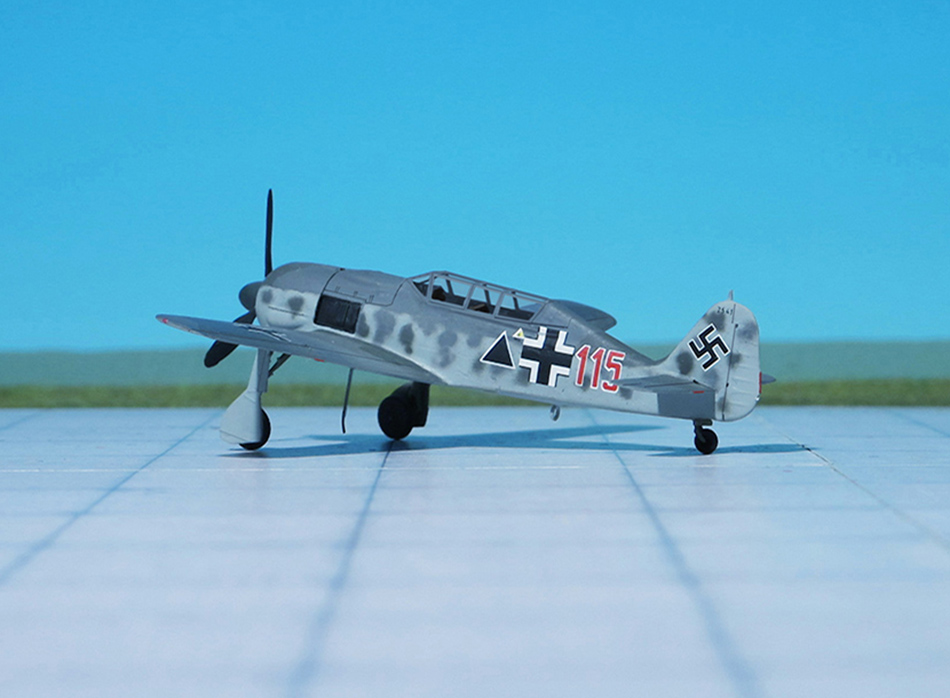
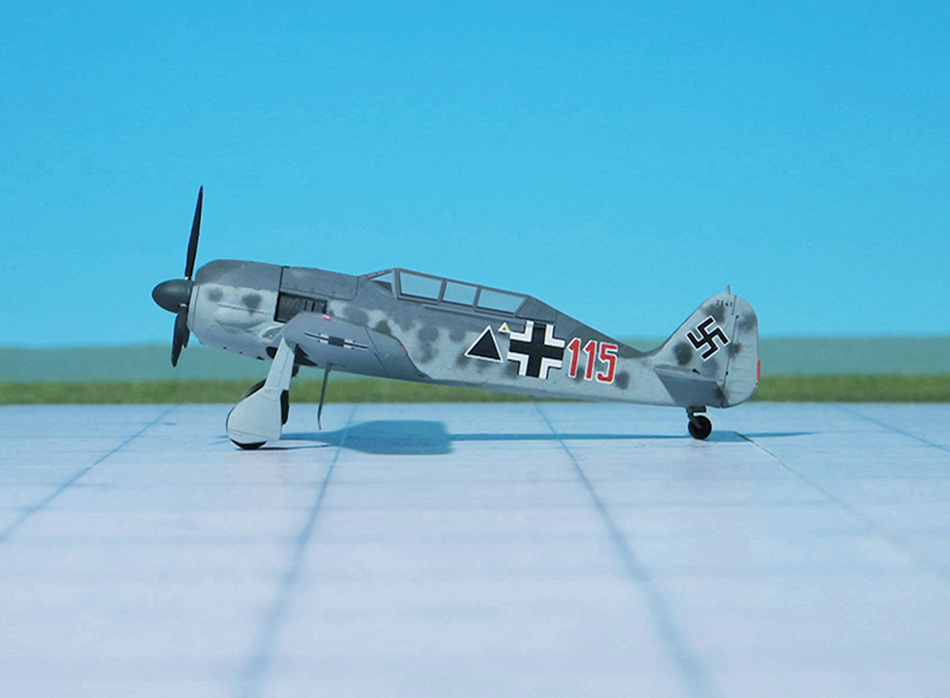
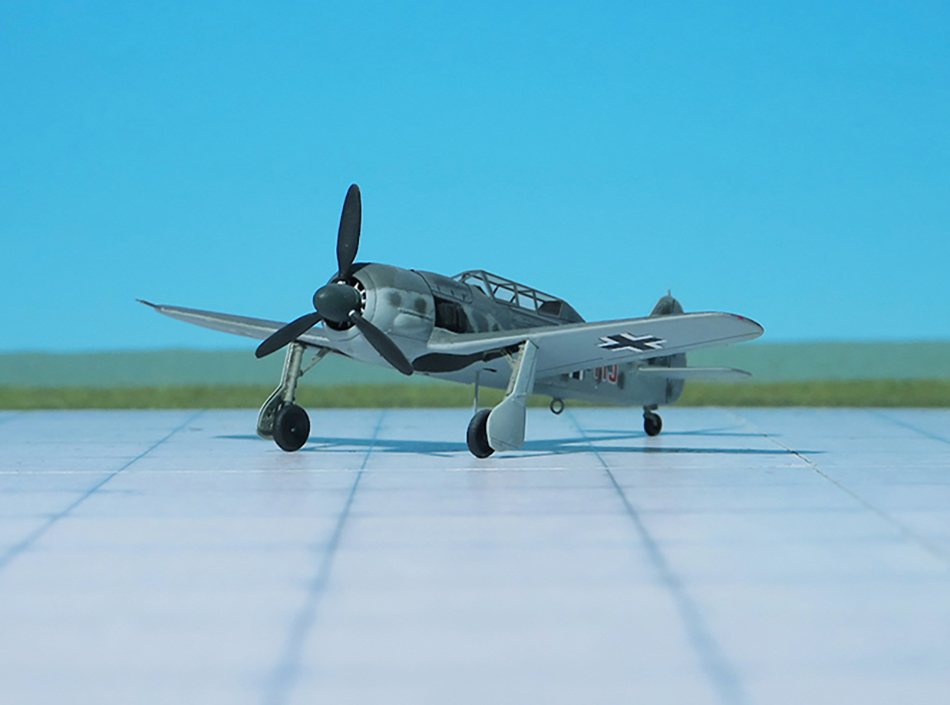
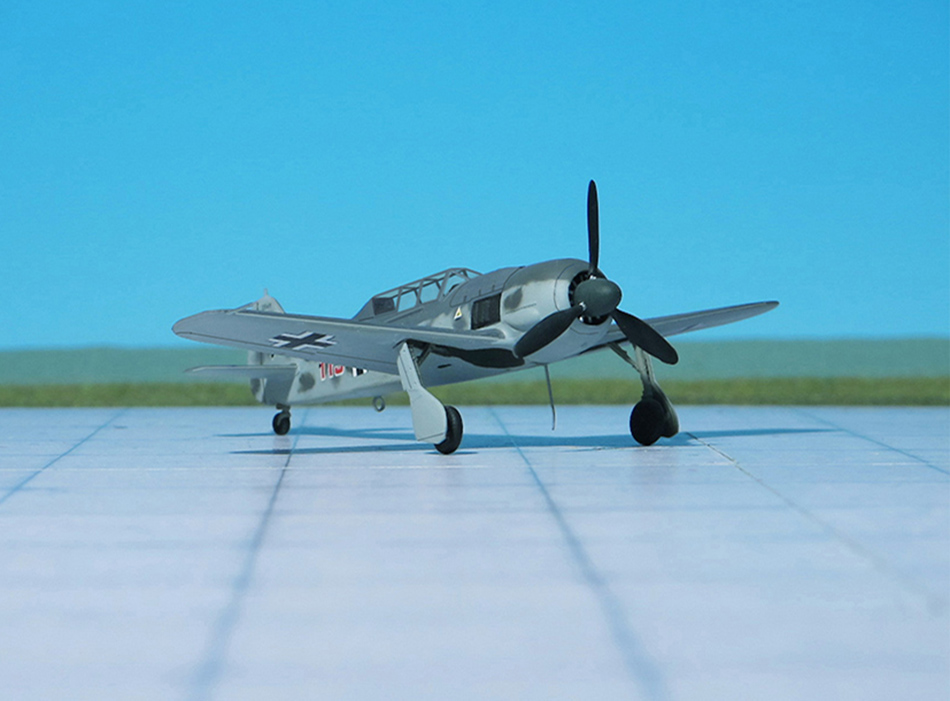
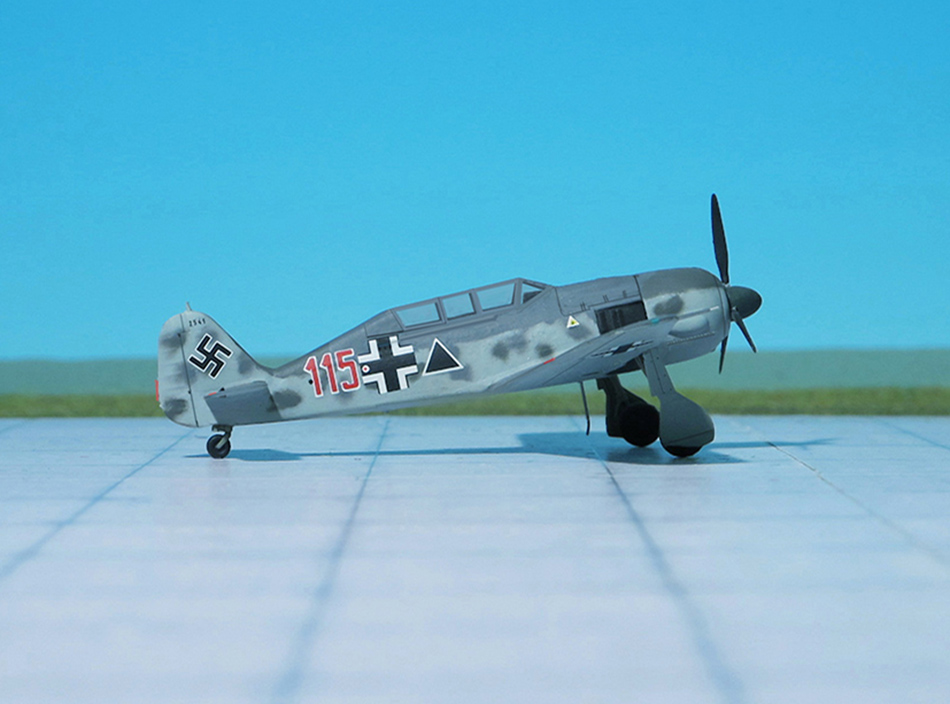
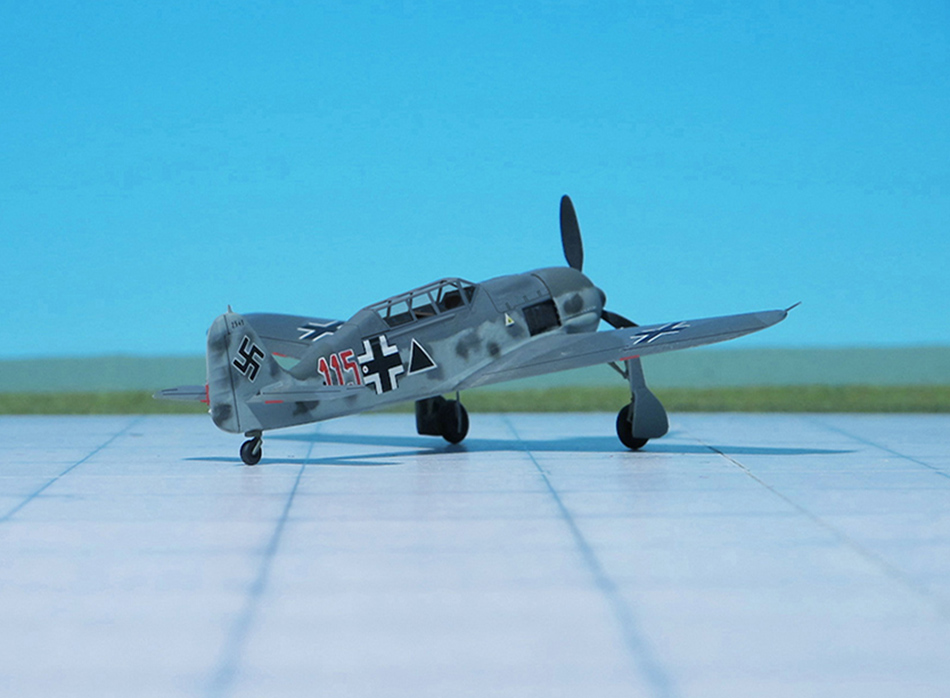
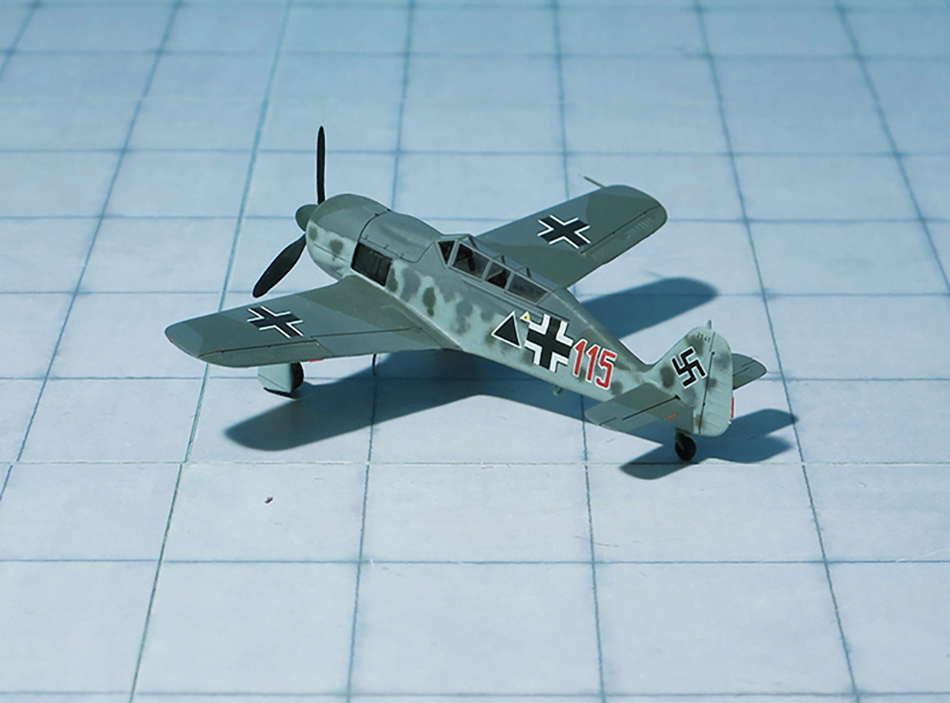
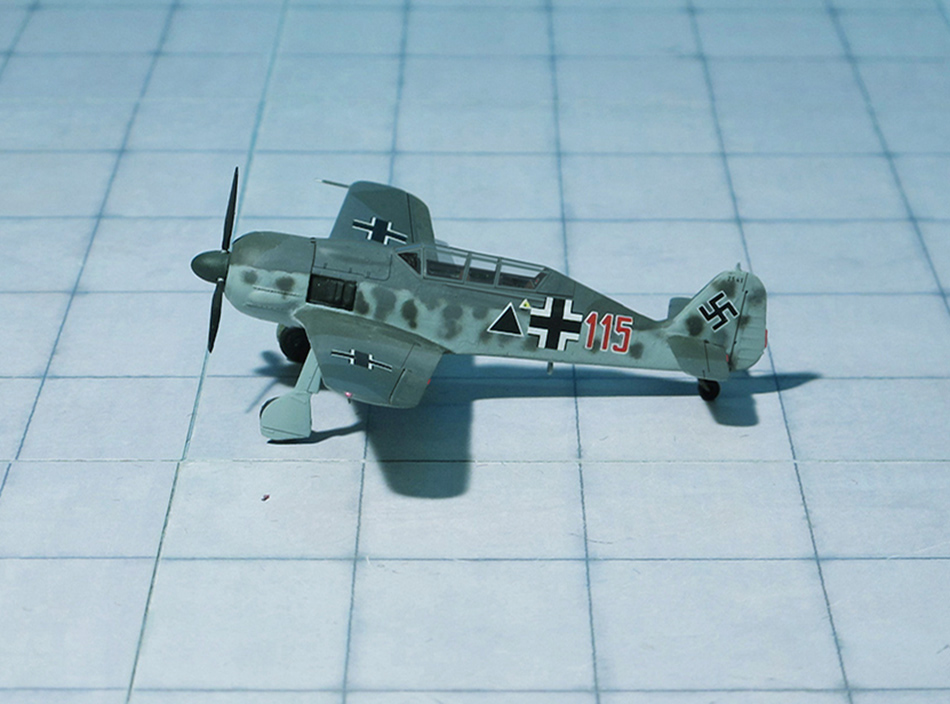
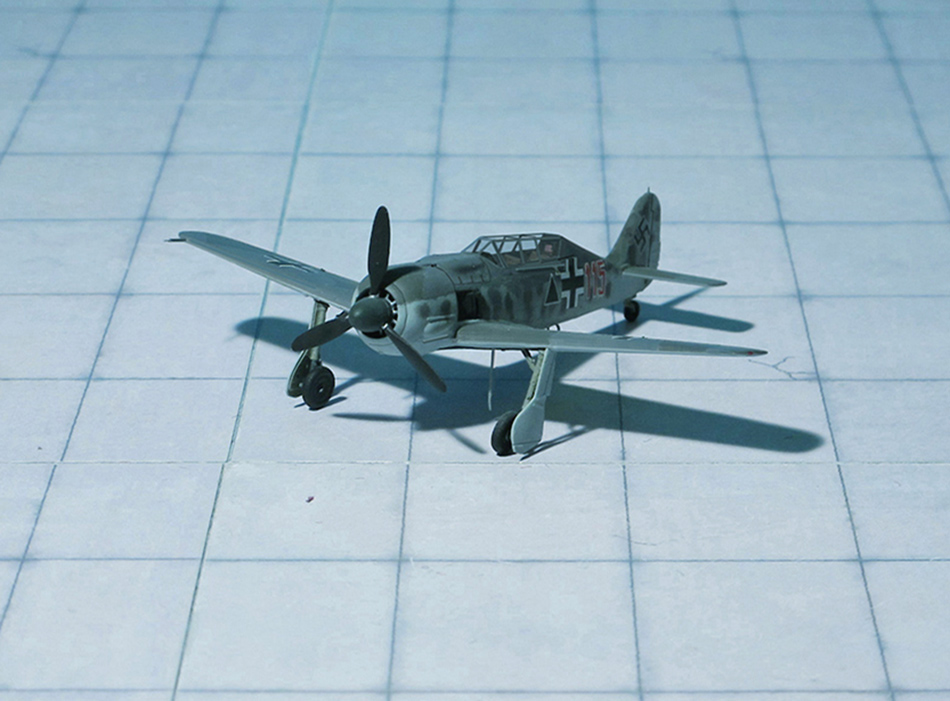
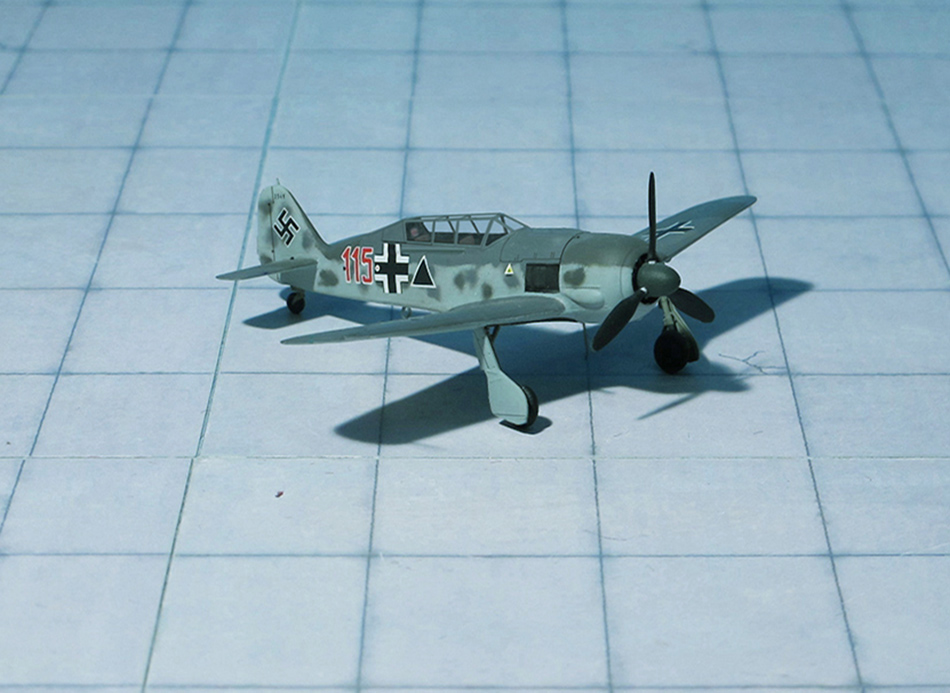
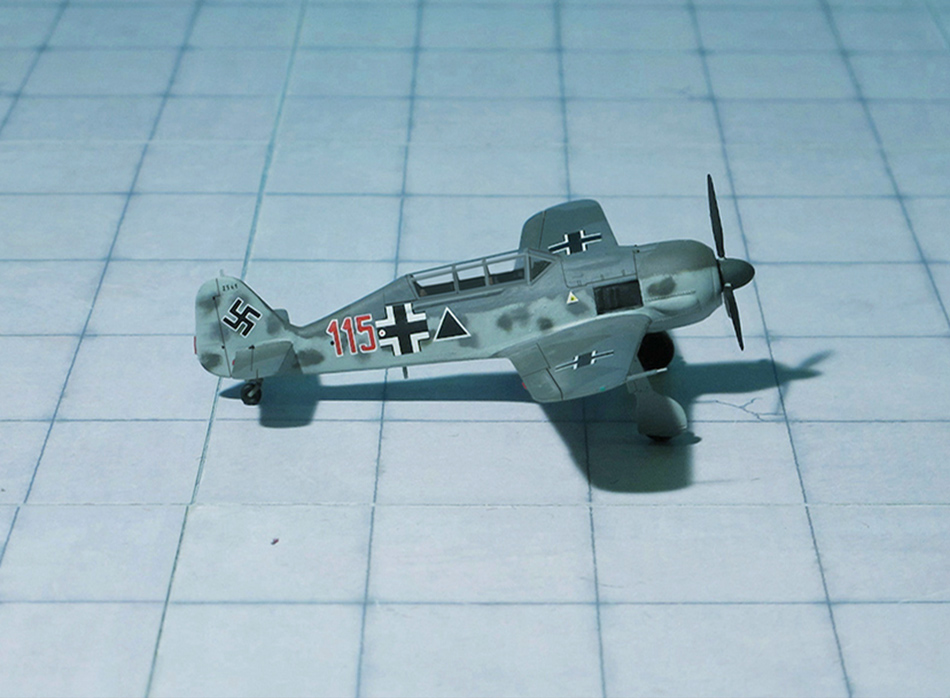
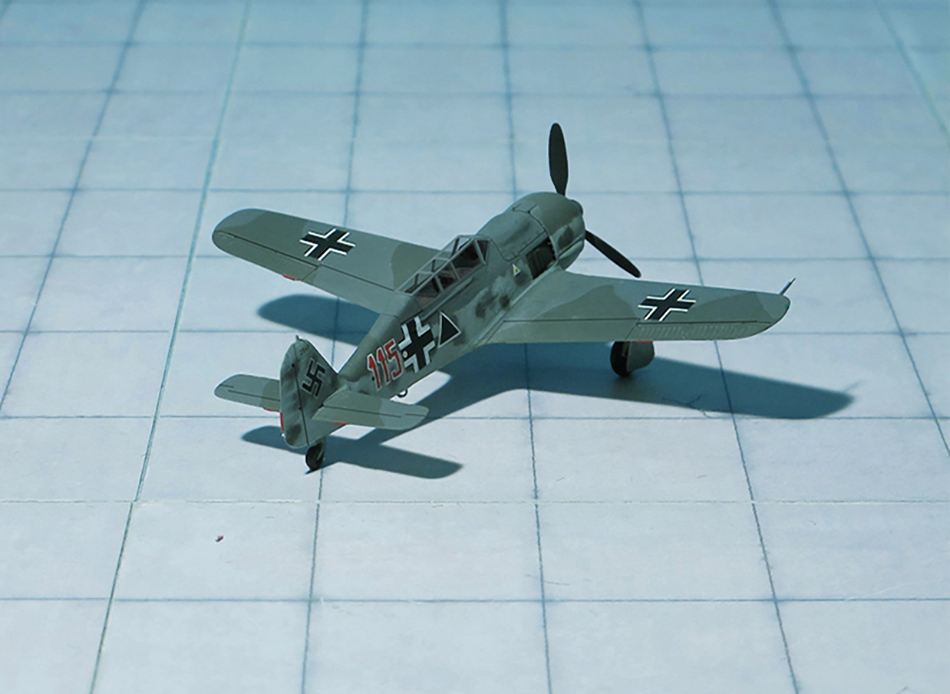
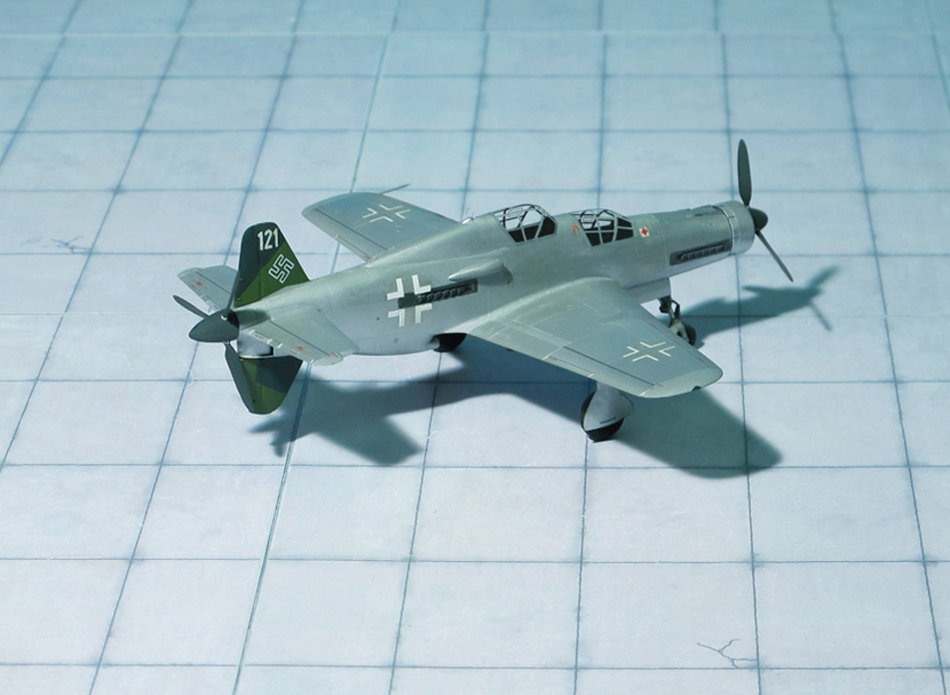
Focke-Wulf Fw 190S-5 (A-5/U1), MPM Models

TYPE: Trainer, Liaison aircraft

ACCOMMODATION
:  Crew of two

POWER PLANT:  One BMW 801D-2 radial engine, rated at 1.677 hp

PERFORMANCE: 405 mph at 19,420 ft

COMMENT
: The Focke-Wulf Fw 190 was a German single-seat, single-engined, fighter aircraft designed by Kurt Tank at Focke Wulf in the late 1930s and widely used during World War II. Along with its well-known counterpart, the Messerschmitt Bf 109, the Fw 190 became the backbone of the Jagdwaffe (Fighter Force) of the Luftwaffe. The twin-row BMW 801 radial engine that powered most operational versions enabled the Fw 190 to lift larger loads than the Bf 109, allowing its use as a day fighter, fighter-bomber, ground-attack aircraft, and to a lesser degree, night fighter.
The Fw 190A started flying operationally over France in August 1941 and quickly proved superior in all but turn radius to the Supermarin e Spitfire Mk. V, the main front-line fighter of the Royal Air Force (RAF), particularly at low and medium altitudes. The Fw 190 maintained its superiority over Allied fighters until the late 1942 and early 1943 introduction of the improved Spitfire Mk. IX. In November/December 1942, the Fw 190 made its air combat debut on the Eastern Front, finding much success in fighter wings and specialised ground attack units (Schlachtgeschwader – Battle Wings or Strike Wings) from October 1943.
During 1943, work had begun on the design of a tandem two-seat fuselage to meet the Luftwaffe requirement of a conversion trainer for the re-training of former Junkers Ju 87 pilots. By October that year, the Schlachtgeschwader were converting from Ju 87 to the Fw 190 at a rate of a Gruppe (Wing) every three weeks, and although the anticipated problems did not arise, three Fw 190A-8 airframes were converted to two-seaters, the itension being that these should serve as pattern aircraft for foreward maintenance units to rebuilt existing aircraft as two-seaters under the designation Fw 190S (the „S“ suffix indicating Schulflugzeug (trainer aircraft)).
A second cockpit  was inserted immediately aft of the standart cockpit, this occupying the space previously taken by the radio and other equipment. The rear fuselage decking was rised, and the two cockpits covered by a continous canopy, the foreward cockpit  for the pupil being enclosed by a section higing to starboard, and the aft cockpit for the instructor being covered by a section slid rearward. Rudimentary dual controls and instrumentation were provided in the rear cockpit, and as Fw 190A-8/U1, the first of three conversions flew in January 1944. The conversion was applicable to any A-series airframe, but apart from the three Fw 190A-8/U1 two seaters only about 55 Fw 190S-5 and -8 (respectively derived from Fw 190A-5 and A-8) trainers were completed, and these were mostly used for high-speed liaison tasks (Ref.: 7, 24).

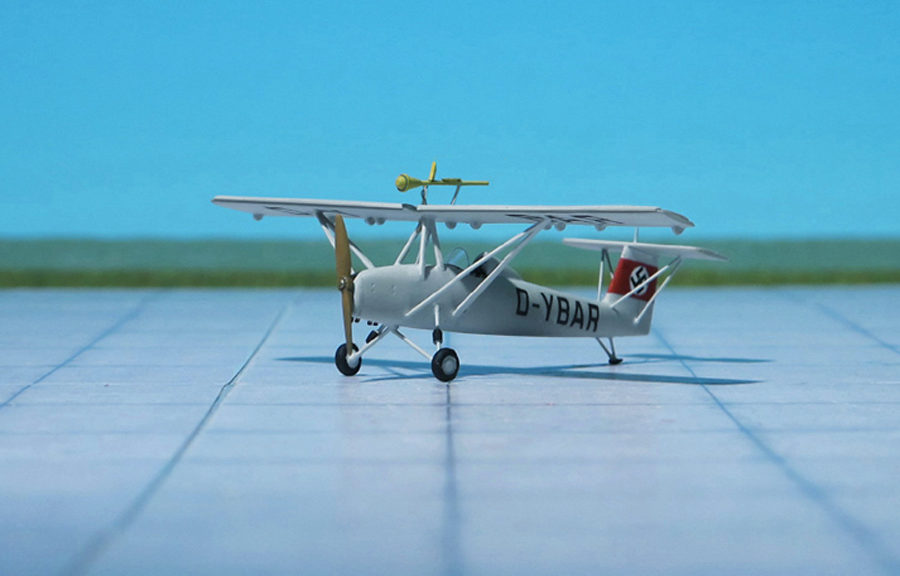
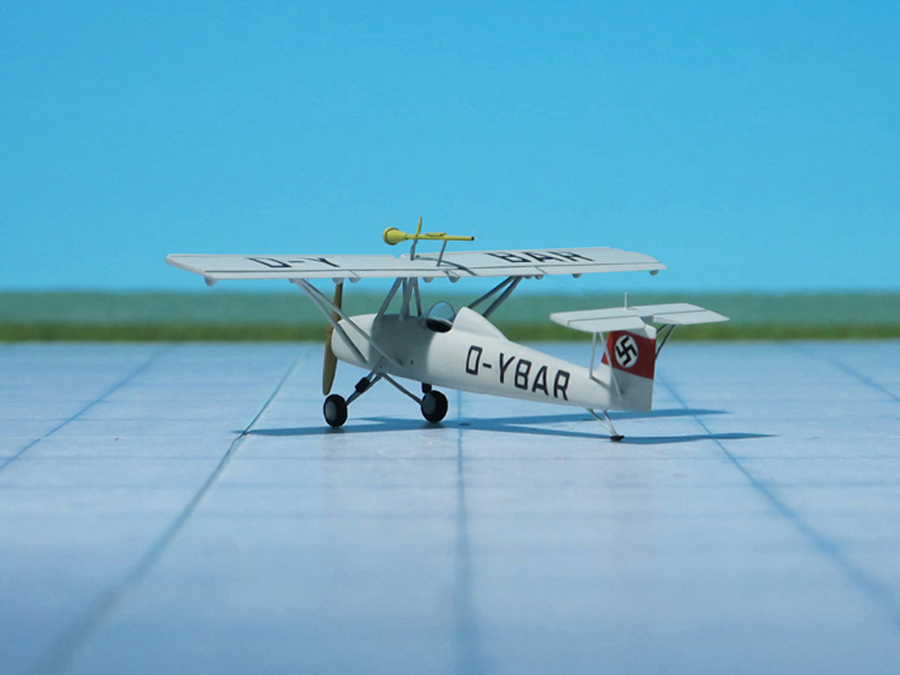
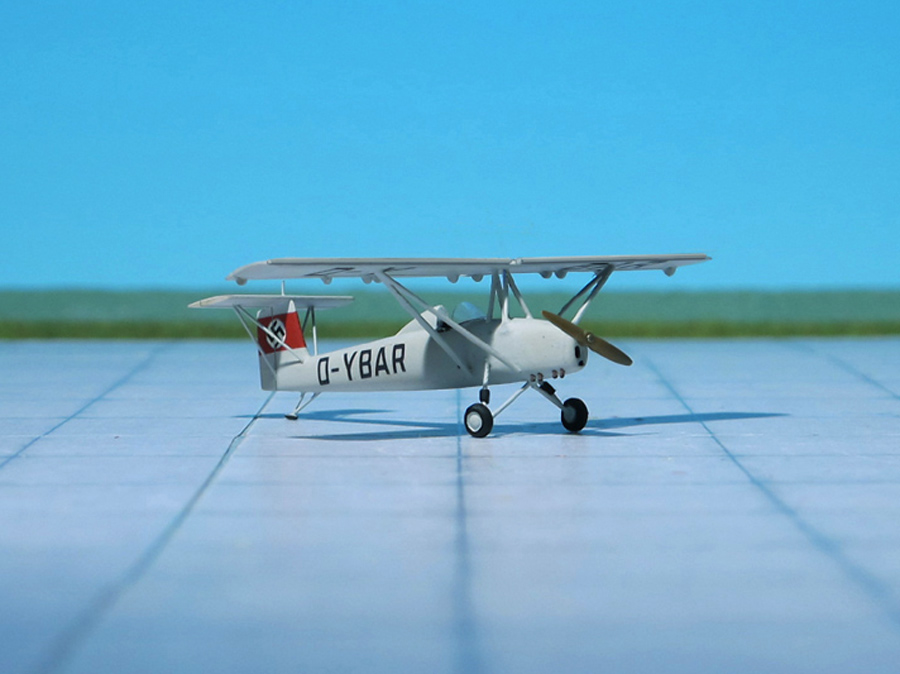
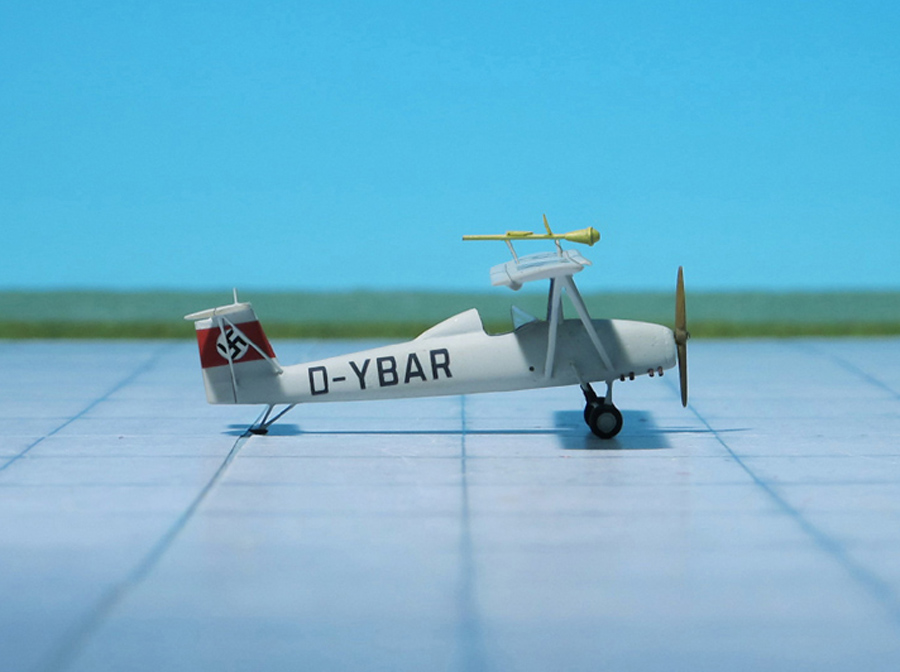
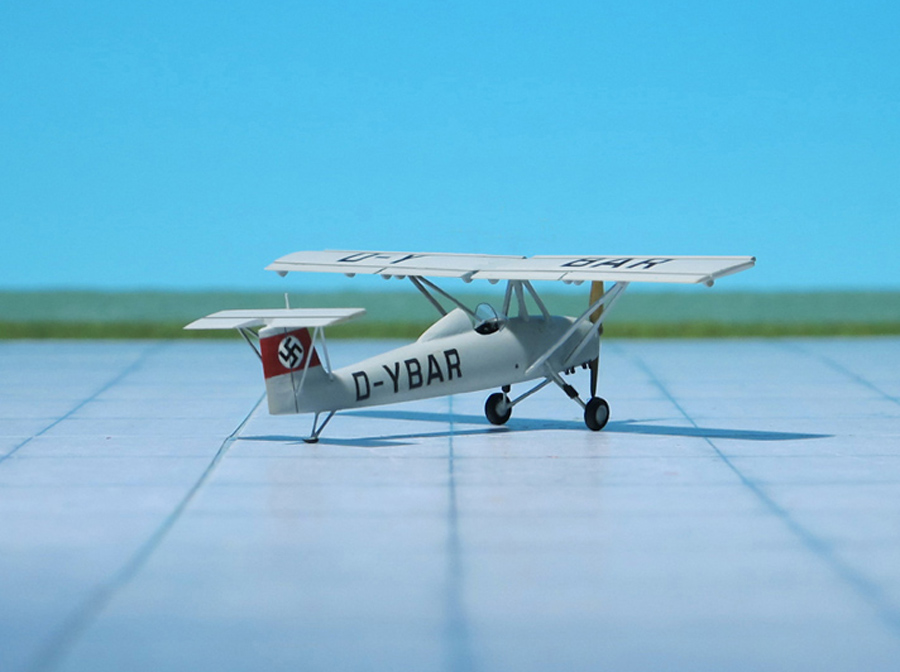
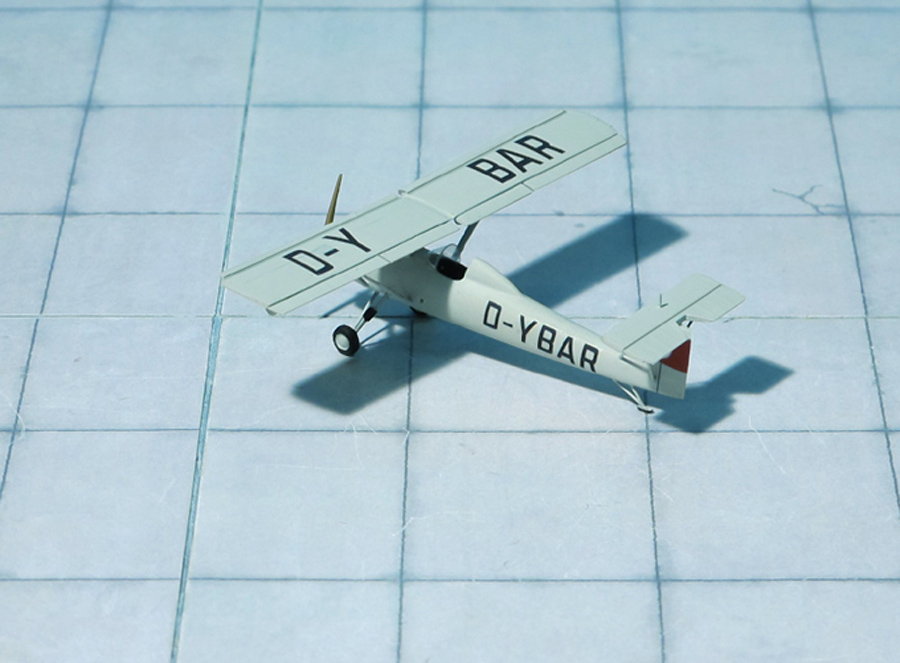
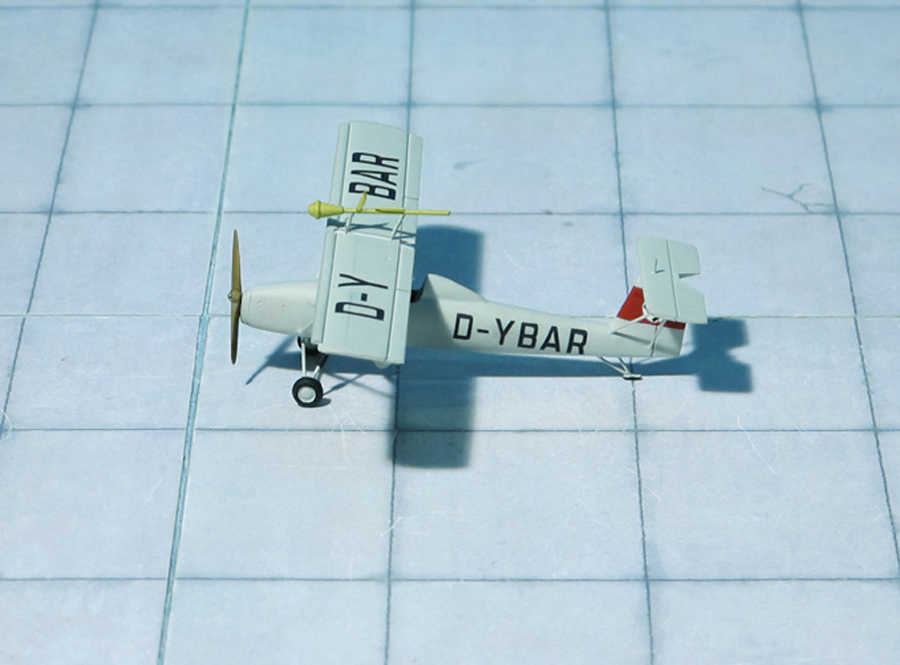
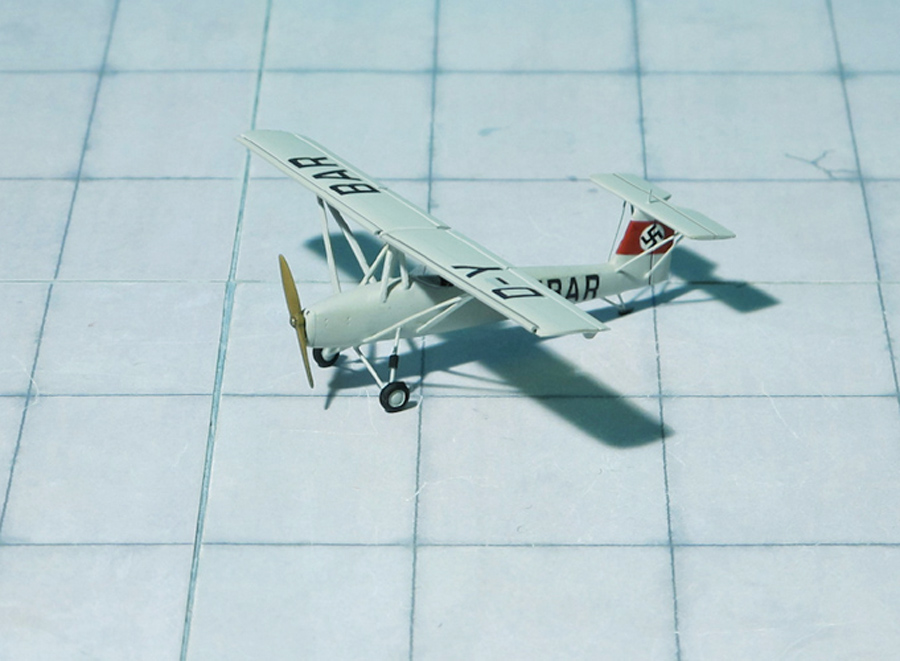
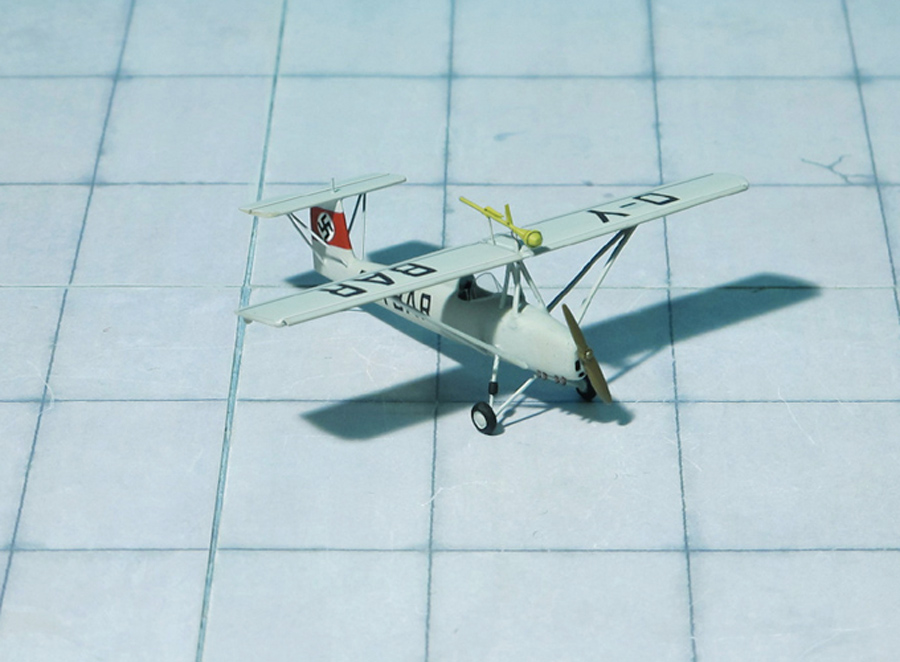
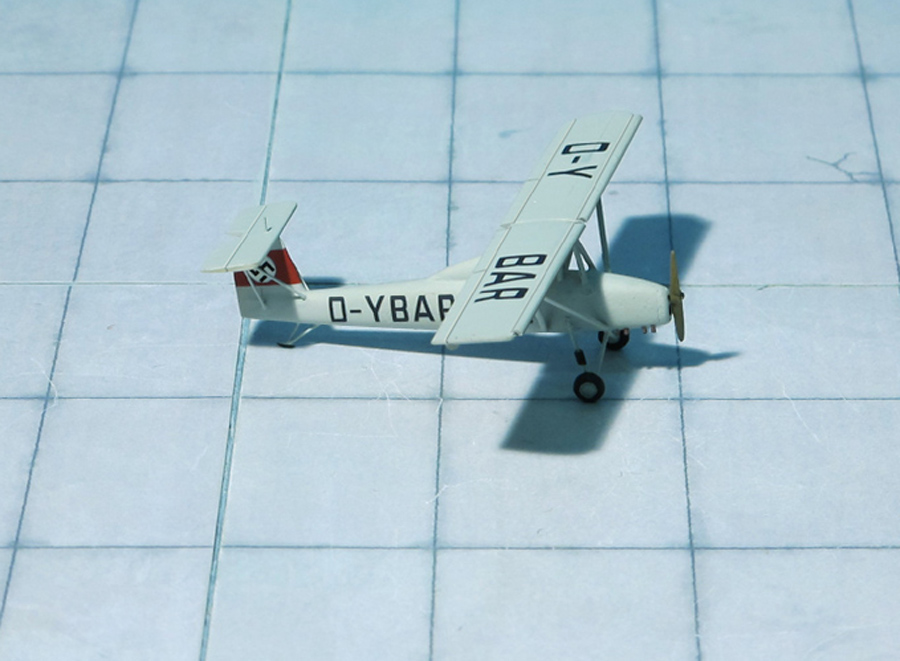
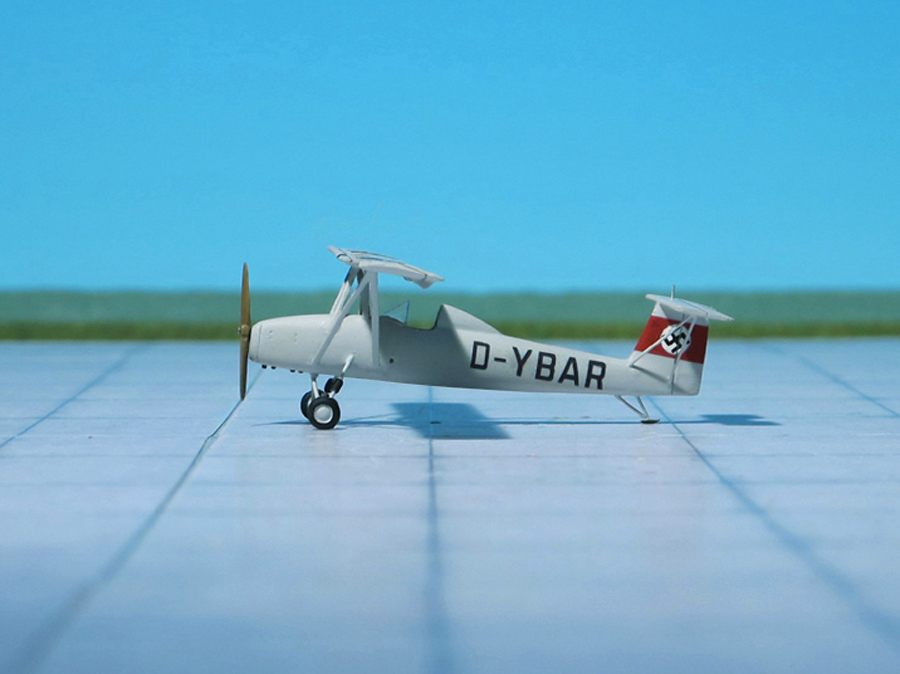
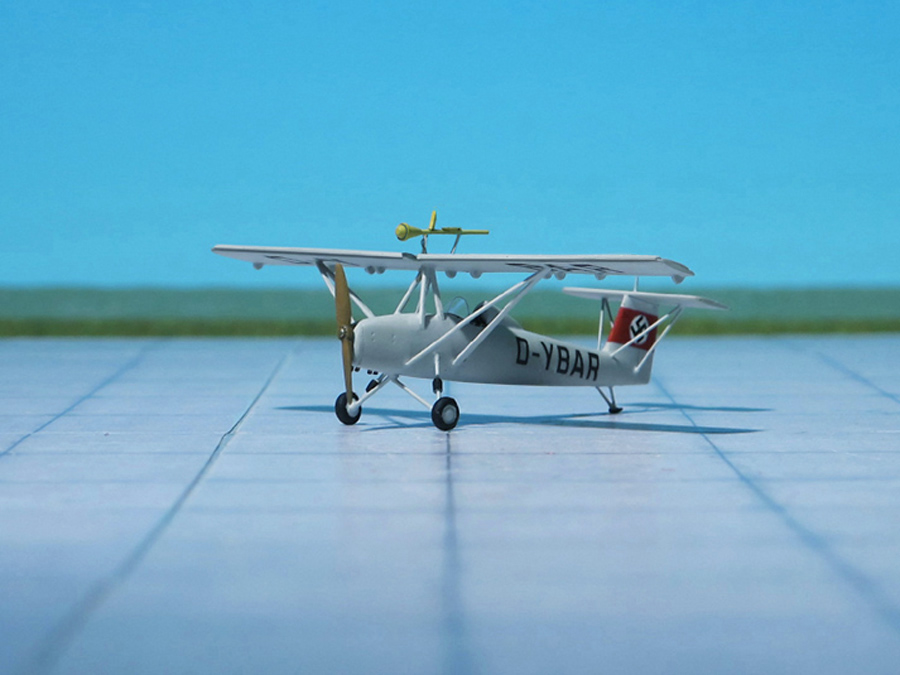
Braunschweig LF 1 ‘Zaunkönig’ (“Wren”) with Panzerfaust 100 (Bazooka), (Luedemann Models)

TYPE: Short Take-Off and Landing aircraft

ACCOMMODATION: Pilot only

POWER PLANT: One Zündapp Z9-092 air-cooled, rated at 50 hp

PERFORMANCE: 88 mph

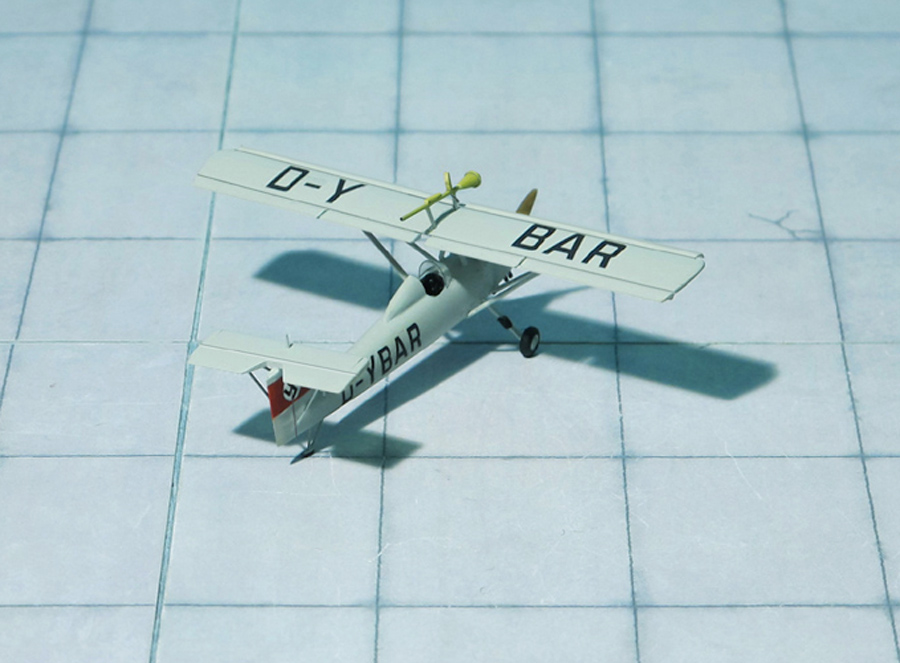
COMMENT: The Braunschweig LF-1 “Zaunkönig”, (“Wren”, LF = Langsames Flugzeug, Slow aircraft), is a Short Take-Off and Landing single-seat light aircraft designed in 1939 by Hermann Winter  and some of his students from the Technische Universität Braunschweig (Technical University of Brunswick), Lower Saxony, Germany, as a fool-proof trainer for novice student pilots to experience solo flight. H. Winter was a former chief engineer at the Bulgarian company DAR (Drzhavnata Aeroplanna Rabotilnitsa, where he created a line of aircraft and gliders for the Bulgarian Army.
The LF-1 is a parasol wing monoplane with a high set tail-plane, powered by a Zündapp Z 9-092 engine delivering 50 hp, able to operate from a 330 ft airstrip. The two-piece wings are set at 16° dihedral and are supported by a pair of V-cabane struts and V-struts either side from approximately half-span to the lower center fuselage. Full span leading edge slats extend automatically and full span trailing edge flaps / drooping ailerons can be extended manually by the pilot. The fixed tailwheel undercarriage attaches to the fuselage with long struts and oleo pneumatic shock absorbers.
It was a proof-of-concept design for a ‘fool-proof’ trainer intended for novice pilots with only one hour of ground instruction, the hour being reduced to five-minutes for those who had already flown gliders, and was intended to be impossible to either stall or spin.
The first prototype, the LF-1 V1, was built in 1940 and made its maiden flight, piloted by Winter himself, in December 1940. Test flights stopped in November 1942 after part of the wing ruptured causing the aircraft to crash. In 1943 a second prototype, the V2, was built, receiving the civil registration D-YBAR.
In early 1945 the aircraft was tested for military applications and was once even armed with a Panzerfaust 100 recoilless anti-tank weapon (Bazooka).
At the end of WW II the LF-1 was taken to the Royal Aircraft Establishment (RAE) at Farnborough for slow flying tests; given the British serial VX190, where amongst others, it was flown by Eric “Winkle” Brown CO Aero Flight, the aircraft also being soloed by the then-head of the RAE Aerodynamics Section, Handel Davies, after half an hour of ground instruction, and whose only previous piloting experience was as a pupil in a dual-control Miles Magister.
Encouraged by the positive British reviews Hermann Winter decided to build three more LF-1 aircraft. The construction started in 1954 and it was the first new aircraft in Germany after the war to receive a certificate by the Luftfahrt-Bundesamt (LBA) in Braunschweig (Ref.: 24).
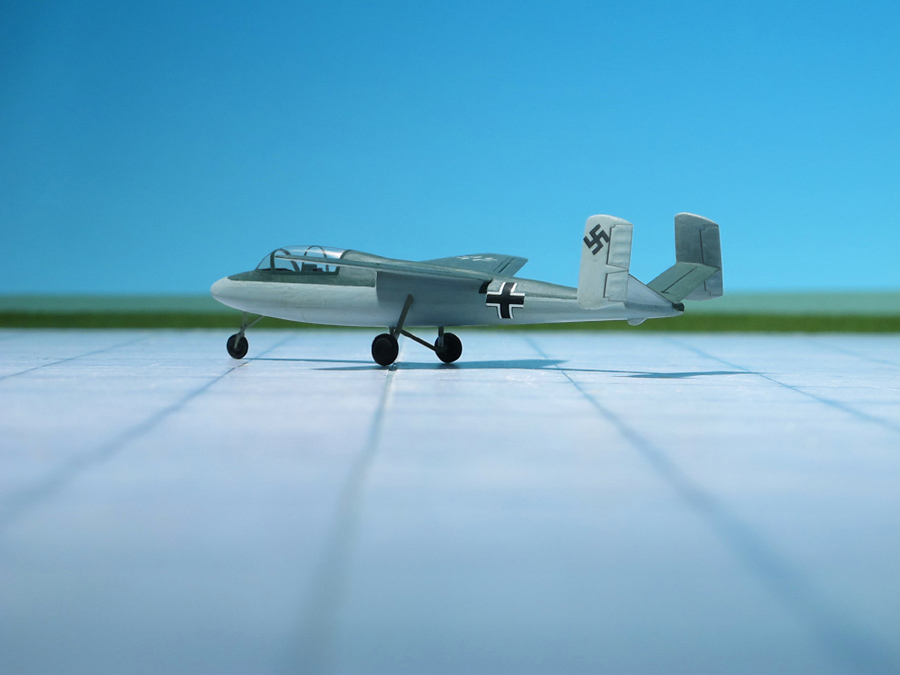
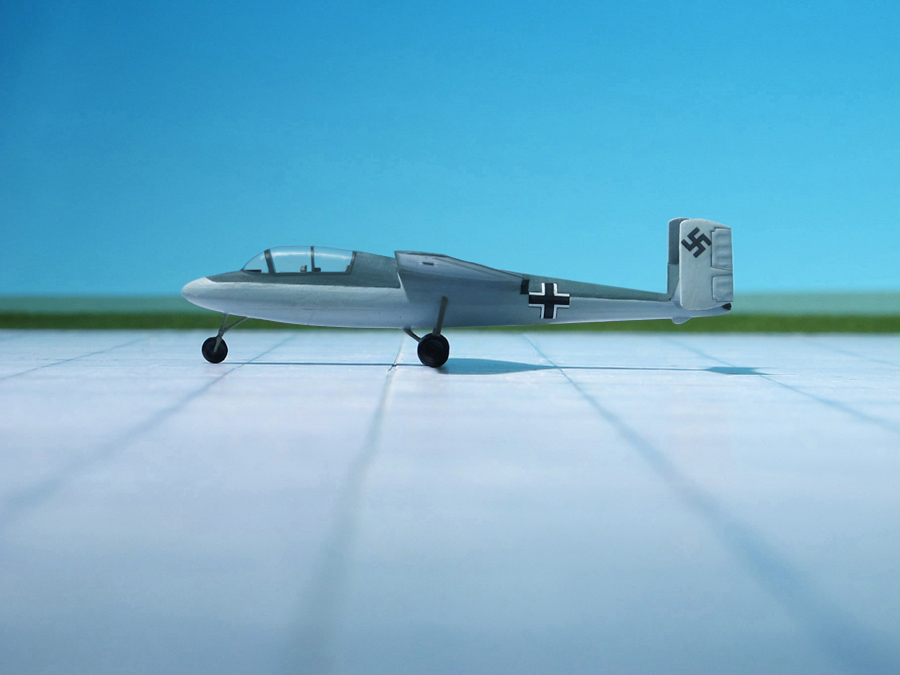
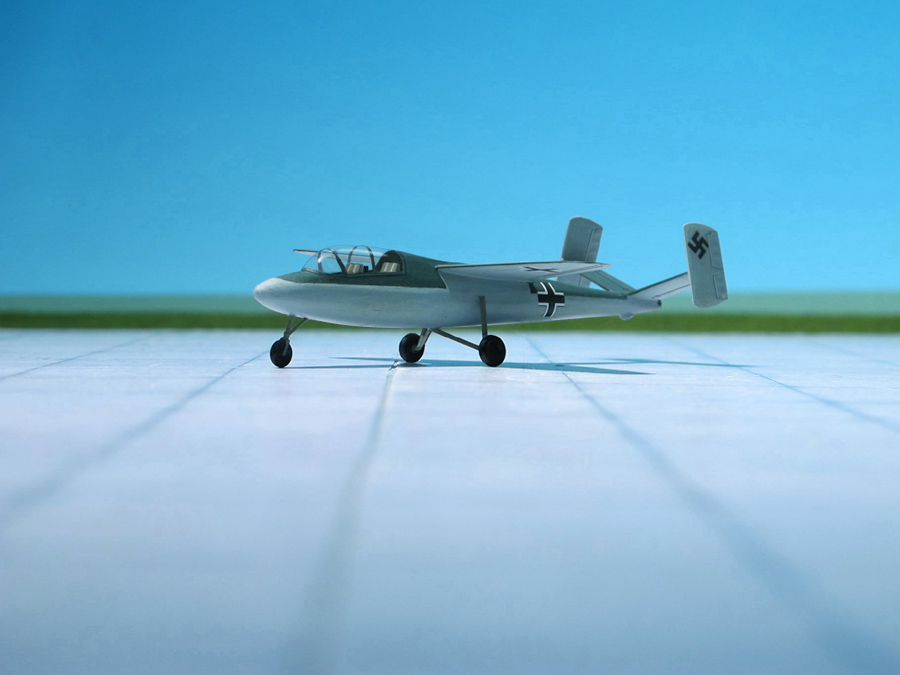
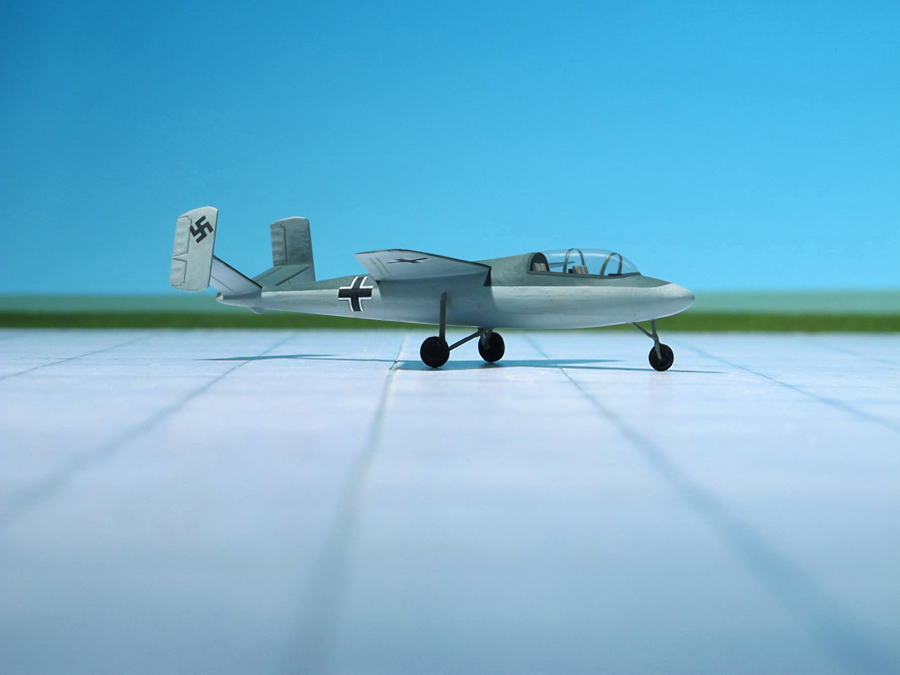
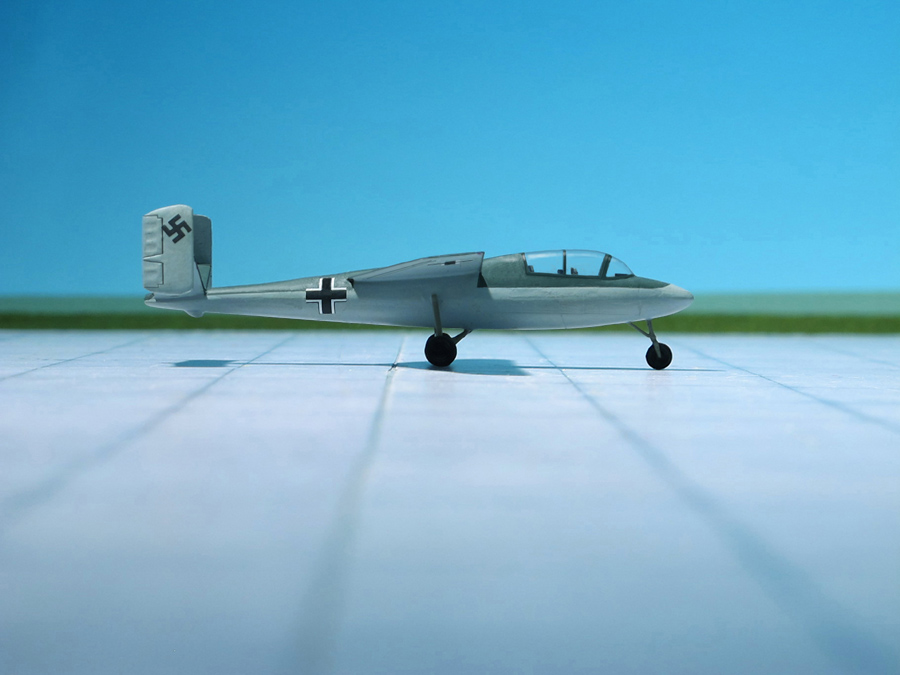
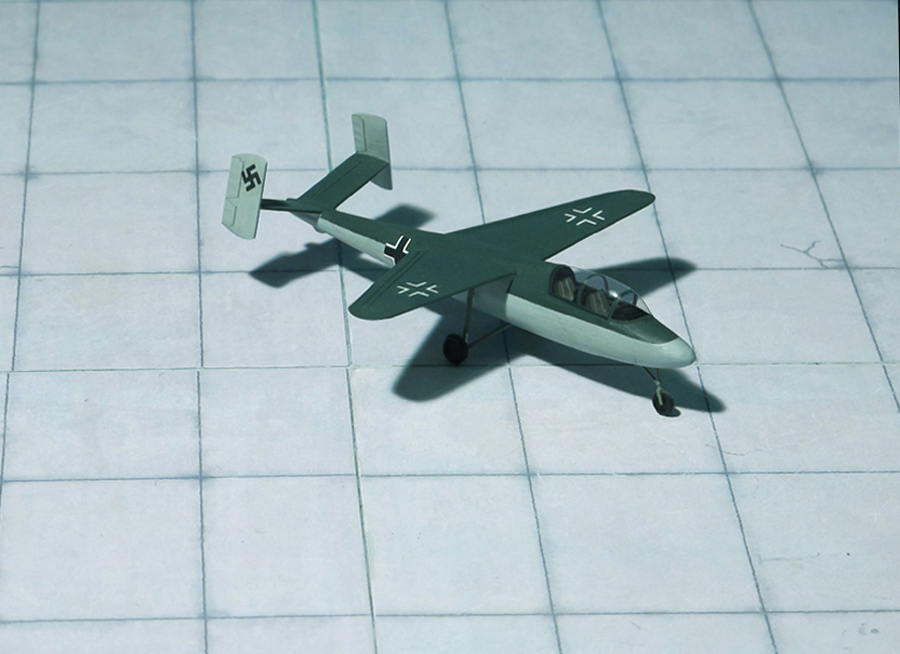
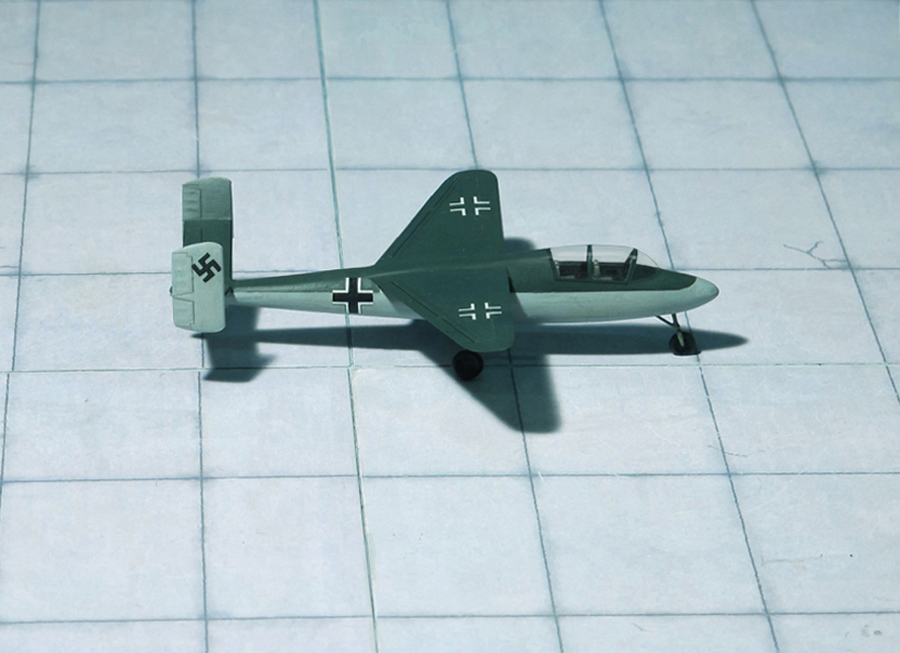
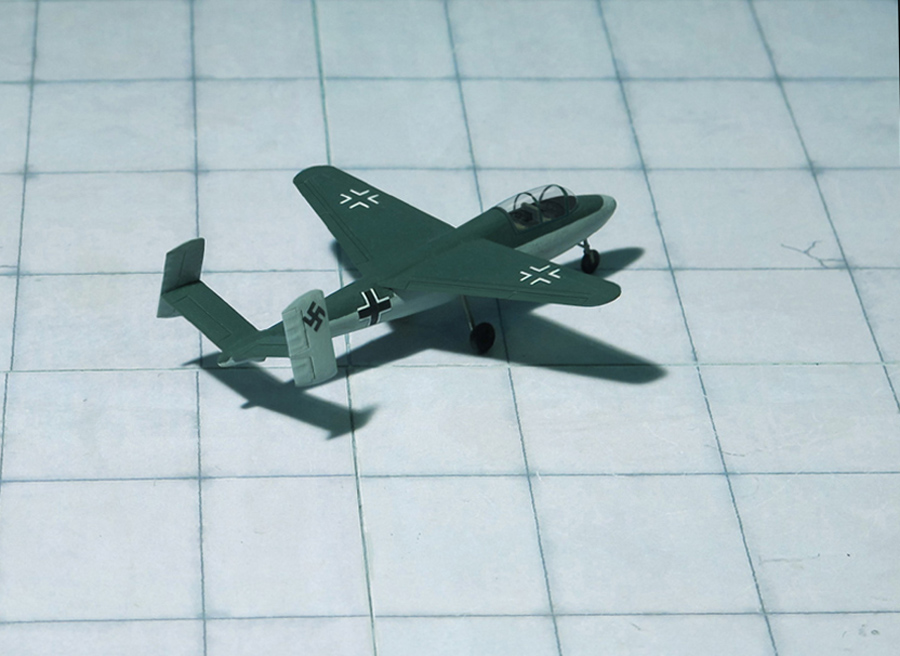
Heinkel He 162S (A+V Models, Resin)

TYPE: Trainer glider for Heinkel He 162 turbojet aircraft

ACCOMMODATION: Crew of two, Pilot and student

POWER PLANT: None

PERFORMANCE: No data available

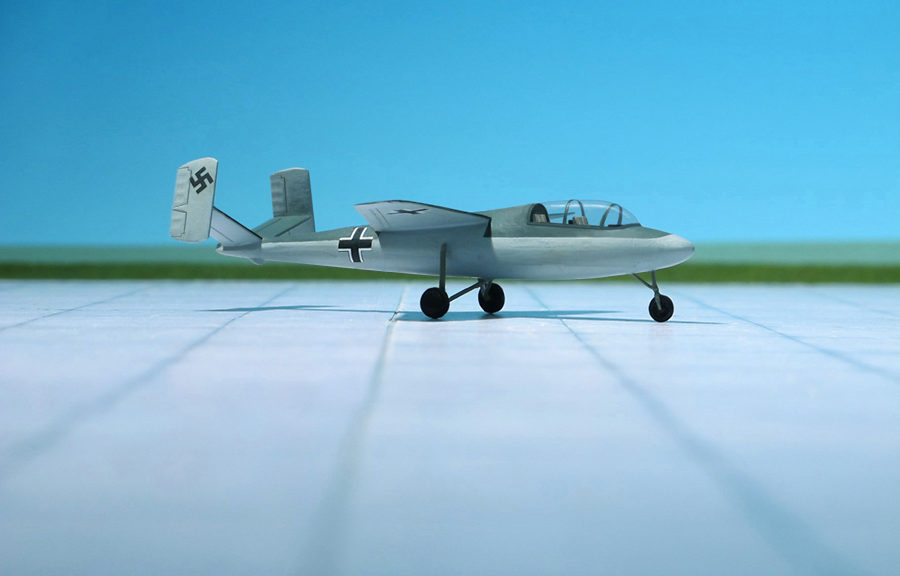
COMMENT: The Heinkel He 162 „Volksjäger“ (“People’s Fighter”), the name of a project of the „Jägernotprogramm“ (Emergency Fighter Program) design competition, was a German single-engine, jet-powered fighter aircraft fielded by the Luftwaffe in WW II. It was designed and built quickly and made primarily of wood as metals were in very short supply and prioritised for other aircraft. „Volksjäger“ was the RLM’s (Reich Air Ministry’s) official name for the government design program competition won by the He 162 design. Other names given to the plane include „Salamander“, which was the codename of its construction program, and „Spatz“ (“Sparrow”), which was the name given to the plane by Heinkel.
The „Volksjäger“ needed to be easy to fly. Some suggested even glider or student pilots should be able to fly the jet effectively in combat, and indeed had the Heinkel He 162 gone into full production, that is precisely what would have happened. After the war, Ernst Heinkel would say, “[The] unrealistic notion that this plane should be a ‘people’s fighter,’ in which the „Hitler Jugend“ (Hitler Youth), after a short training regimen with clipped-wing two-seater gliders like the DFS „Stummel Habicht“, could fly for the defense of Germany, displayed the unbalanced fanaticism of those days.”
The clipped-wingspan DFS „Habicht“ (Goshawk) models had varying wingspans of both 8 m or 6 m, and were used to prepare more experienced Luftwaffe pilots for the dangerous Messerschmitt Me 163B „Komet“ rocket fighter – the same sort of training approach would also be used for the „Hitler Youth“ aviators chosen to fly the jet-powered „Volksjäger“ design competition’s winning airframe design.
Besides the „Stummelhabicht“ a standard-fuselage length, unarmed BMW 003E-powered two-seat version (with the rear pilot’s seat planned to have a ventral access hatch to access the cockpit) and an unpowered two-seat glider version, designated the Heinkel He 162S („S“ for Schulen, Training establishment), were developed for training purposes. Only a small number were built, and even fewer delivered to the sole He 162 „Hitler Youth“ training unit to be activated in March 1945 at an airbase at Sagan (now Poland). The unit was in the process of formation when the war ended, and did not begin any training; it is doubtful that more than one or two He 162S gliders ever took to the air (Ref.: 24).
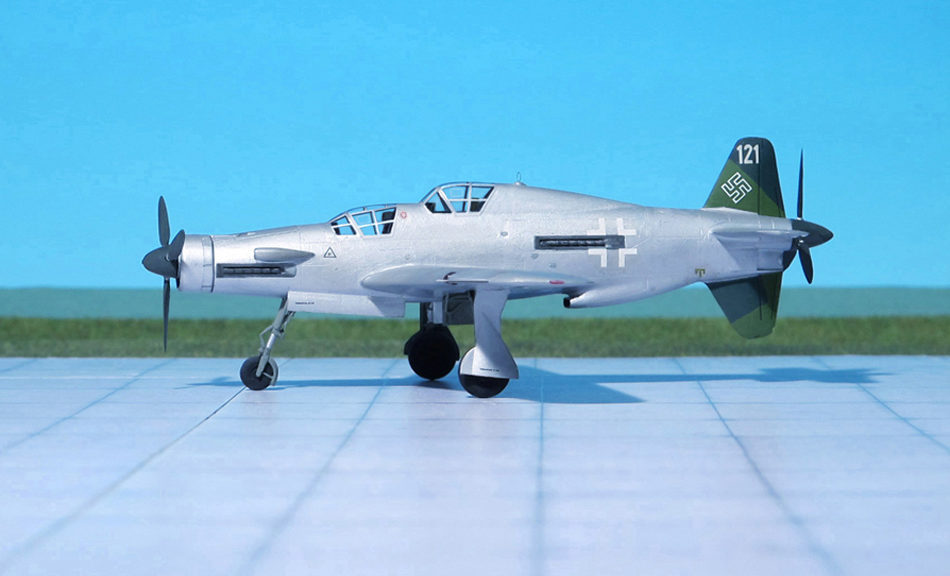
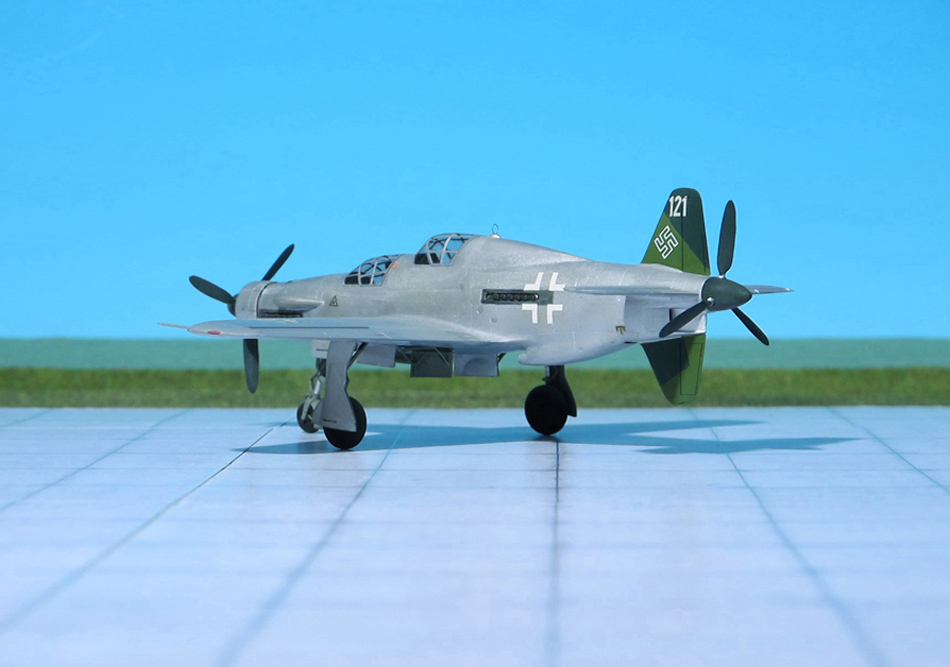
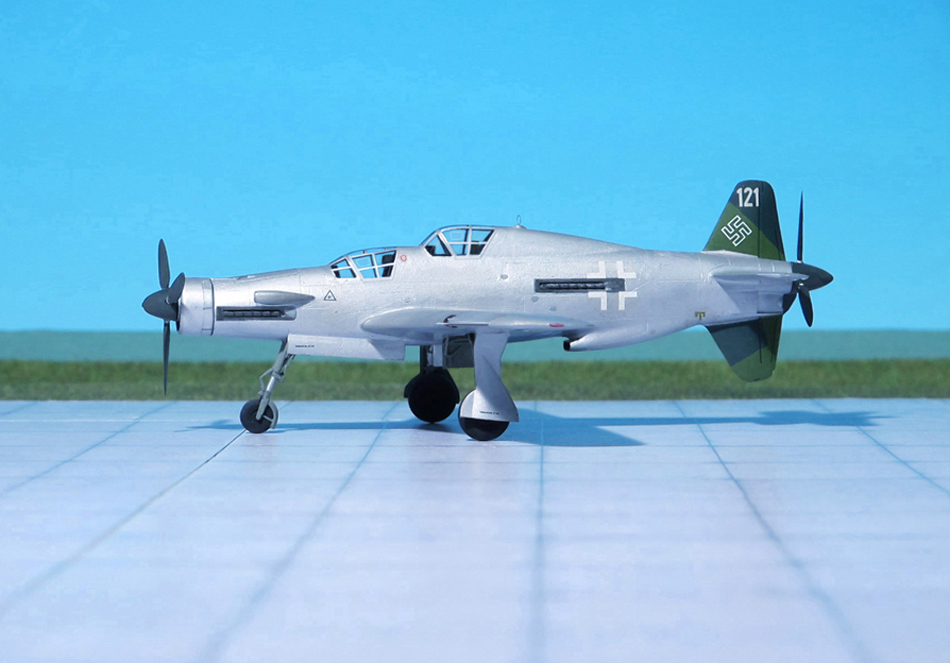
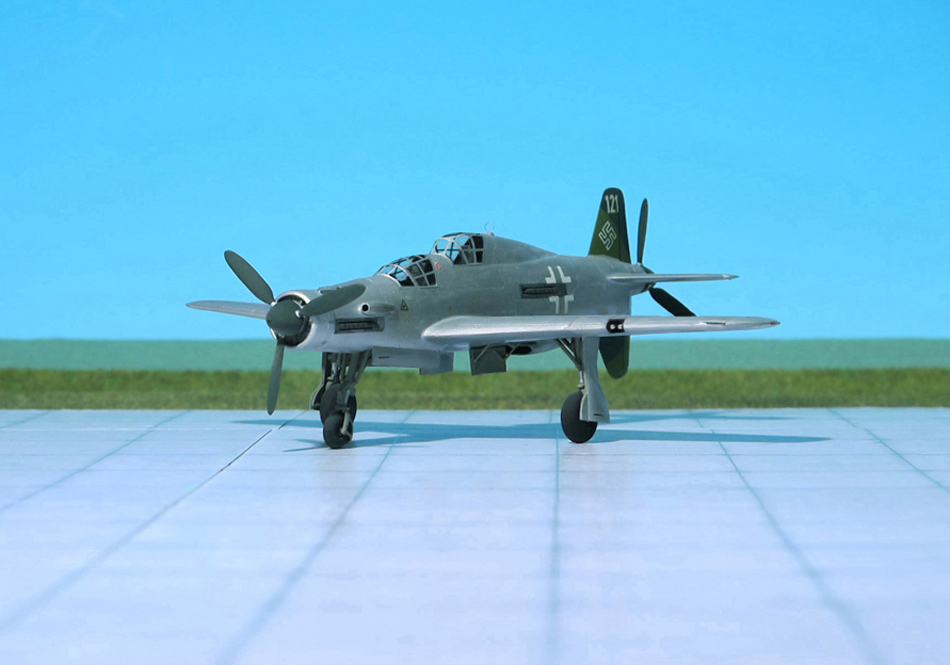
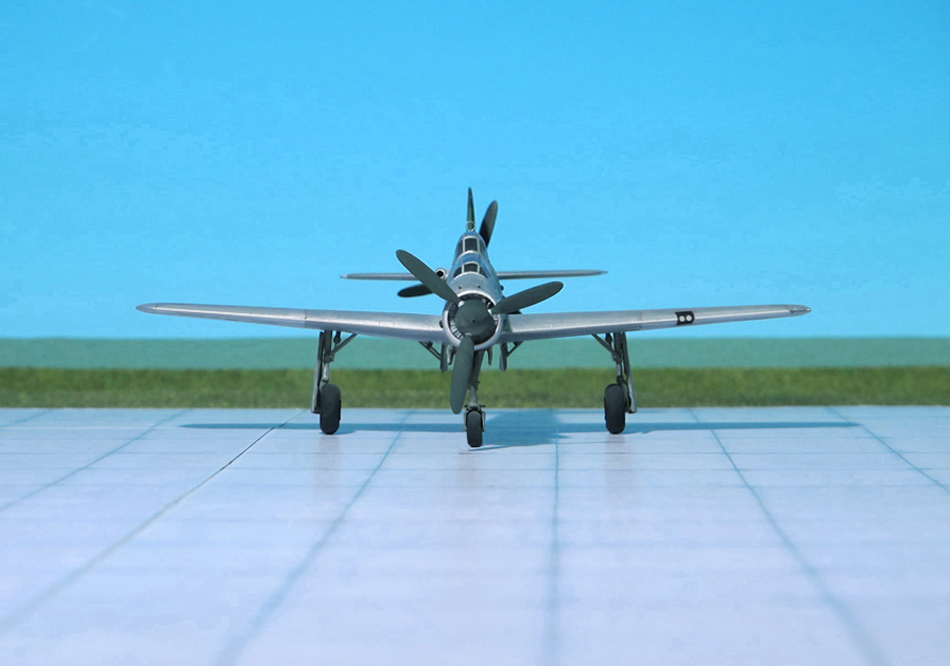
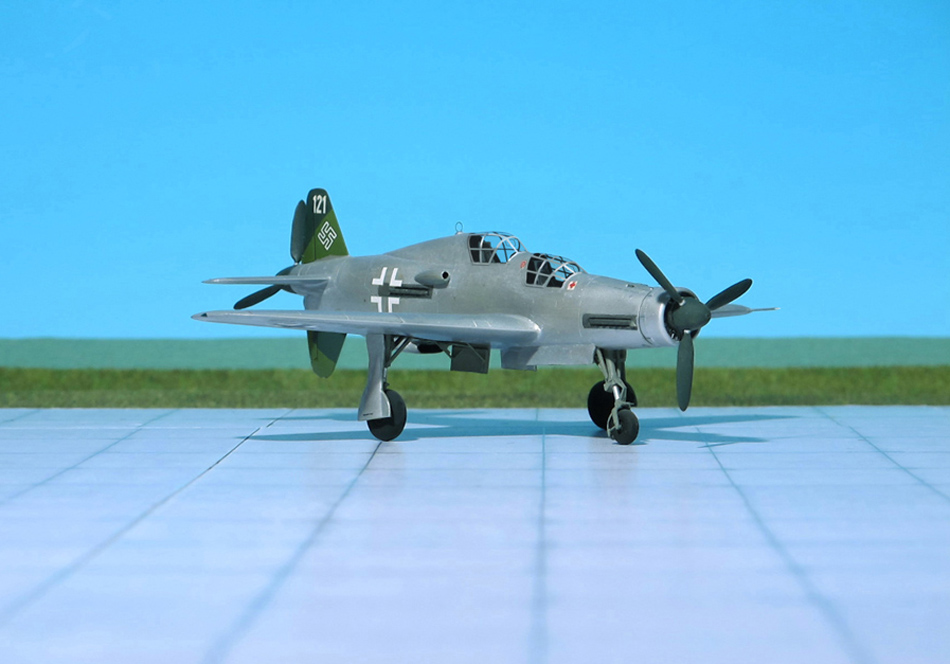
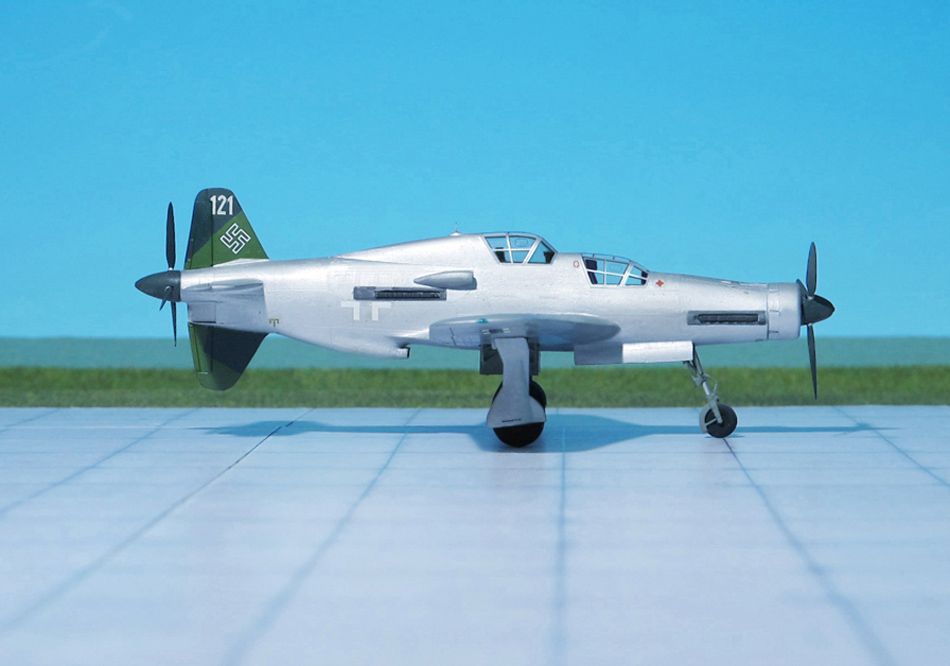
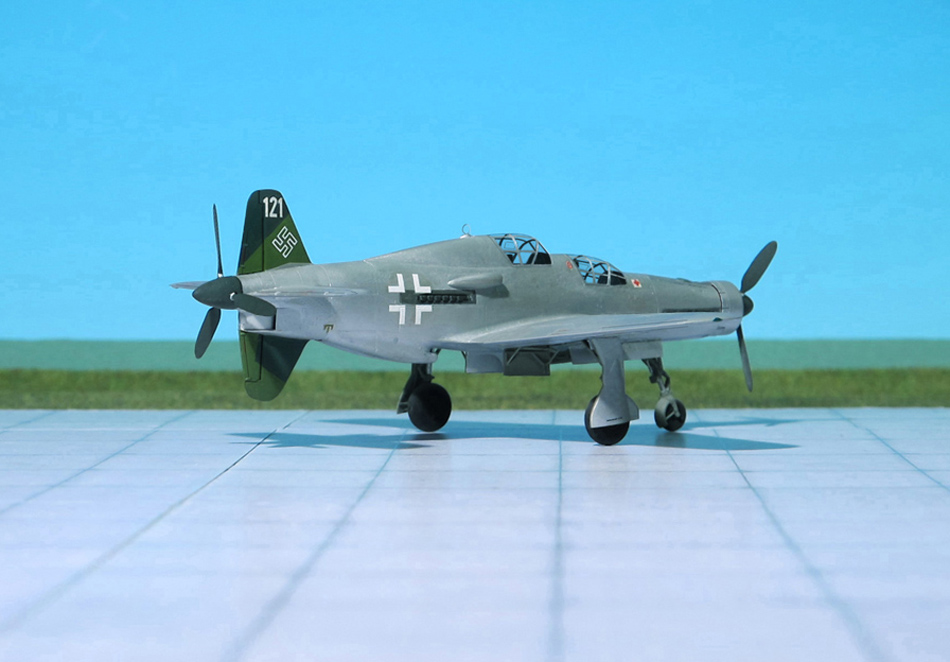
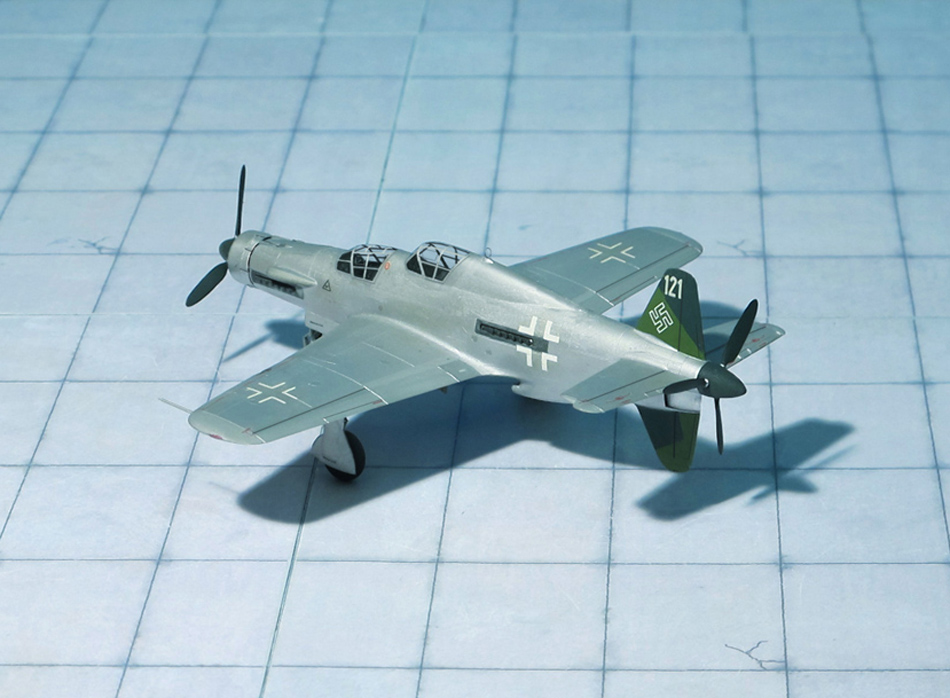
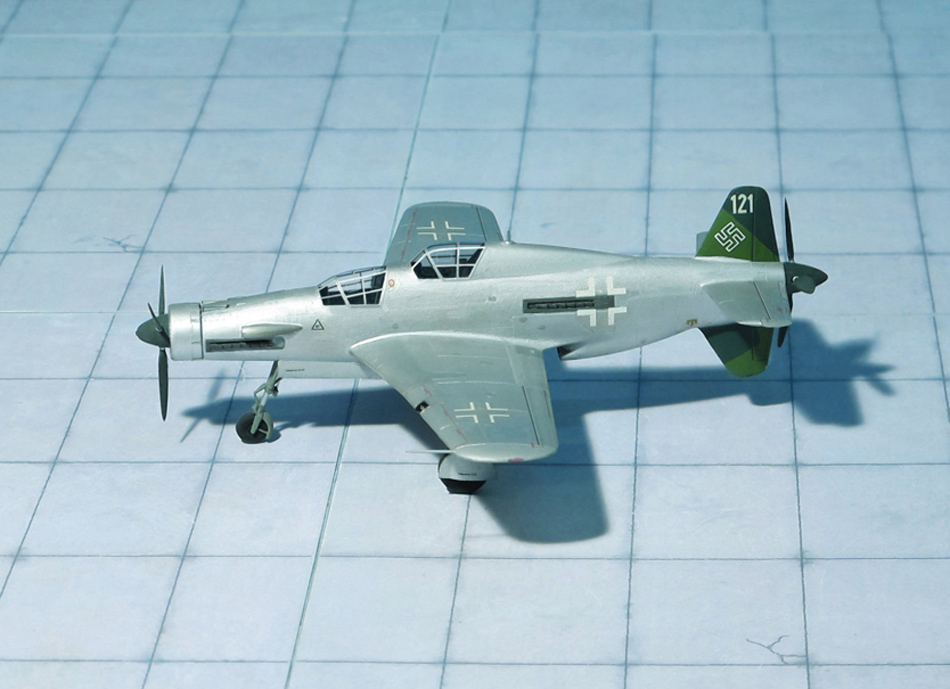
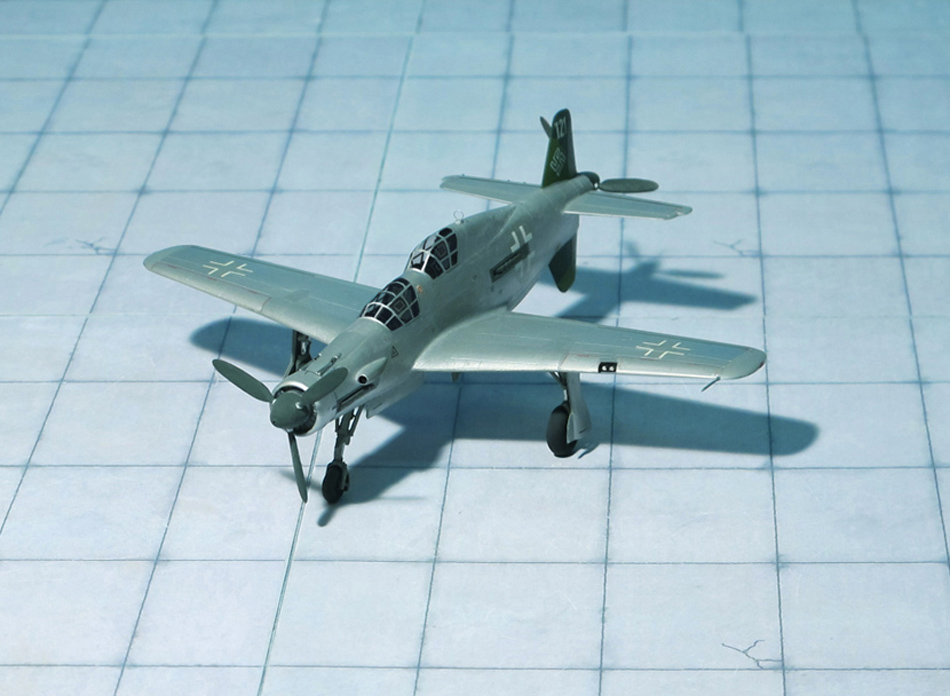
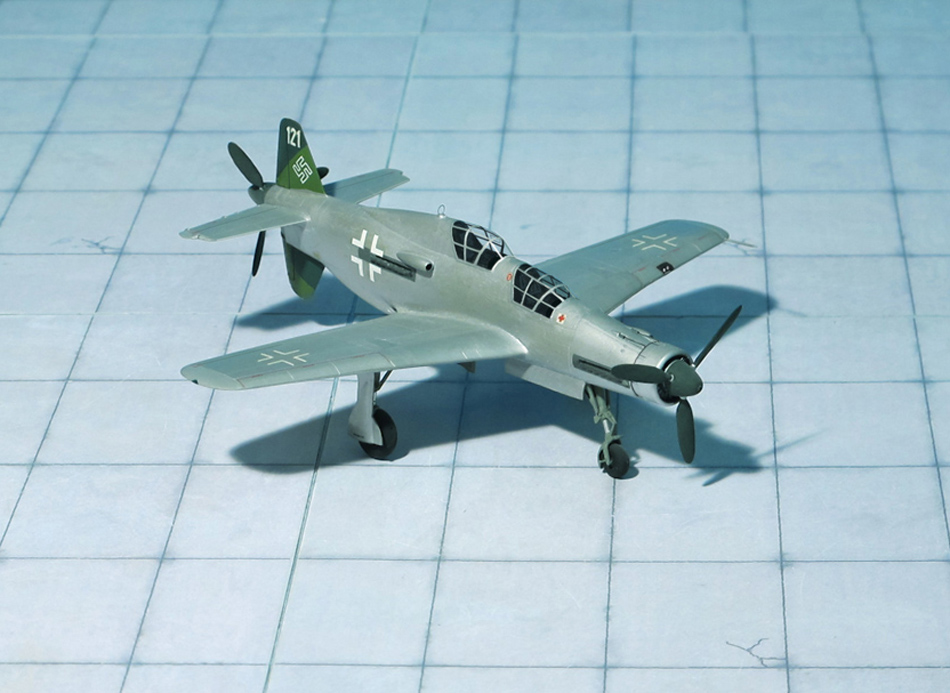
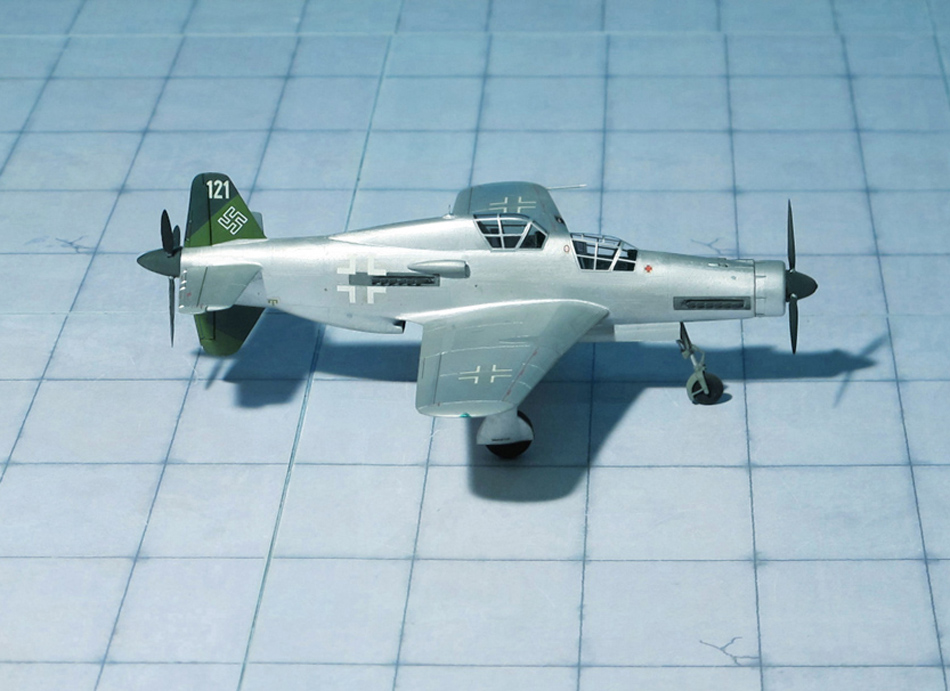
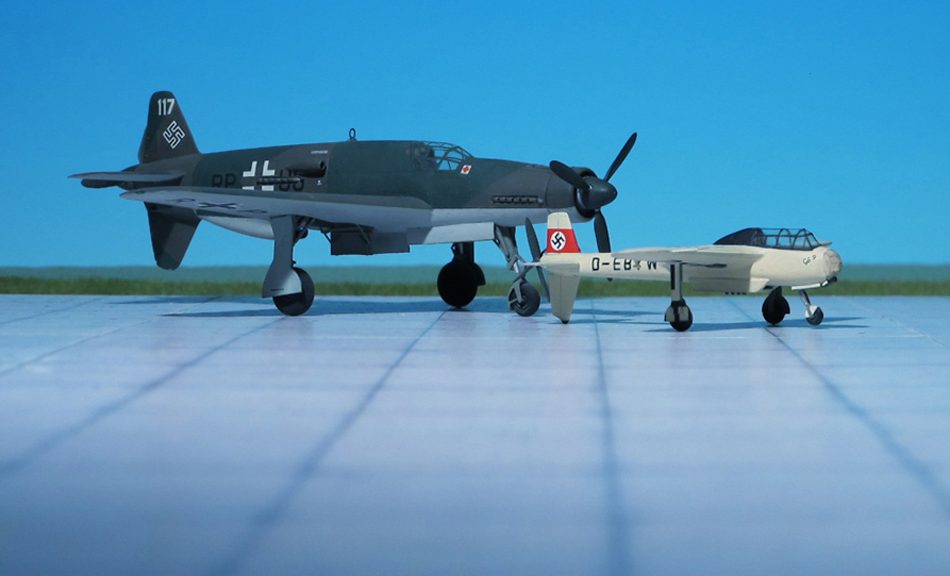
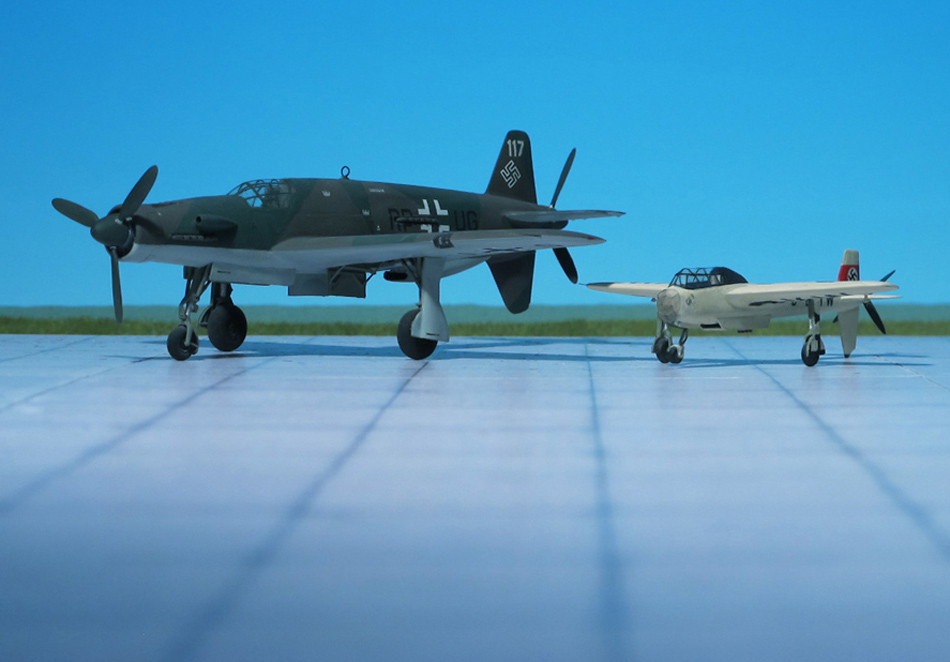
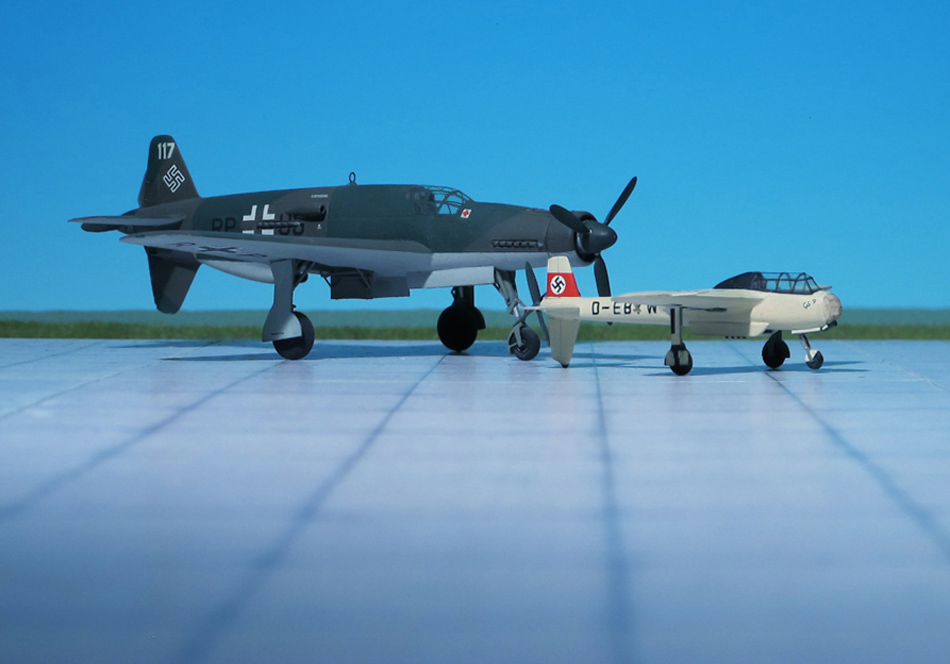
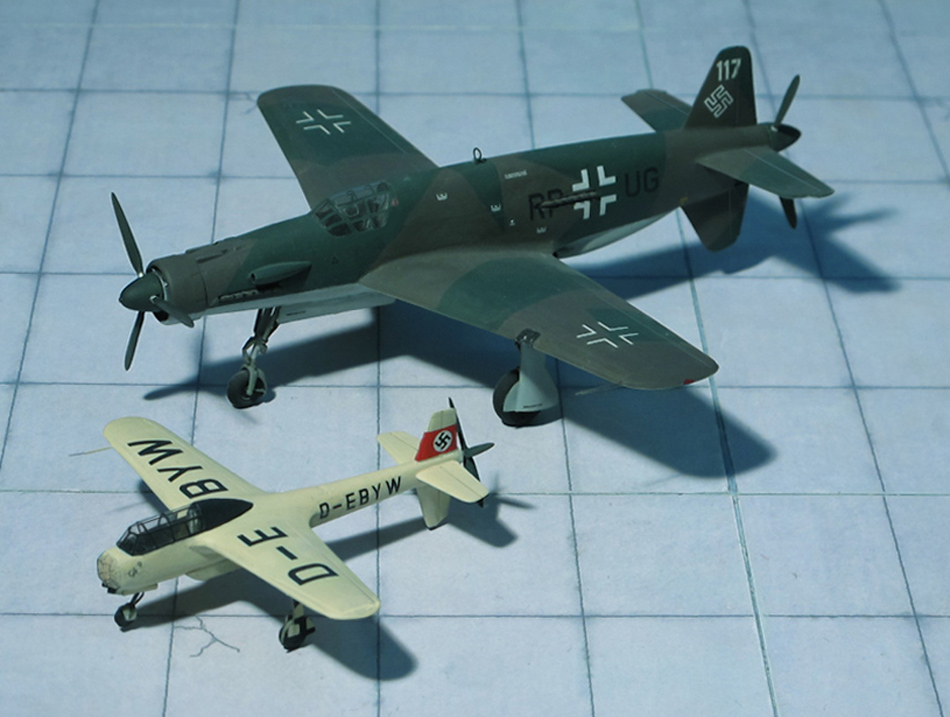
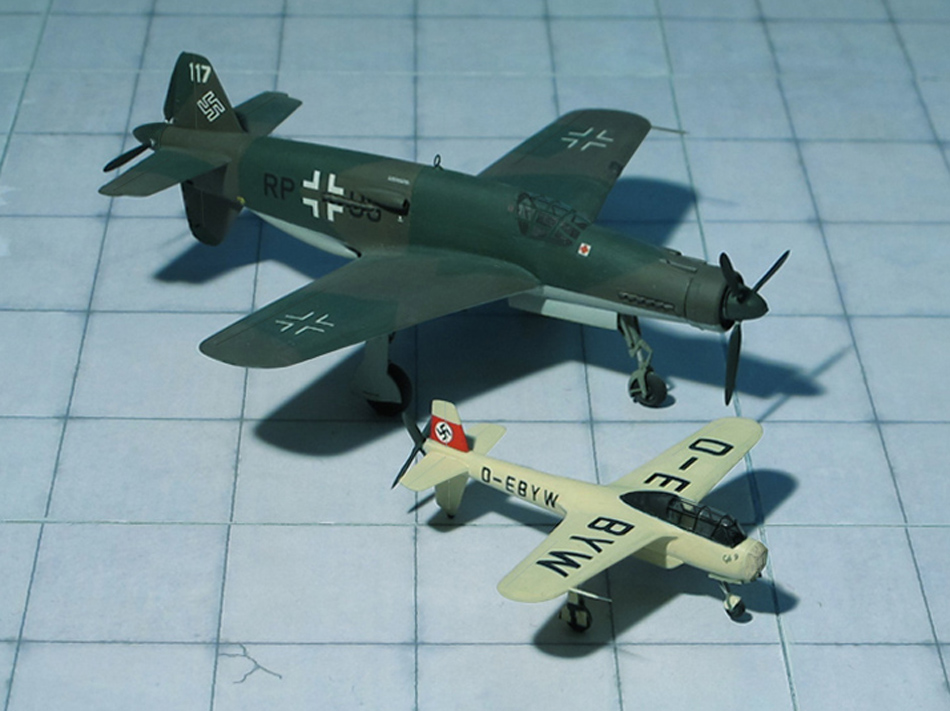
Dornier Do 335A-12 “Ameisenbär” (Anteater”), (Dragon)

TYPE: Trainer aircraft

ACCOMMODATION: Pilot and Instructor

POWER PLANT: Two Daimler-Benz DB 603A-2, rated at 1,726 hp each

PERFORMANCE: 430 mph at 17,400 ft

COMMENT: The Dornier Do 335 “Pfeil” (“Arrow”) was a WW II heavy fighter built by the Dornier company. The two-seater trainer version was unofficially called “Ameisenbär (“Anteater”). The Do 335s performance was much better than other twin-engine designs due to its unique push-pull configuration and the lower aerodynamic drag of the in-line alignment of the two engines. It was Germany’s Luftwaffe fastest piston-engine aircraft of World War II. The Luftwaffe was desperate to get the design into operational use, but delays in engine deliveries meant that only a handful were delivered before the war ended.
The Dornier Do 335 V1 first prototype flew for the first time on October 1943. However, several problems during the initial flight of the Do 335 would continue to plague the aircraft through most of its short history. Issues were found with the weak landing gear and with the main gear’s wheel well doors, resulting in them being removed for the remainder of the V1’s test flights. The Do 335 V1 made 27 flights, flown by three different pilots. During these test flights the second prototype Do 335 V2 was completed and made its first flight on end December 1943. New to the V2 were upgraded DB 603A-2 engines, and several refinements learned from the test flights of the V1 as well as further wind tunnel testing.
In early 1944 the Do 335 was scheduled to begin mass construction, with the initial order of 120 preproduction aircraft to be manufactured by DWF (Dornier-Werke Friedrichshafen) to be completed no later than March 1946. This number included a number of bombers, destroyers (heavy fighters), and several yet to be developed variants. At the same time, DWM (Dornier-Werke München) was scheduled to build over 2000 Do 335s in various models, due for delivery in March 1946 as well.
The first preproduction Dornier Do 335A-0s were delivered in July 1944 to the “Erprobungskommando 335” (“Proving detachment 335”) formed for service evaluation purposes.
On May 1944, Hitler, as part of the developing “Jägernotprogramm” (Emergency Fighter Program) directive, which took effect on July that year, ordered maximum priority to be given to Do 335 production. The main production line was intended to be at Manzell, but bombing raids in March destroyed the tooling and forced Dornier to set up a new line at Oberpfaffenhofen.
Among the different variants of the Do 335 under construction were two further two-seat prototypes, the Do 335 V11 and V12, these being respectively prototypes for the Daimler-Benz DB 603A-2-powered Do 335A-10 and DB 603E-1-powered Do 335A-12 dual-control conversion trainer. Having a similar raised second cockpit inserted aft and above the normal cockpit, the Do 335A-10 was equipped with full instrumentation and controls and was occupied by the instructor. The first aircraft were delivered without armament, but similar armament to that of the Do 335A-1 was specified for production models which were interspersed on the Do 335A-1 assembly line, and the genuine production aircraft was, in fact, a Do 335A-12 trainer.
At least 16 prototype Do 335s were known to have flown (V1–V12, and Muster-series prototypes M13–M17) on a number of DB603 engine subtypes including the DB 603A, A-2, G-0, E and E-1. The first preproduction Do 335A-0s were delivered in July 1944. Approximately 22 preproduction aircraft were thought to have been completed and flown before the end of the war including approximately 11 A-0s converted to A-11s for training purposes.
When U.S. forces overran Dornier’s Oberpfaffenhofen factory only 11 Do 335A-1 single-seat fighter bombers and two Do 335A-12 conversion trainers had been completed, but a further nine A-1s, four A-4s and two A-12s were in final assembly, and components and assemblies for nearly 70 additional aircraft had been completed. Production of the Do 335A-6 night and all-weather fighter had been transferred to the Heinkel factory at Vienna, but despite high priority allocated to the program, circumstances prevented the necessary jigs and tools being assembled (Ref: 7, 12).
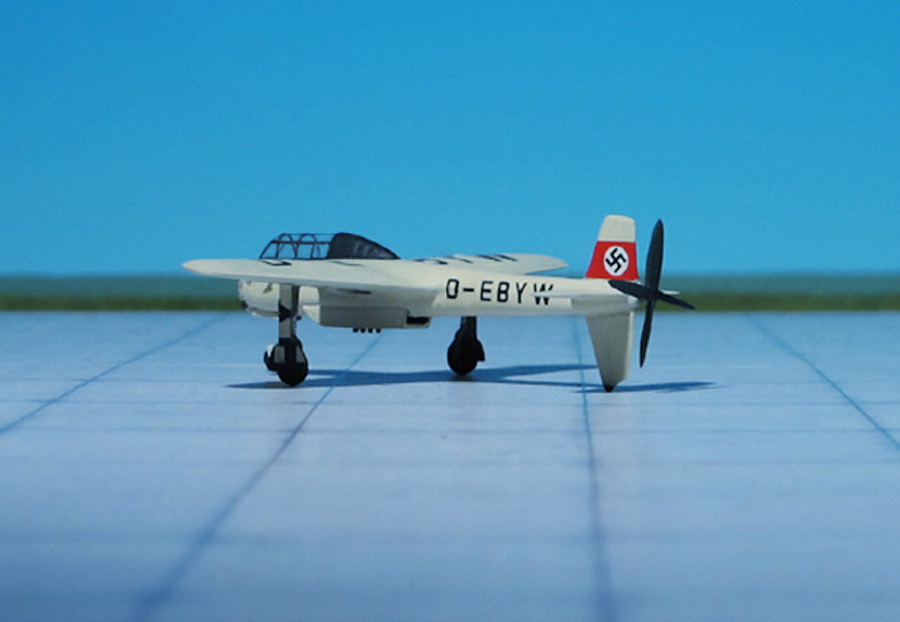
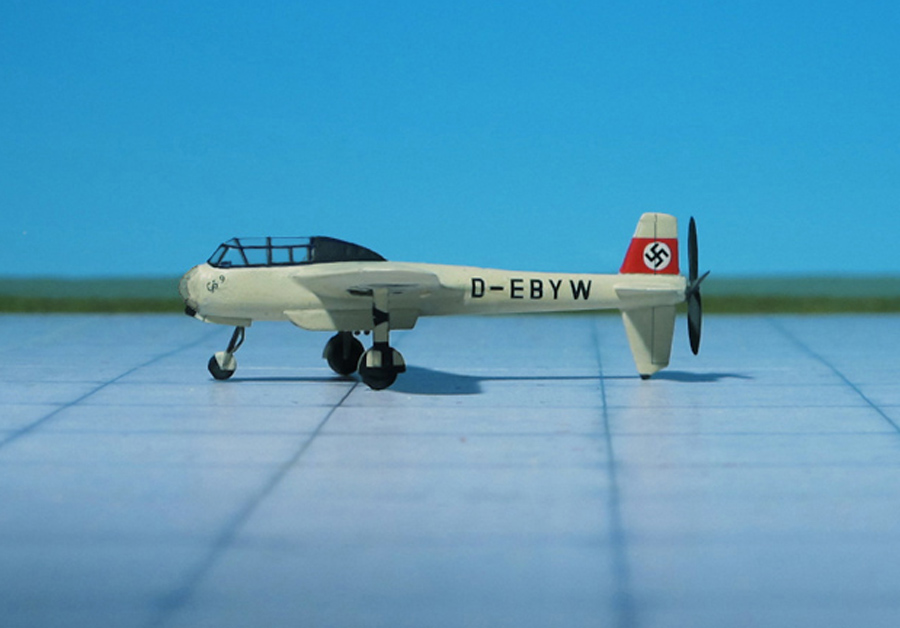
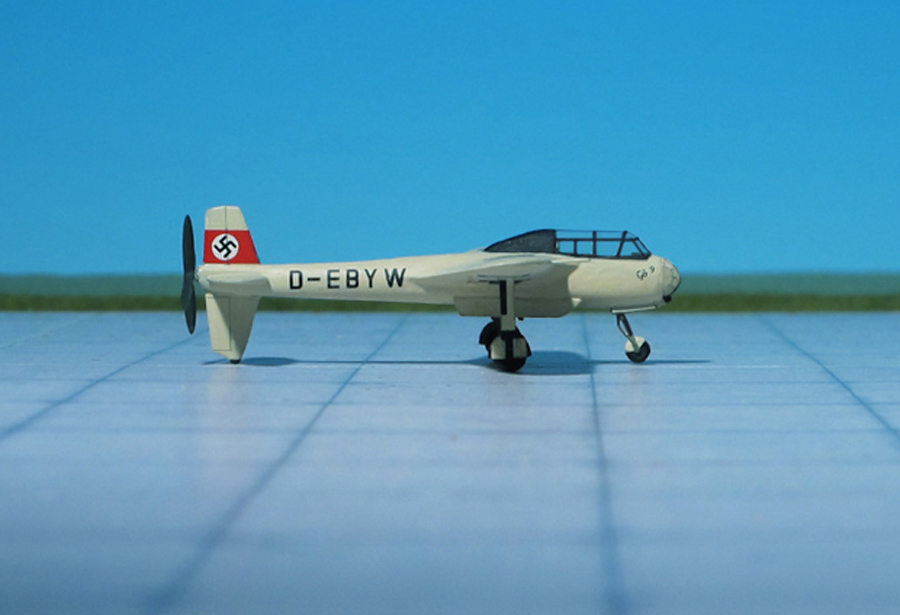
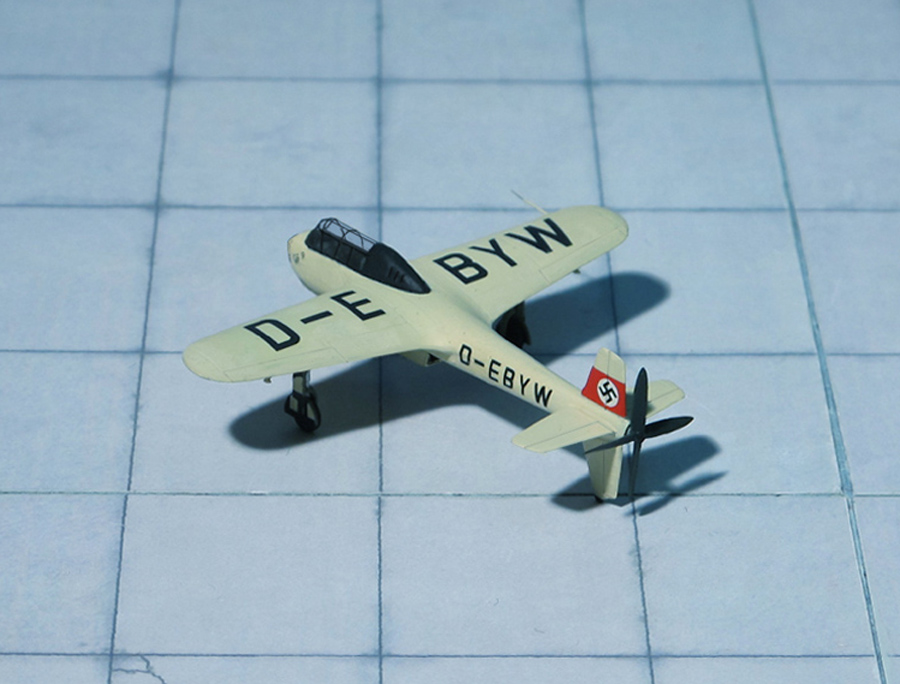
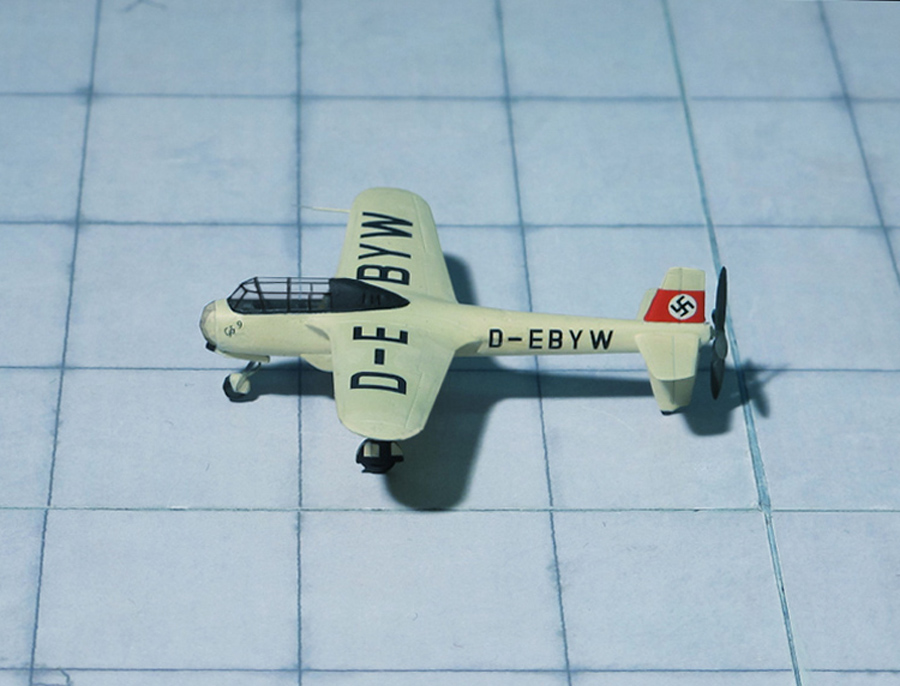
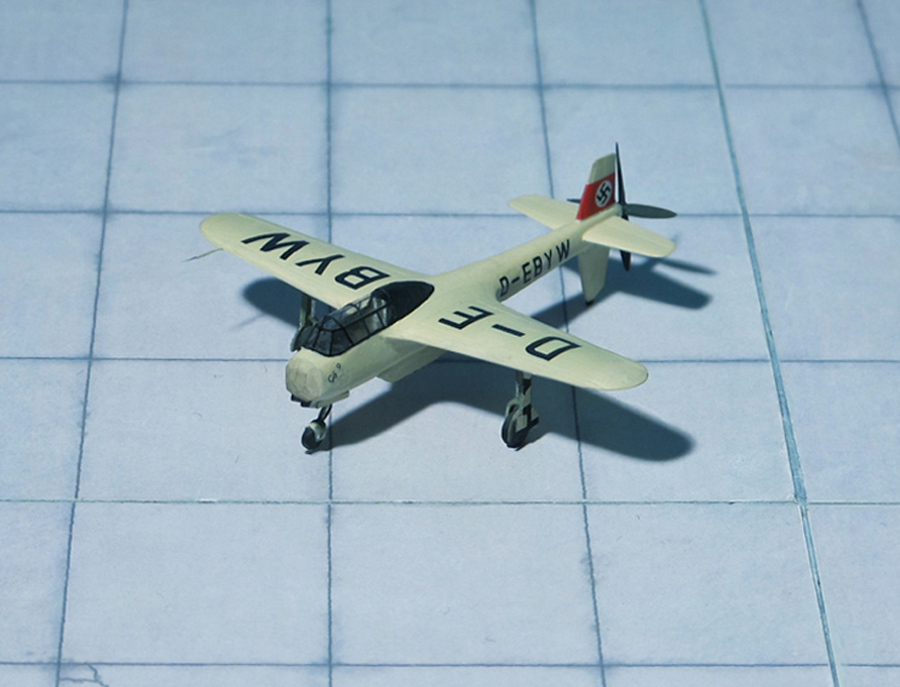
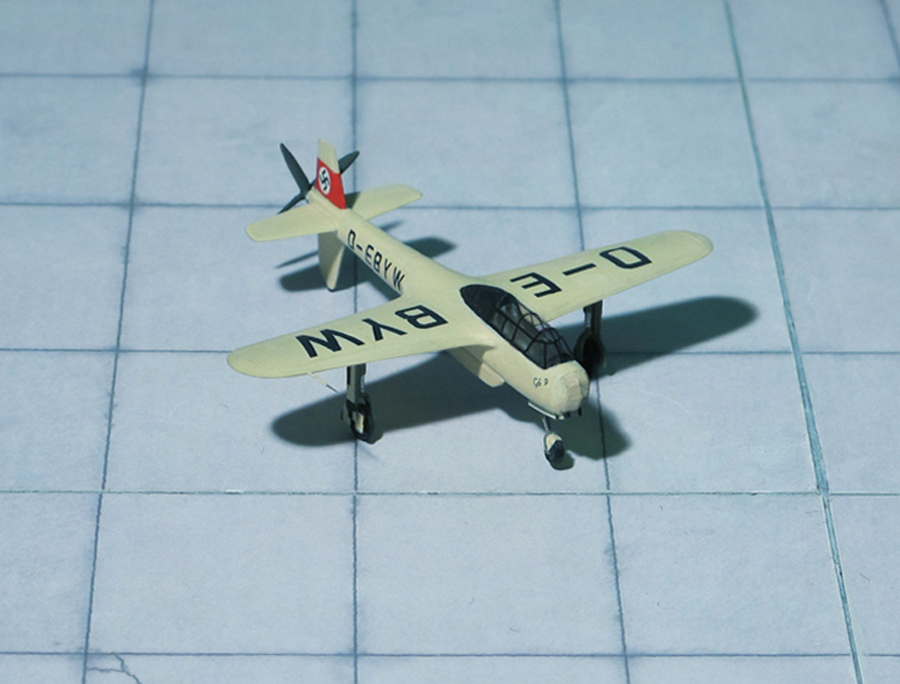
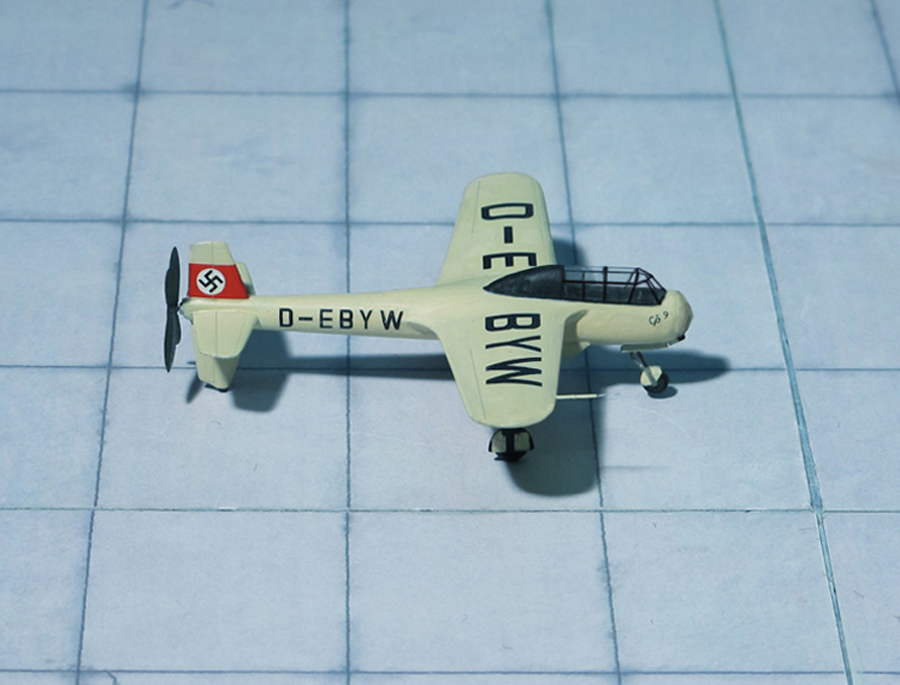
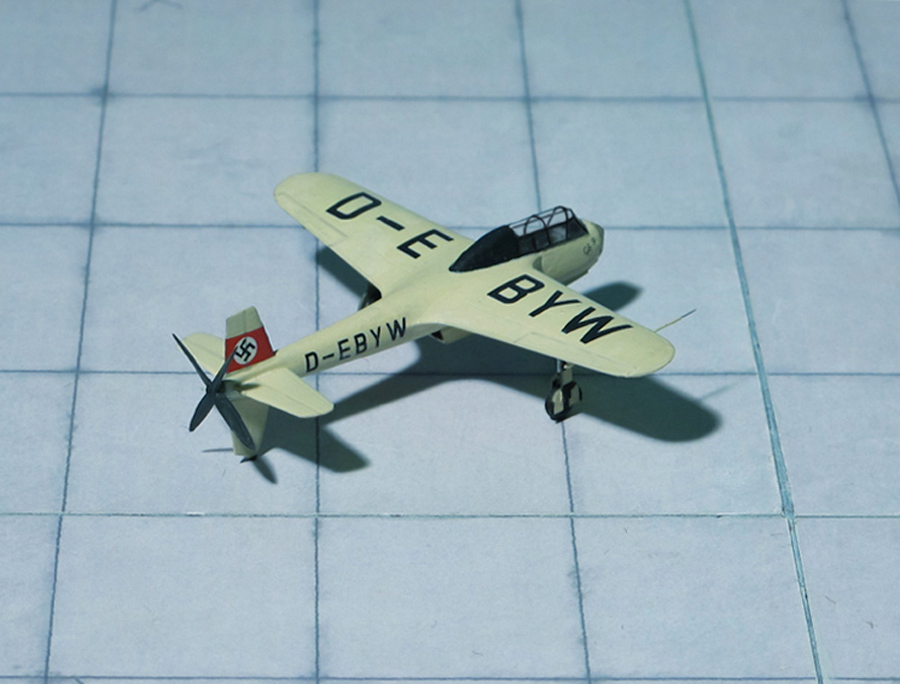
Göppingen Gö 9 (AML Models, Resin)

TYPE:  Scaled-down research aircraft

ACCOMMODATION: Pilot only

POWER PLANT: One Hirth HM 60 four cylinder inverted air-cooled in-line piston engine, rated at 80 hp, driving a four-bladed pusher propeller via an extension shaft

PERFORMANCE: 137 mph

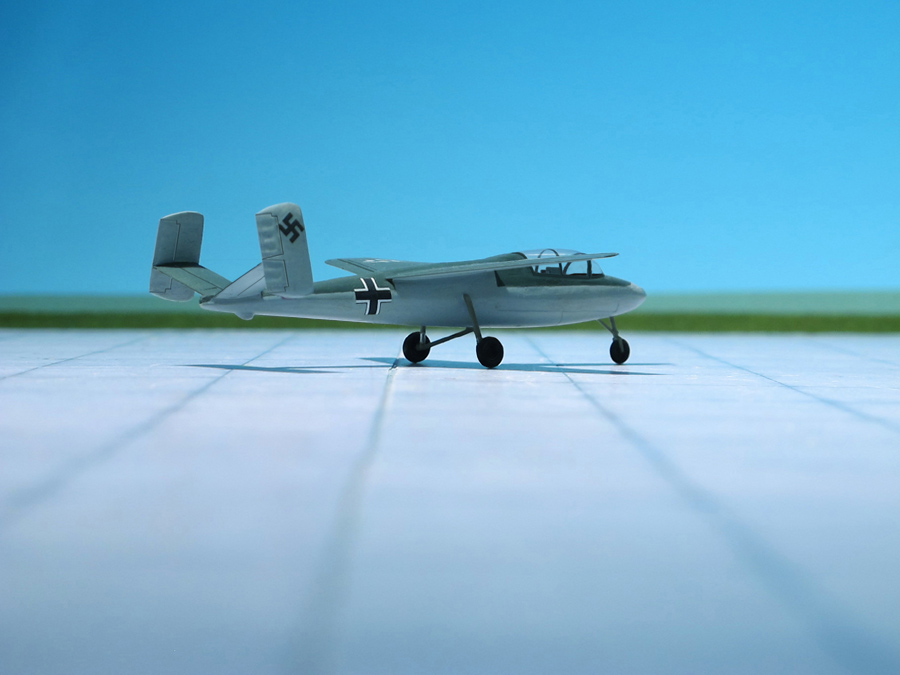
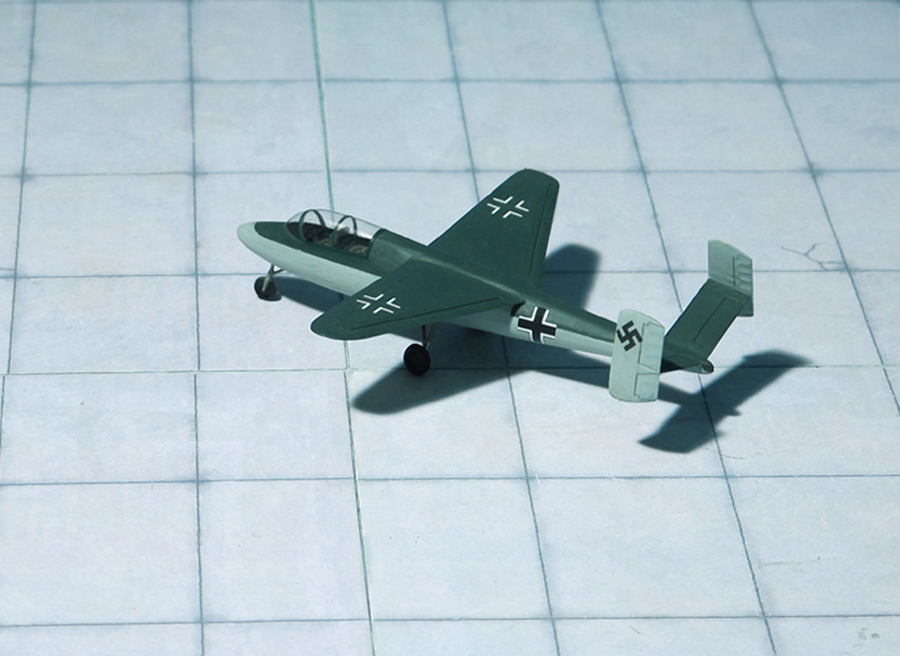
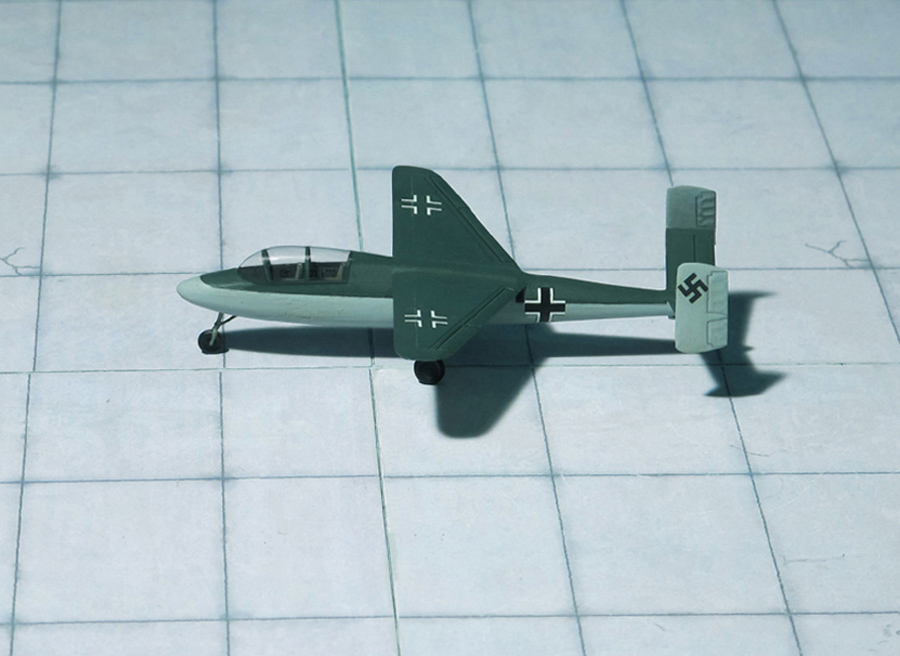
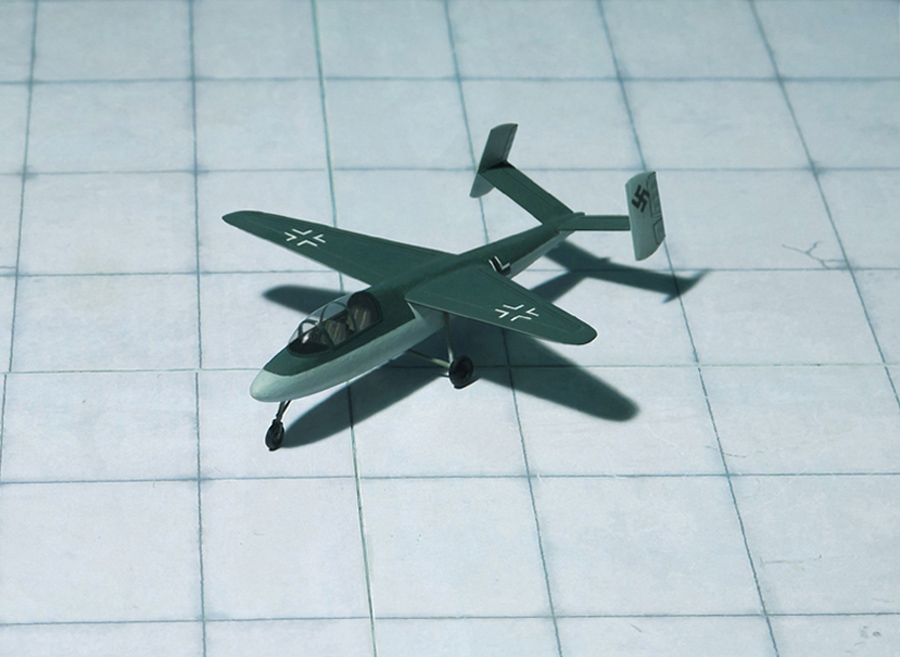
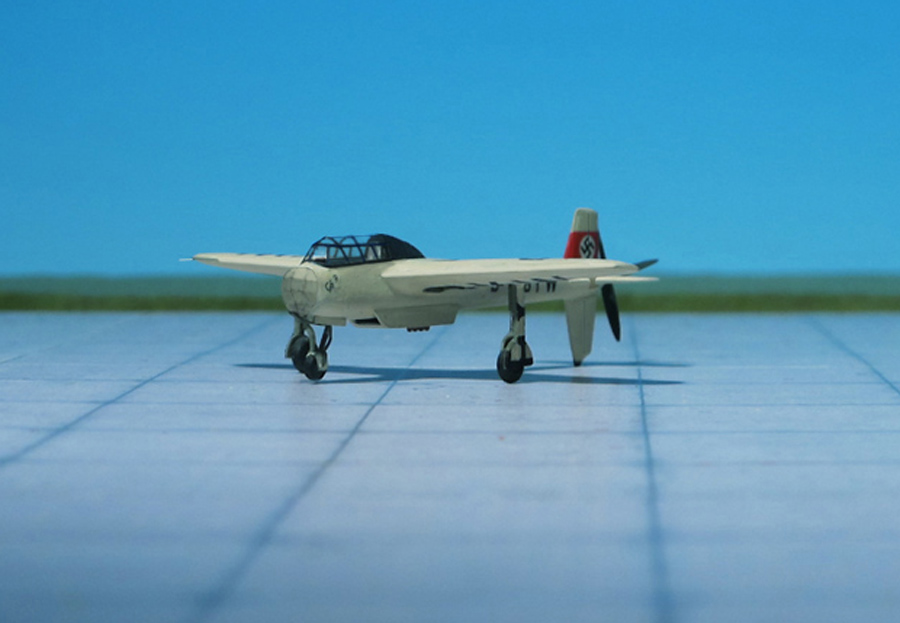
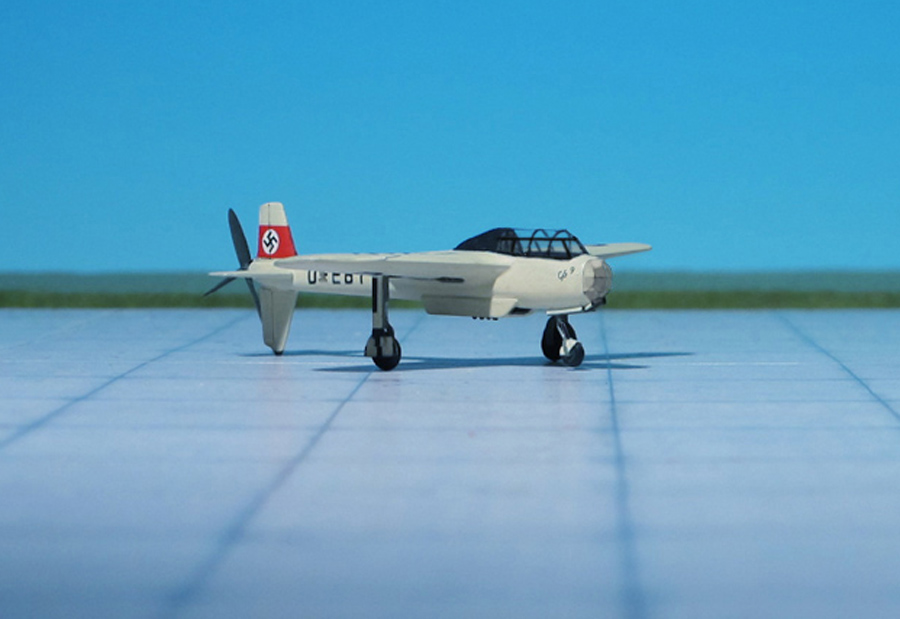
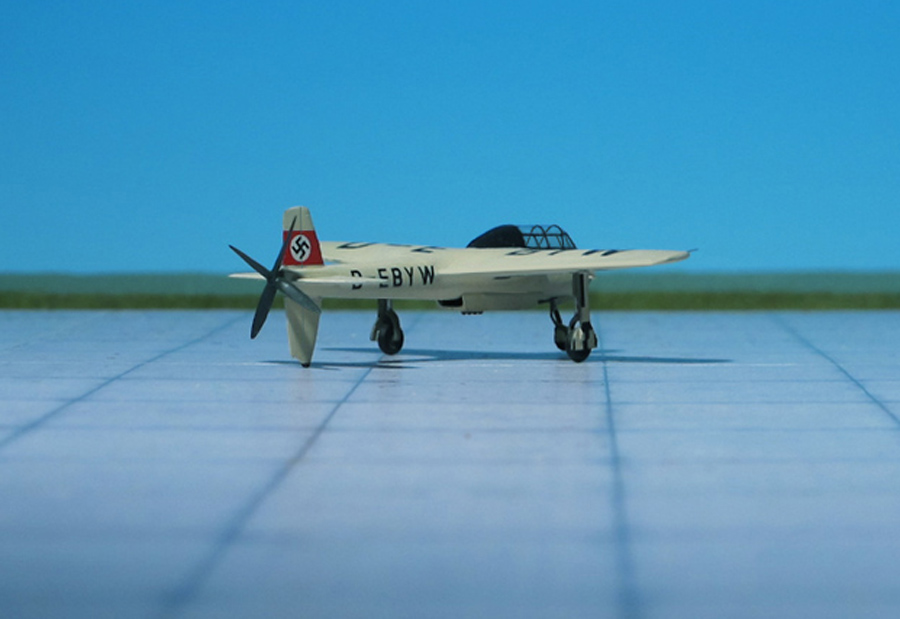
COMMENT: The Göppingen Gö 9 was a research aircraft built to investigate the practicalities of powering a plane using a pusher propeller located far from the engine and turned by a long driveshaft. In 1937, Claudius Dornier observed that adding extra engines and propellers to an aircraft in an attempt to increase speed would also attract a penalty of greater drag, especially when placing two or more engines within nacelles mounted on the wings. He reasoned that this penalty could be minimized by mounting a second propeller at the rear of an aircraft. In order to prevent tail-heaviness, however, the engine would need to be mounted far ahead of it. Dornier patented this idea and commissioned a test plane to evaluate it. This aircraft was designed by Dr. Hütter as a 40% sized, scaled-down version of the Dornier Do 17 ‘Fast bomber’ fuselage and wing panels without the twin-engine nacelles, and built by Schempp-Hirth at Wüsterberg. The airframe was entirely of wood and used a retractable tricycle landing gear – one of the earliest German airframe designs to use such an arrangement. Power was supplied by a Hirth HM 60 inverted, air-cooled inline four-cylinder engine mounted within the fuselage near the wings. Other than the engine installation, the only other unusual feature of the aircraft was its all-new, full four-surface cruciform tail, which included a large ventral fin/rudder unit of equal area to the dorsal surface. This fin incorporated a small supplementary tail-wheel protruding from the ventral fin’s lower tip that assisted in keeping the rear-mounted, four-blade propeller away from the ground during take-off and landing. The Gö 9 carried the civil registration D-EBYW. Initially towed aloft by a Dornier Do 17, flight tests began in June 1941, but later flights operated under its own power. The design validated Dornier’s ideas, and he went ahead with his original plan to build a high-performance aircraft with propellers at the front and rear, producing the Dornier Do 335 ‘Pfeil’ (‘Arrow’) the fastest fighter aircraft in service during WW II. The eventual fate of the Gö 9 is not known (Ref.: 24)
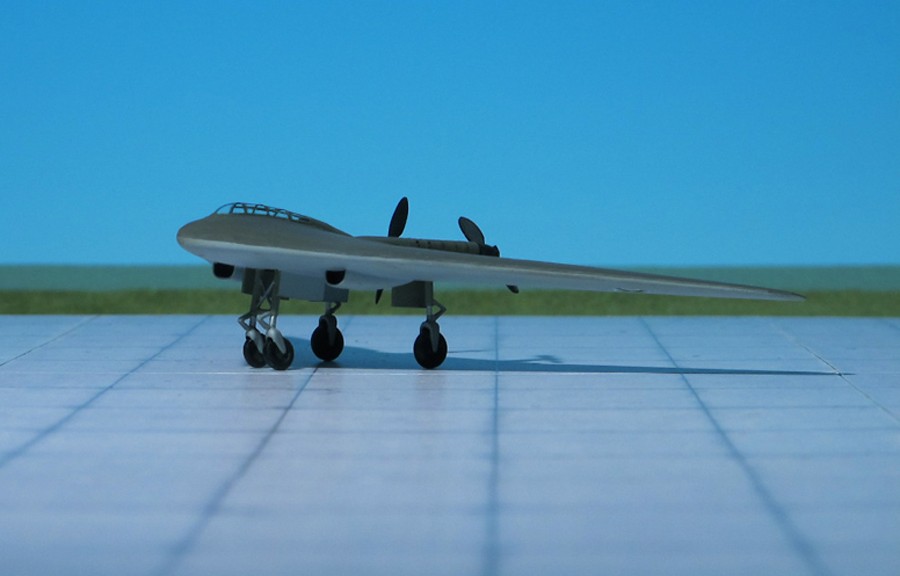
Horten Ho VII V-2 (Ho 226) (Frank-Airmodel, Resin)

TYPE: Trainer

ACCOMMODATION: Crew of two

POWER PLANT: Two Argus As 10 C air-cooled engines, rated at 250 hp each

PERFORMANCE: 212 mph

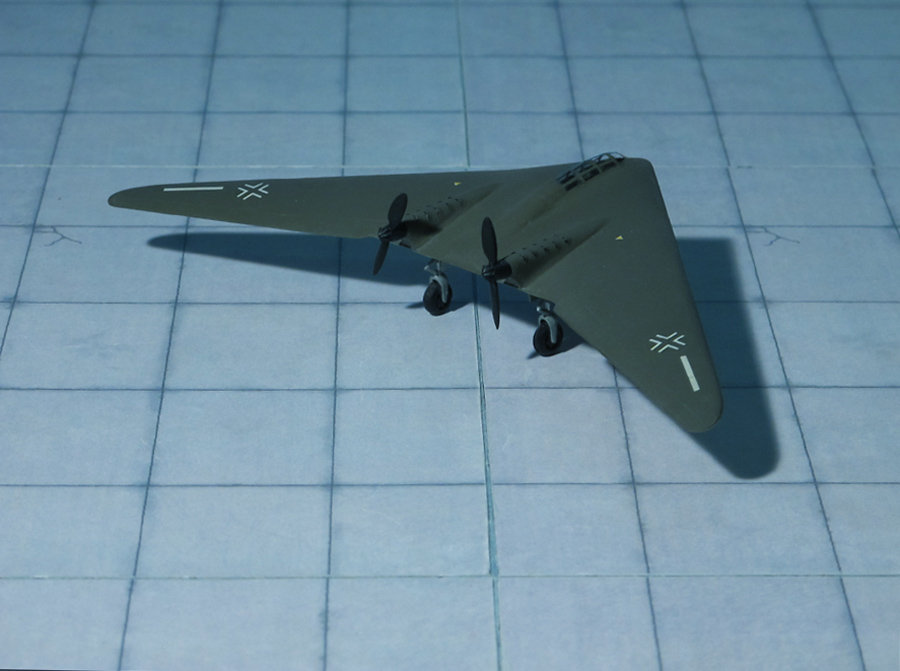
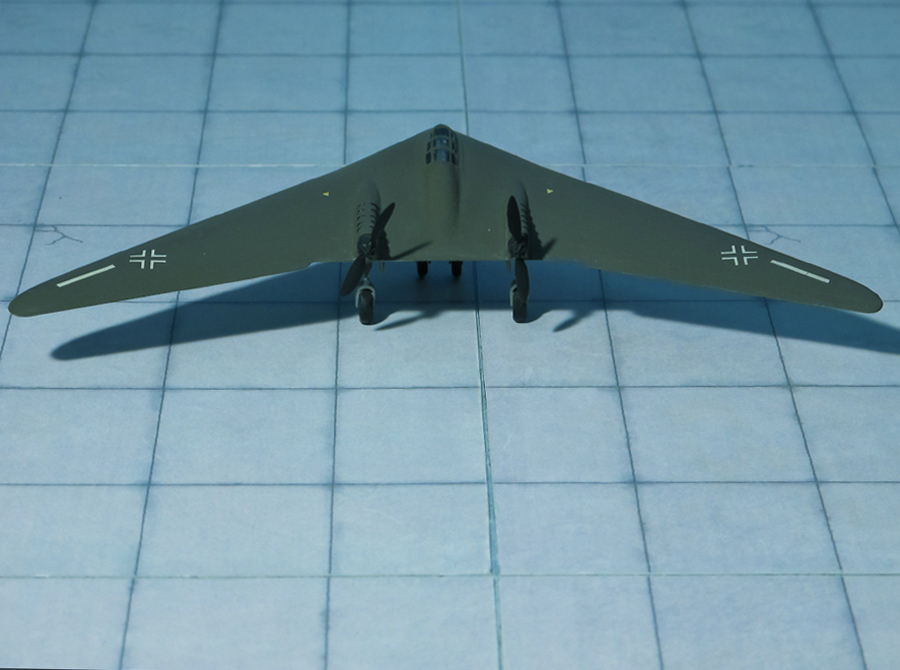
COMMENT: To support the development of flying wing aircraft the Luftwaffe founded a special “Luftwaffen-Sonderkommando 9” (Air Force Special Command 9). This command ordered several two-seater flying wing trainers for pilots who should fly the on-coming Horten/Gotha Go 229 twin-engine flying wing turbojet fighter. In 1943, based on the Horten V the Horten Brothers developed the Horten Ho VII, a flying wing with an enlarged center section to hold a longer canopy for a crew of 2, and greater fuel tanks. The wing sections remained nearly unchanged. Two aircraft were built by Peschke Company at Minden and flight tested at Minderheide airfield, the Ho VII V-1 with fixed undercarriage, the Ho VII V-2 with retracting undercarriage, the front wheel backwards and the main wheels forwards into the fuselage. Further tests were performed by Skoda-Kauba-Flugzeugwerke at Ruzyn airfield close to Prague (occupied by Germany at that time). In 1945 an order calling for 20 Ho VII trainers was placed as trainer for the Horten/Gotha Go 229 flying wing turbojet fighter. With the end of WW II all work was cancelled (Ref.: 19).

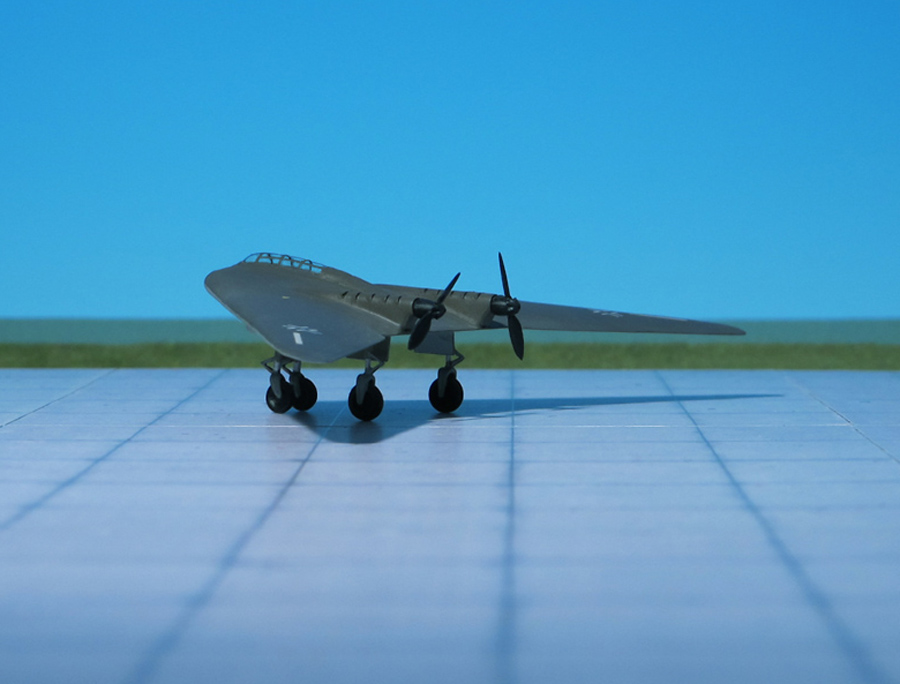
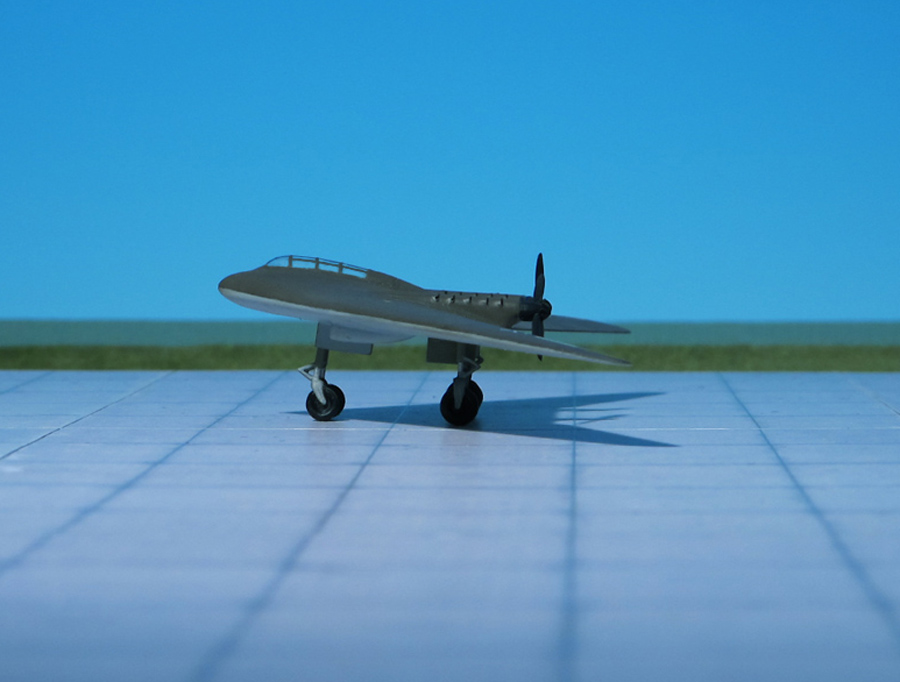
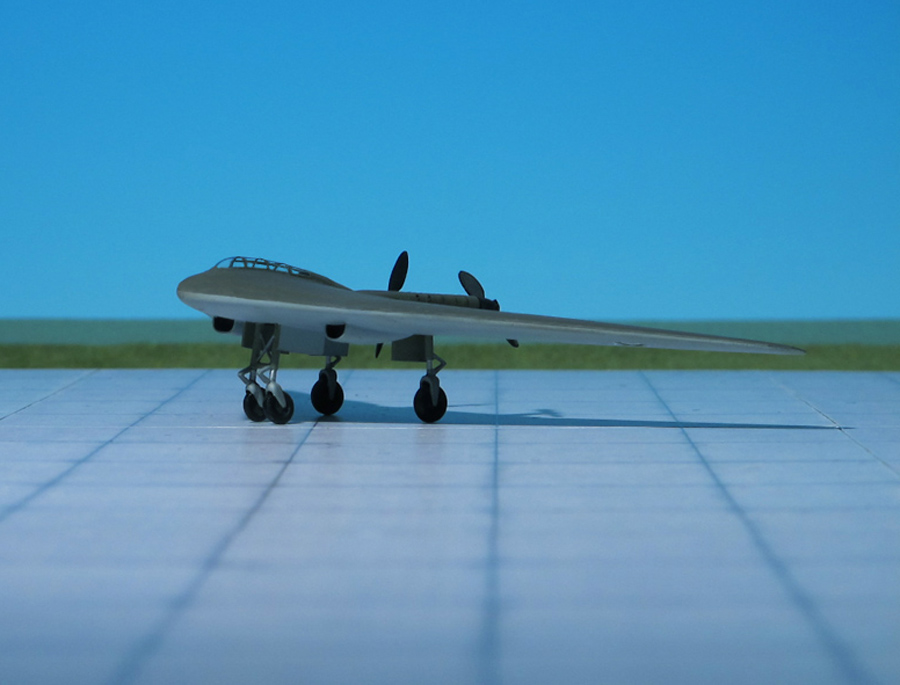
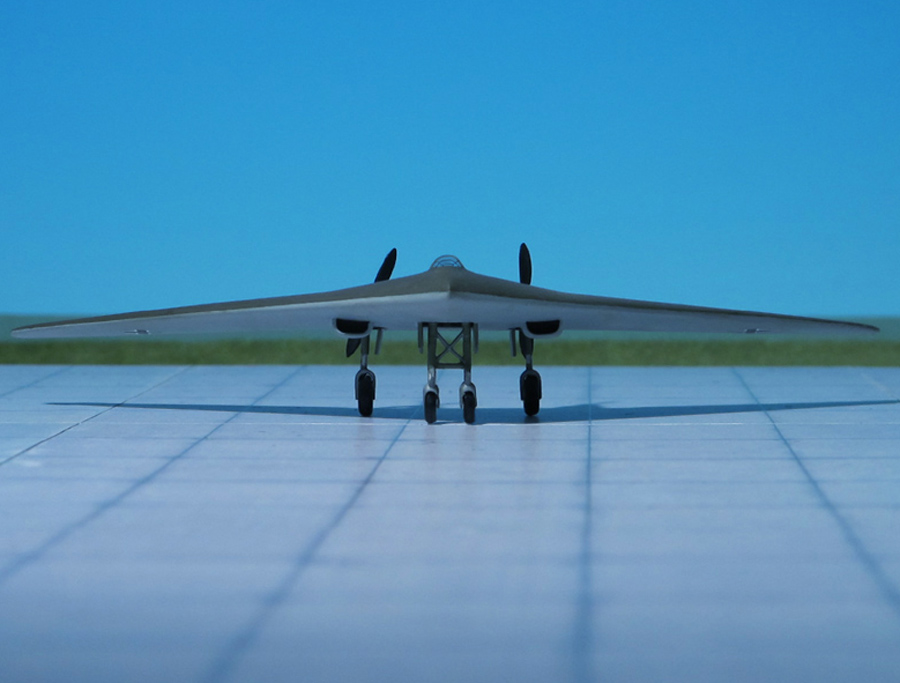
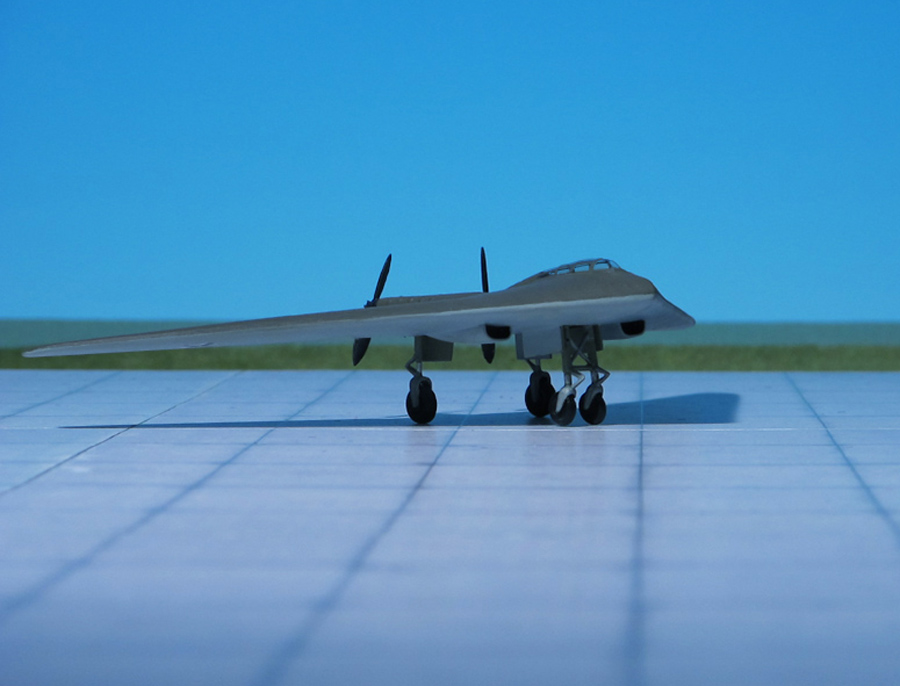
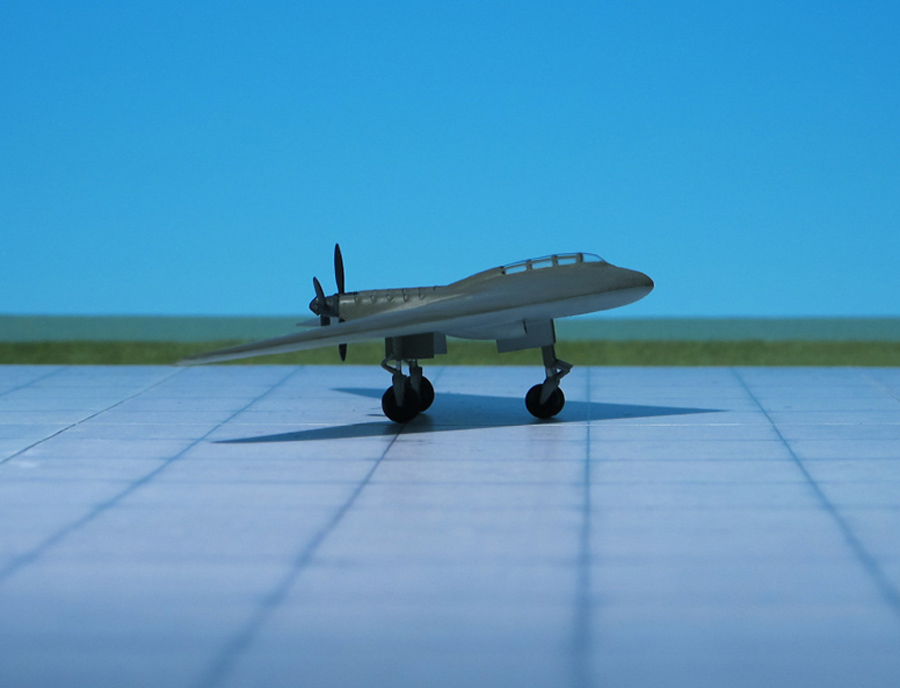
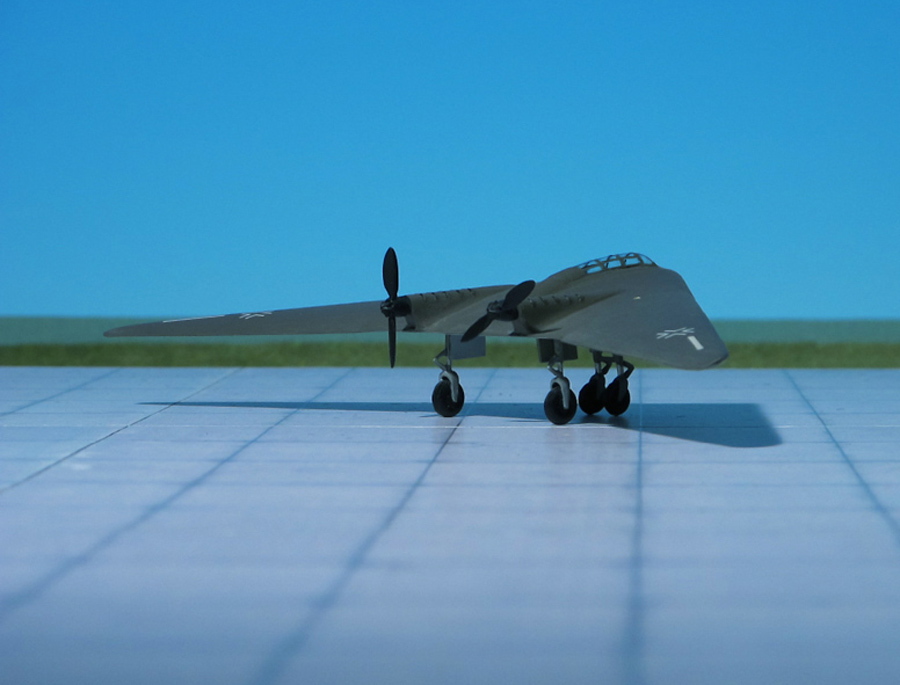
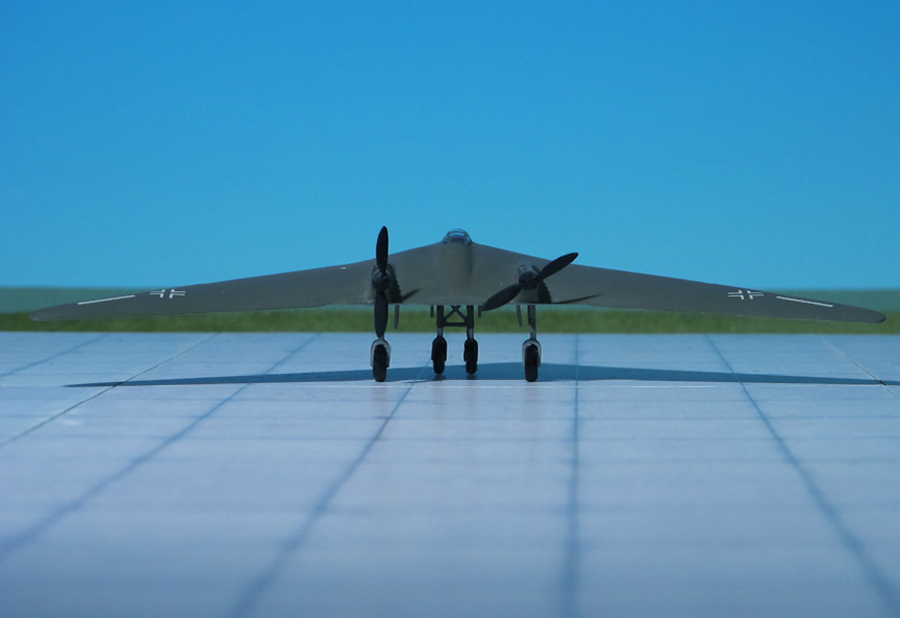
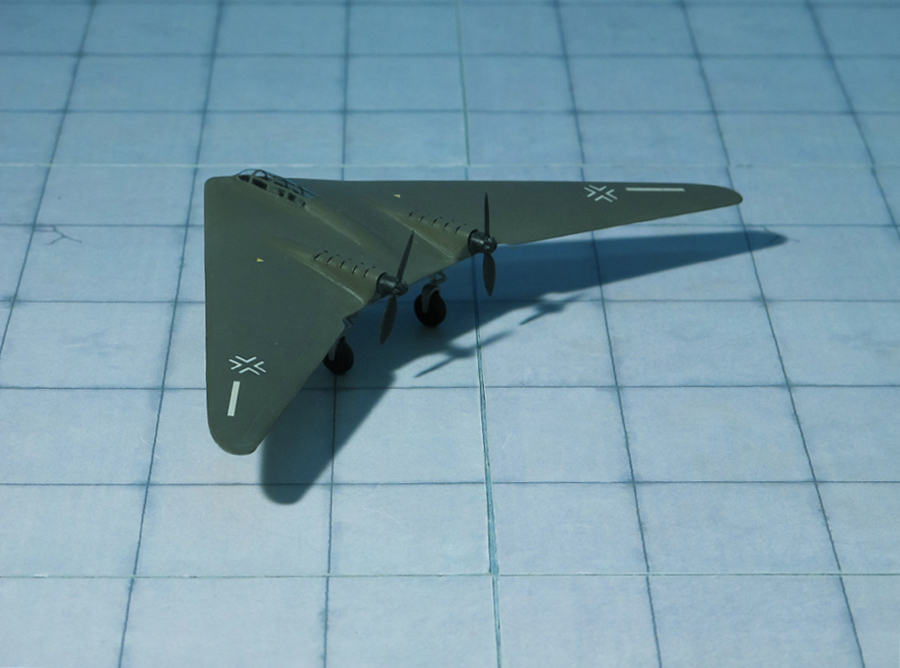
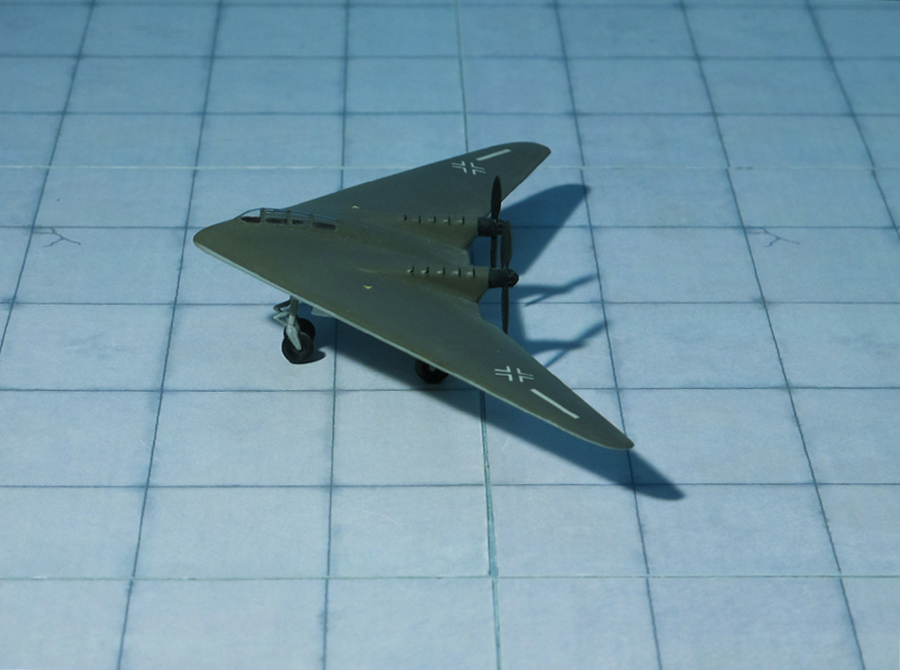
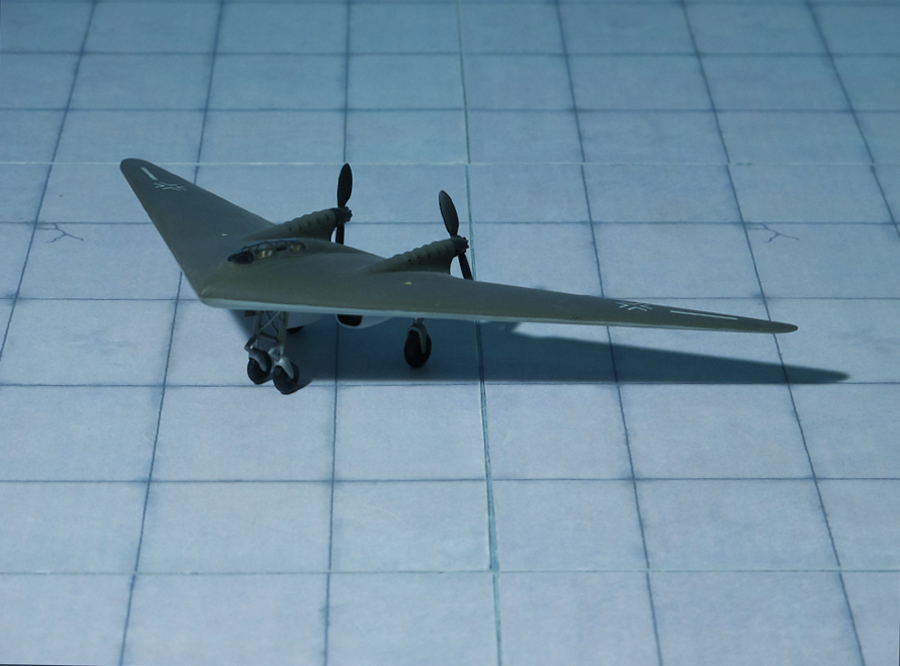
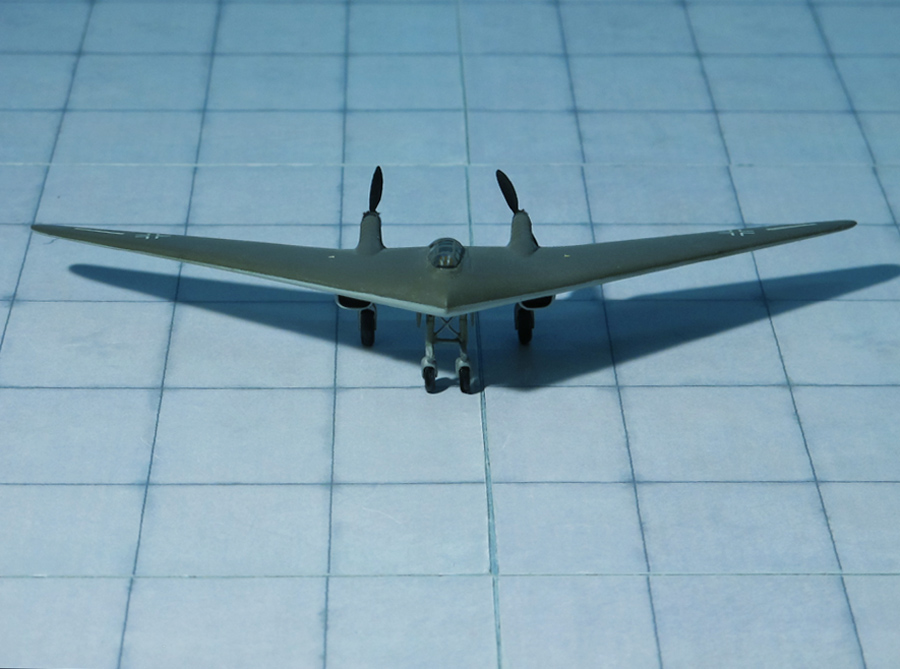
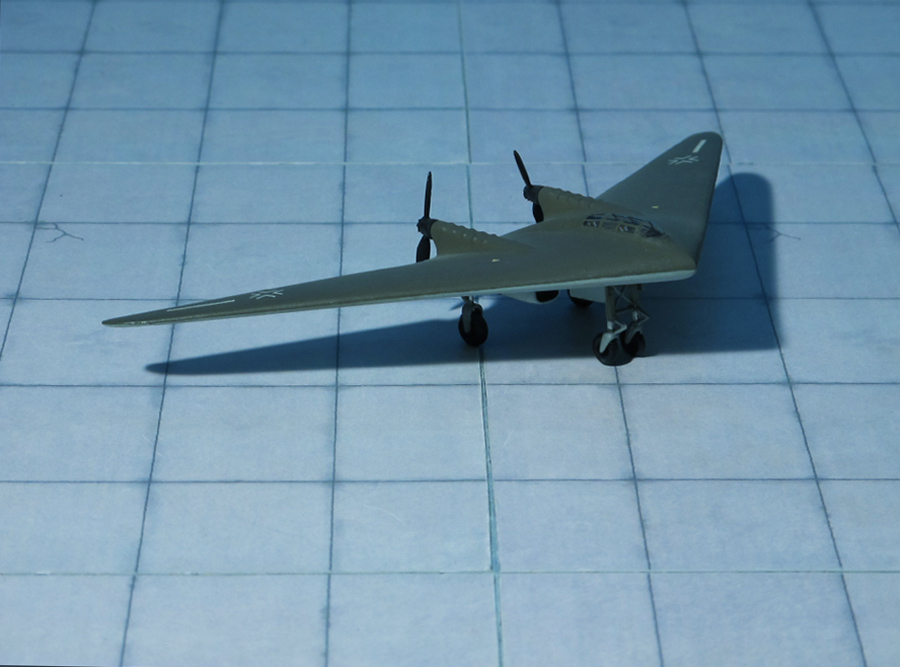
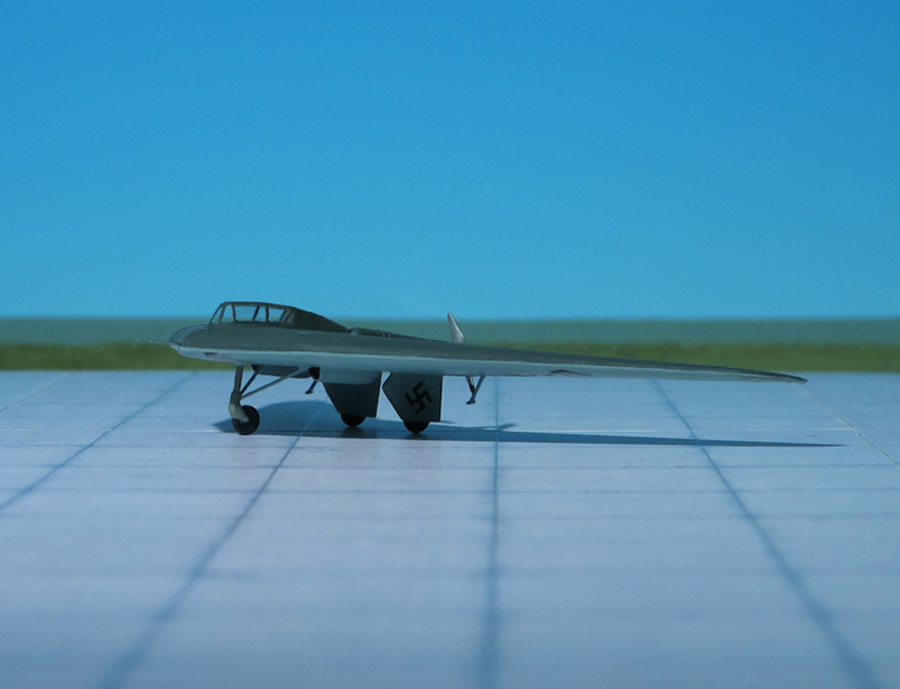
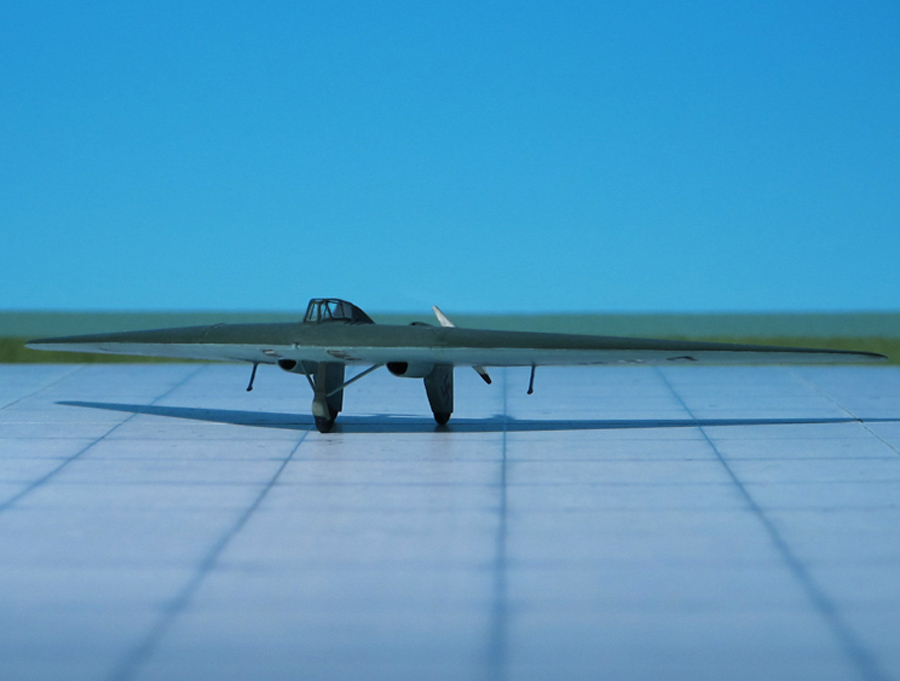
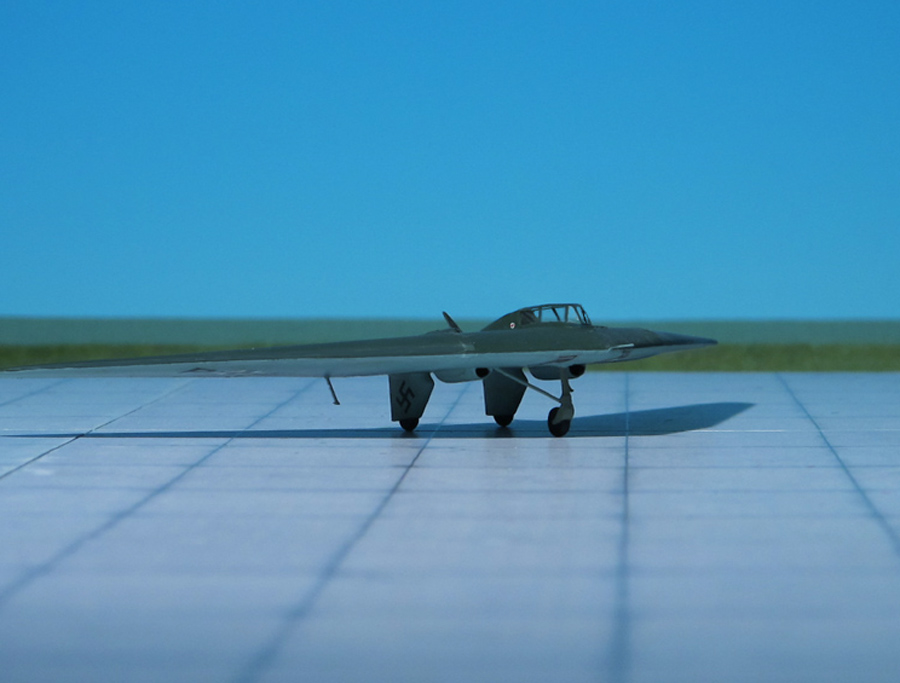
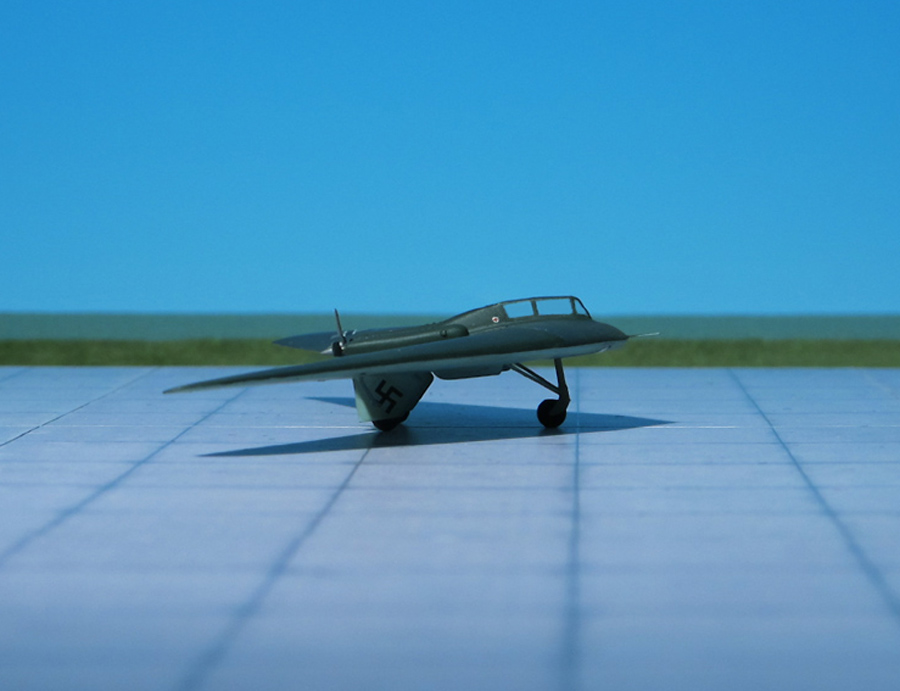
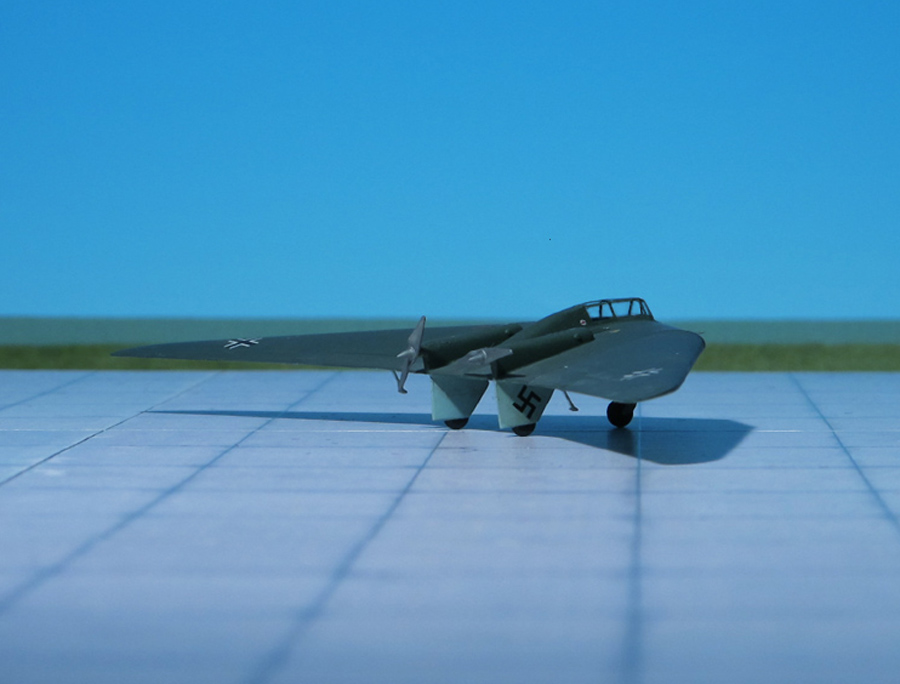
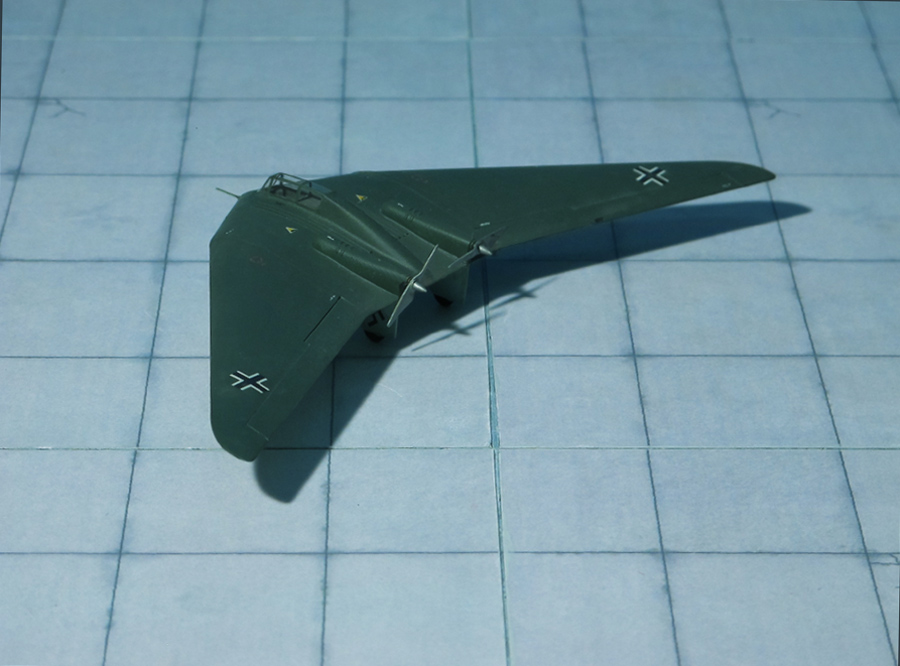
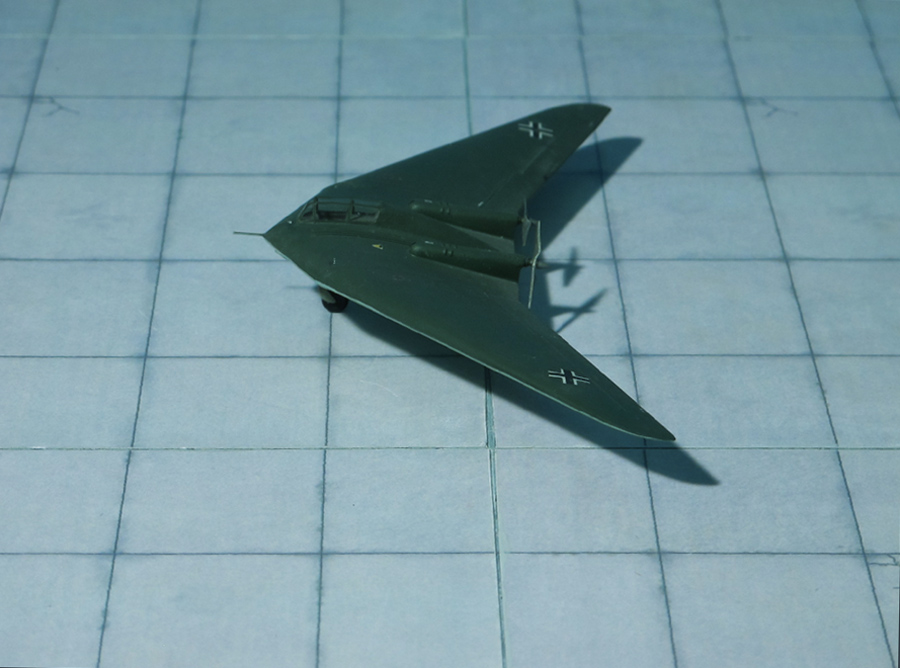
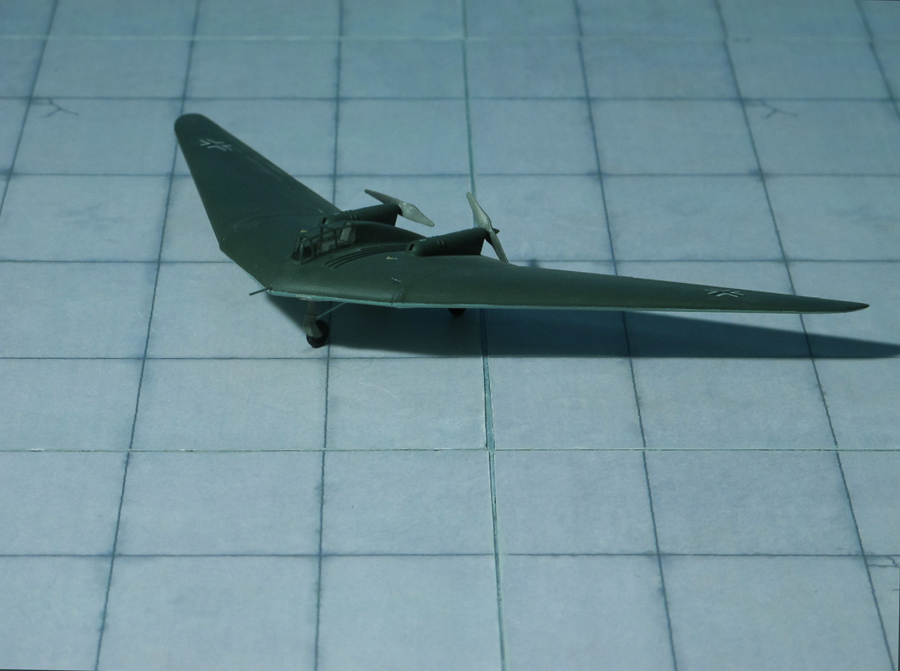
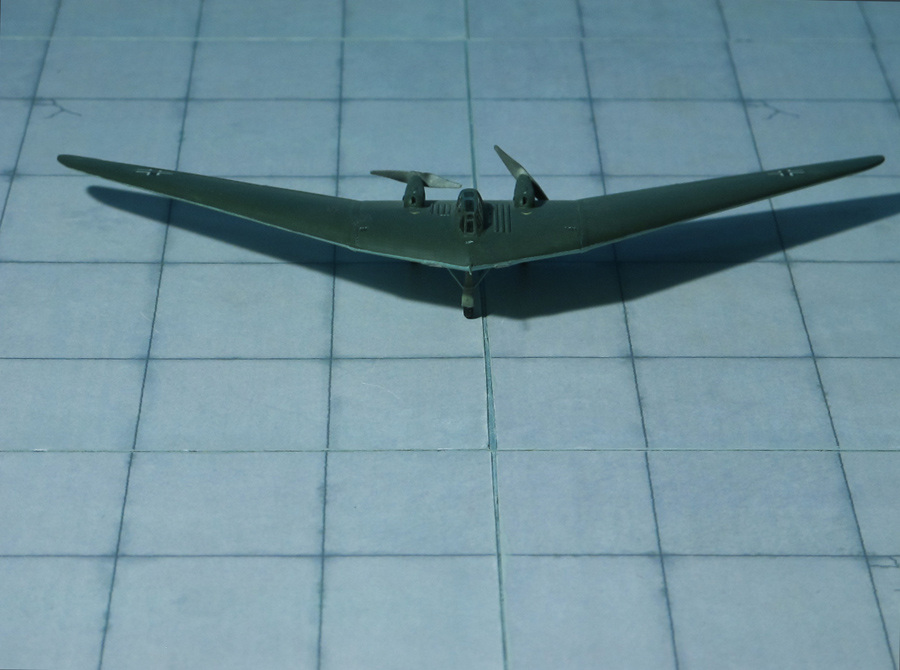
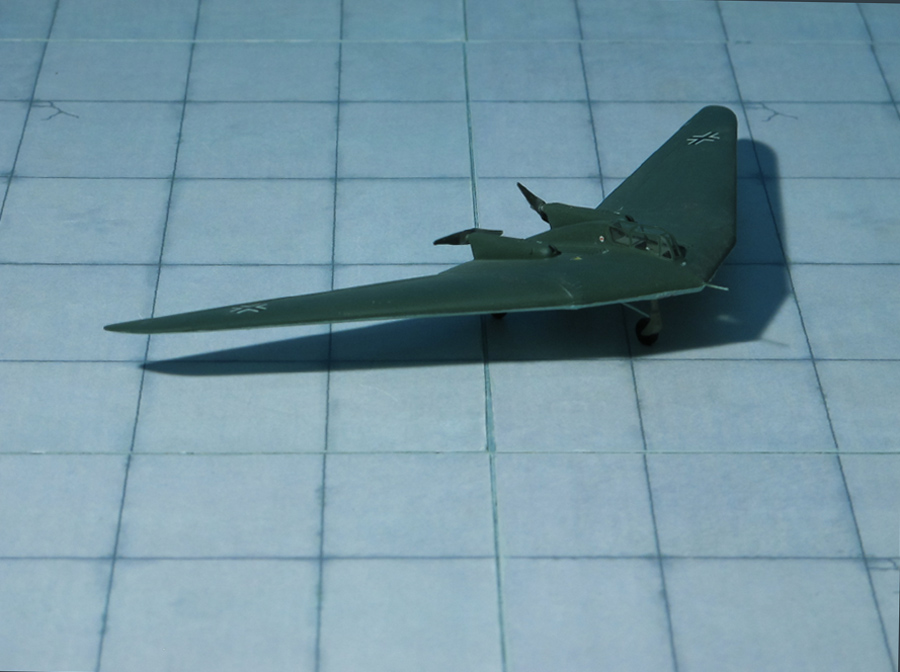
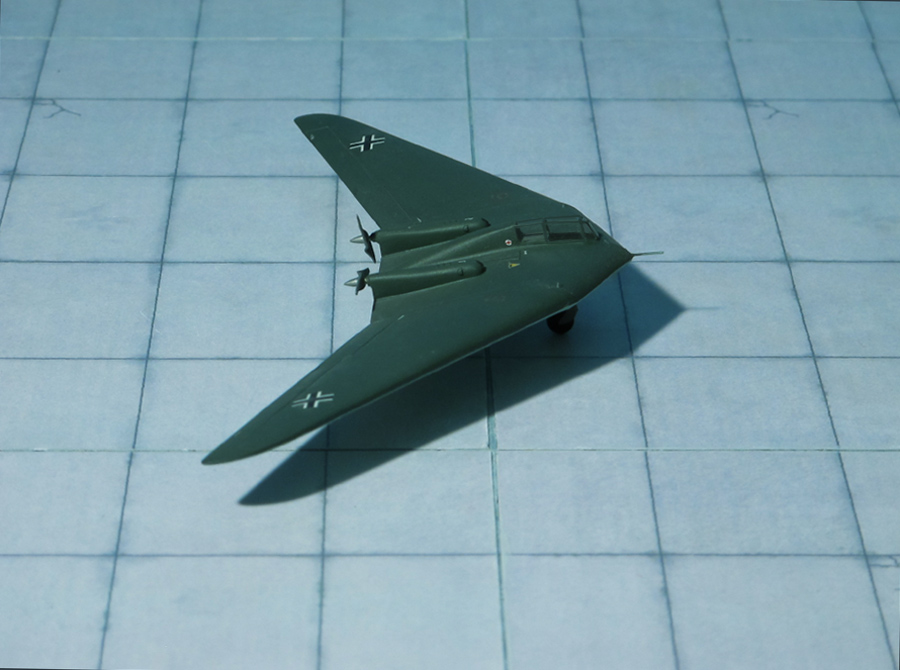
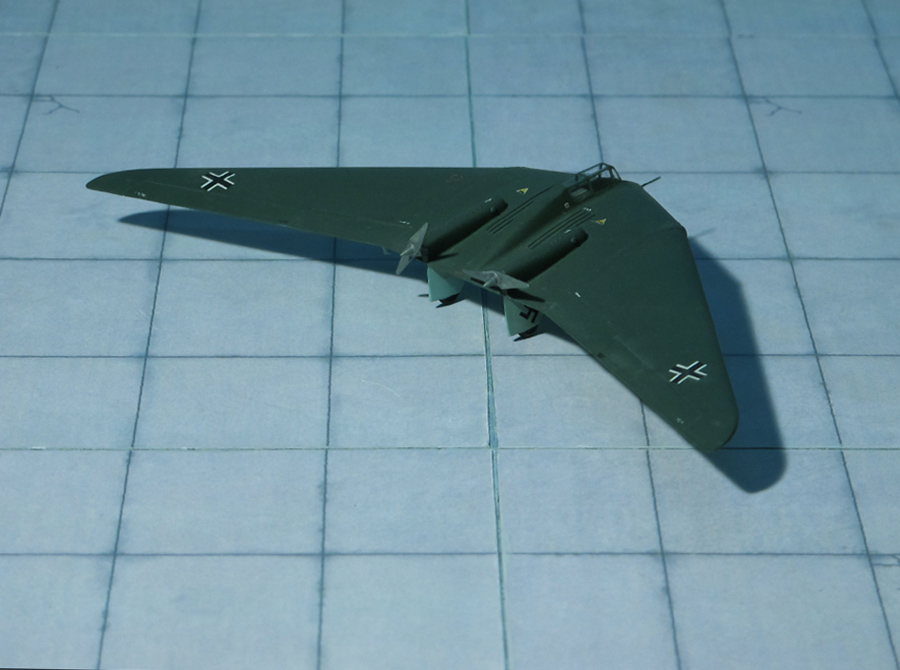
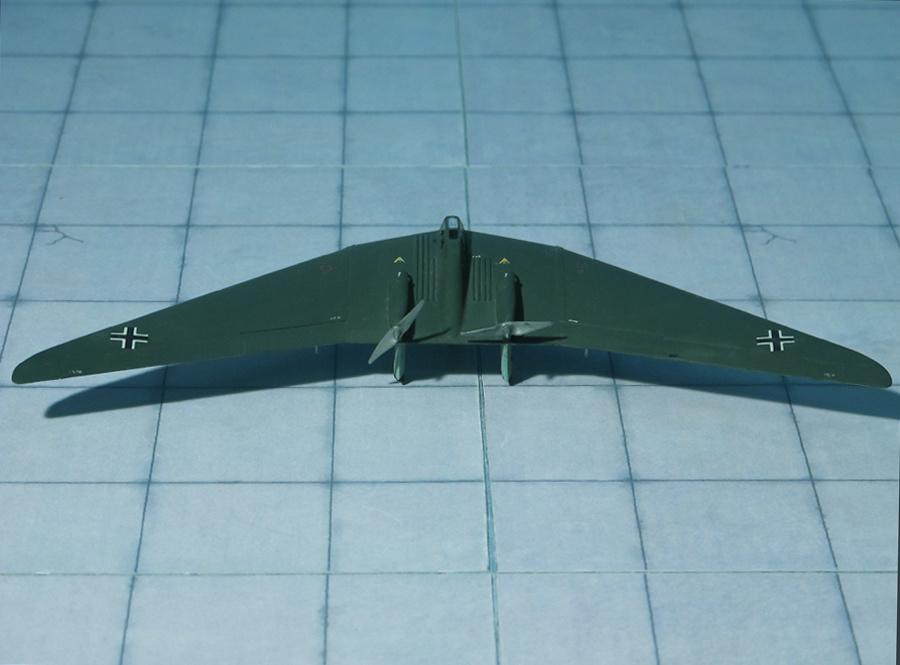
Horten Ho V V-2 (Fruitbat)

TYPE: Experimental flying wing

ACCOMMODATION: Pilot only

POWER PLANT: Two Hirth HM 60R inline engines, rated at 80 hp each, driving pusher propellers

PERFORMANCE: 218 mph

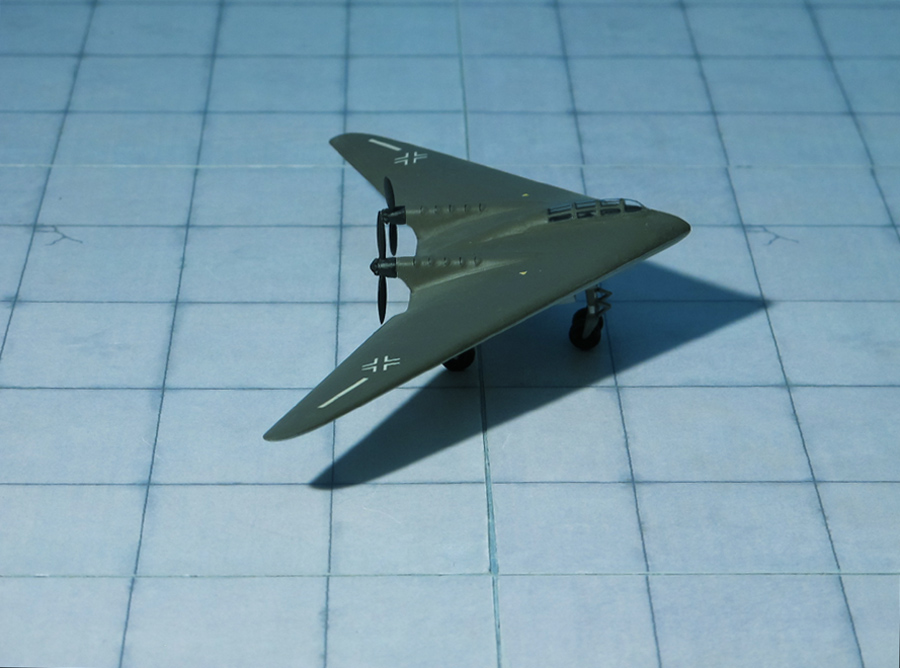
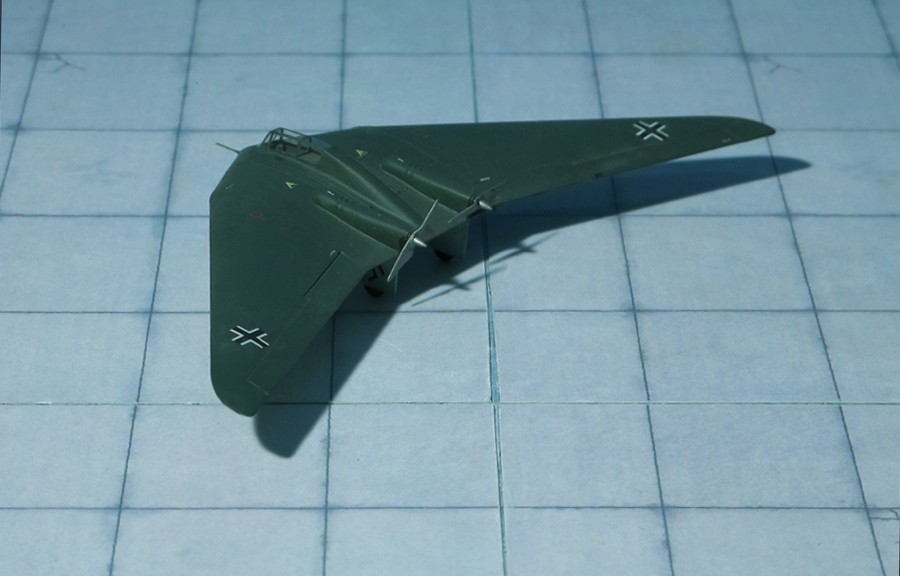
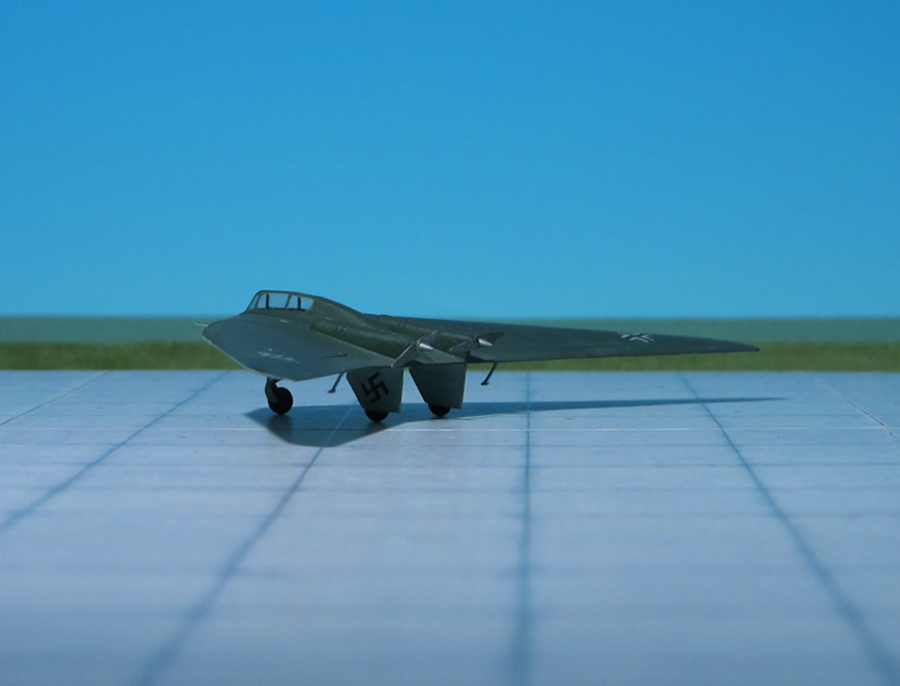
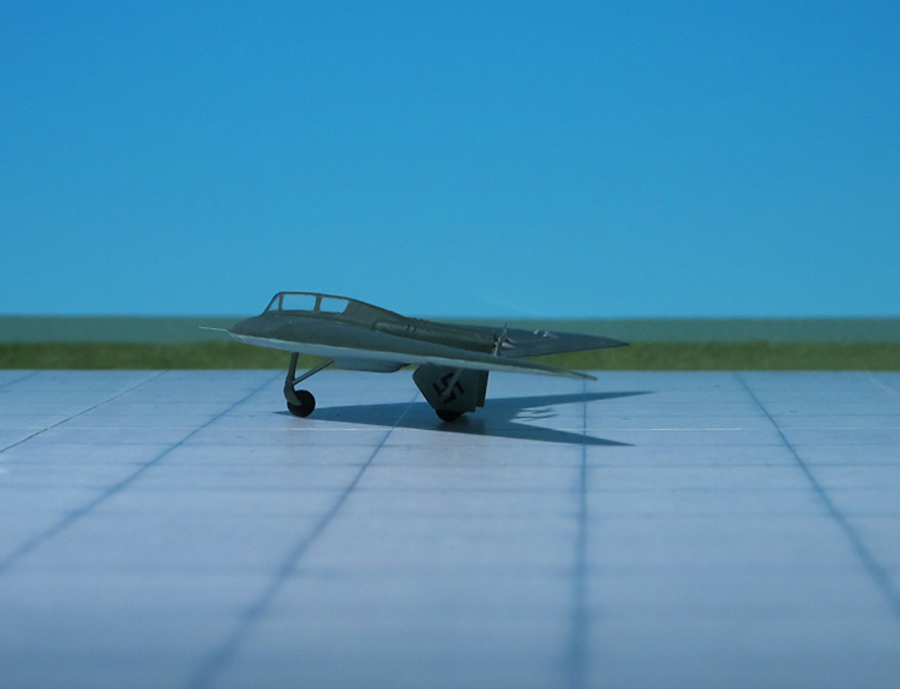
COMMENT: Walter and Reimar Horten, credited as the Horten Brothers, were German aircraft pilots and enthusiasts. Although they had little, if any, formal training in aeronautics or related fields, the Horten Brothers designed not only some outstanding gliders but some of the most advanced aircraft of the mid 1940s, including the world’s first jet-powered flying wing, the Horten Ho 229. Early in 1930, both began their career by designing some outstanding gliders, most of them in flying wing configuration. The first Horten Ho I glider was awarded for its excellent construction and was followed by the Horten Ho II that, after flight testing as glider, was powered  by one Hirth HM 60 R engine with pusher-type propeller. Further development was the Horten Ho III, a high performance glider, of which 14 aircraft were built, and the Horten Ho IV, also a high performance glider. In 1936, supported by the Dynamit Noble Company, construction of the Horten Ho V began, a twin engine flying wing with two seats and built completely from “Trolitax”, a new synthetic material. Most advanced was its control system by combining lateral and yaw control. Undamped vibrations occurred during flight and the aircraft crashed, the pilot survived. The second prototype, the Horten Ho V V-2, a single seater, was constructed in a conventional way, as far as the material and the control systems are concerned. During flight tests the aircraft showed excellent handling characteristics but remained grounded as WW II proceeded (Ref.:  19)