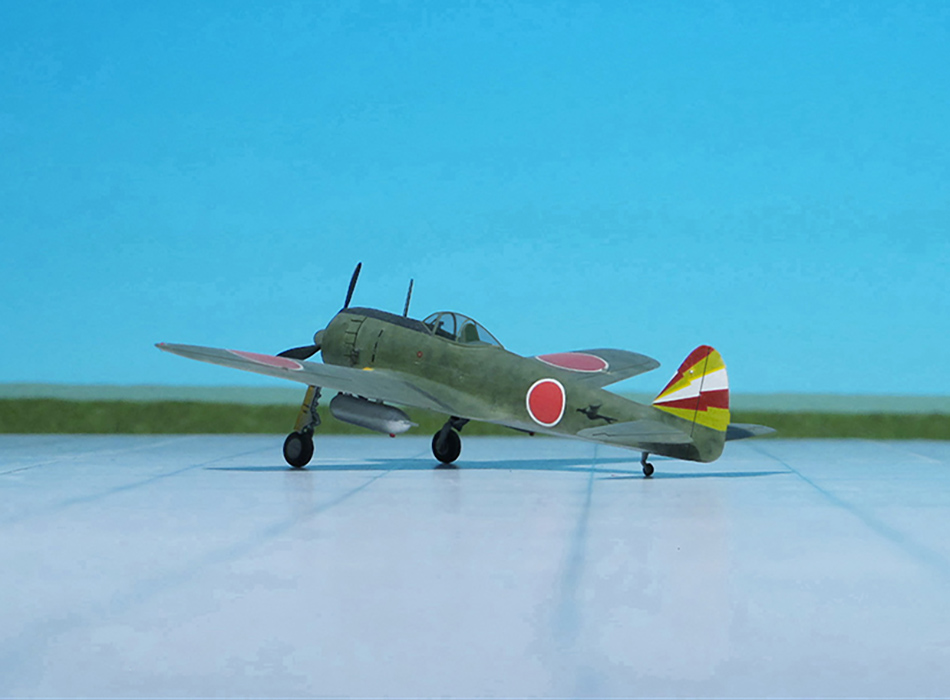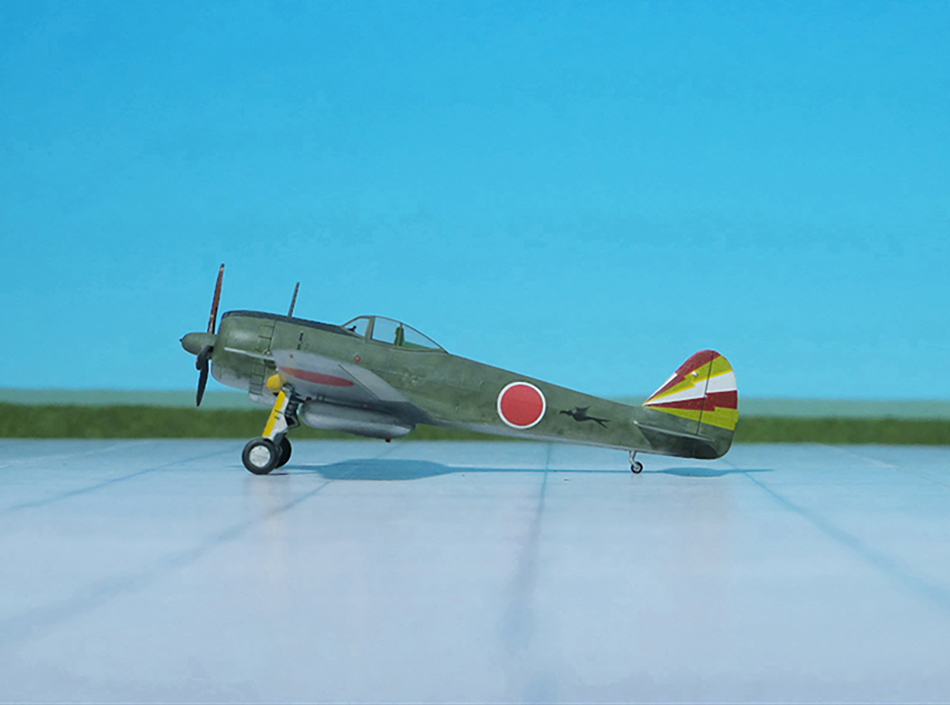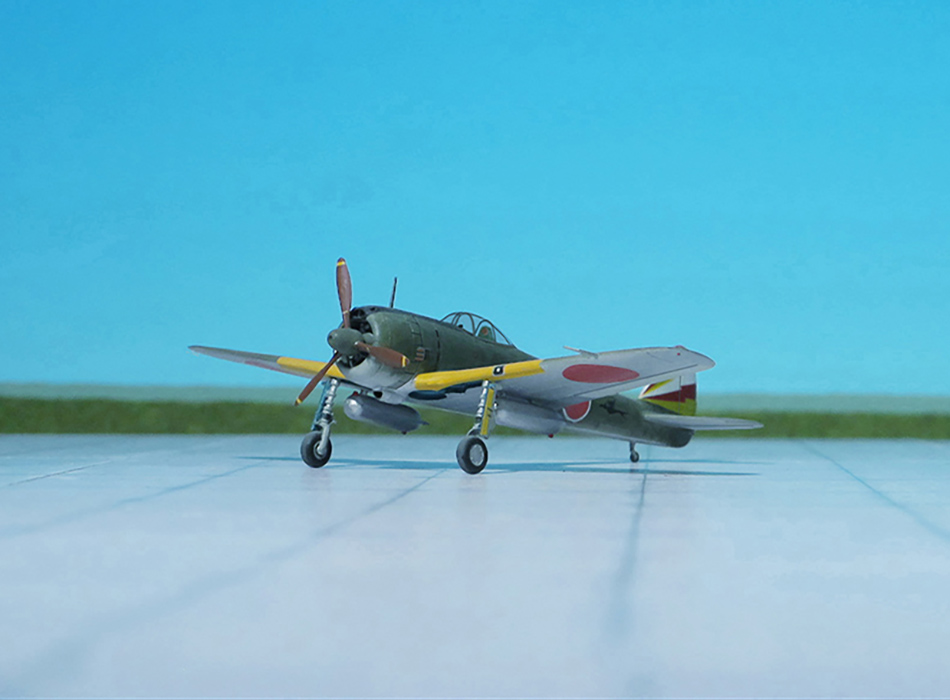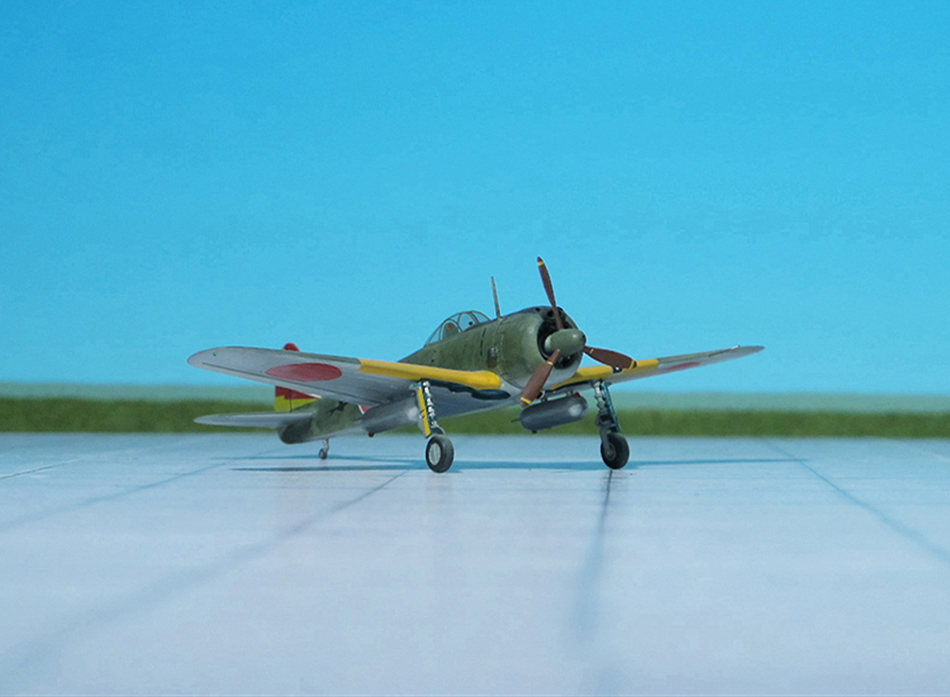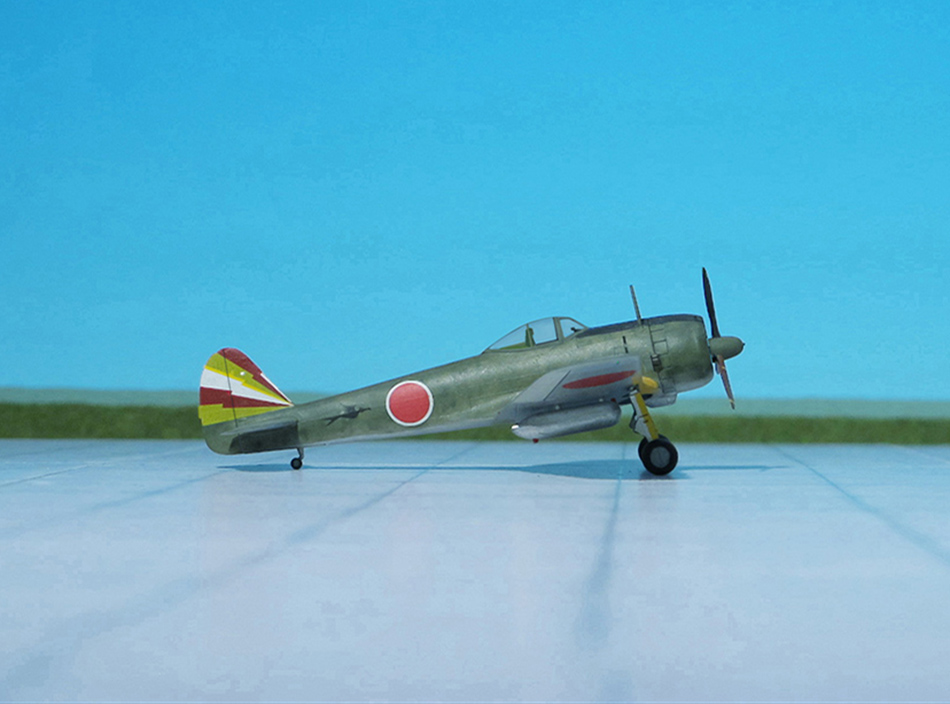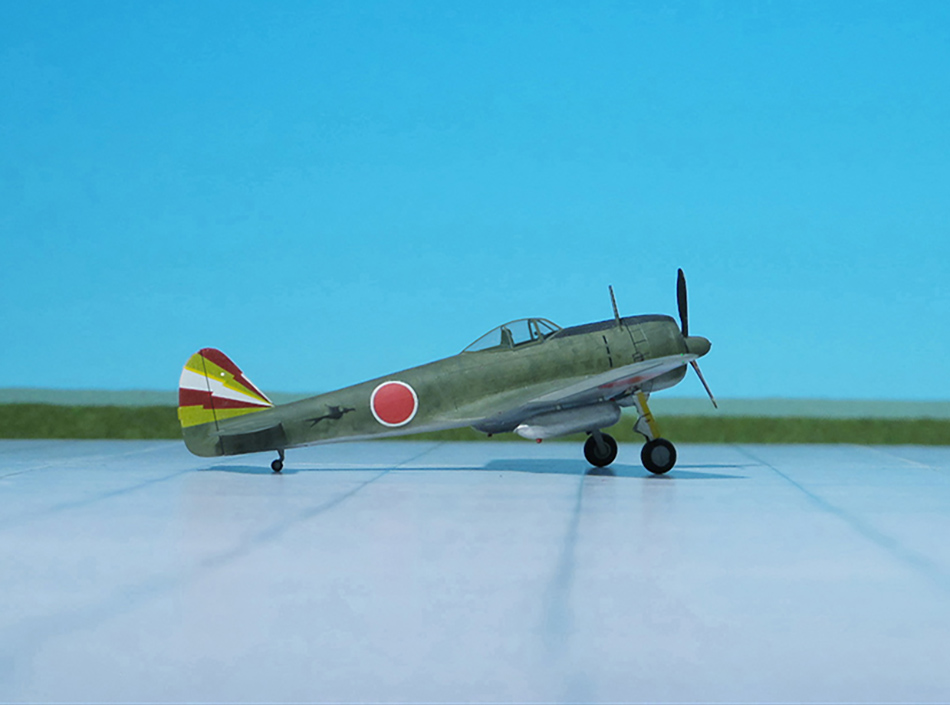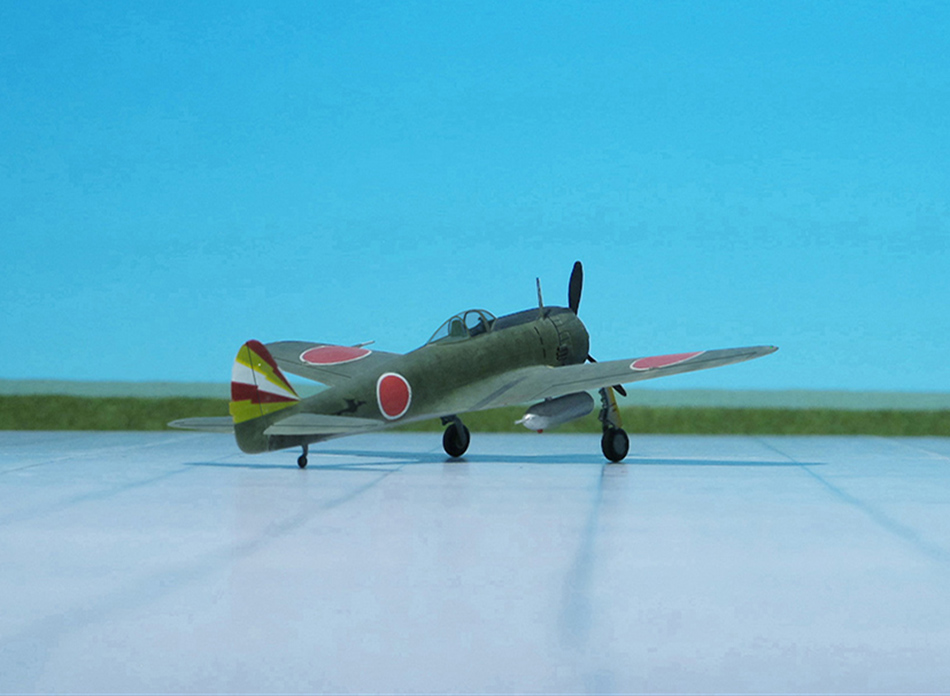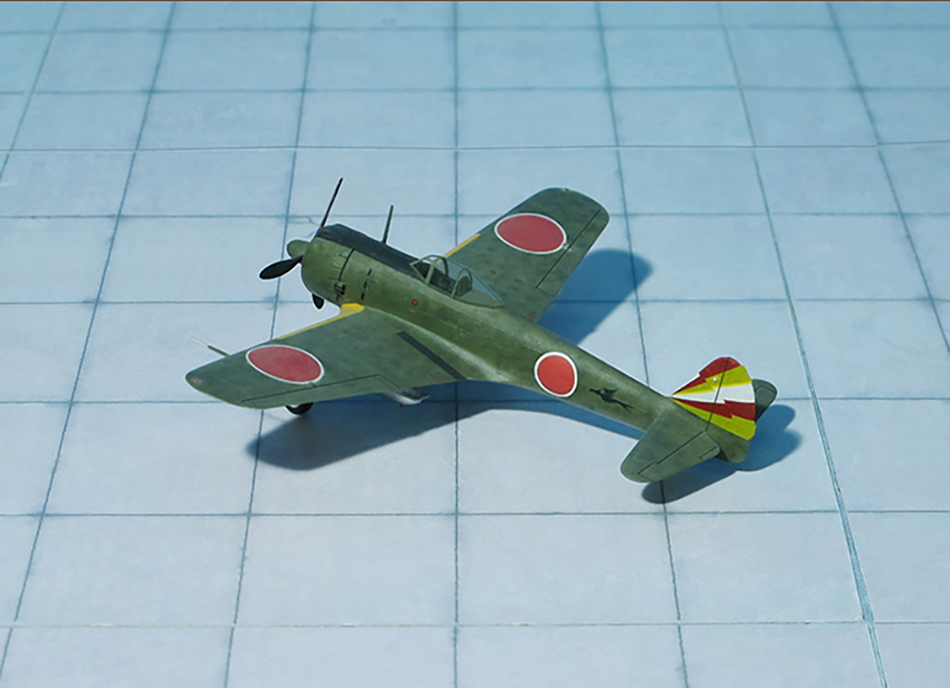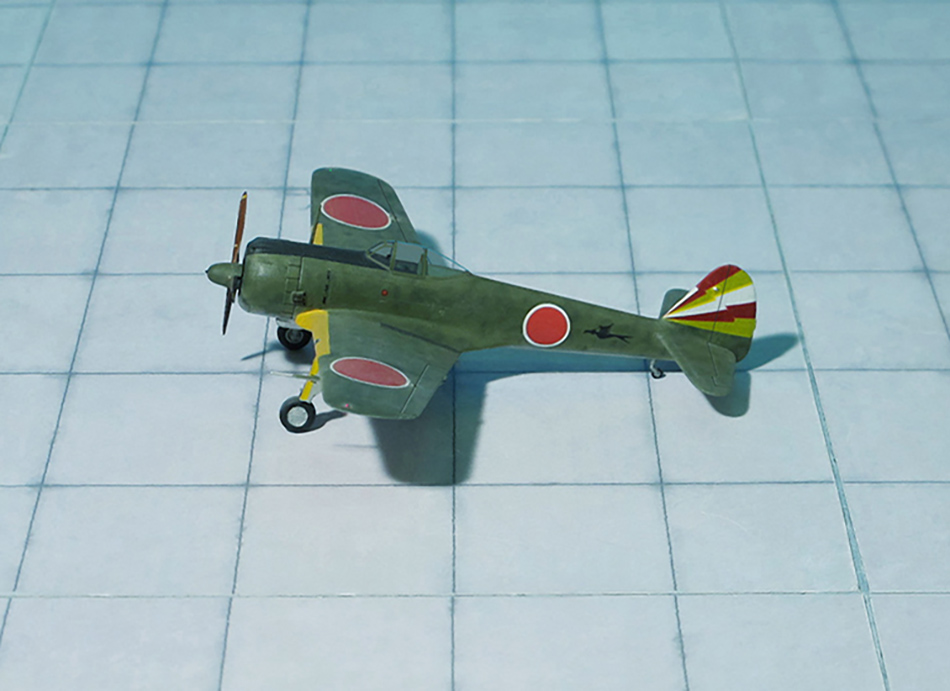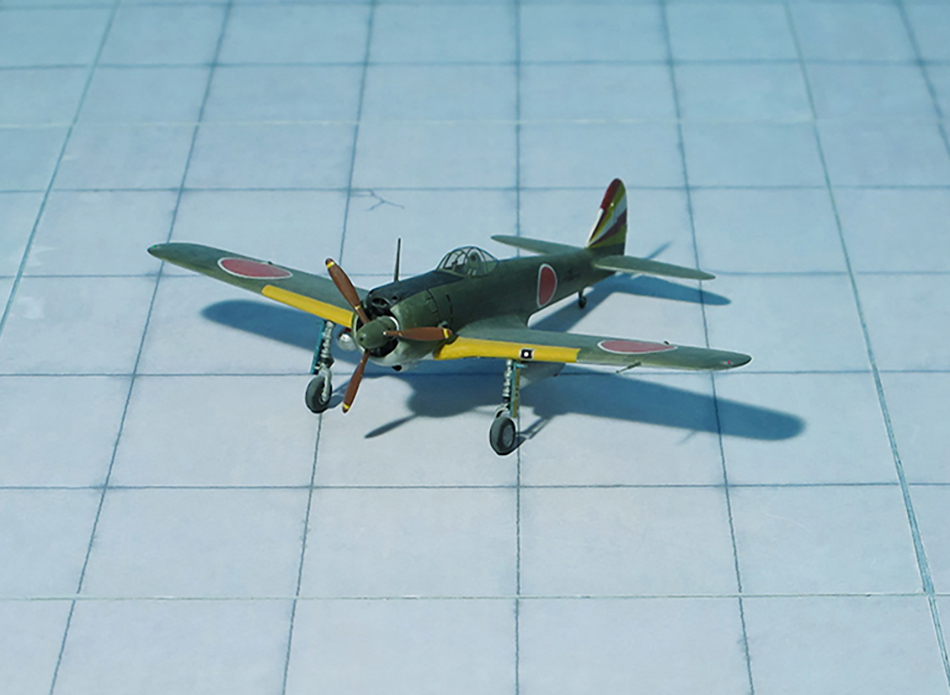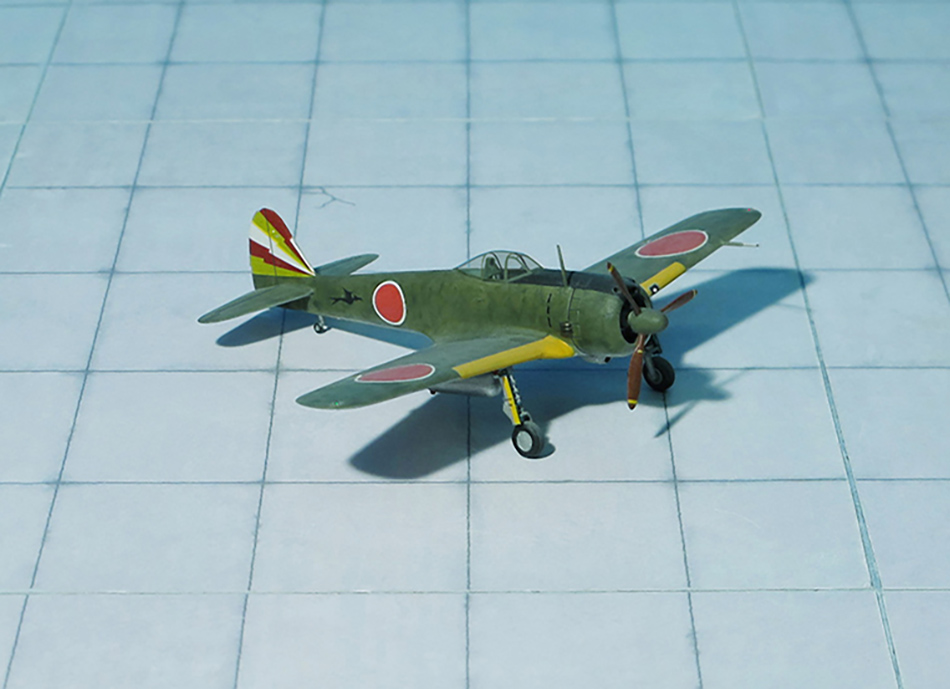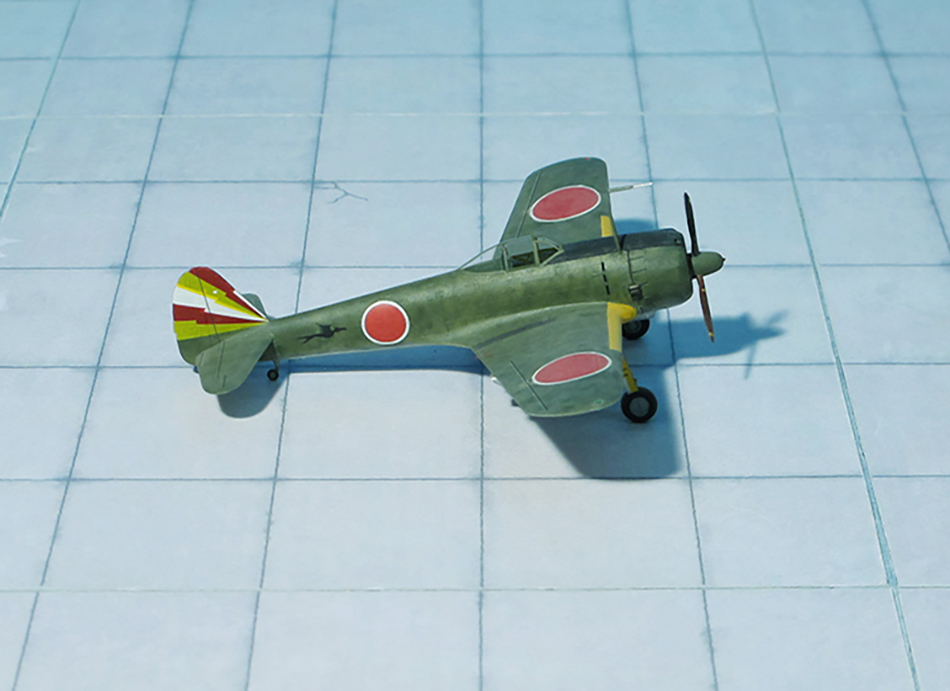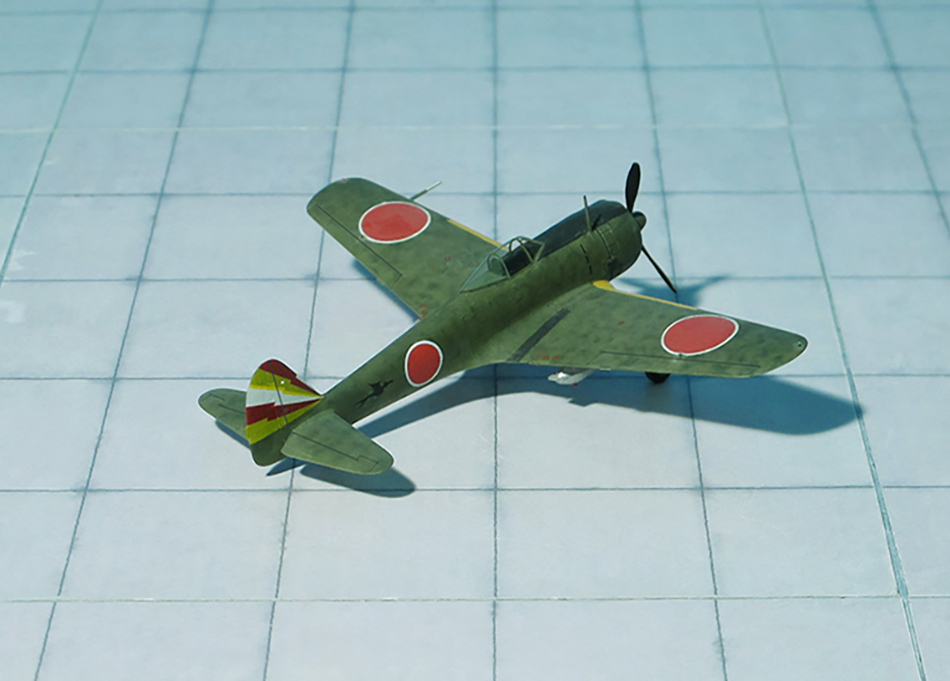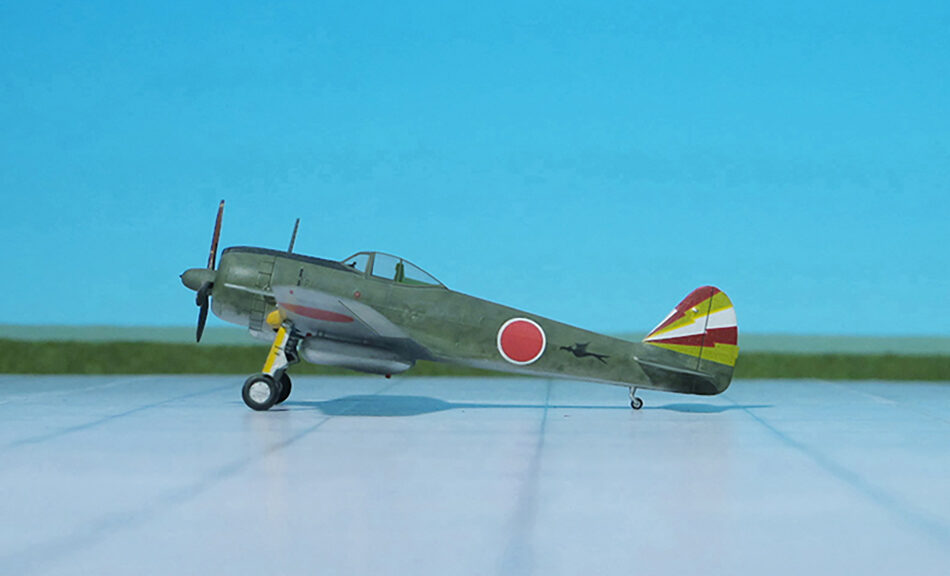
TYPE: Fighter, fighter bomber
ACCOMMODATION: Pilot only
POWER PLANT: One Nakajima Ha-115 air-cooled radial piston engine, rated at 1,100 hp at 20,300 ft
PERFORMANCE: 330 mph at 13,000 ft
COMMENT: The Nakajima Ki-43 Hayabusa , formal Japanese designation Army Type 1 Fighter (Ichi-shiki sentōki) was a single-engine land-based tactical fighter that was used by the Imperial Japanese Army Air Service in World War II.
The Allied reporting name was “Oscar”, but it was often called the “Army Zero” by American pilots because it bore a certain resemblance to the Mitsubishi A6M Zero, the Imperial Japanese Navy’s counterpart to the Ki-43. Both aircraft had generally similar layout and lines, and also used essentially the same Nakajima radial engine, with similar round cowlings and bubble canopy (the Oscar’s being distinctly smaller and having much less framing than the A6M). While relatively easy for a trained eye to tell apart with the “finer” lines of the Ki-43’s fuselage – especially towards the tail – and more tapered wing planform, in the heat of battle, given the brief glimpses and distraction of combat, Allied aviators frequently made mistakes in enemy aircraft identification, reportedly having fought “Zeros” in areas where there were no Navy fighters.
Like the A6M Zero, the radial-engined Ki-43 was light and easy to fly and became legendary for its combat performance in East Asia in the early years of the war. It could outmaneuver any opponent, but did not initially have armor or self-sealing fuel tanks, and its armament was poor until its final version, which was produced as late as 1945. Allied pilots often reported that the nimble Ki-43s were difficult targets but burned easily or broke apart with a few hits.
The Ki-43 Hayabusa was initially produced in November 1939, given the designation Ki-43-I. Deliveries from Nakajima’s Ota factory commenced in February 1941. In addition to outstanding maneuverability, the Ki-43-I had an impressive rate of climb due to its light weight. Power was provided by the Nakajima Ha-25 engine turning a two-bladed, two-position variable-pitch metal propeller. Top speed was 308 mph at 13,000 ft.
Prototypes for the Ki-43-II flew in February 1942. The Ha-25 engine was upgraded with the 2-stage supercharger, thus becoming the more powerful Nakajima Ha-115 engine, which was installed in a longer-chord cowling. The new engine turned a three-bladed propeller. The wing structure, which had suffered failures in the Ki-43-I, was strengthened and equipped with racks for drop tanks or bombs. The Ki-43-II was also fitted with a 0.51 in armor plate for the pilot’s head and back, and the aircraft’s fuel tanks were coated in rubber to form a crude self-sealing tank. This was later replaced by a 3-layer rubber bladder, 8 mm core construction; with 2 mm oil-proof lamination. The bladder proved to be highly resistant against 0.303 in bullets, but was not as effective against larger calibers. The pilot also enjoyed a slightly taller canopy and a reflector gunsight in place of the earlier telescopic gunsight.
Like the A6M Zero, the Ki-43 initially enjoyed air superiority in the skies of Malaya,Dutch East Indies, Burma and New Guinea. This was partly due to the better performance of the Oscar and partly due to the relatively small numbers of combat-ready Allied fighters, mostly the Curtiss P-36 Hawk, Curtiss P-40 Warhawk, Brewster F2A Buffalo, Hawker Hurricane and Curtis-Wright CW-21 in Asia and the Pacific during the first months of the war. As newer Allied aircraft were introduced, such as the Republic P-47 Thunderbolt, Lockheed P-38 Lightning, North American P-51 Mustang, Vought F4U Corsair, Grumman F6F Hellcat and late-model Supermarine Spitfire/Seafire, the Japanese were forced into a defensive war and most aircraft were flown by inexperienced pilots. However, even near the end, the Oscar’s excellent maneuverability could still gain advantage over rash Allied pilots.
Hayabusas were well liked in the JAAF because of the pleasant flight characteristics and excellent maneuverability, and almost all JAAF fighter aces claimed victories with Hayabusas in some part of their career. At the end of the war, most Hayabusa units received Nakajima Ki-84 Hayate “Frank” and Kawasaki Ki-100 fighters, but some units flew the Hayabusa to the end of the war.
Total production amounted to 5,919 aircraft, making it the second-most produced Japanese fighter aircraft during the war after the Mitsubishi A6M Zero. Many of these were used during the last months of the war for kamikaze missions against the American fleet (Ref.: 24).