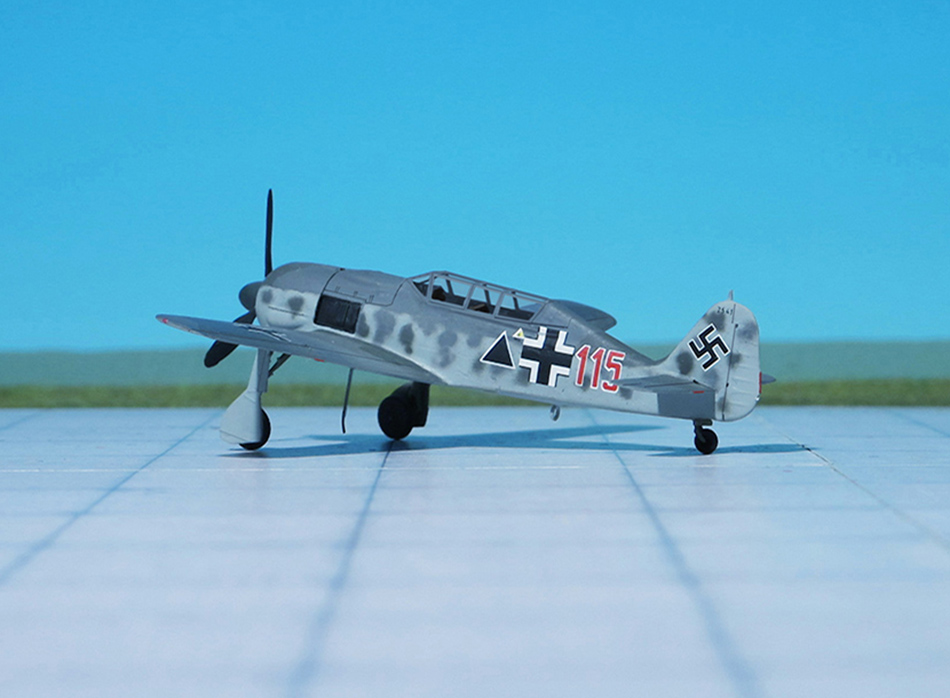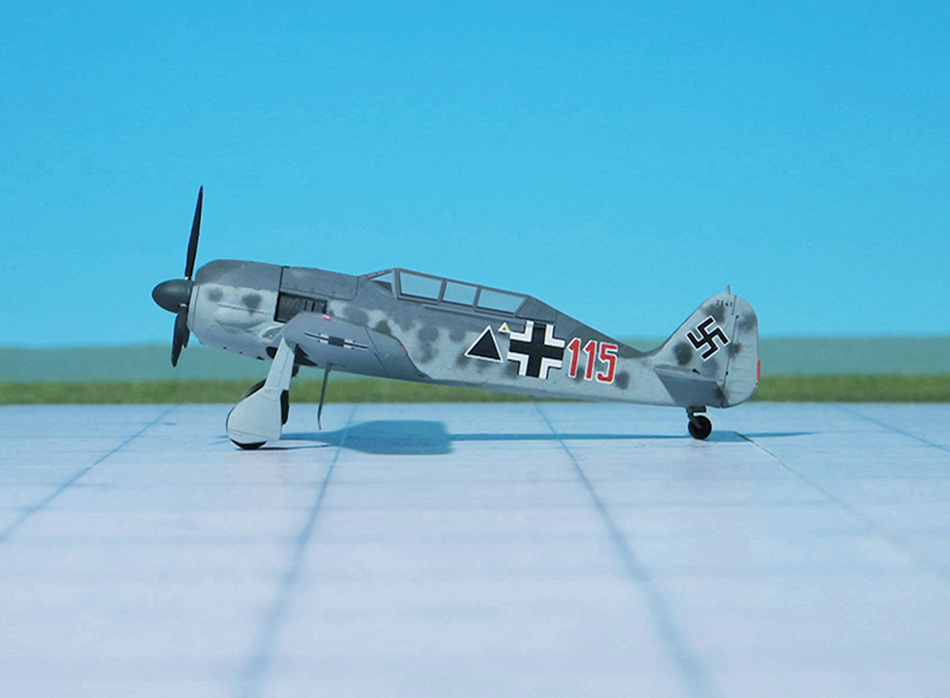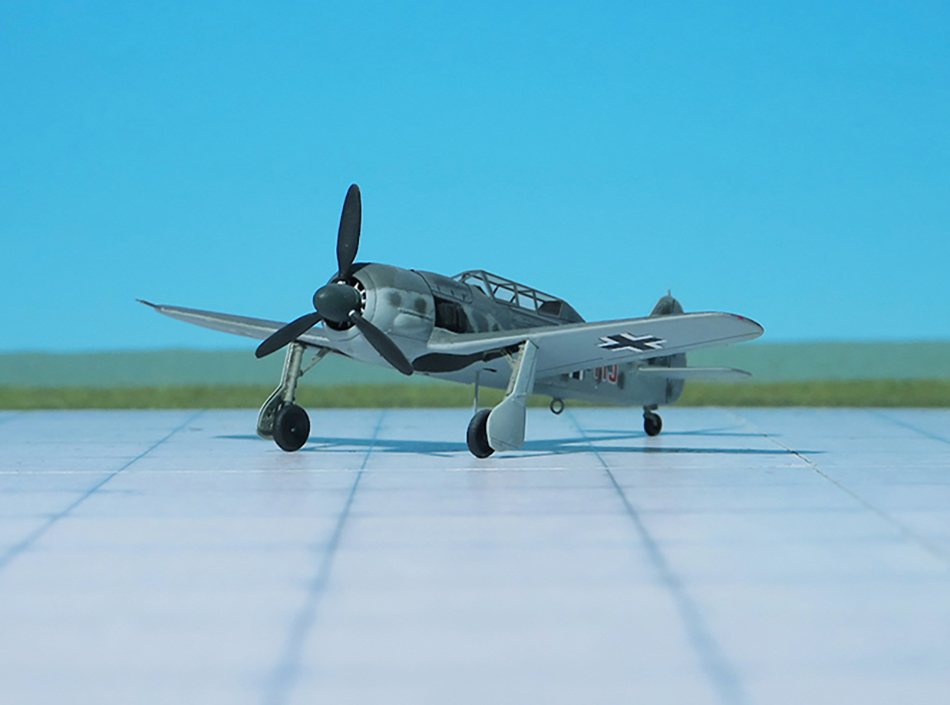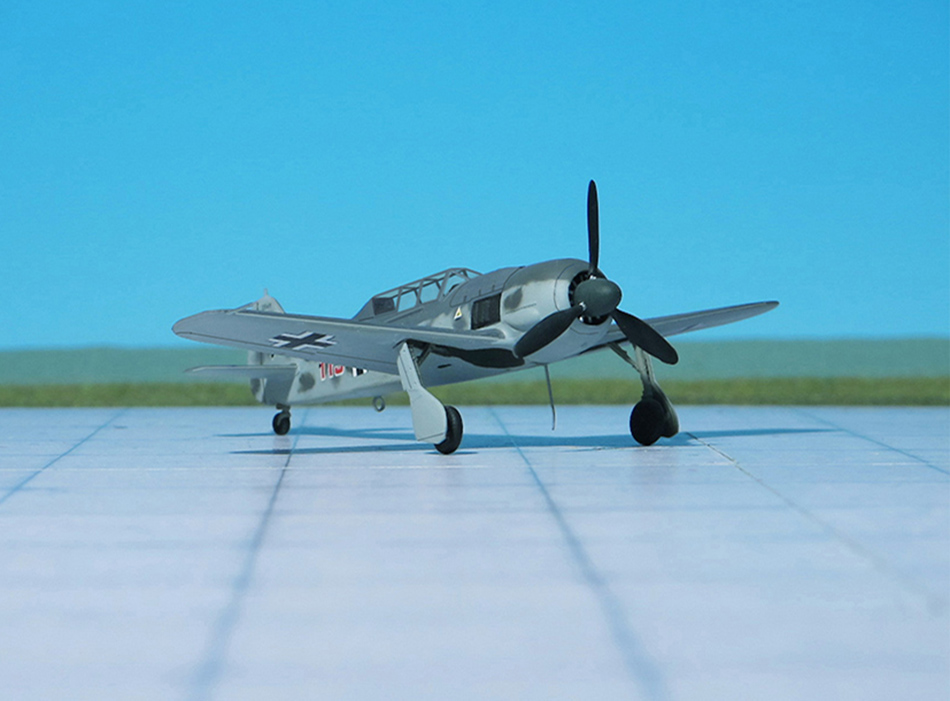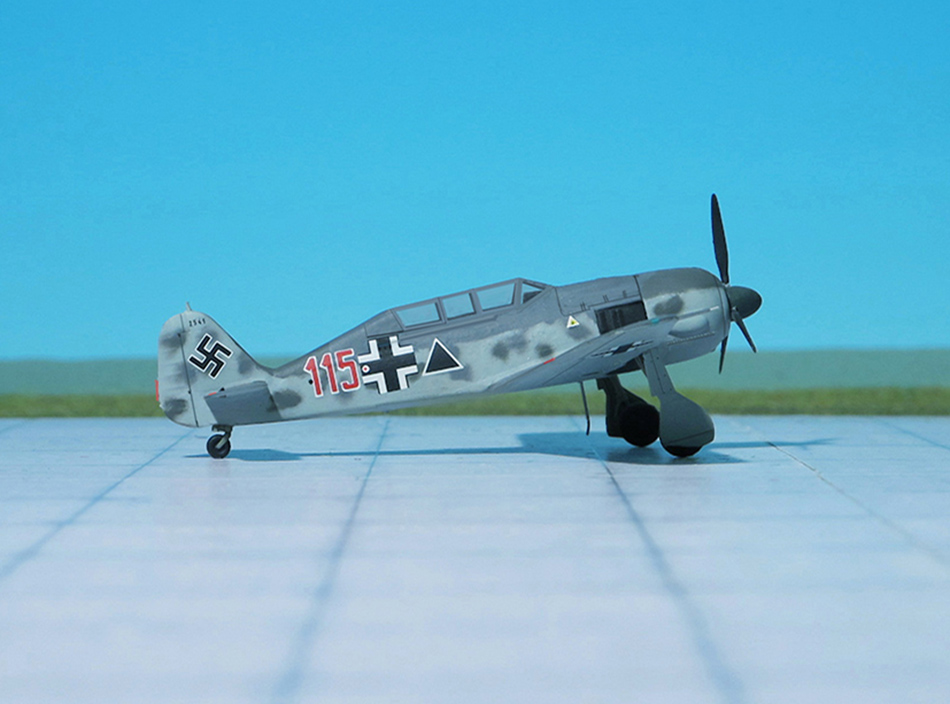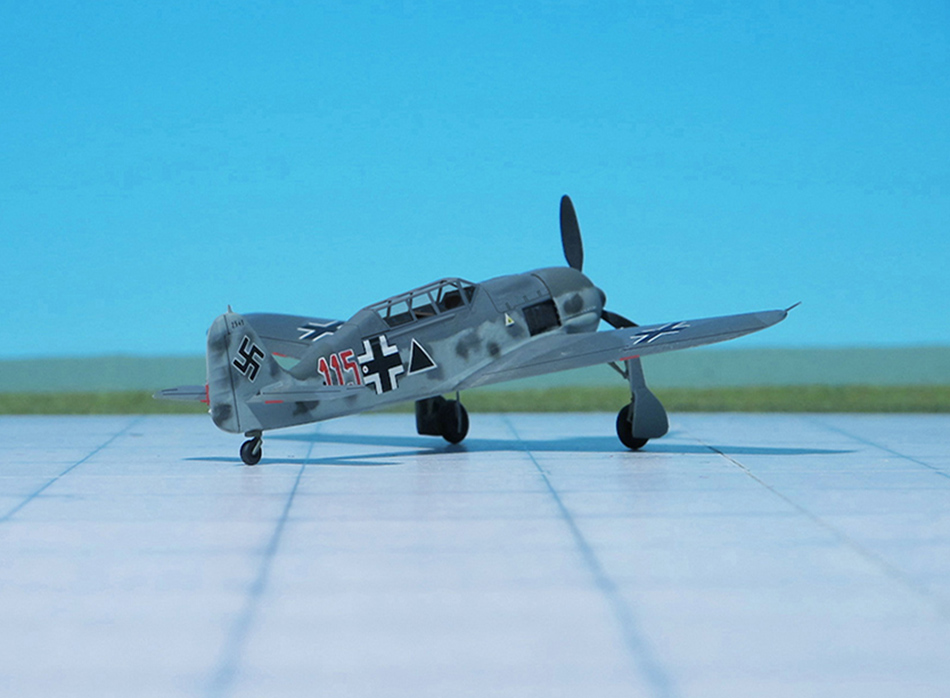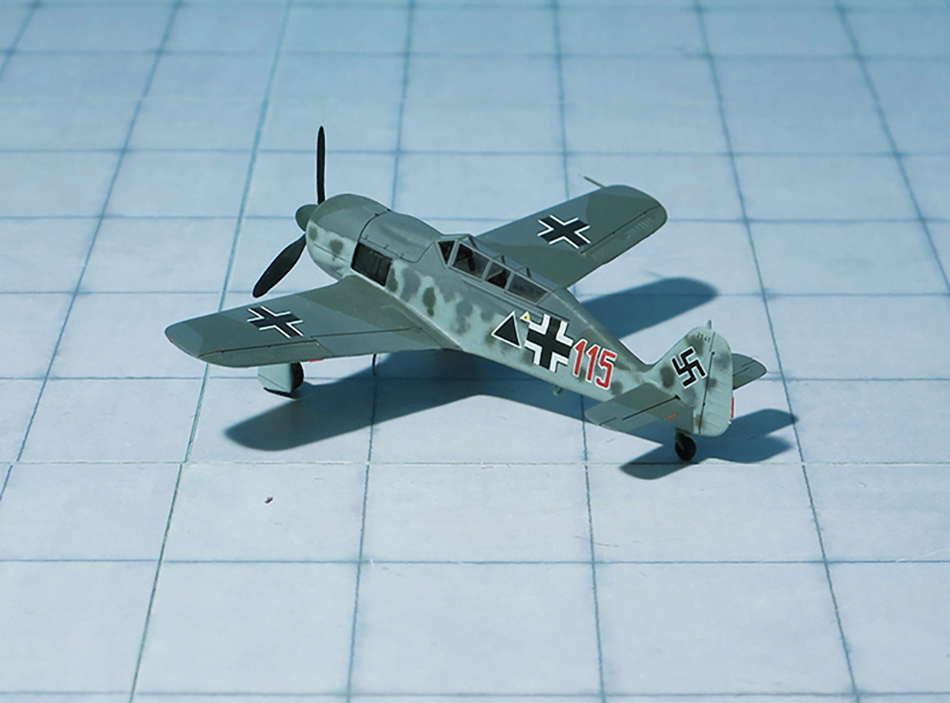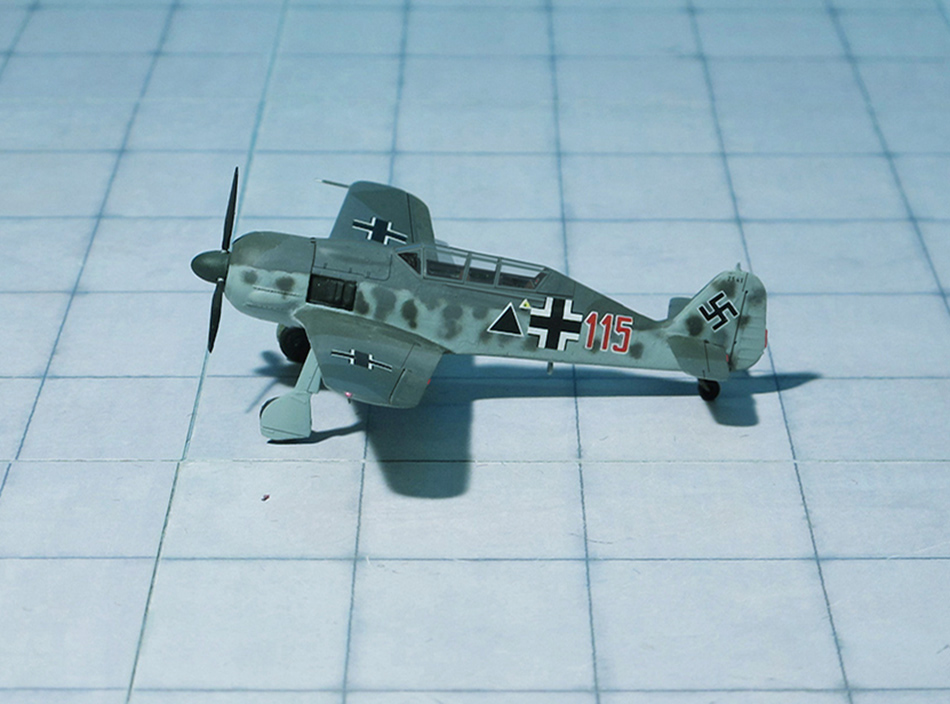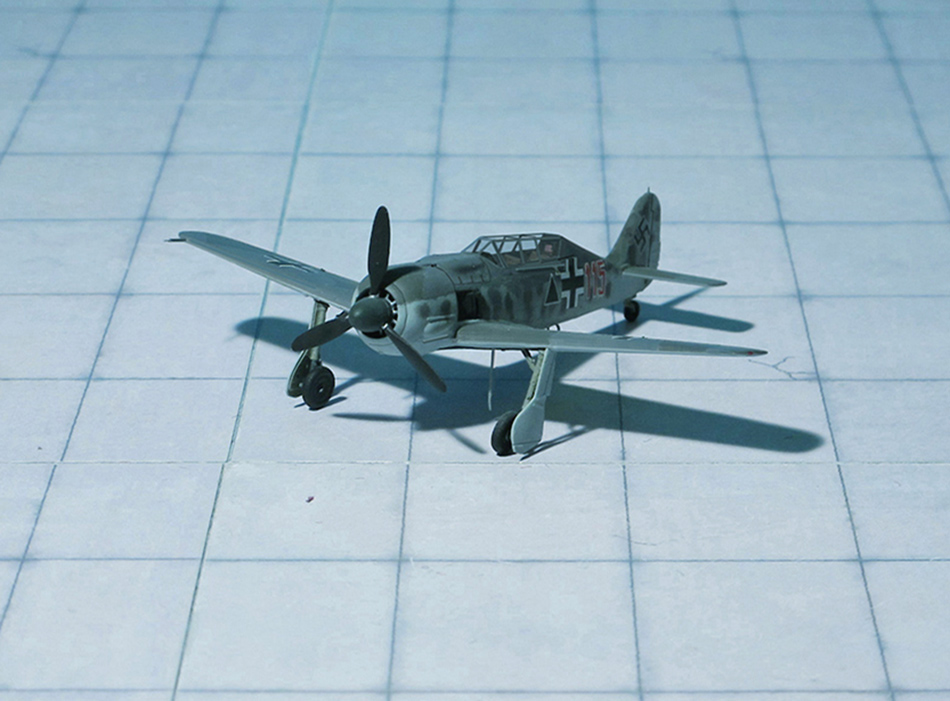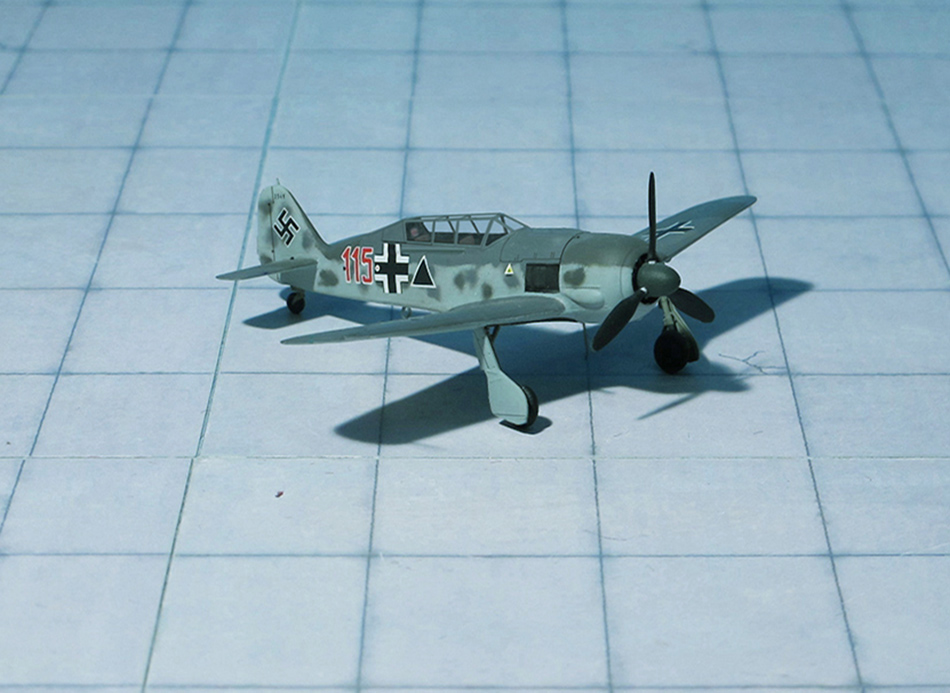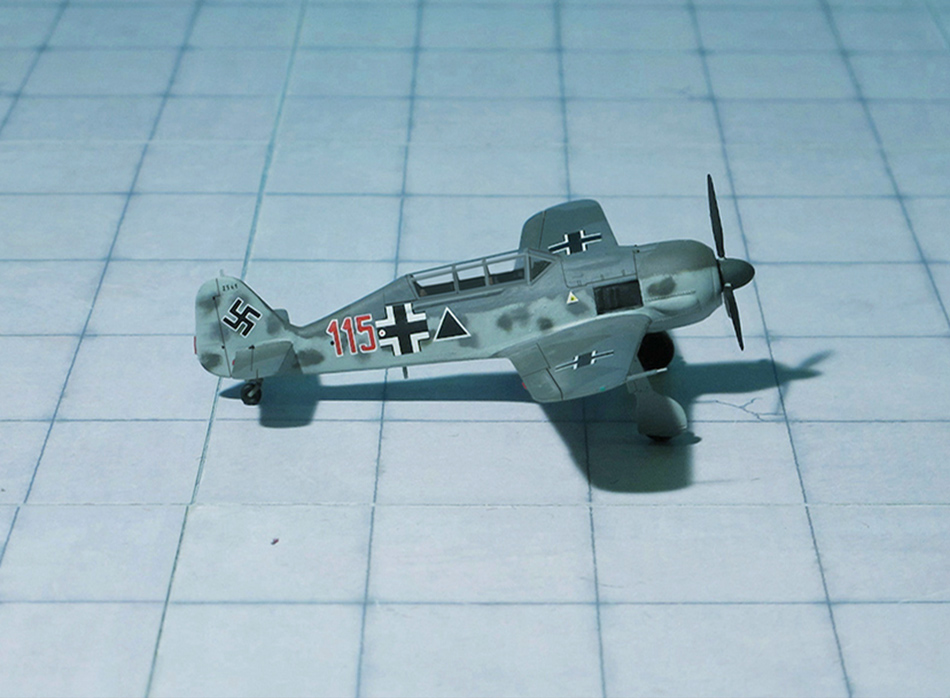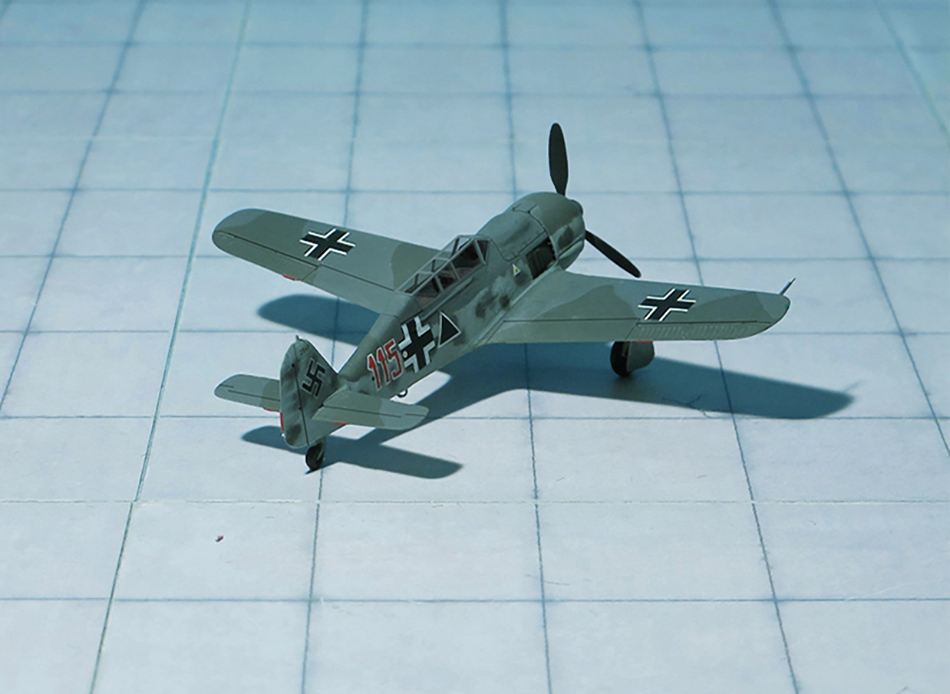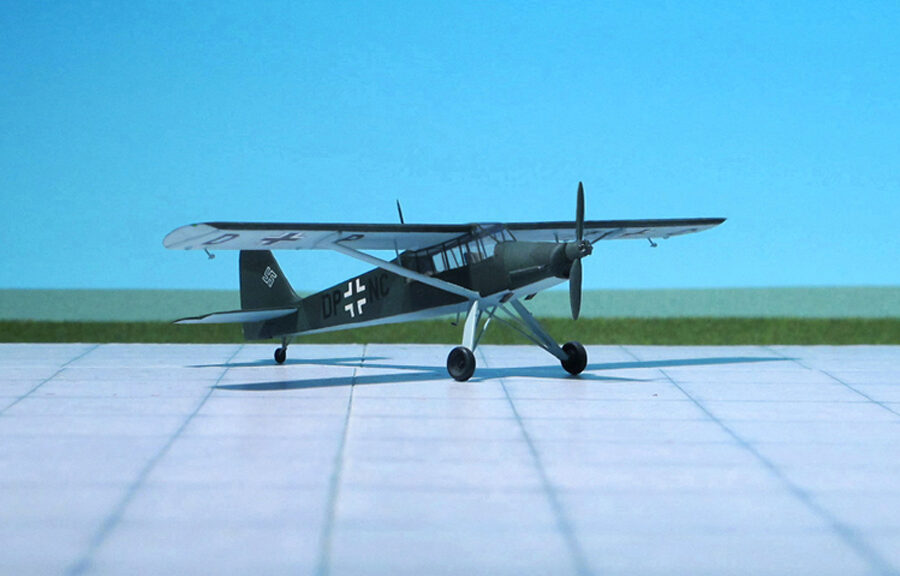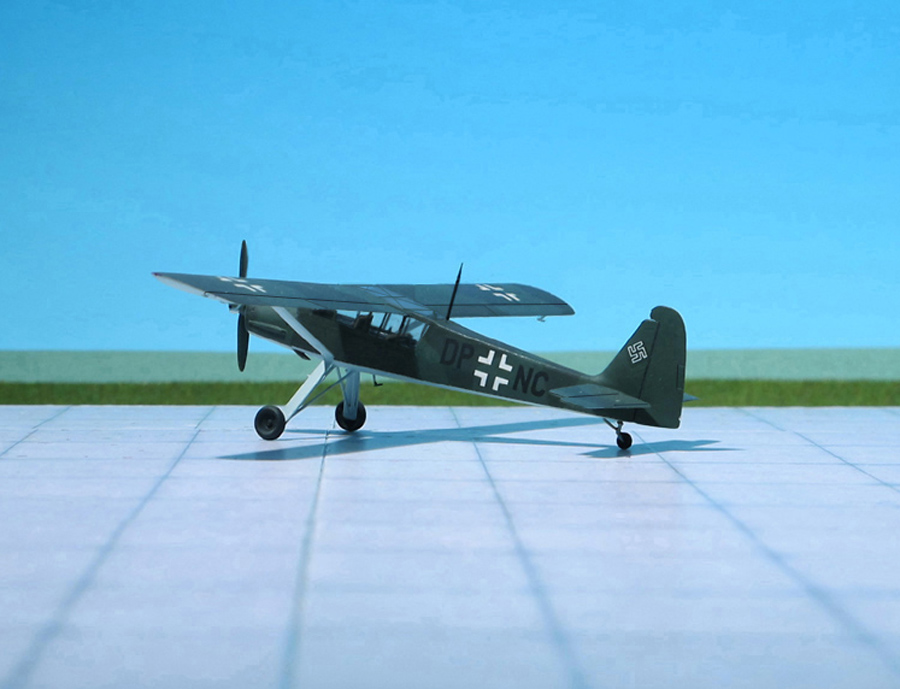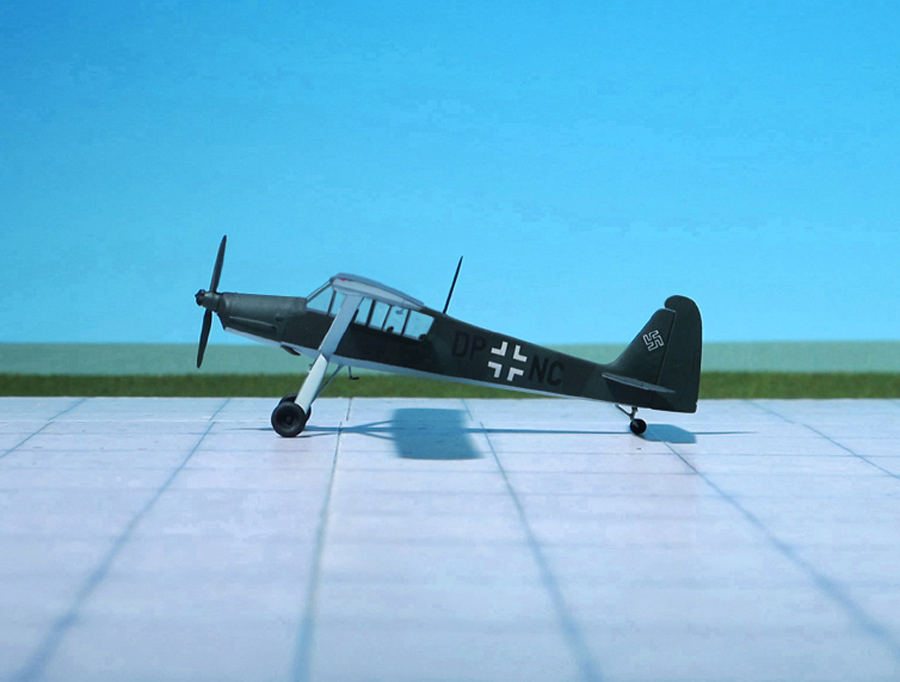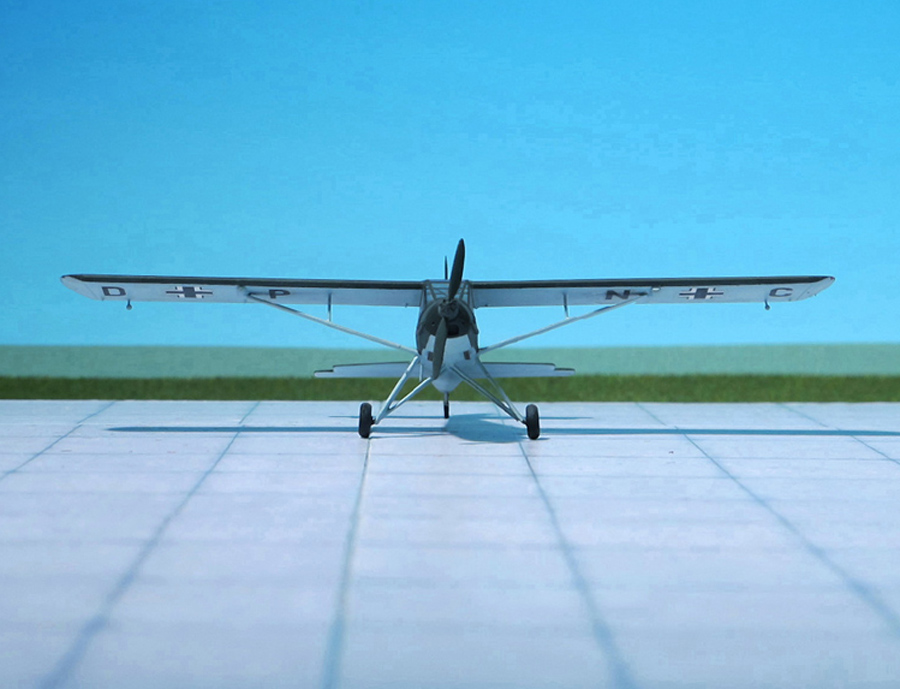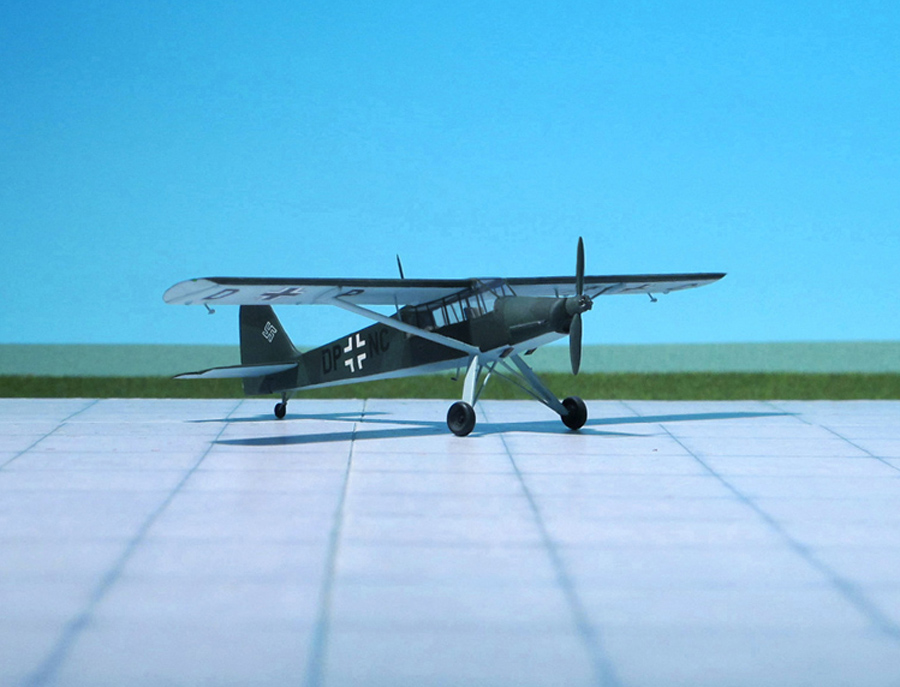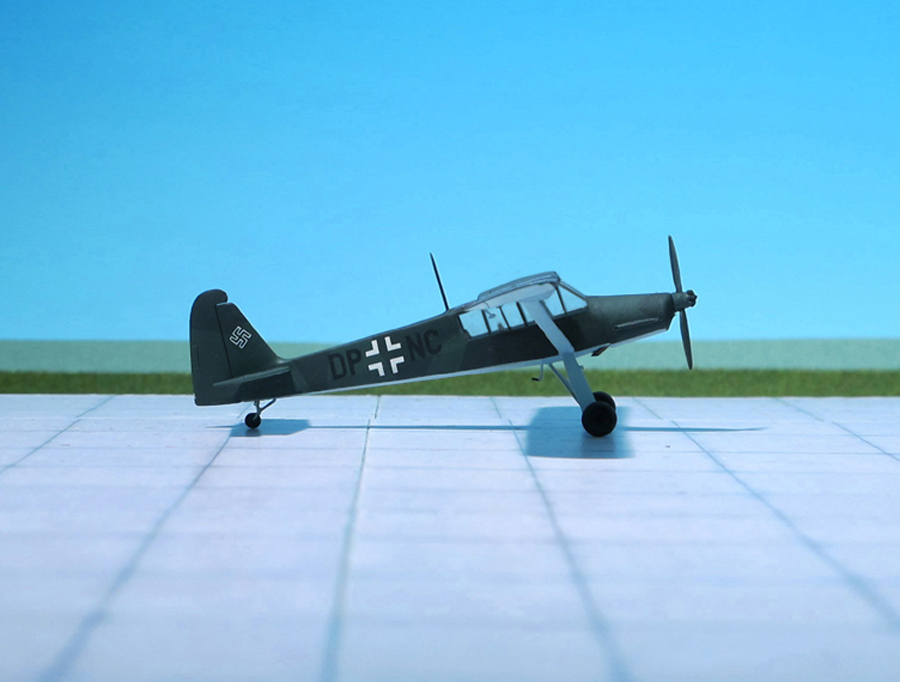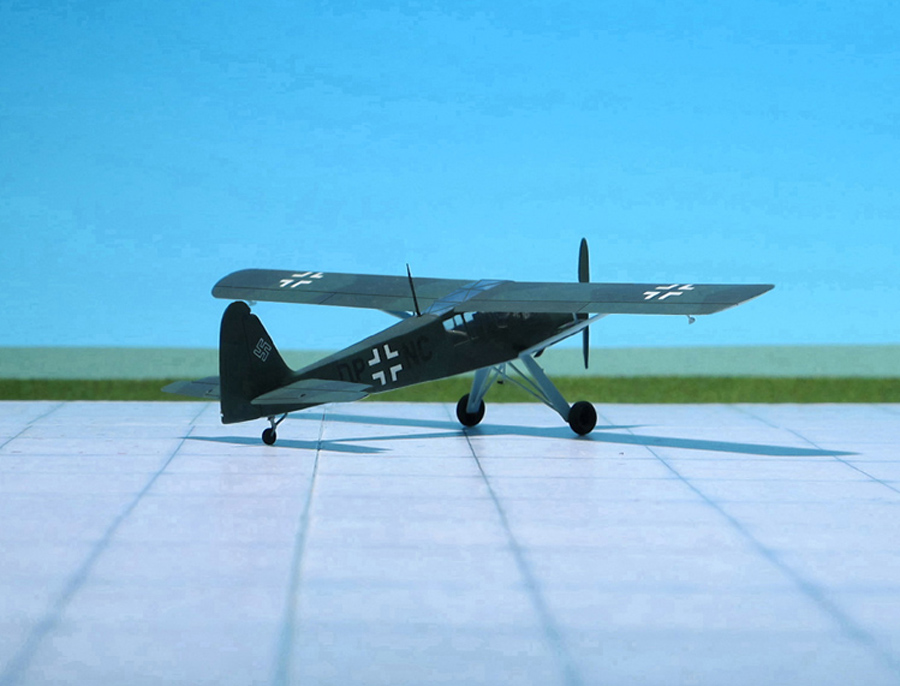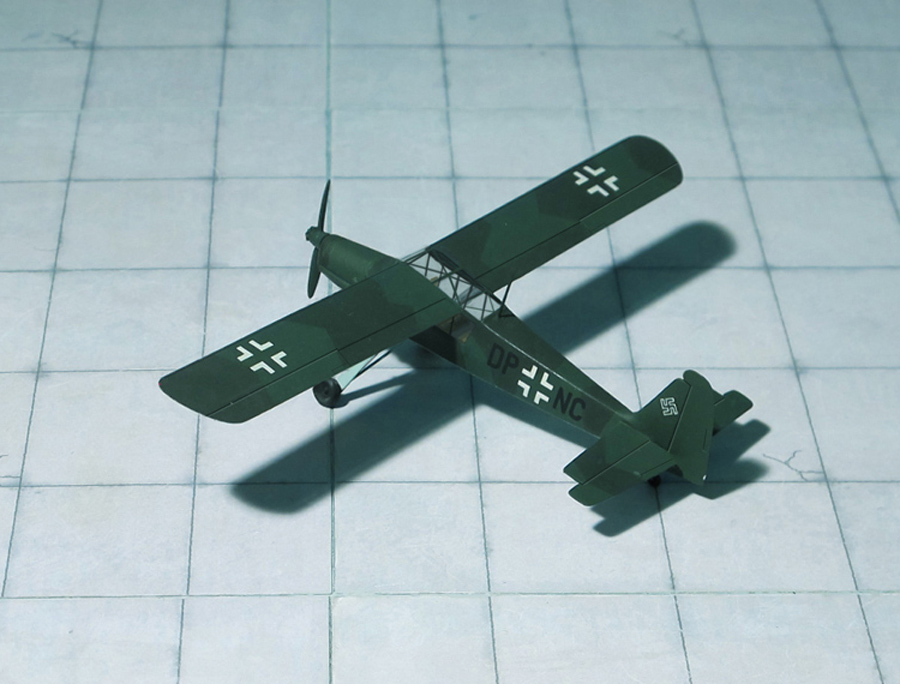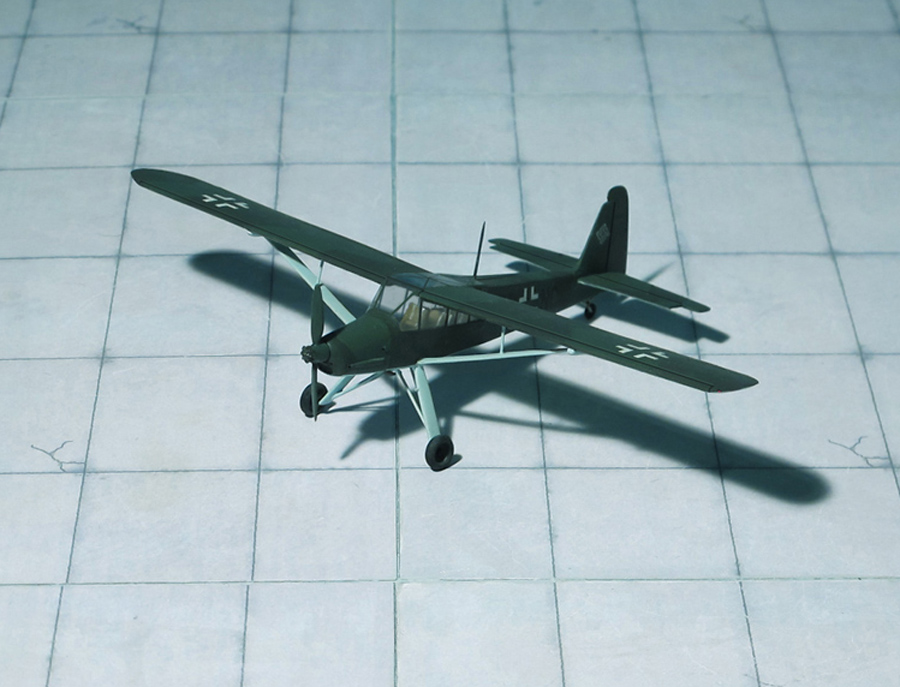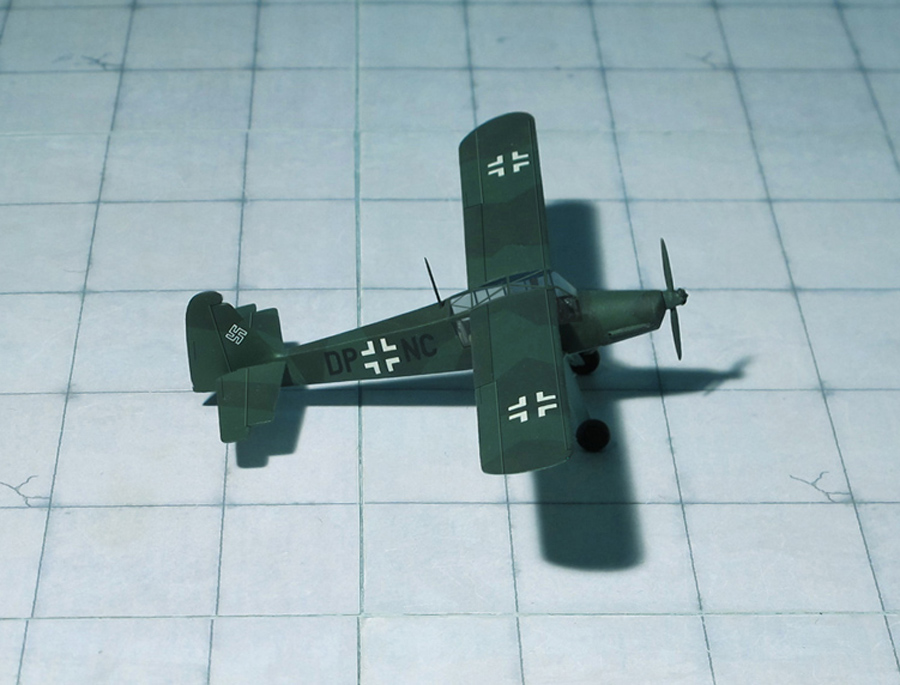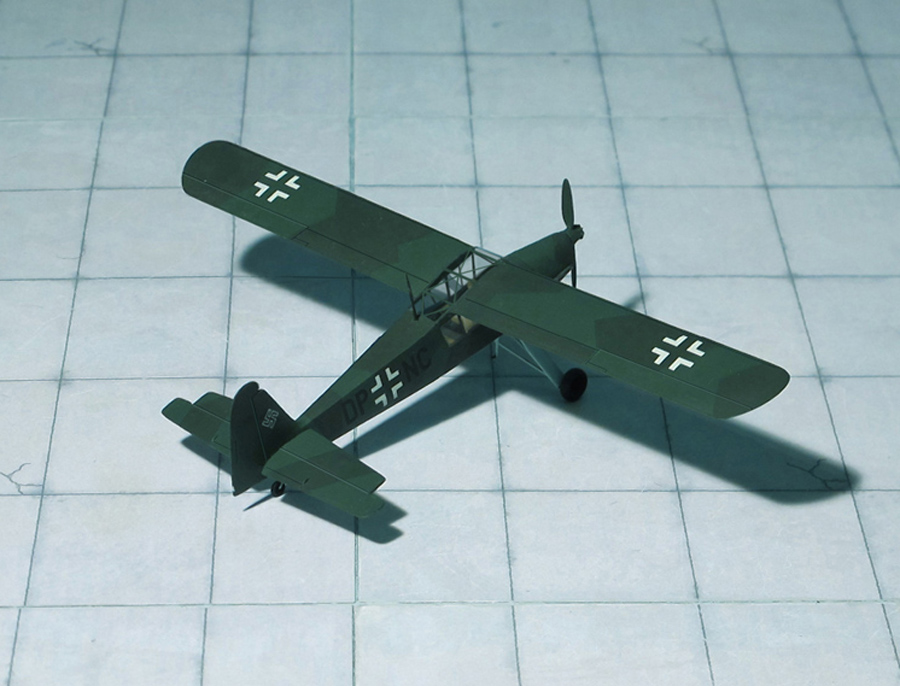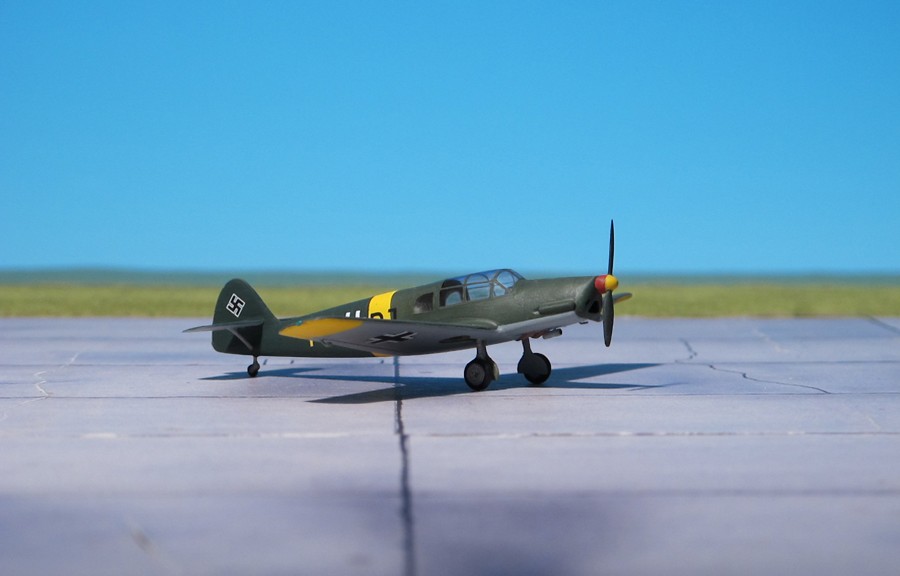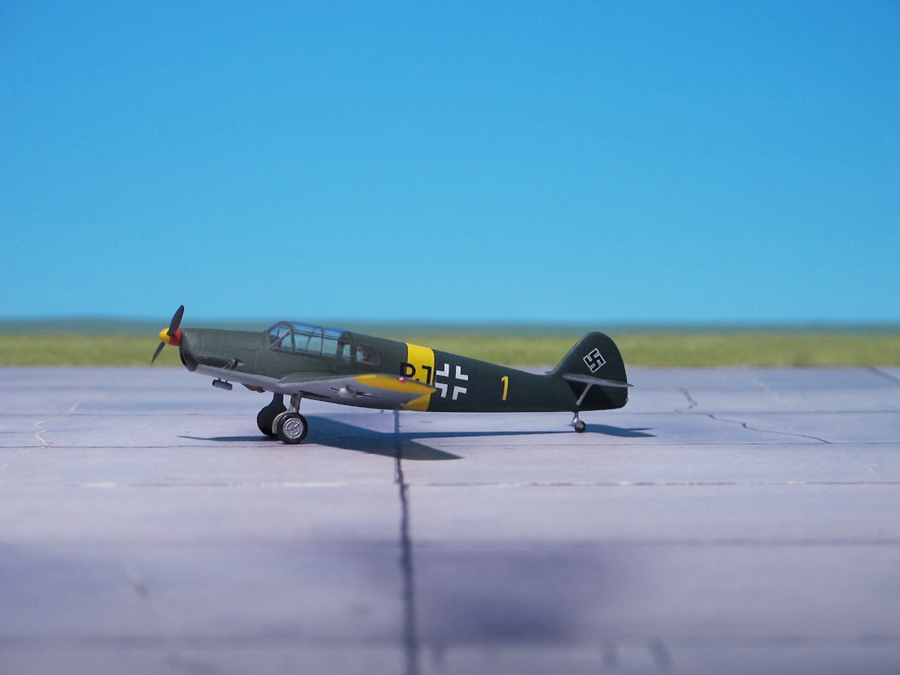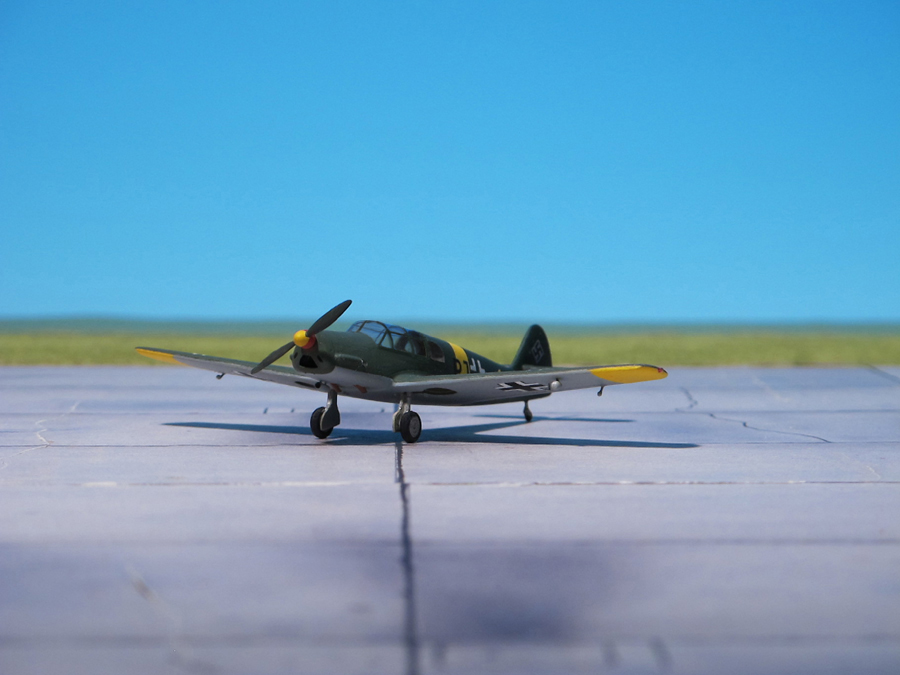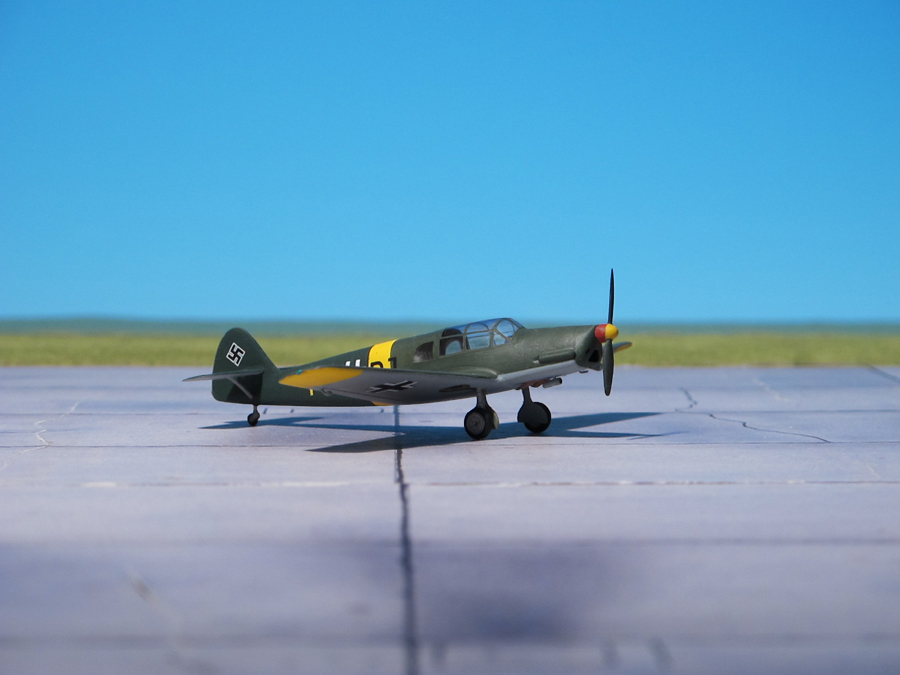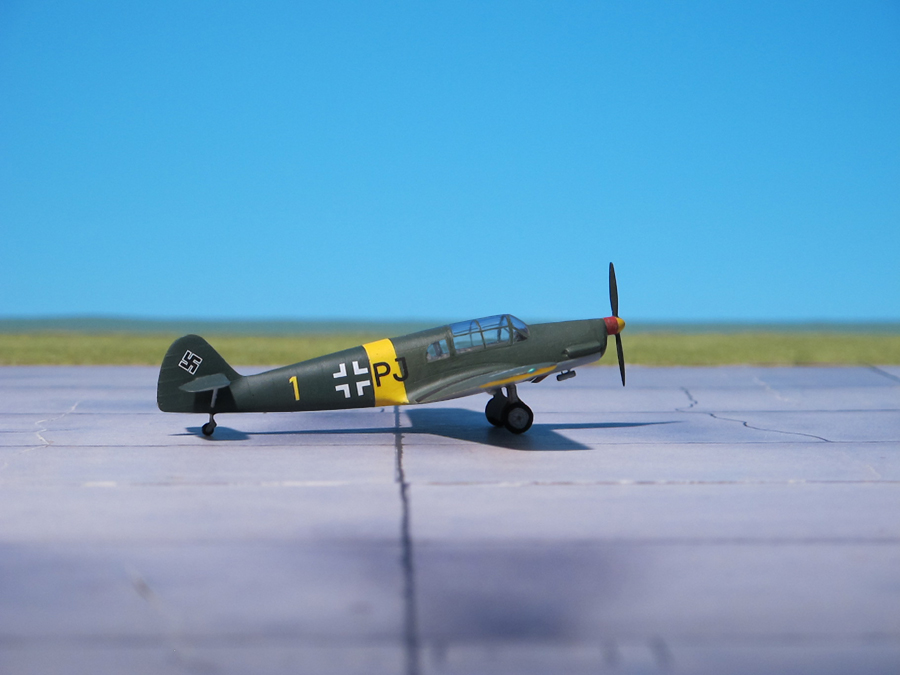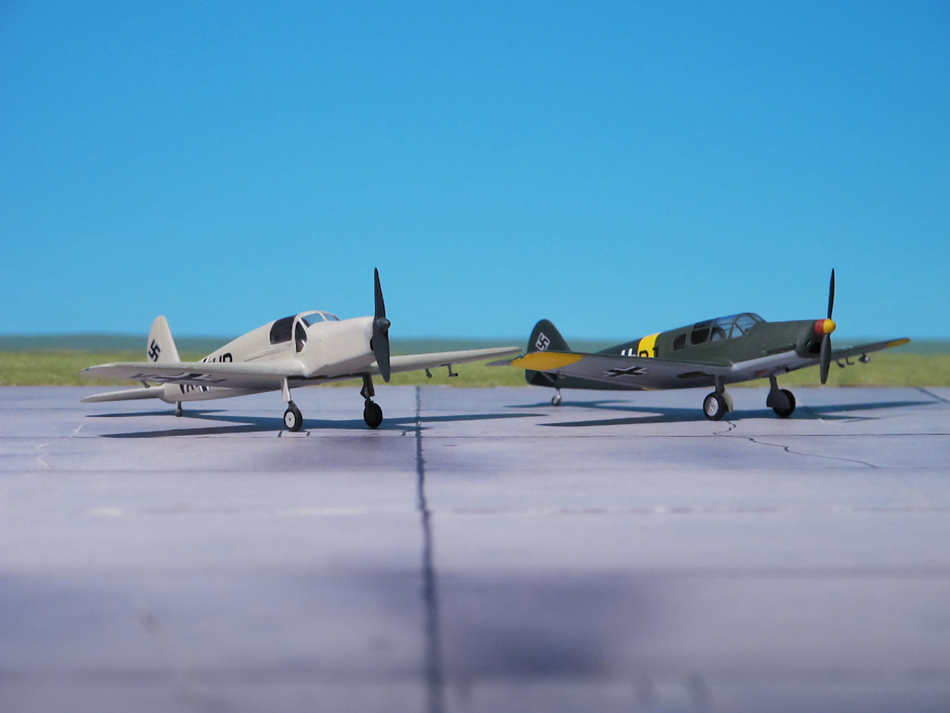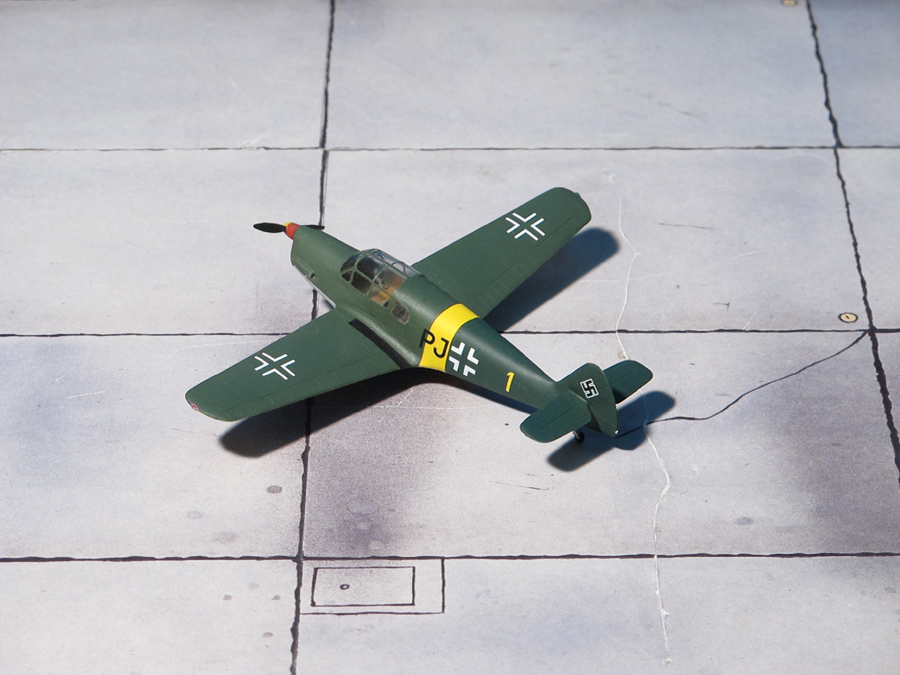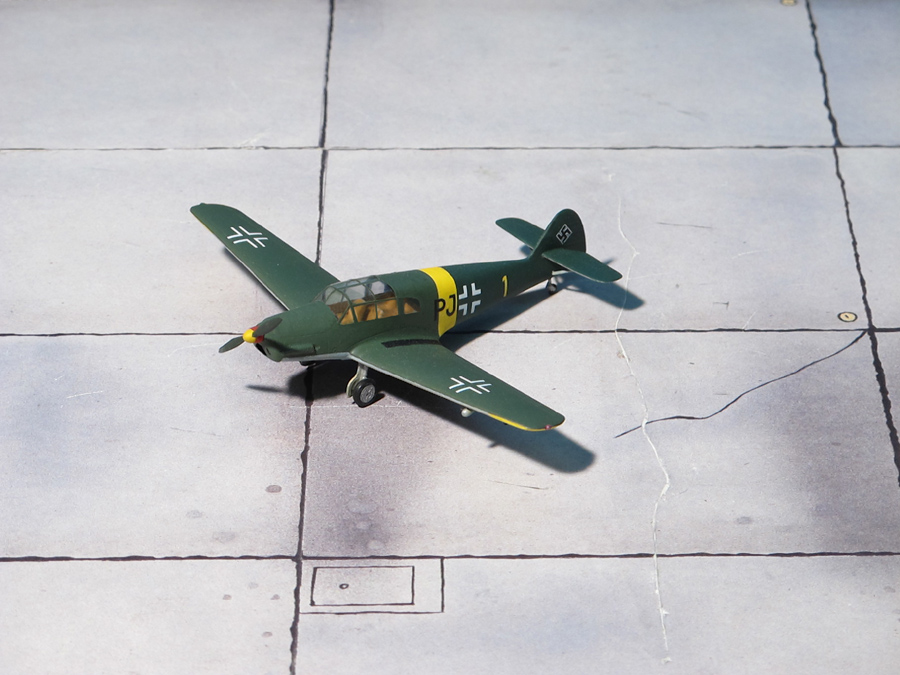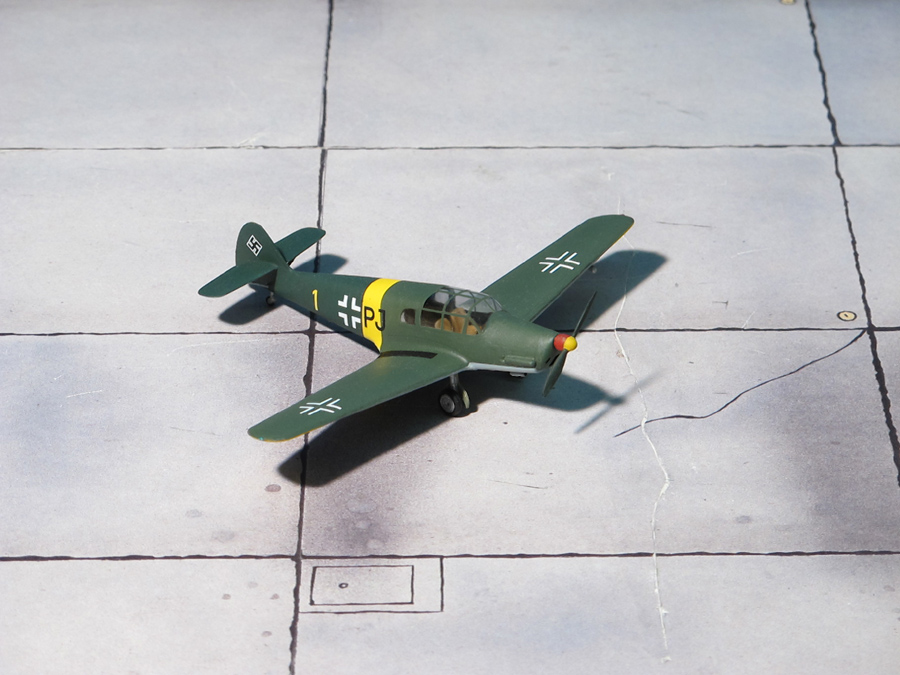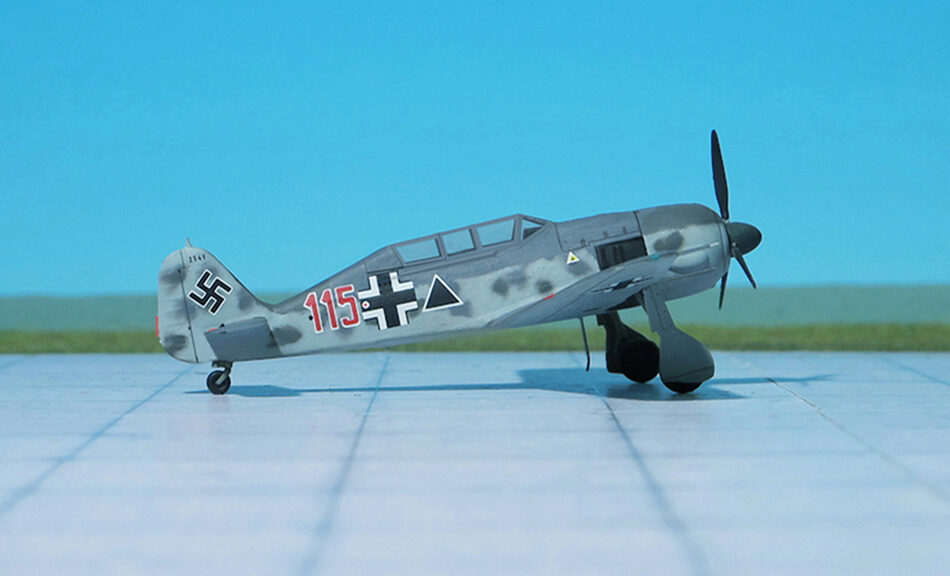
TYPE: Trainer, Liaison aircraft
ACCOMMODATION: Crew of two
POWER PLANT: One BMW 801D-2 radial engine, rated at 1.677 hp
PERFORMANCE: 405 mph at 19,420 ft
COMMENT: The Focke-Wulf Fw 190 was a German single-seat, single-engined, fighter aircraft designed by Kurt Tank at Focke Wulf in the late 1930s and widely used during World War II. Along with its well-known counterpart, the Messerschmitt Bf 109, the Fw 190 became the backbone of the Jagdwaffe (Fighter Force) of the Luftwaffe. The twin-row BMW 801 radial engine that powered most operational versions enabled the Fw 190 to lift larger loads than the Bf 109, allowing its use as a day fighter, fighter-bomber, ground-attack aircraft, and to a lesser degree, night fighter.
The Fw 190A started flying operationally over France in August 1941 and quickly proved superior in all but turn radius to the Supermarin e Spitfire Mk. V, the main front-line fighter of the Royal Air Force (RAF), particularly at low and medium altitudes. The Fw 190 maintained its superiority over Allied fighters until the late 1942 and early 1943 introduction of the improved Spitfire Mk. IX. In November/December 1942, the Fw 190 made its air combat debut on the Eastern Front, finding much success in fighter wings and specialised ground attack units (Schlachtgeschwader – Battle Wings or Strike Wings) from October 1943.
During 1943, work had begun on the design of a tandem two-seat fuselage to meet the Luftwaffe requirement of a conversion trainer for the re-training of former Junkers Ju 87 pilots. By October that year, the Schlachtgeschwader were converting from Ju 87 to the Fw 190 at a rate of a Gruppe (Wing) every three weeks, and although the anticipated problems did not arise, three Fw 190A-8 airframes were converted to two-seaters, the itension being that these should serve as pattern aircraft for foreward maintenance units to rebuilt existing aircraft as two-seaters under the designation Fw 190S (the „S“ suffix indicating Schulflugzeug (trainer aircraft)).
A second cockpit was inserted immediately aft of the standart cockpit, this occupying the space previously taken by the radio and other equipment. The rear fuselage decking was rised, and the two cockpits covered by a continous canopy, the foreward cockpit for the pupil being enclosed by a section higing to starboard, and the aft cockpit for the instructor being covered by a section slid rearward. Rudimentary dual controls and instrumentation were provided in the rear cockpit, and as Fw 190A-8/U1, the first of three conversions flew in January 1944. The conversion was applicable to any A-series airframe, but apart from the three Fw 190A-8/U1 two seaters only about 55 Fw 190S-5 and -8 (respectively derived from Fw 190A-5 and A-8) trainers were completed, and these were mostly used for high-speed liaison tasks (Ref.: 7, 24).