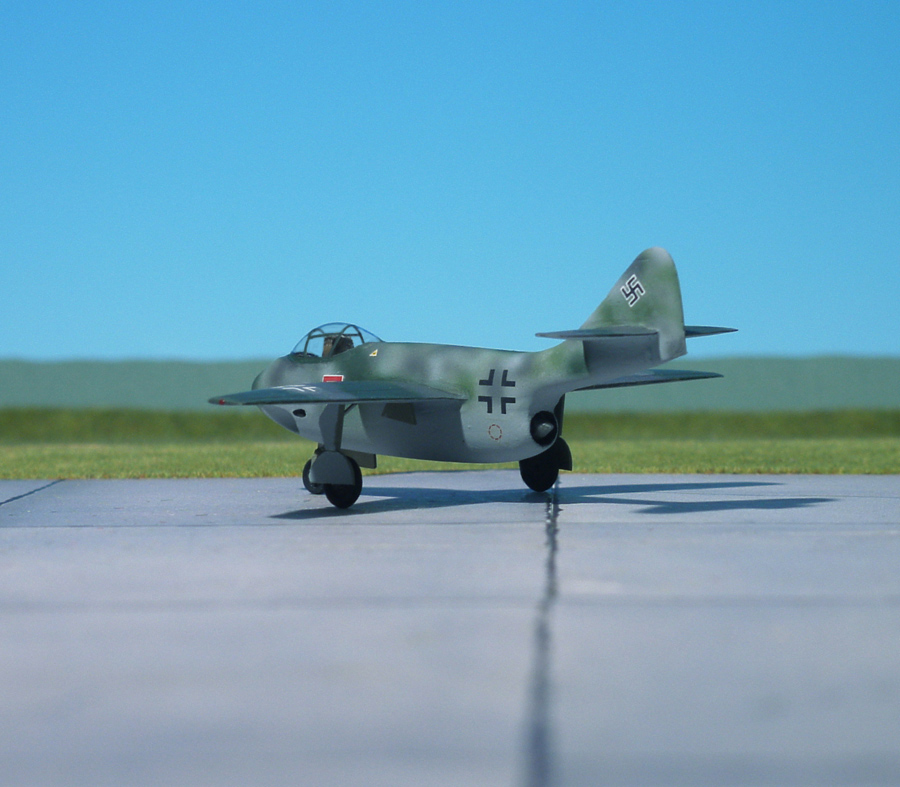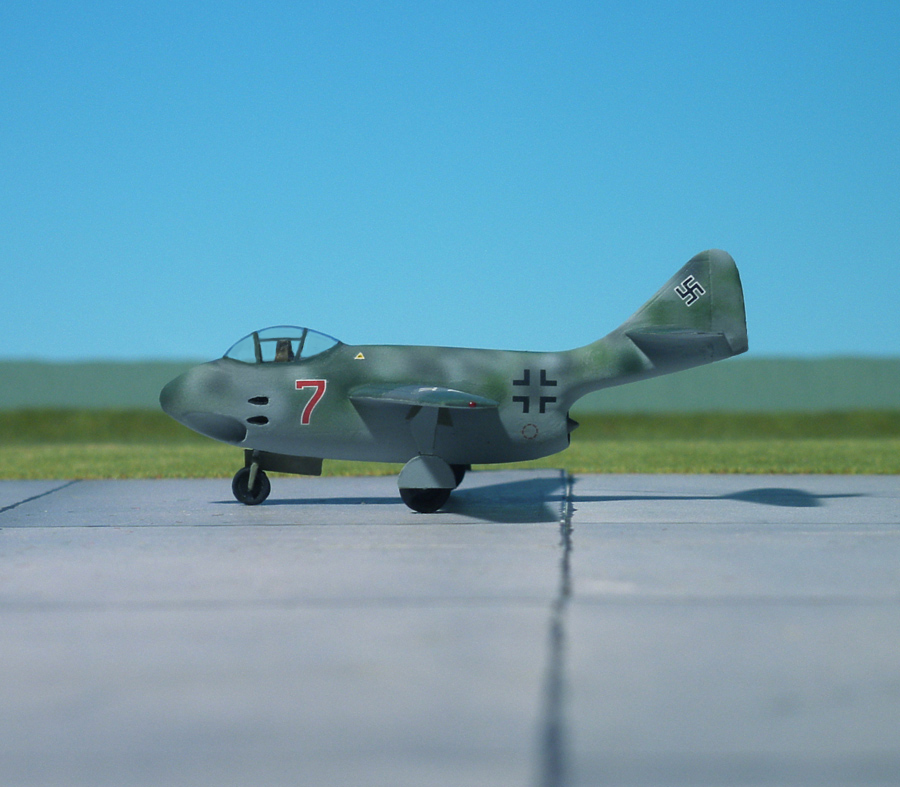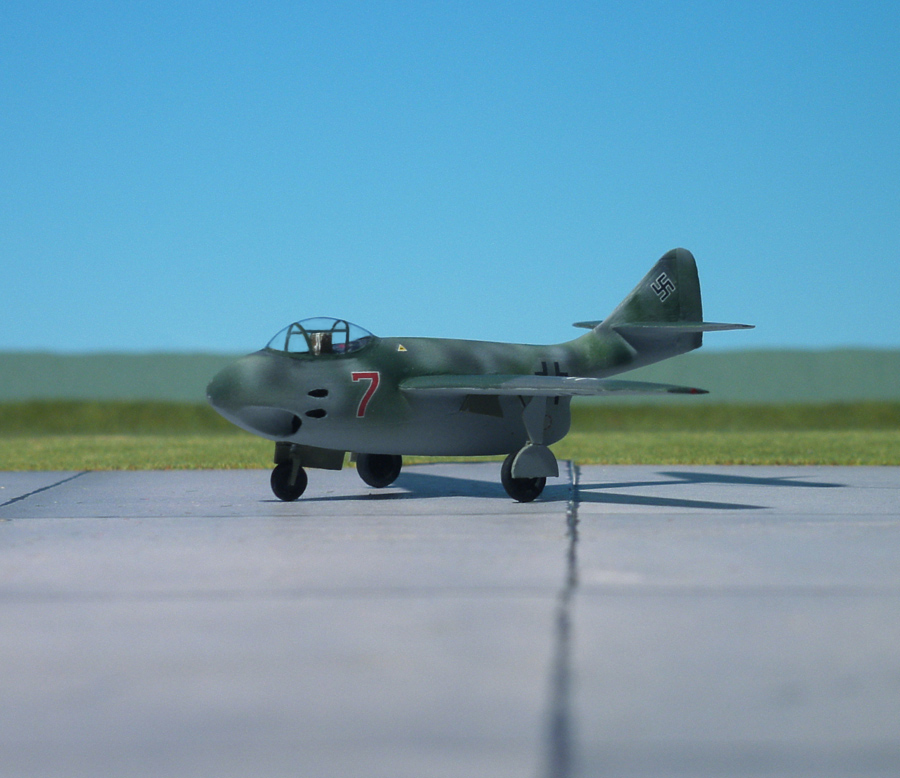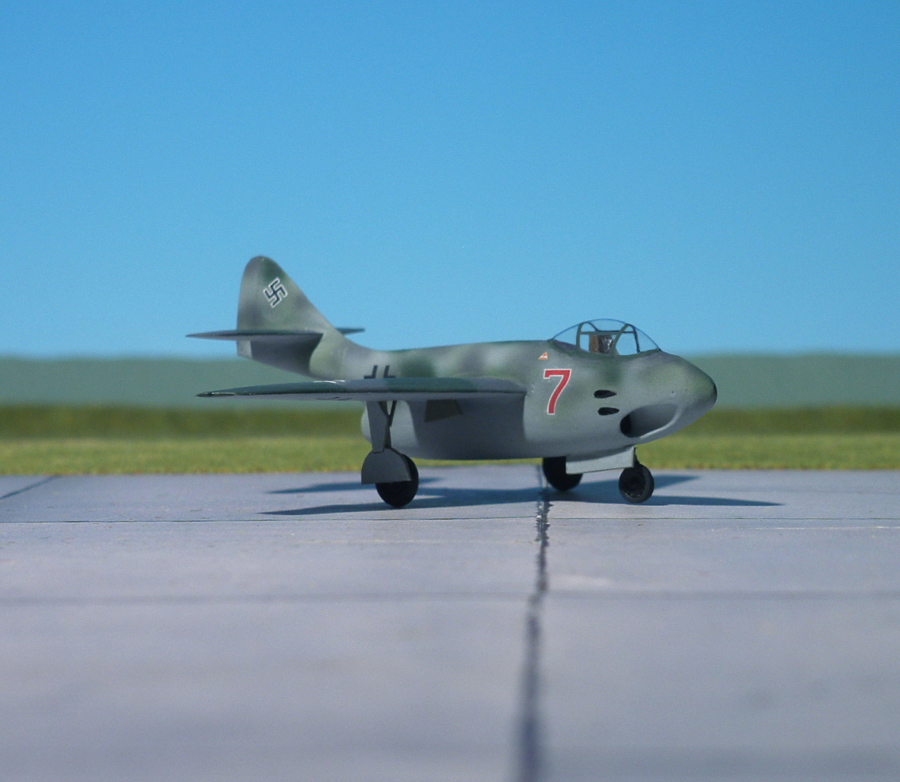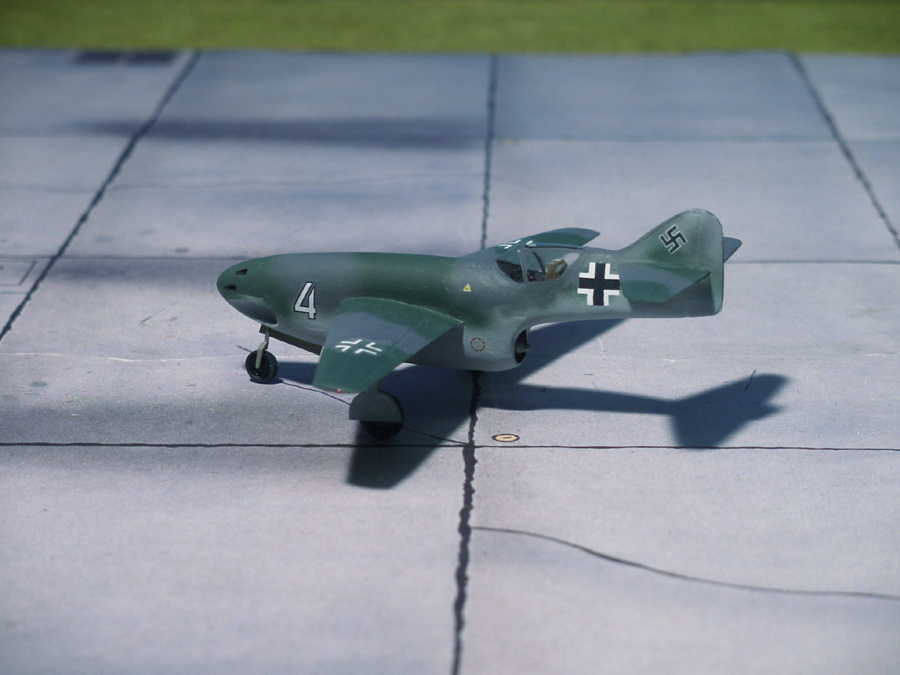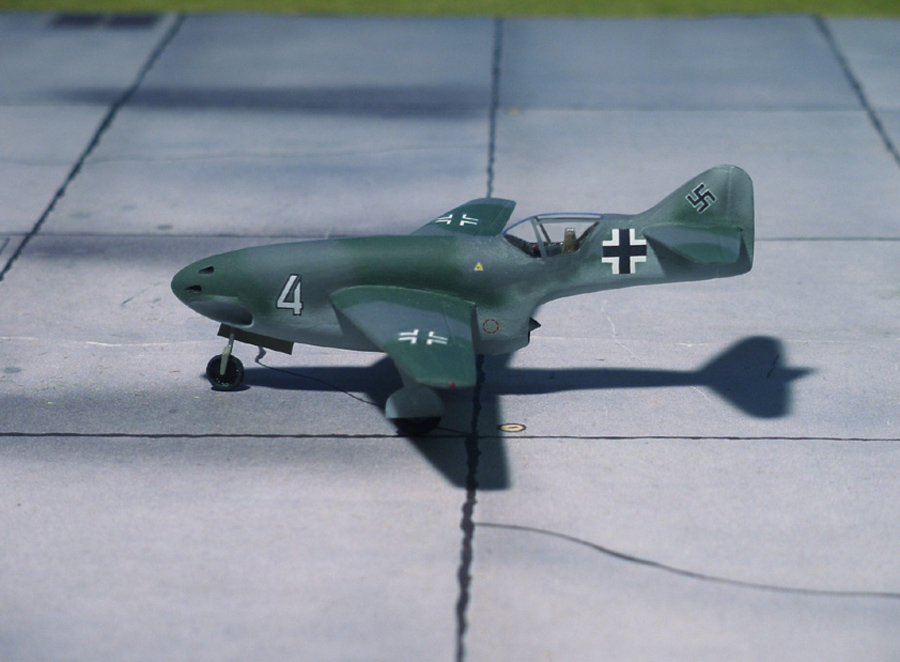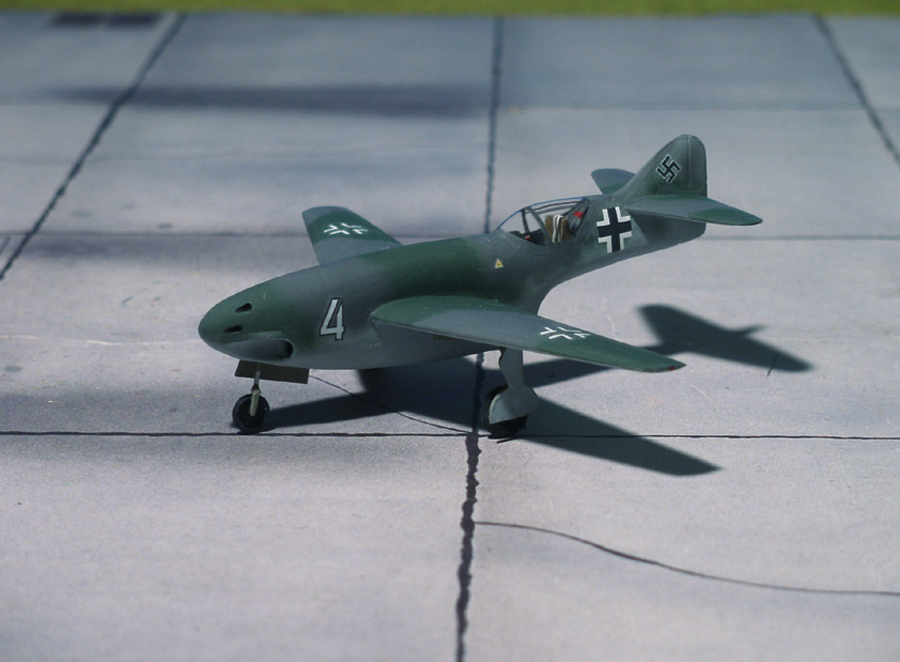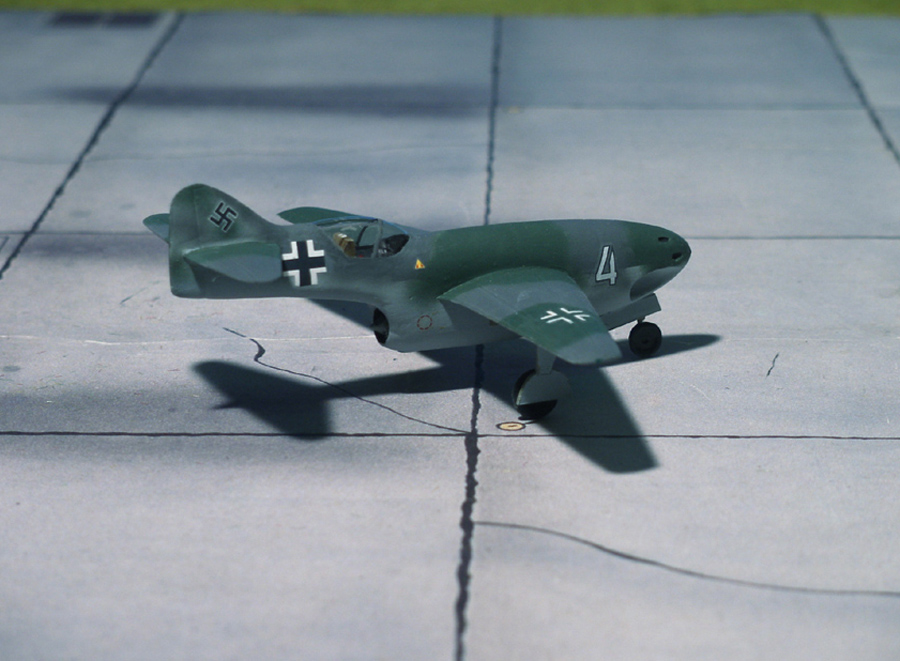
Category Archives: Fighter

Fighter

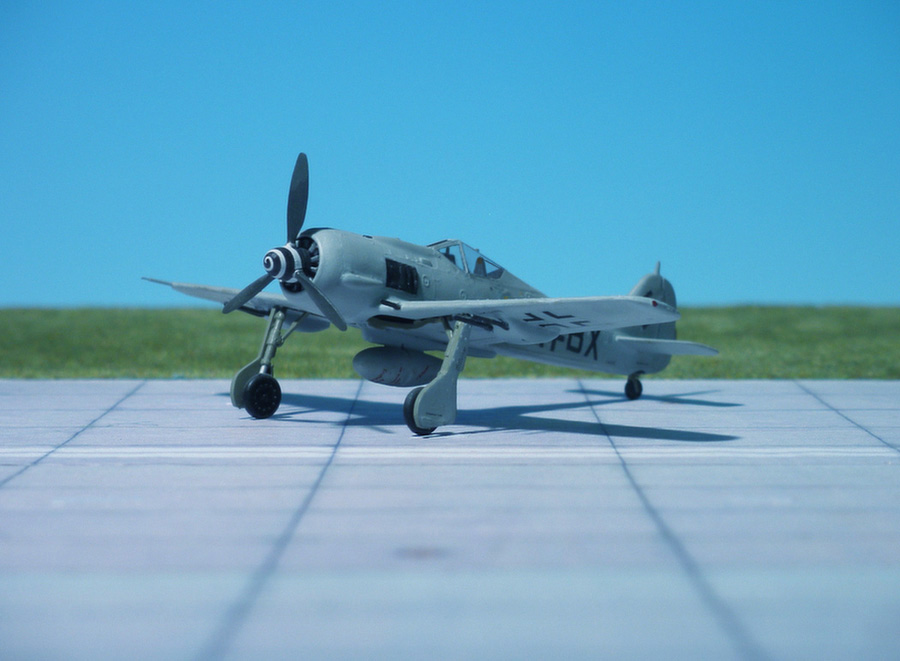
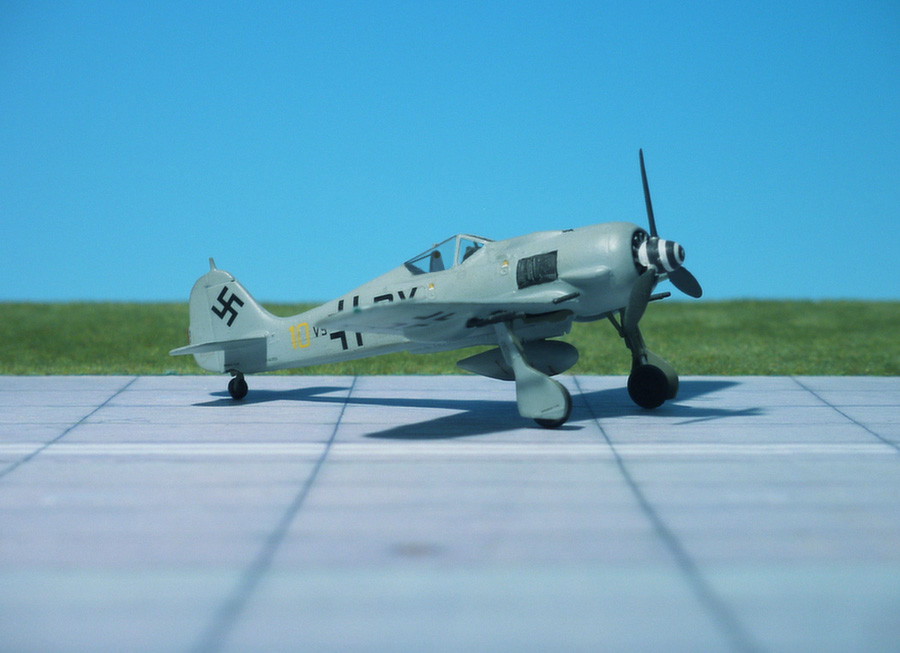
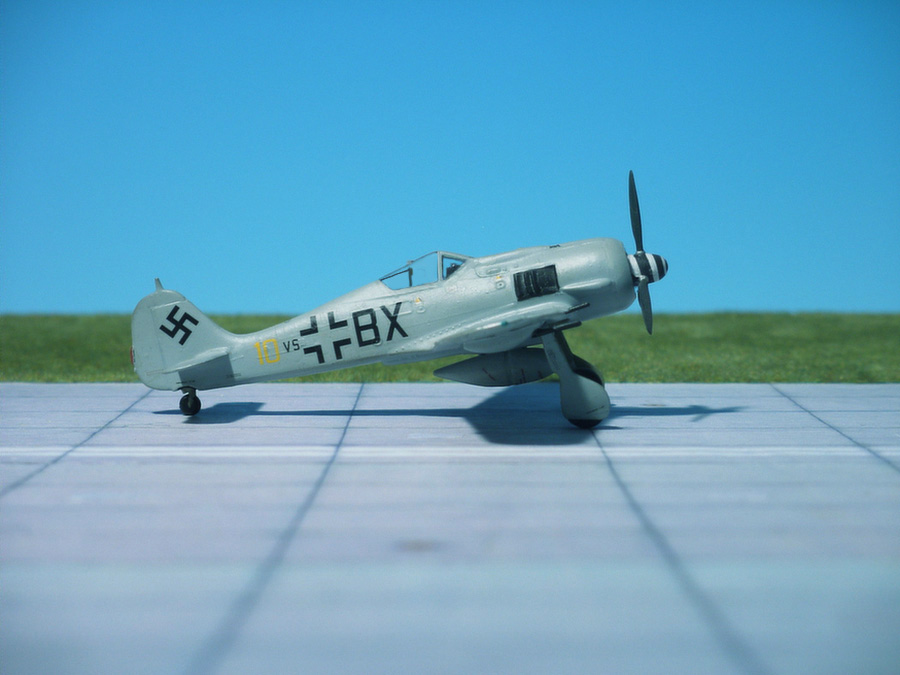
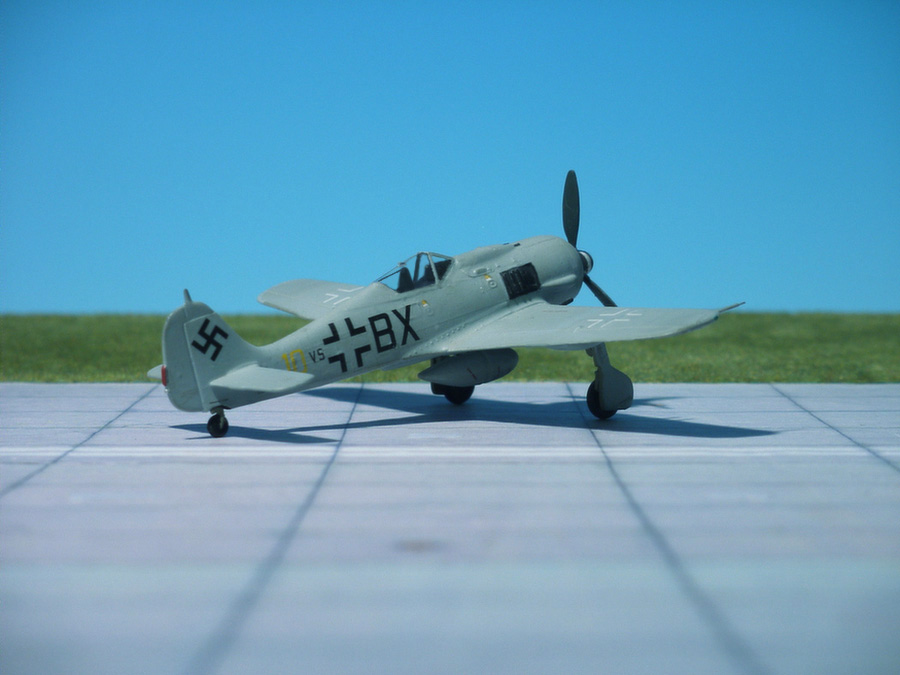
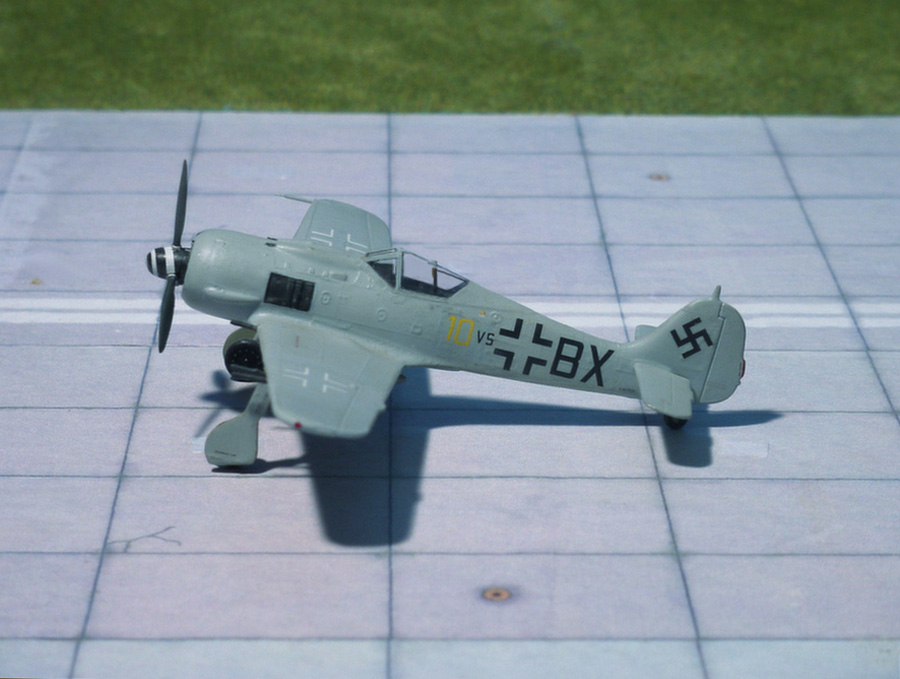
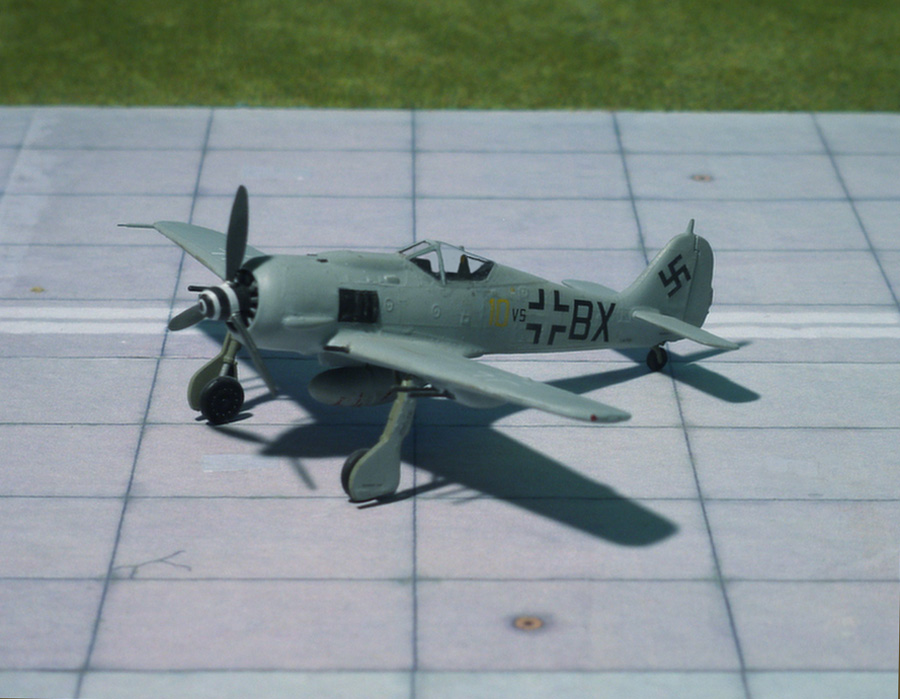
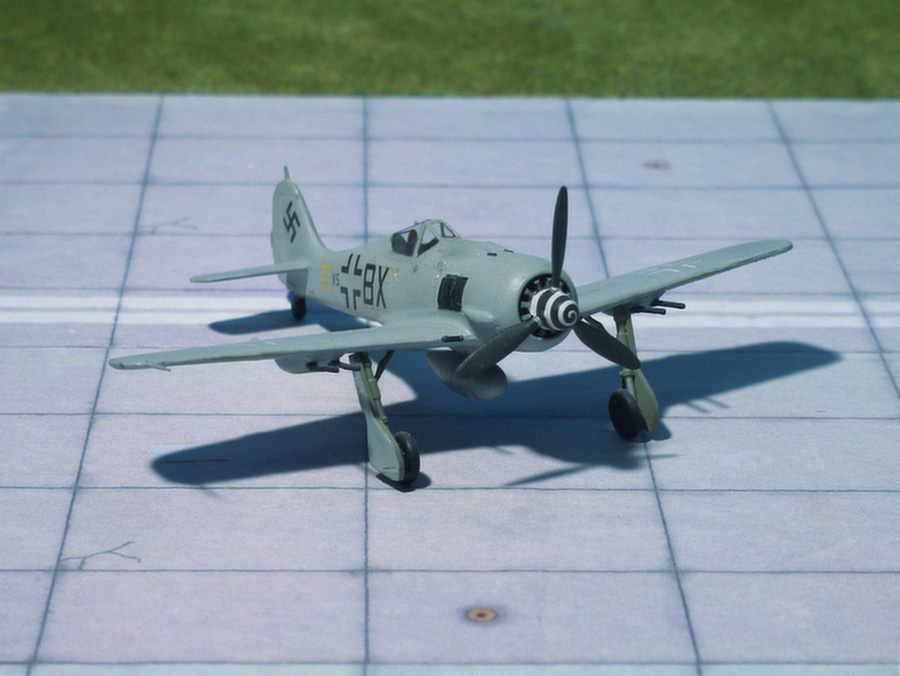
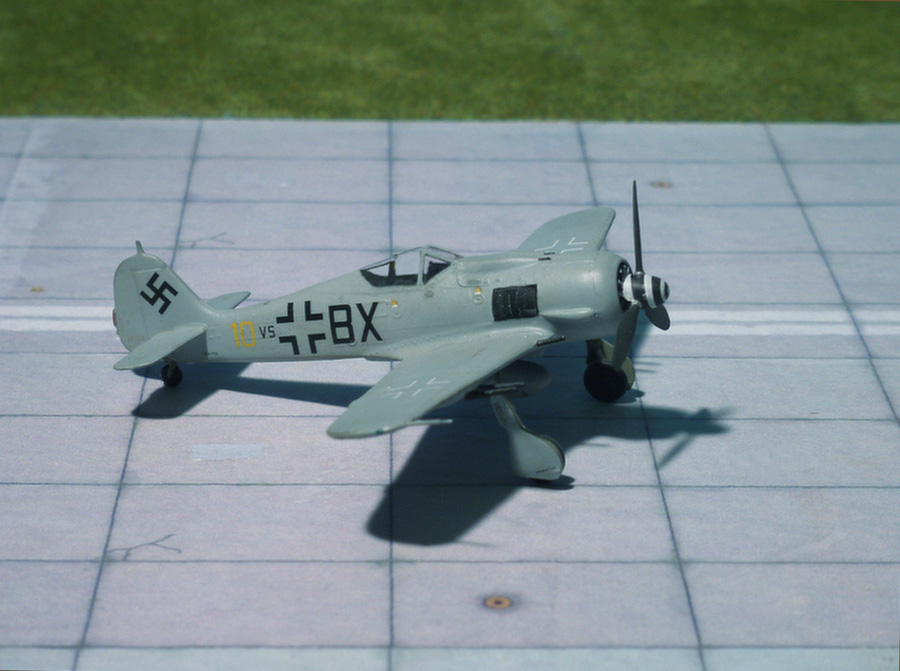
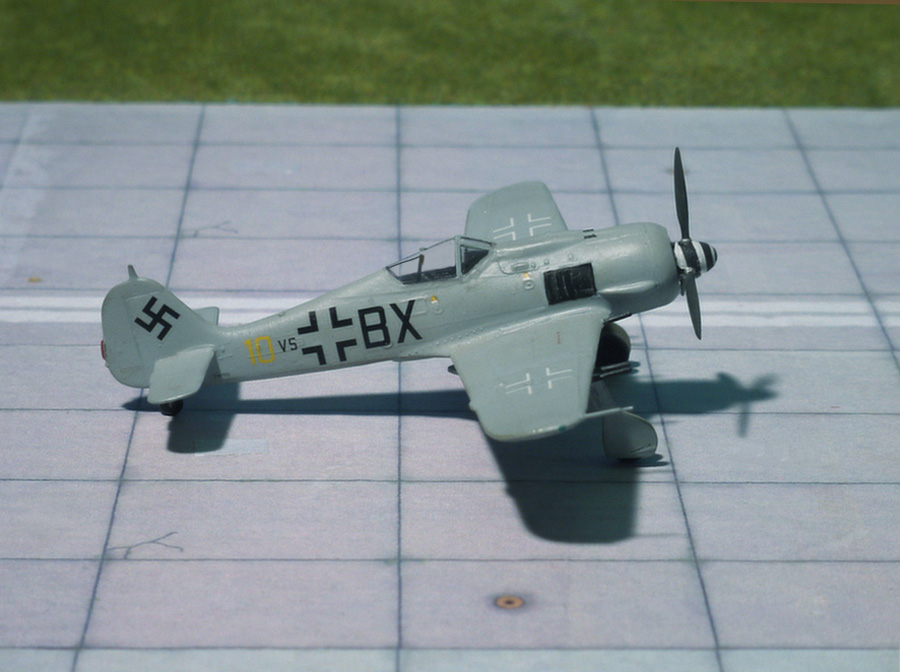
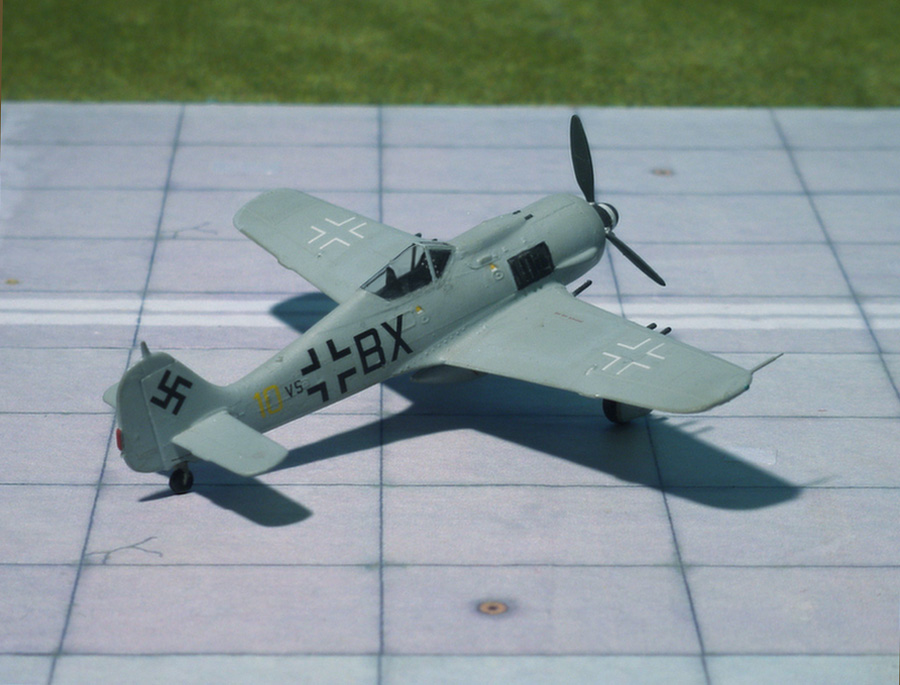
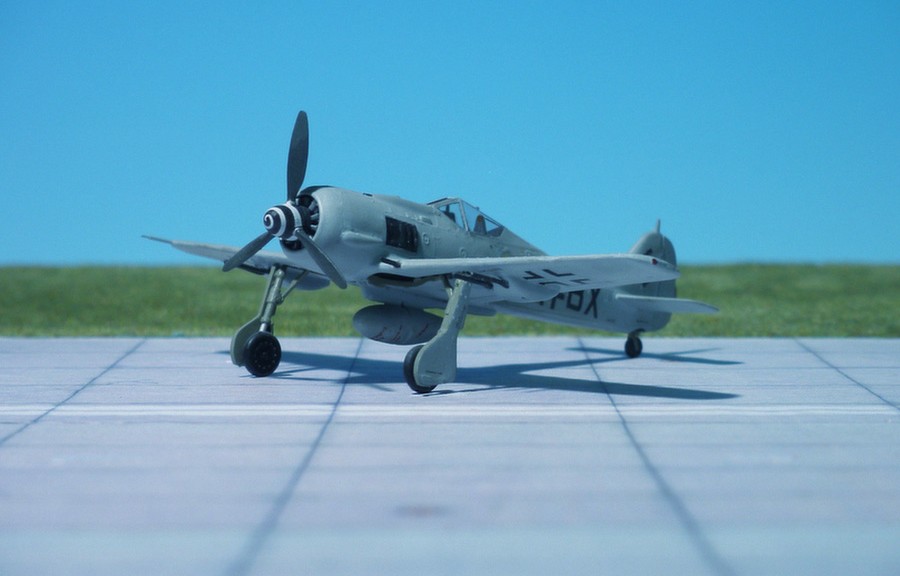
Focke Wulf Fw 190A-8, unknown unit 1945 (Airfix)

TYPE: Fighter, fighter-bomber, close-support aircraft

ACCOMMODATION: Pilot only

POWER PLANT: One BMW 801D-2 radial engine, rated at 1,700 hp

PERFORMANCE: 408 mph at 19, 400 ft

COMMENT: The Focke-Wulf Fw 190 “Würger” (Shrike) was a single-seat, single-engine fighter designed in the late 1930s. Production started in 1940, first flying operations began in autumn 1941. Along with its well-known counterpart, the Messerschmitt Me 109 the Fw 190 became the backbone of the German Fighter Force (Jagdwaffe). The more powerful BMW 801 radial engine – the Messerschmitt Me 109 was powered by an inline Daimler-Benz DB 605, rated at 1,450 hp)  – enabled the Fw 190 to lift larger loads than the Bf 109. So the Fw 190 was widely used as a day fighter, fighter-bomber, ground-attack aircraft and even as night-fighter and trainer. Production ended with WWII, a total of 19,500 aircraft been built in a variety of subtypes: Fw 190A-1 to A9, Fw 190B, Fw 190C, Fw 190D, Fw 190F und G, Fw 190S. Also the Fw 190 was used as test-plane for different engines, weapons etc.
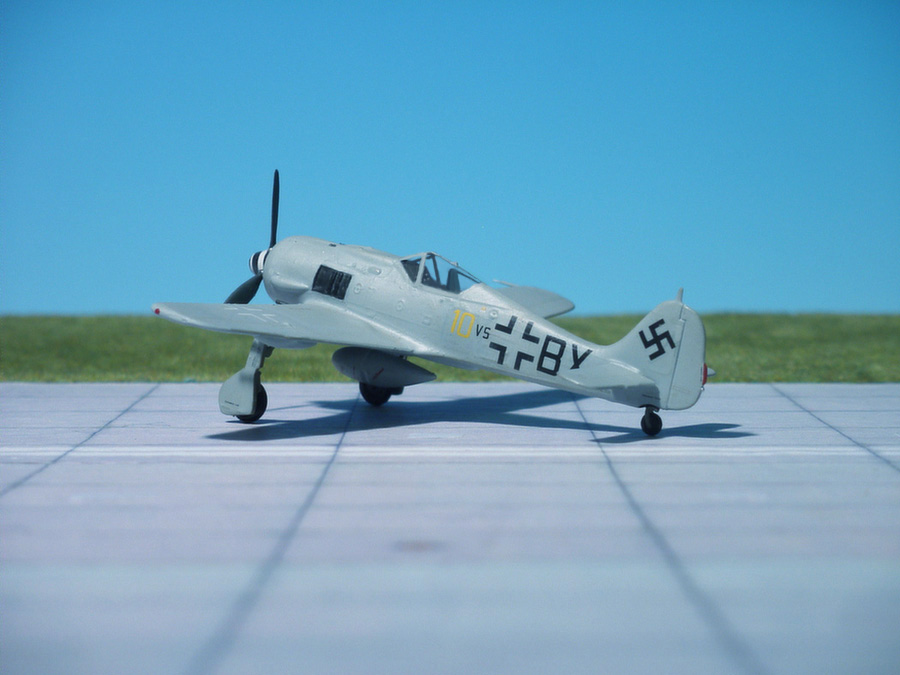
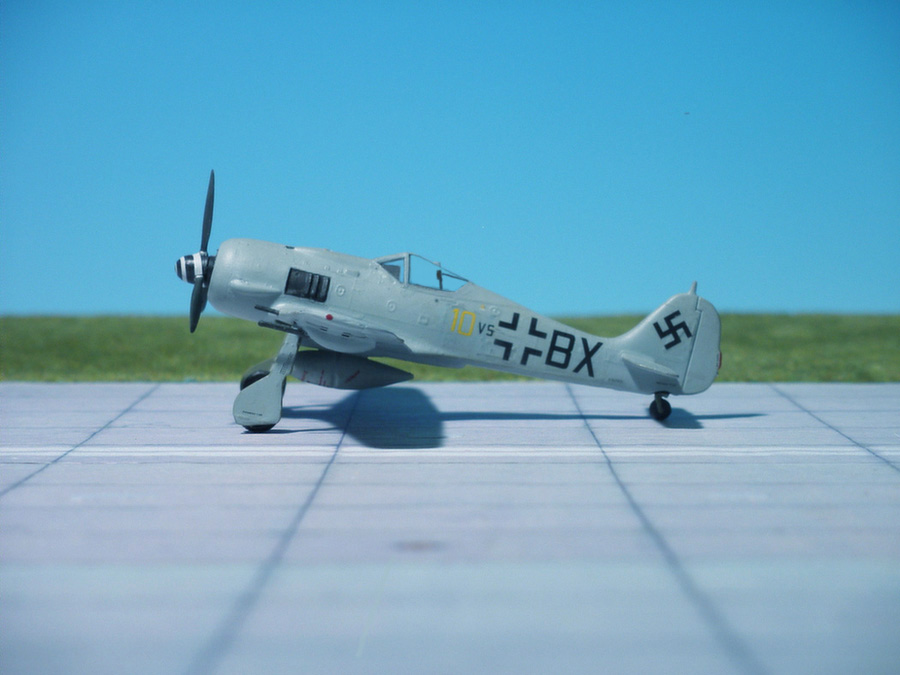
 

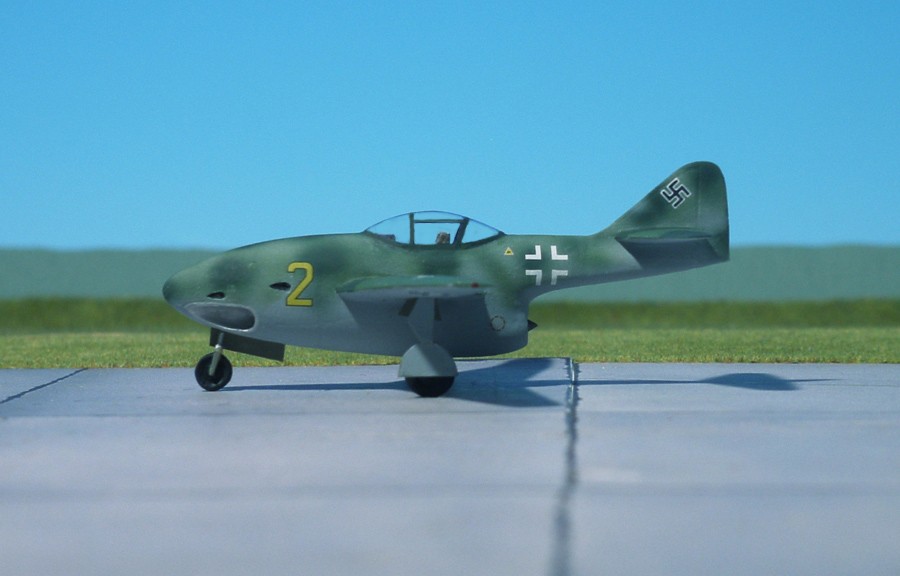
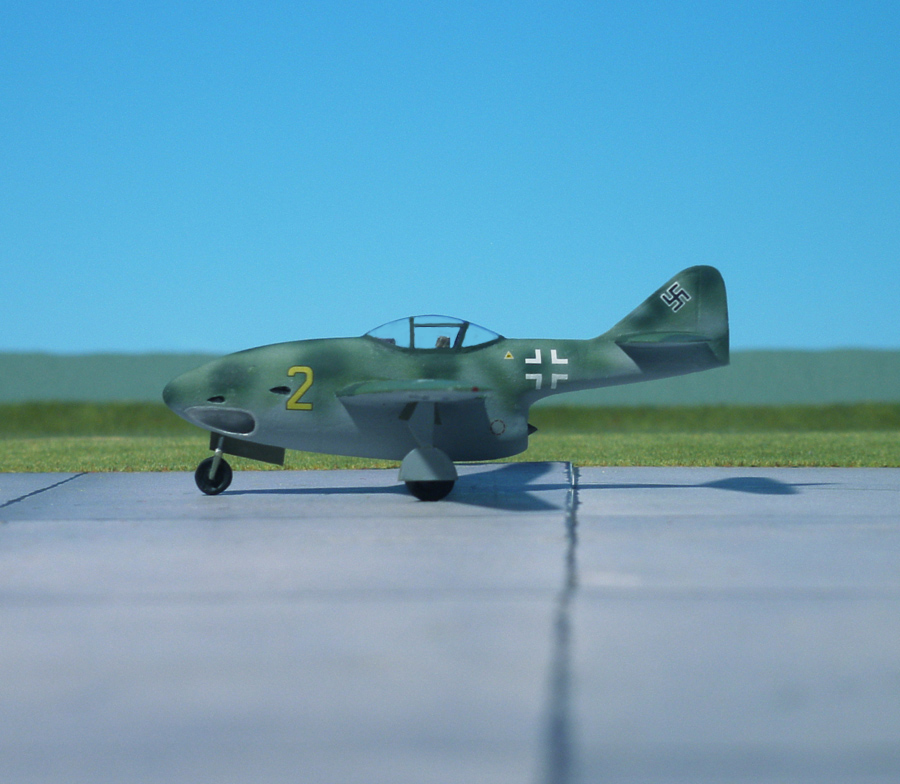
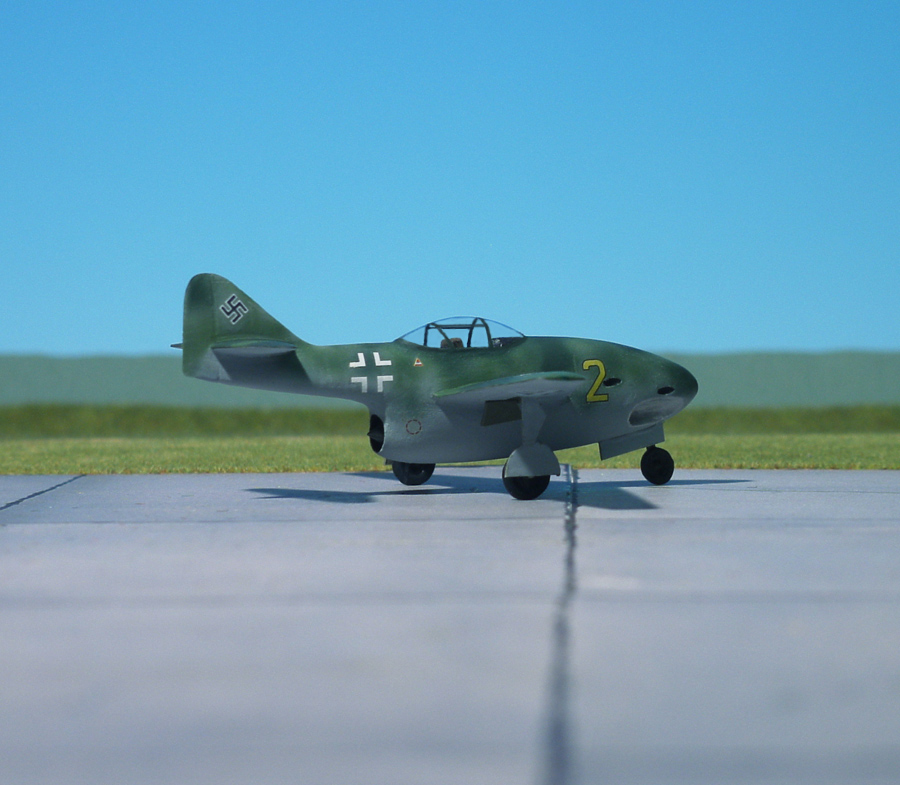
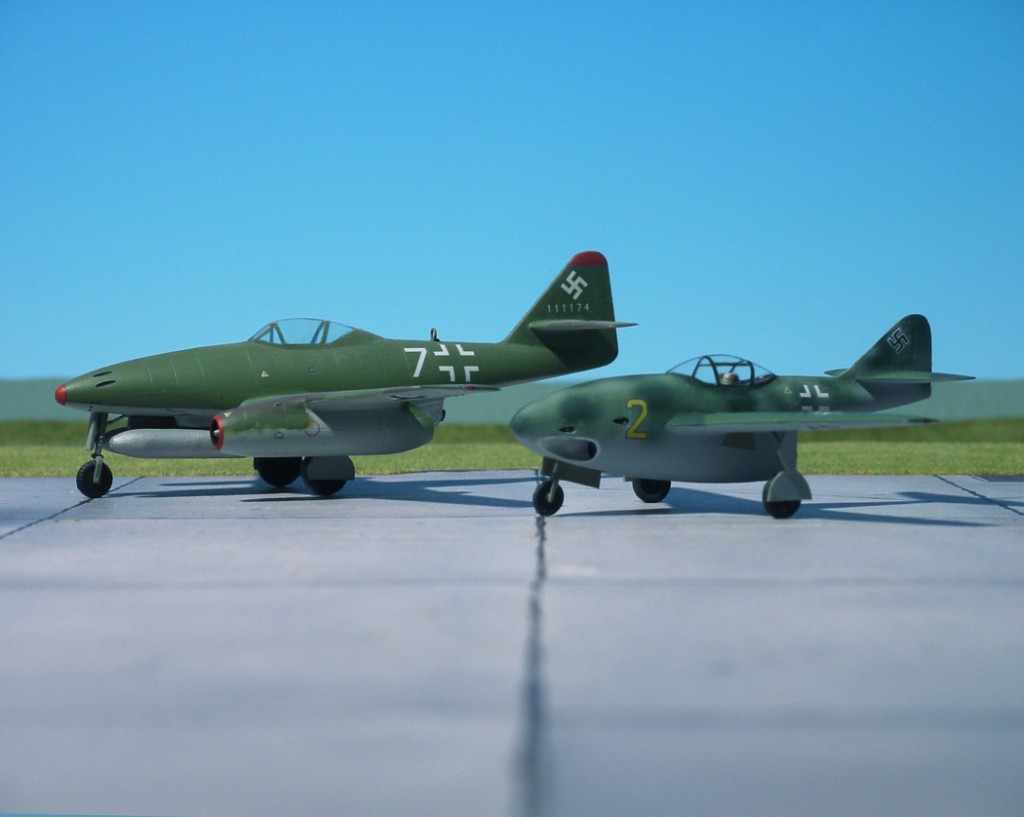
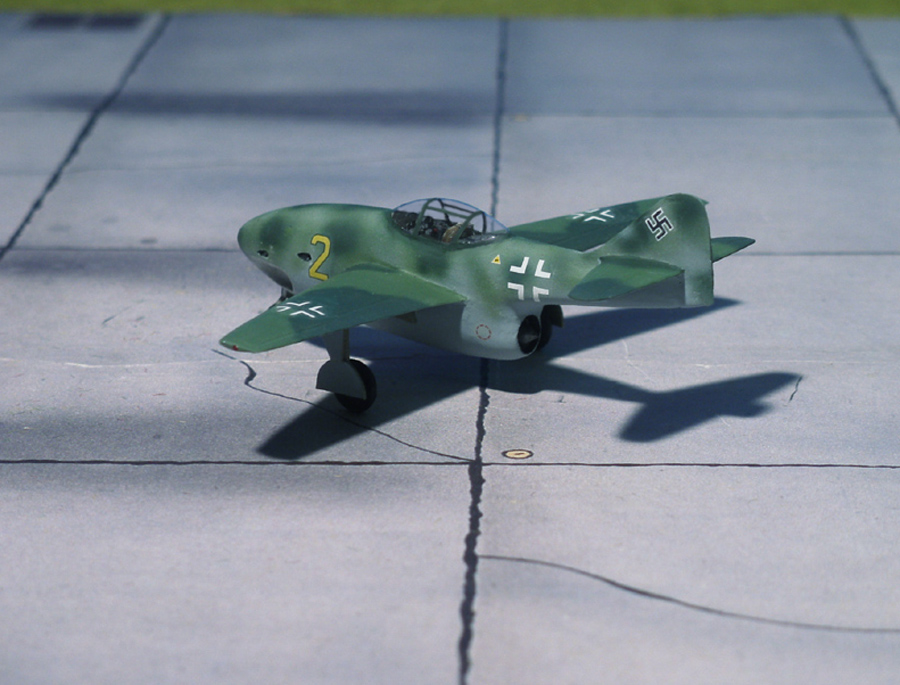
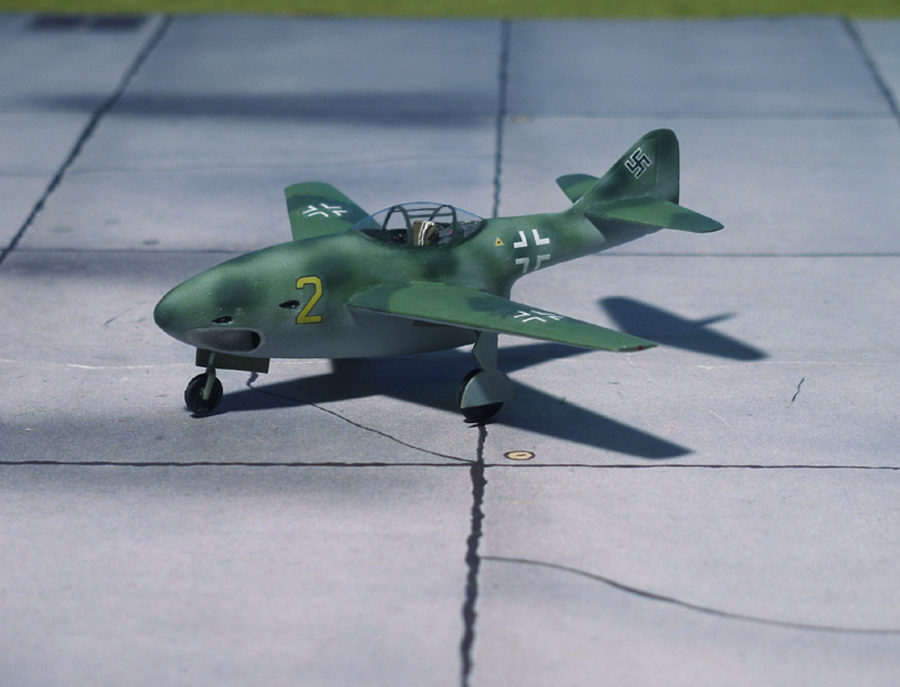
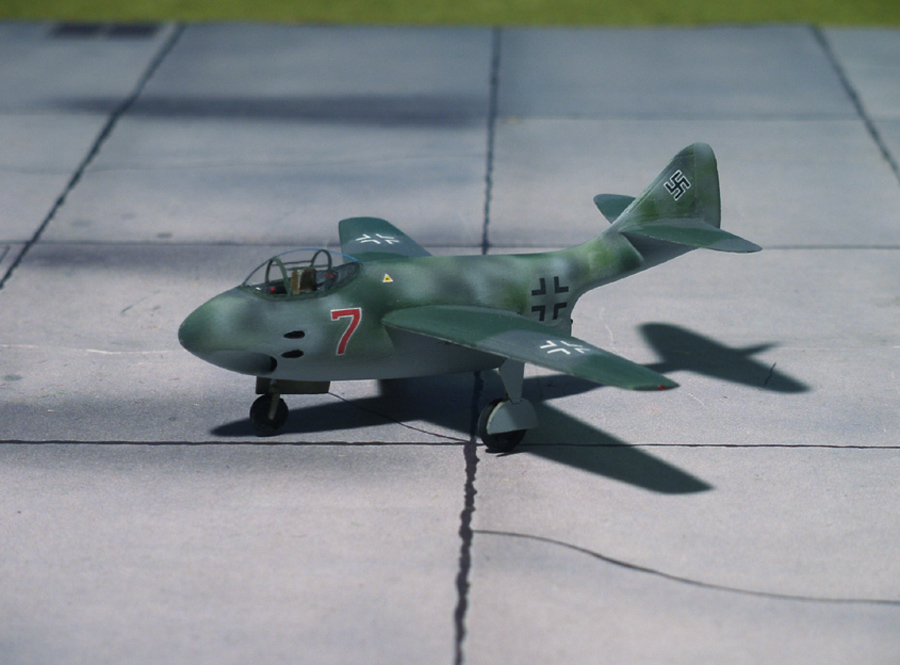
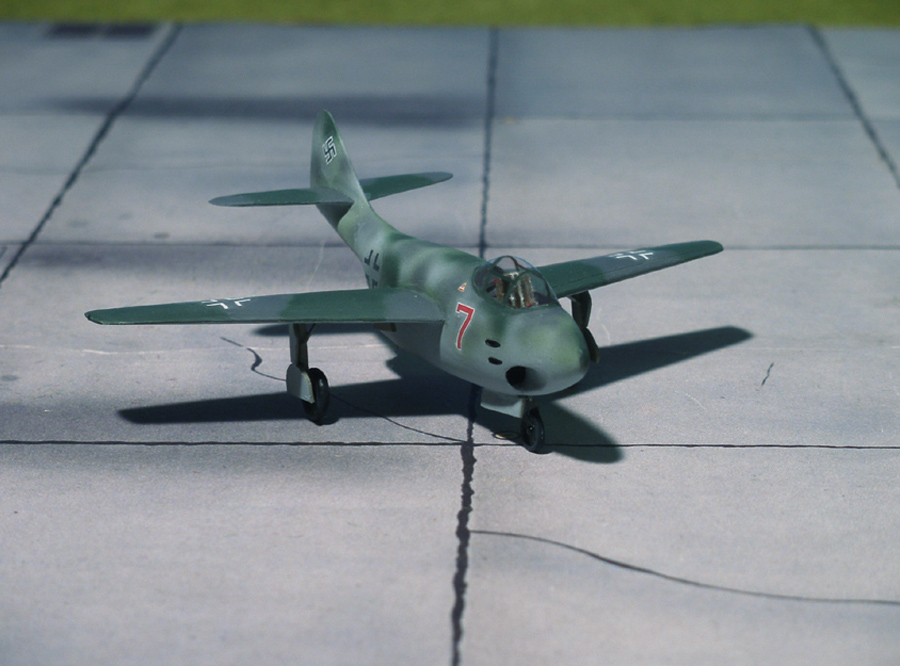
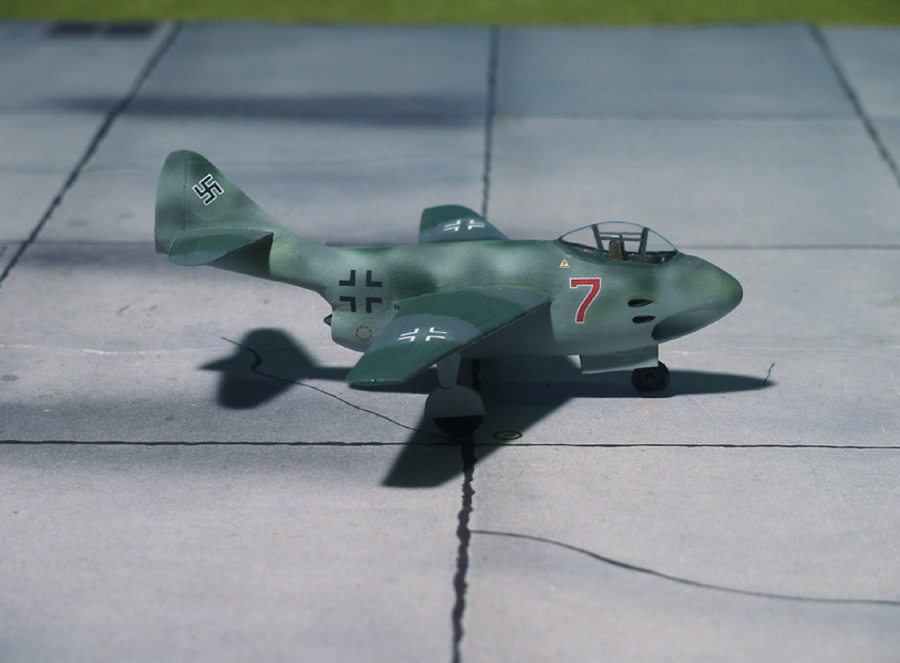
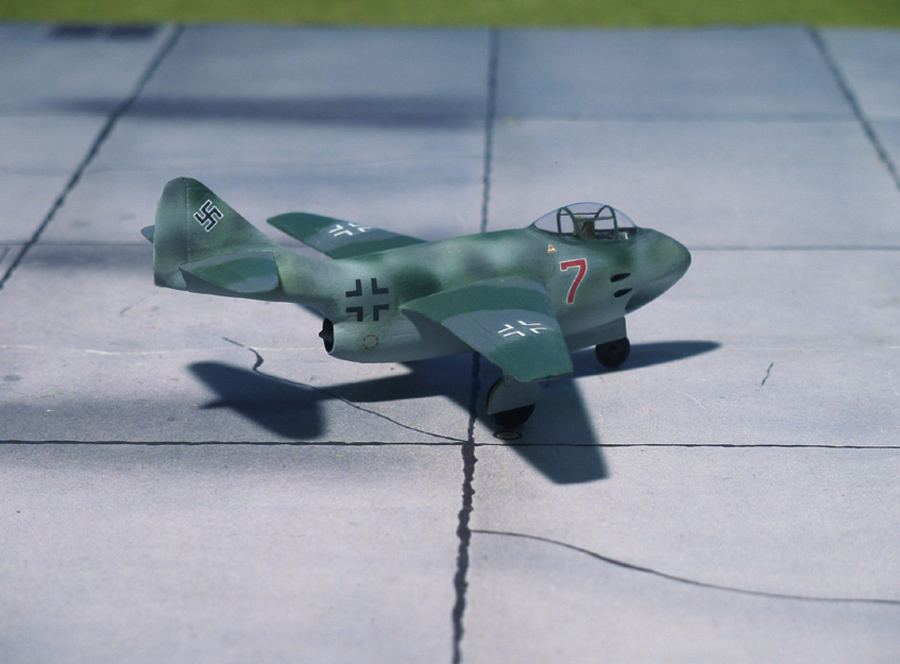
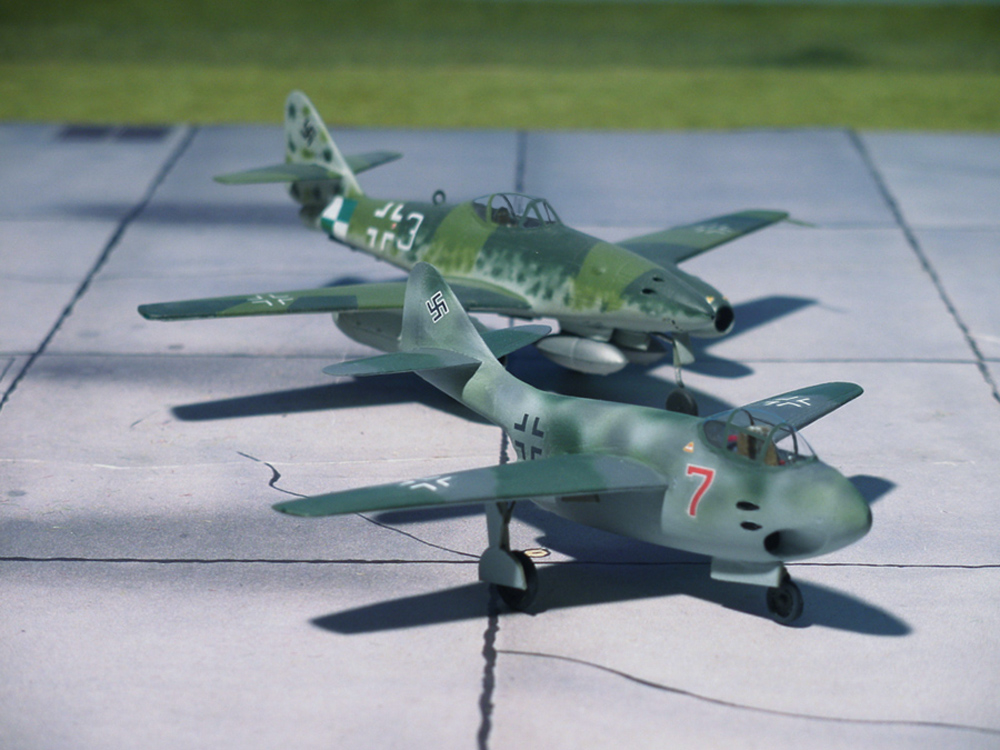
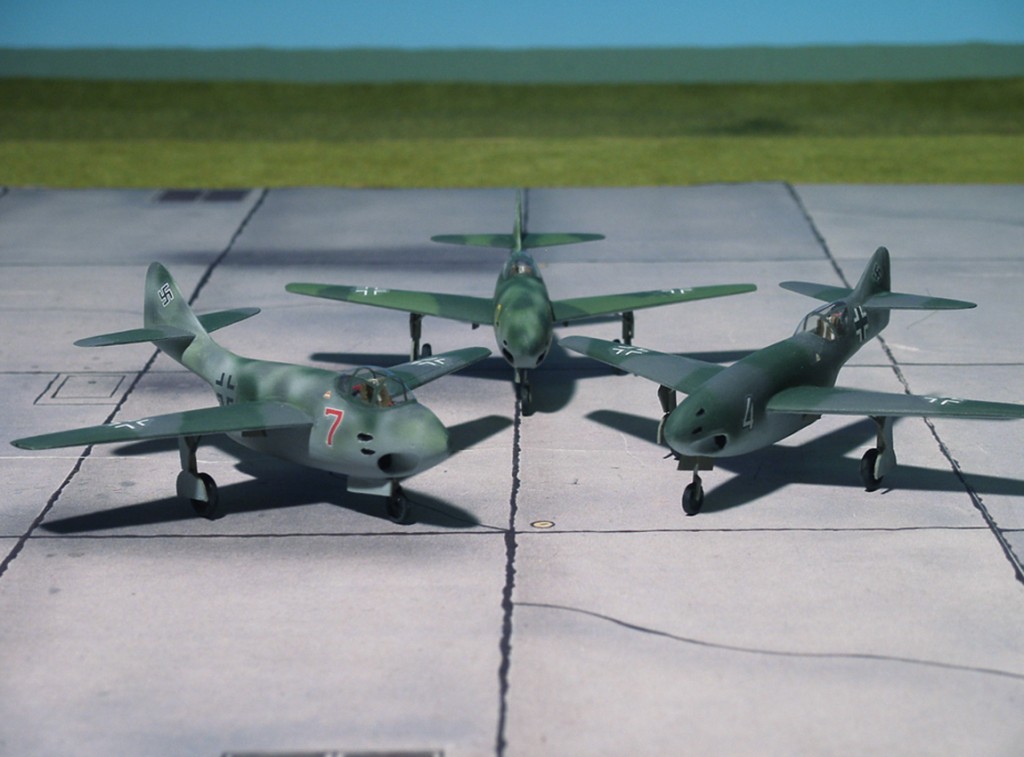
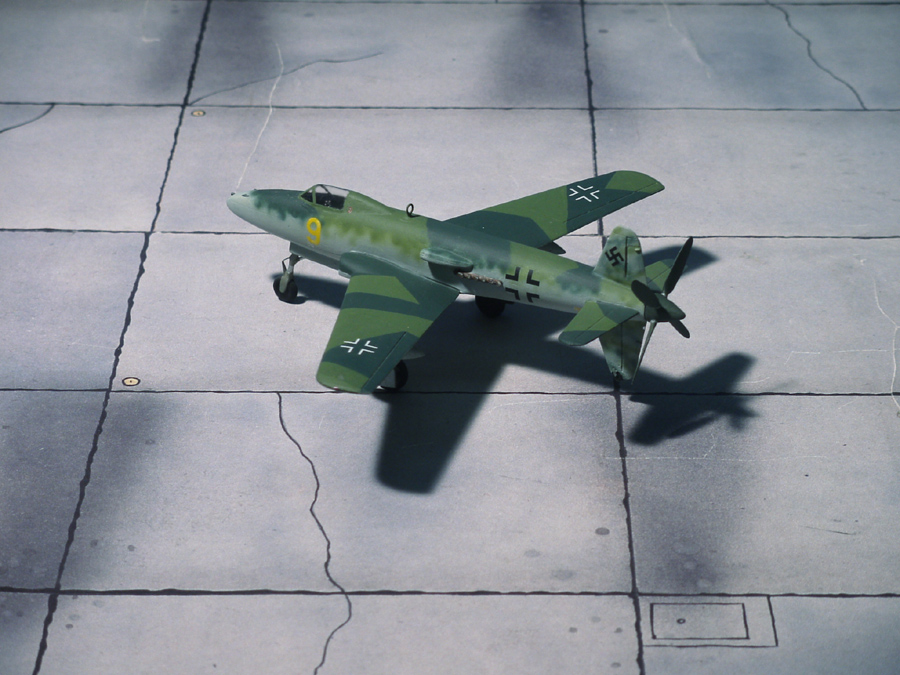
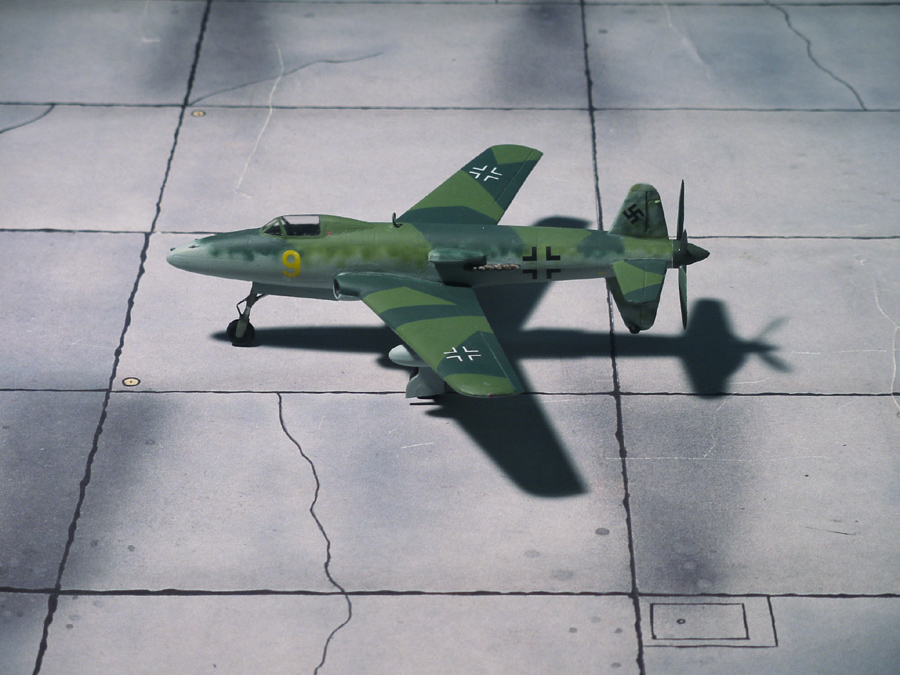
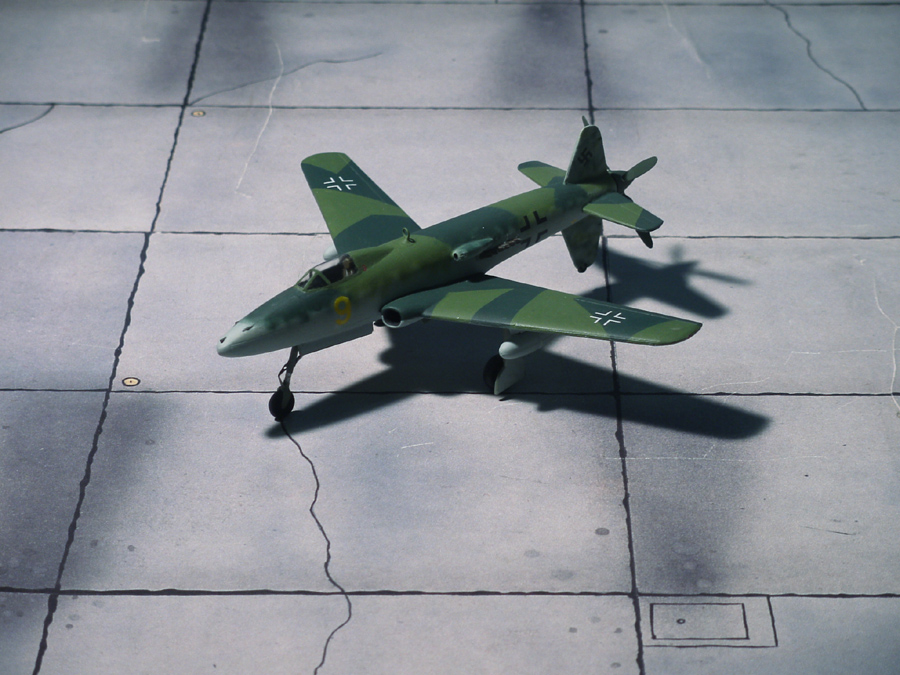
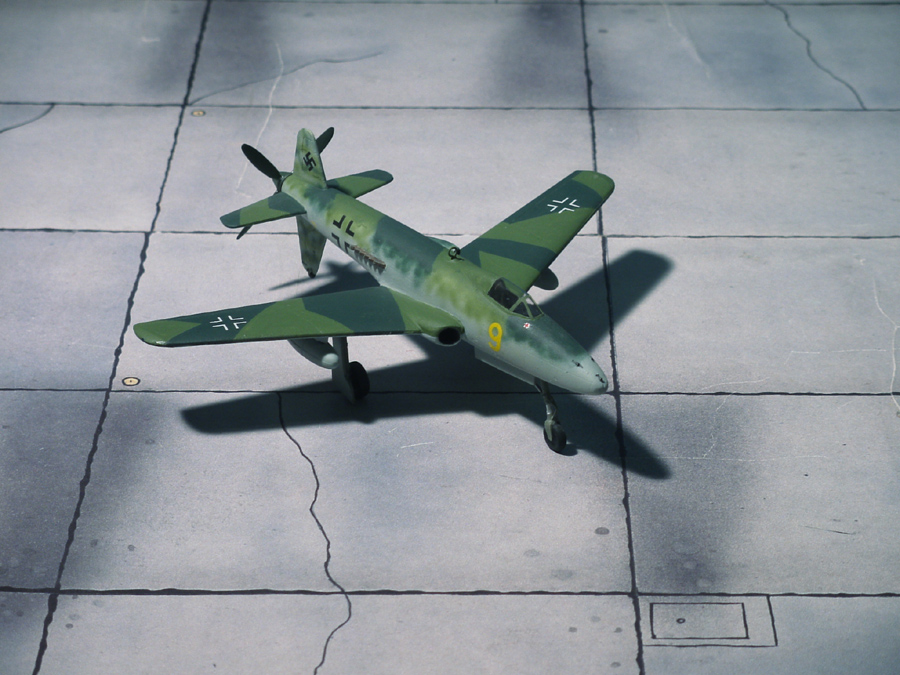
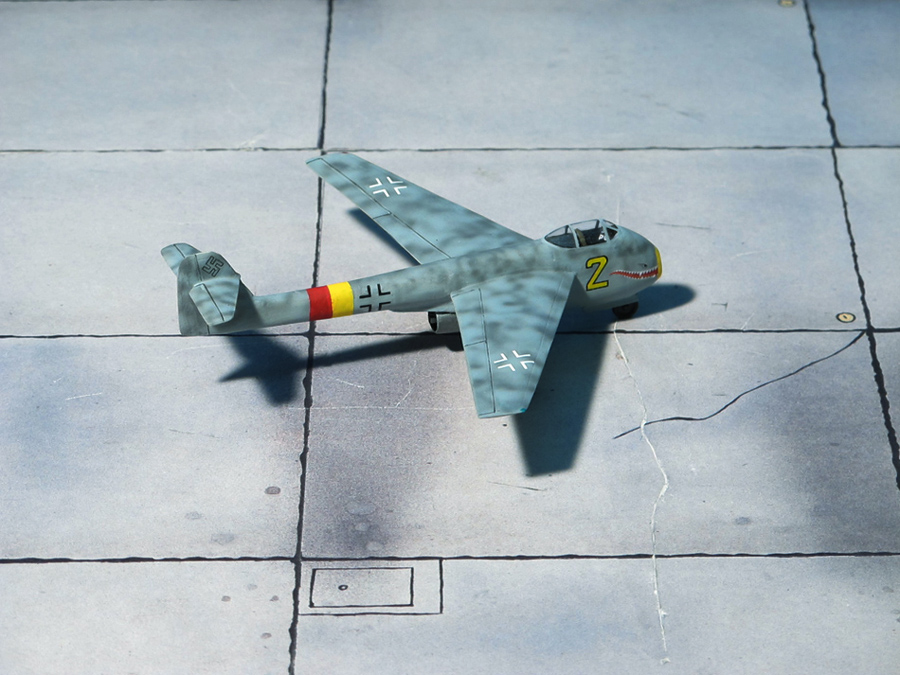
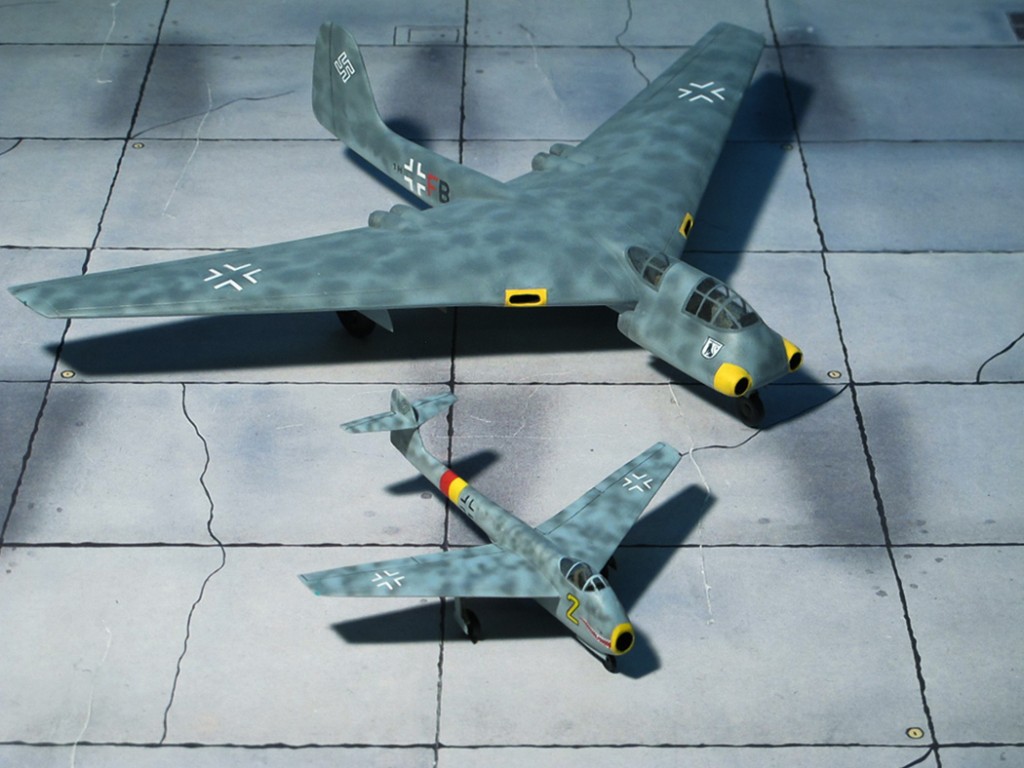
Messerschmitt Me P.1092/5 (Unicraft, Resin)

TYPE: Interceptor, Fighter, Fighter bomber. Project.+
ACCOMMODATION: Pilot only

POWER PLANT: One Junkers Jumo 004C turbo jet, rated at 1,015 kp

PERFORMANCE: 567 mph at 19,700 ft (estimated)

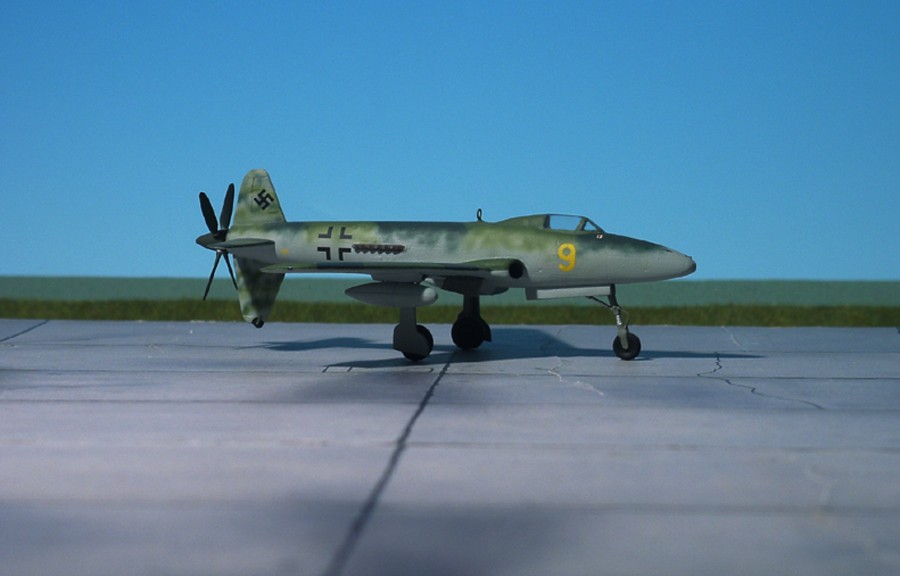
COMMENT: The Messerschmitt Me P.1092/5 was the final design of all Me P.1092 projects. The layout was similar to the Me P.1092/3 and Me P.1092/4 as far as wings, tail compartment, air intake, undercarriage and turbo engine are concerned. Also the calculated performance remained equivalent. Solely the cockpit was moved back above the wings to give more space for armament in the fuselages nose. All the different Me P.1092 projects remained on drawing board. However, the designs influenced later projects such as Messerschmitt Me P.1106 and Me P.1101, respectively.
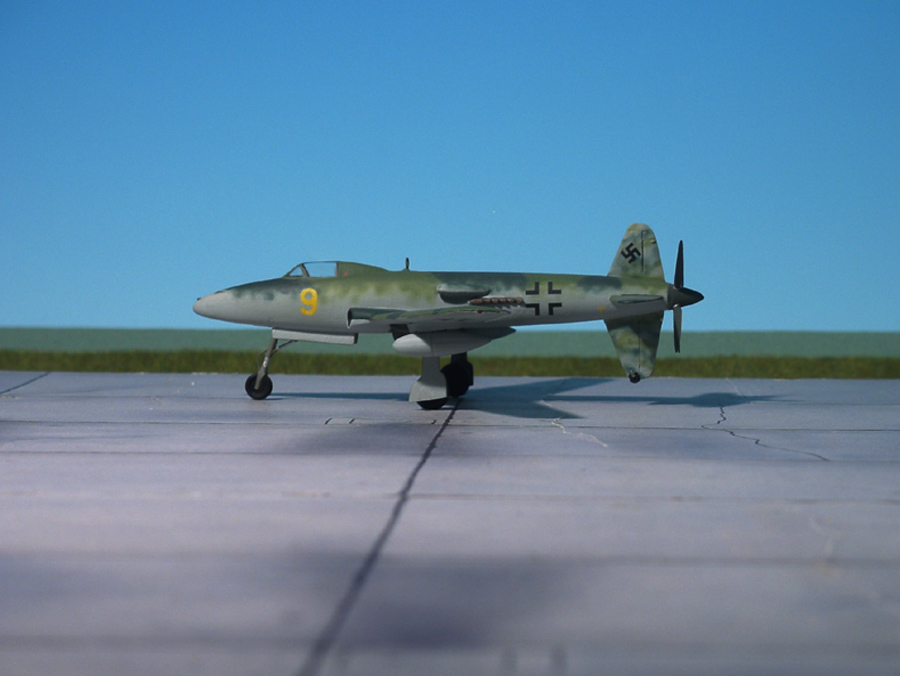
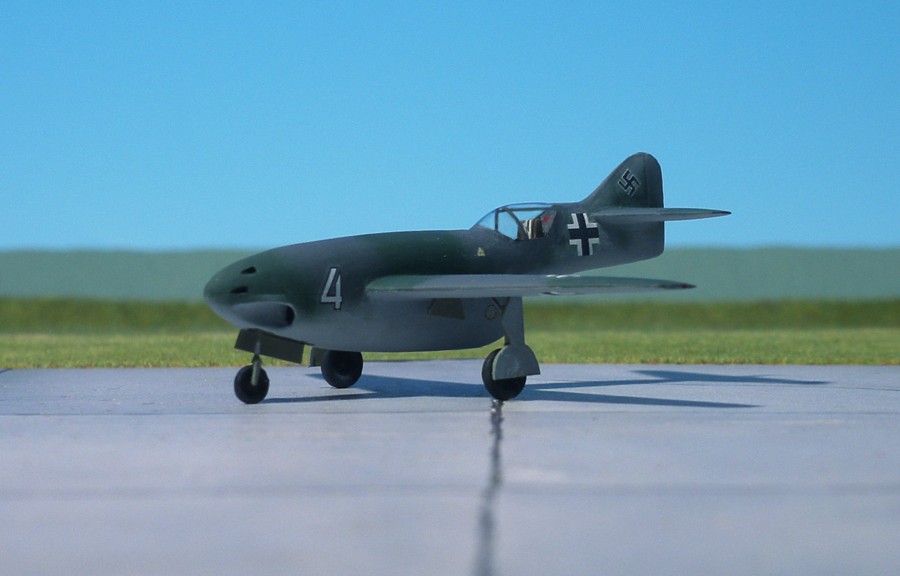
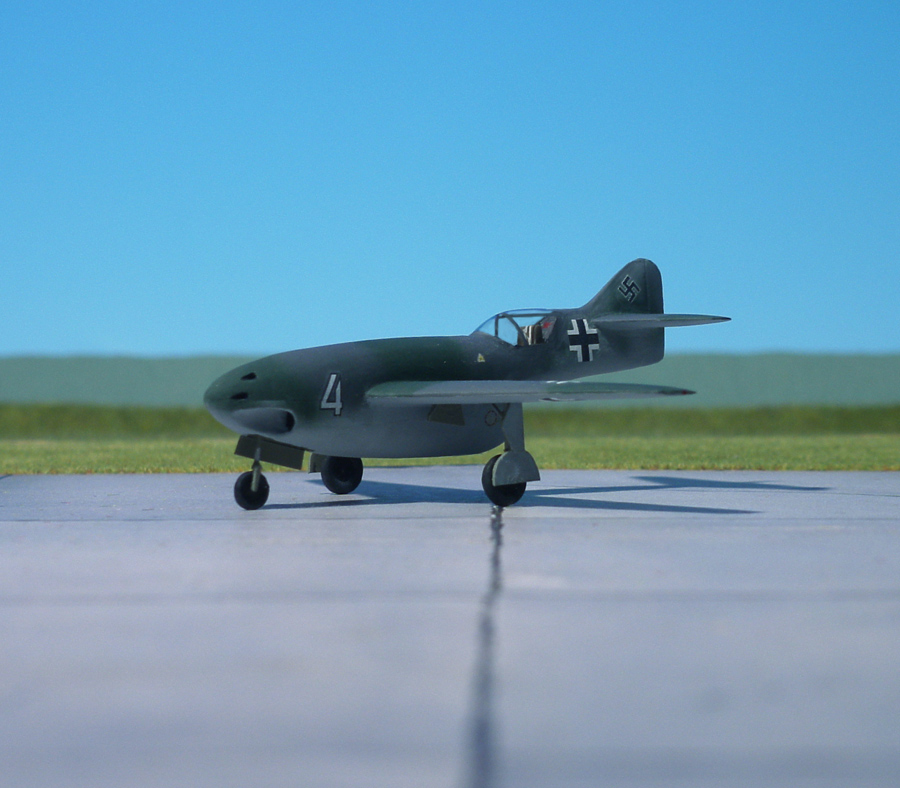
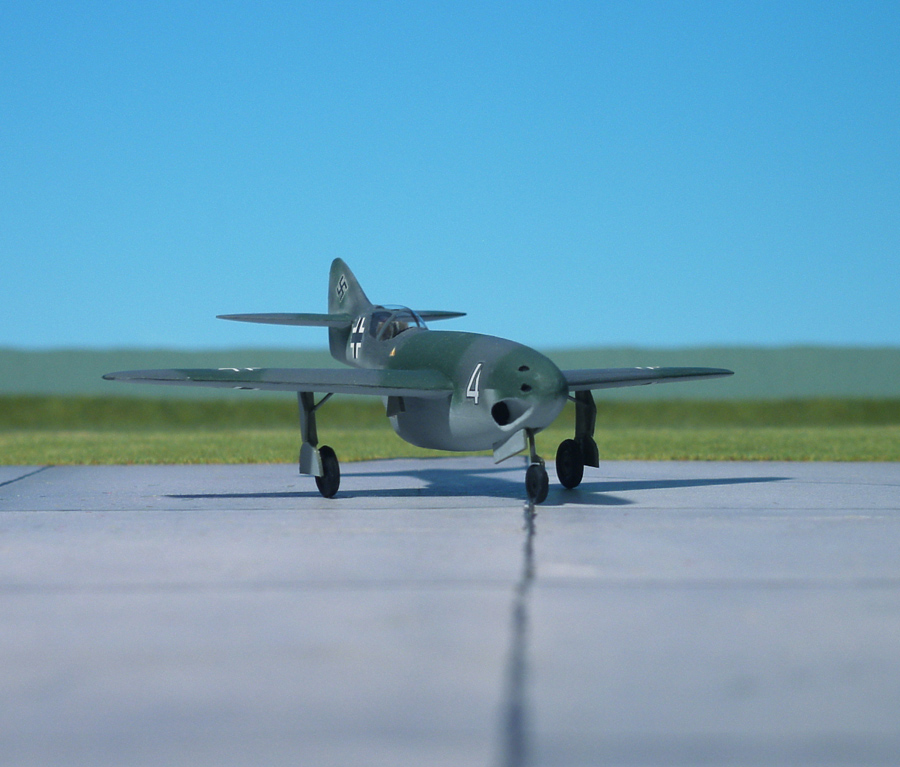
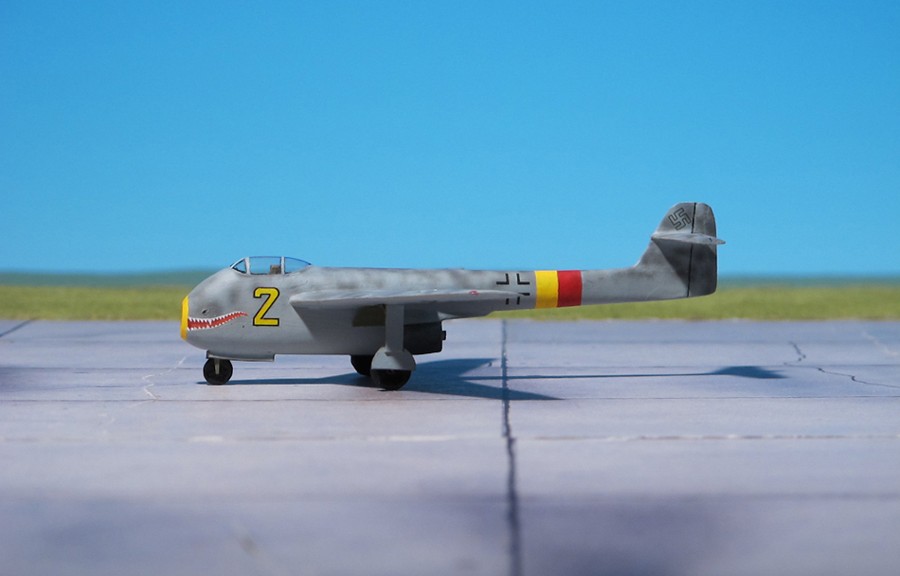
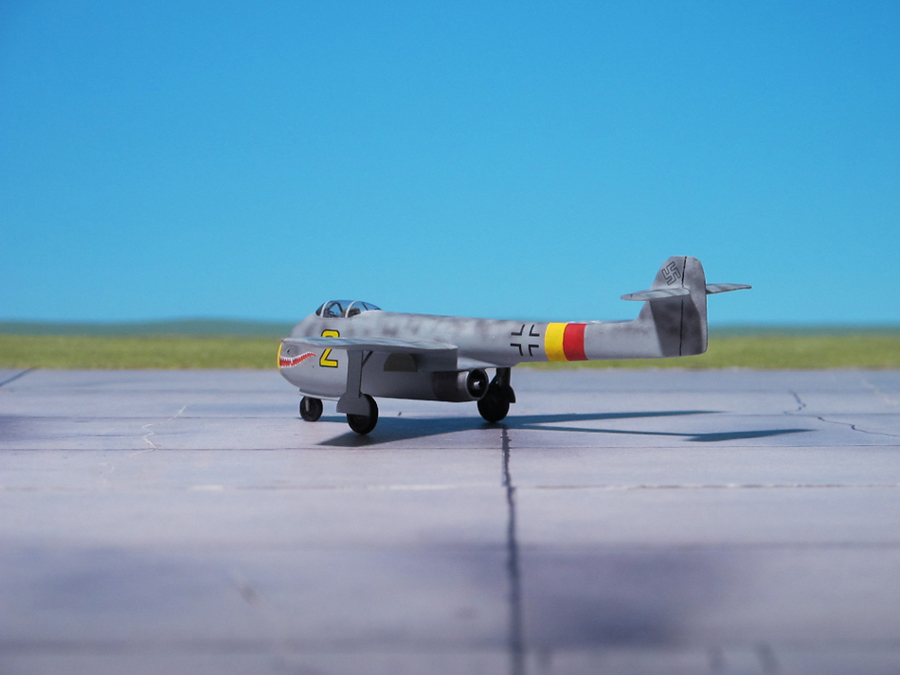
Messerschmitt Me P.1092/4 (Unicraft, Resin)

TYPE: Interceptor, Fighter, Fighter bomber. Project.

ACCOMMODATION: Pilot only

POWER PLANT: Junkers Jumo 004C turbojet, rated at 1,015 kp

PERFORMANCE: 567 mph at 19,700 ft (estimated)

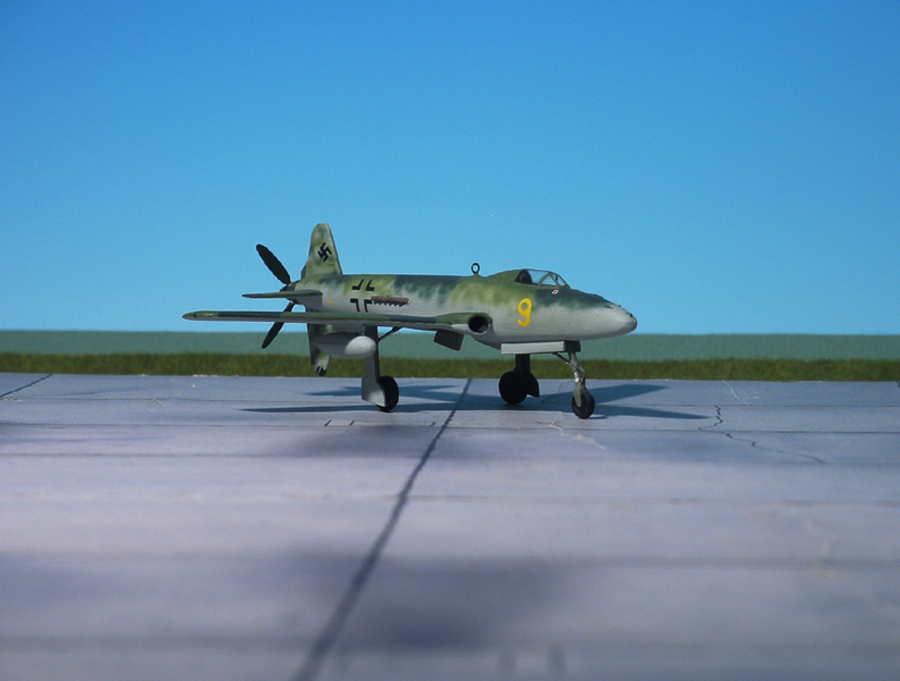
COMMENT: The design of the Messerschmitt Me P.1092/4 was very similar to the Messerschmitt Me P.1092/3 except the cockpit that was placed to the forward fuselage. This layout allowed the pilot a much better field of vision. Air intake, wings and tail unit as well as power unit remained unchanged.

Messerschmitt Me P.1092/3 Unicraft, Resin)

TYPE: Interceptor, Fighter, Fighter bomber. Project.

ACCOMMODATION: Pilot only

POWER PLANT: Junkers Jumo 004C, rated at 1,015 kp

PERFORMANCE: 567 mph at 19,700 ft (estimated)

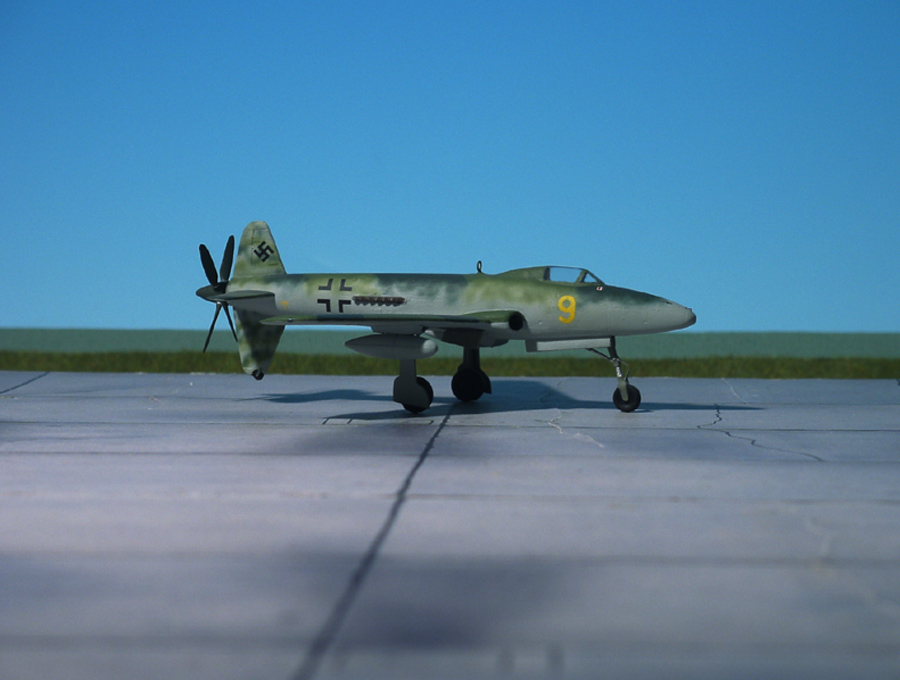
COMMENT: In May 1943, the Messerschmitt Company  began work on a series of fighter/Interceptor aircraft under the designation Me P.1092. The first design, the Messerschmitt Me P.1092A had single Junkers Jumo 004C turbojet and the P.1092B had a rocket engine.  The wings were basically the outer wing sections from the Messerschmitt Me 262, a butterfly tail and a tricycle landing gear arrangement were planned. In mid 1943, based on that design, a new series of derivatives were on the drawing boards, the Messerschmitt Me P.1092/2, Me P.1092/3, Me P.1092/4, and Me P.1092/5, respectively. All were of conventional design, as far as power unit, wings and tail arrangement as well as landing gear are concerned.


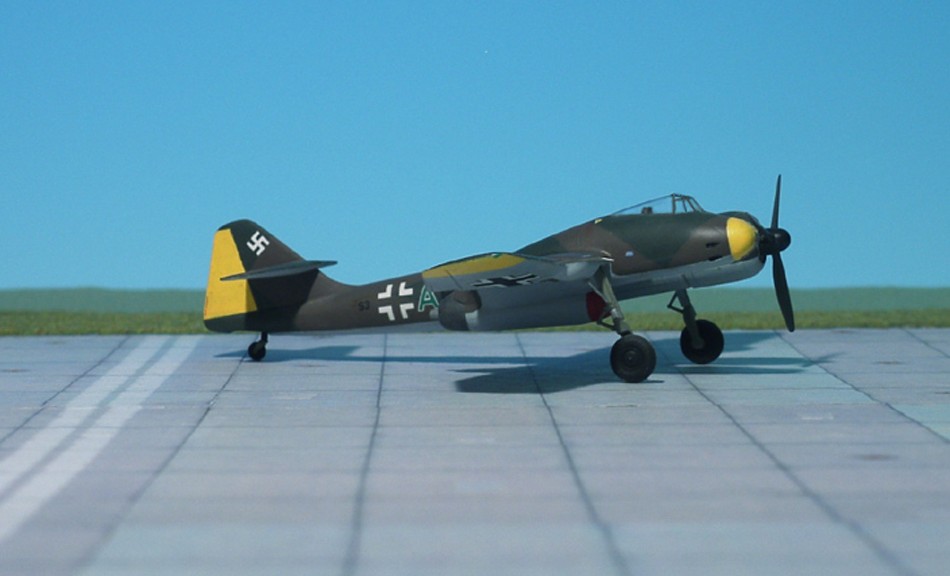
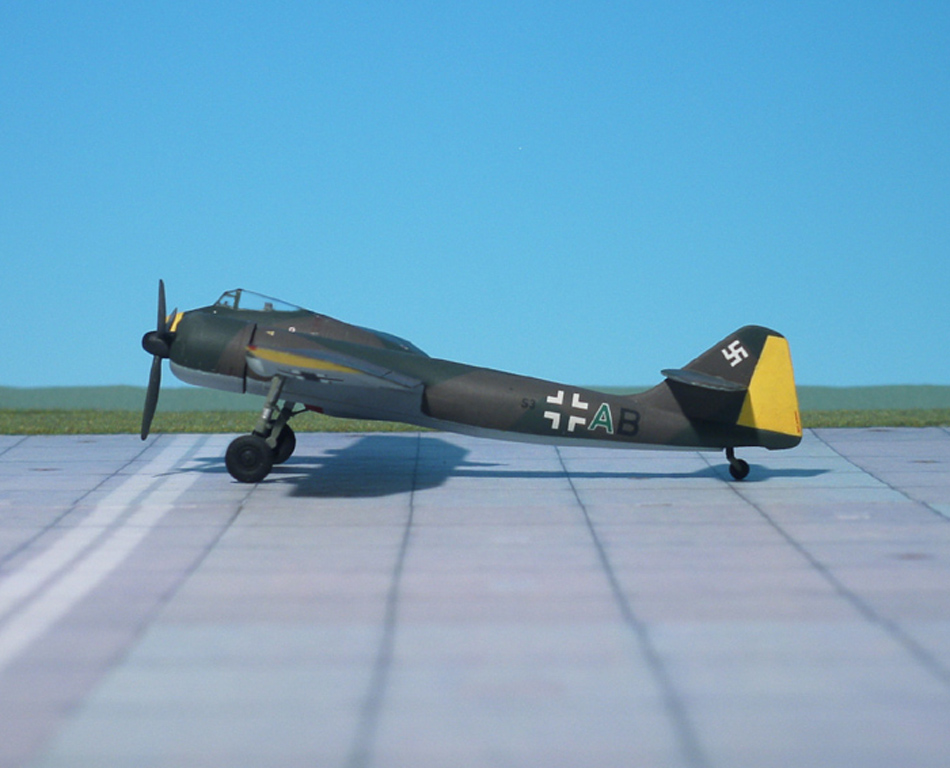
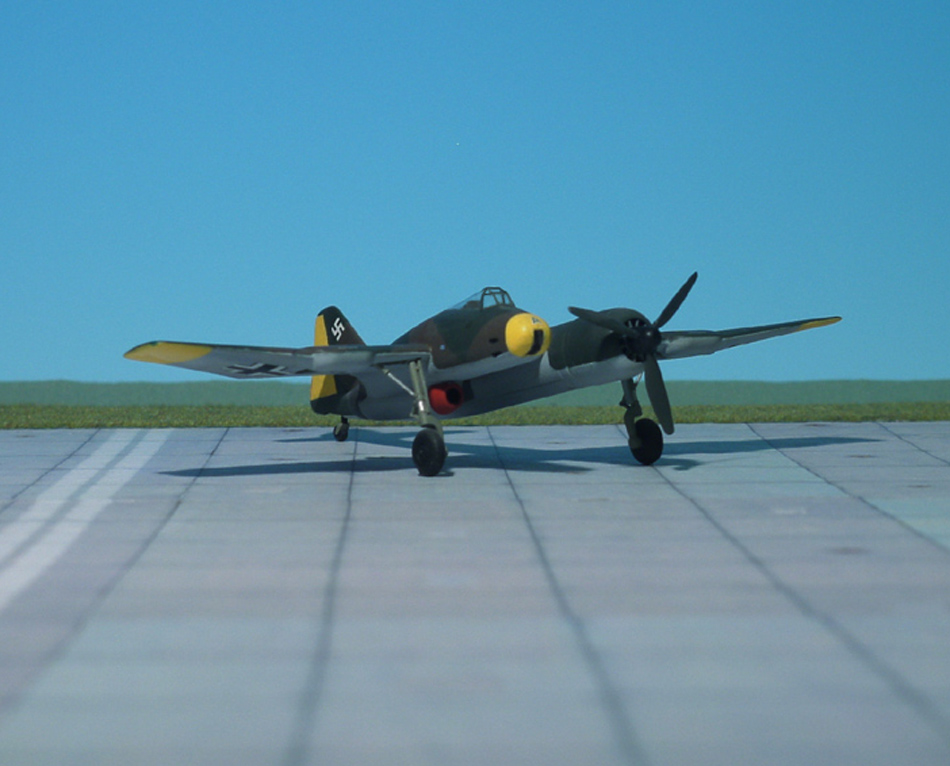
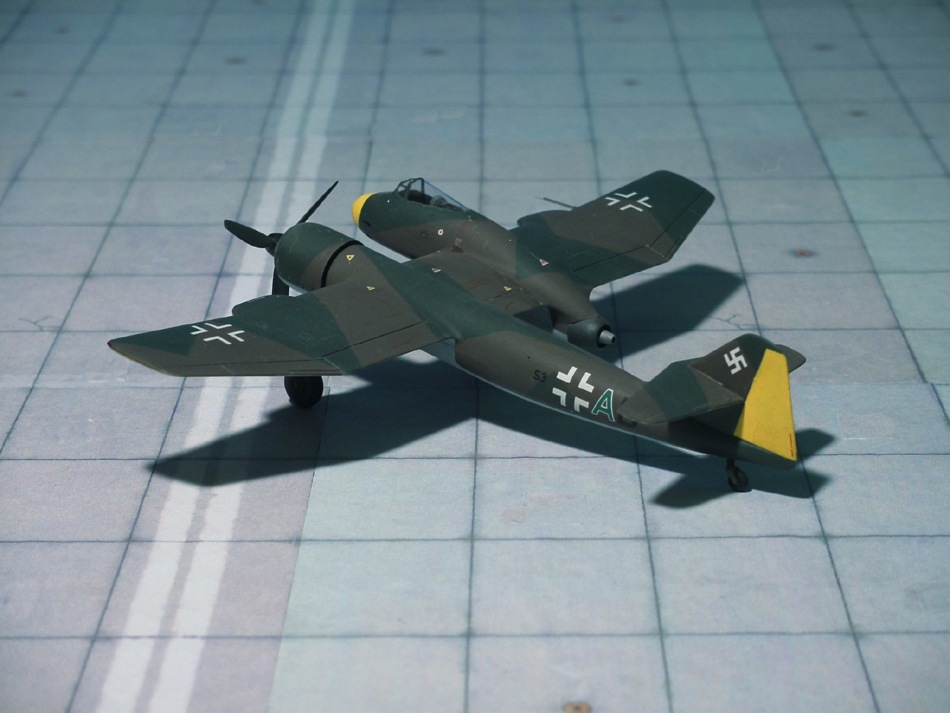
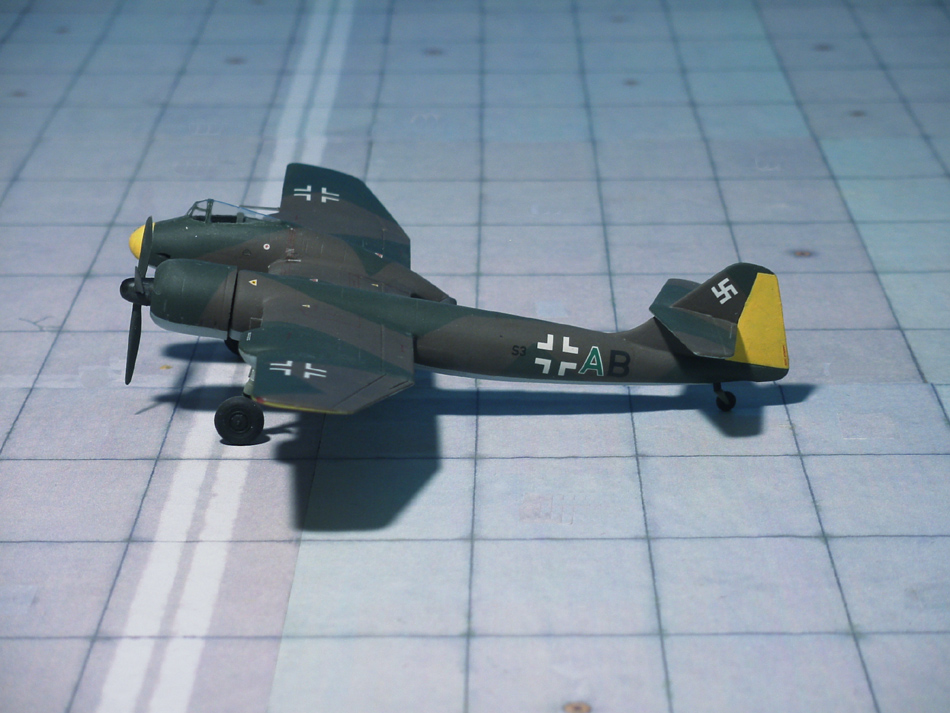
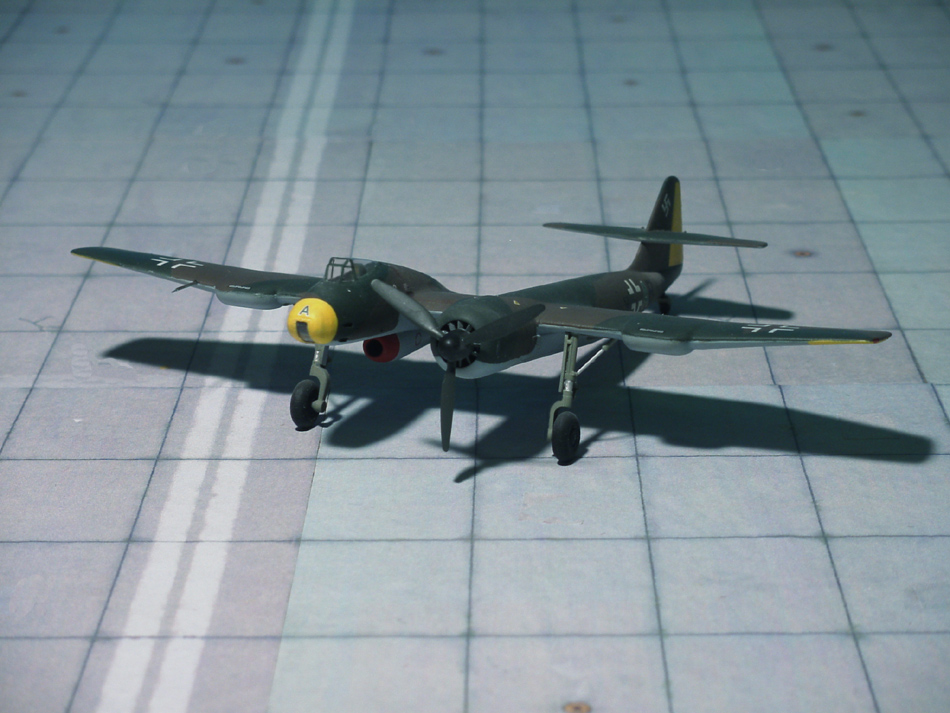
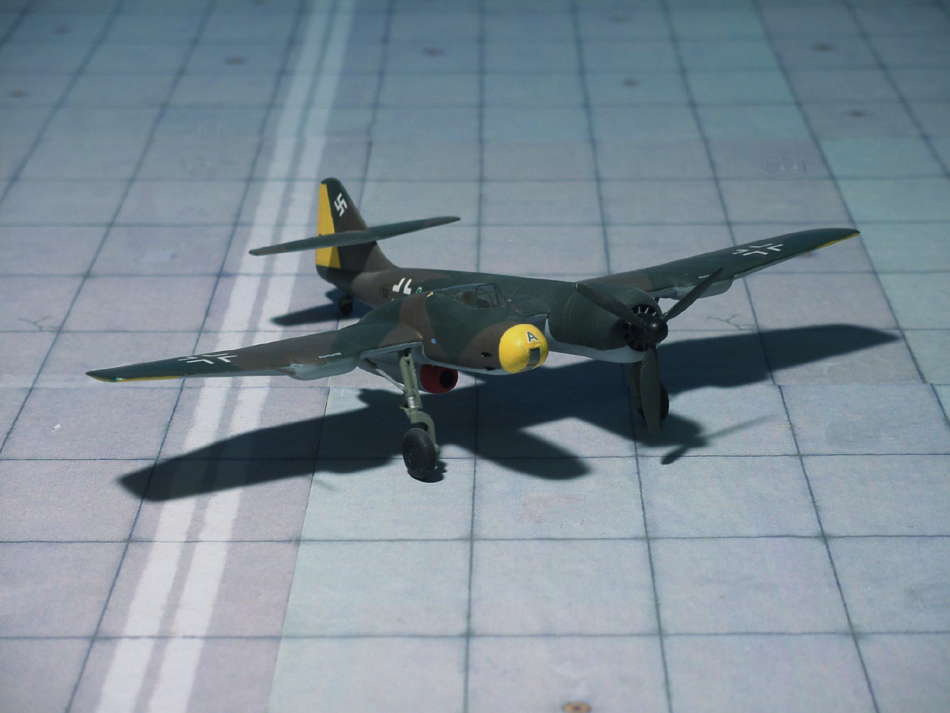
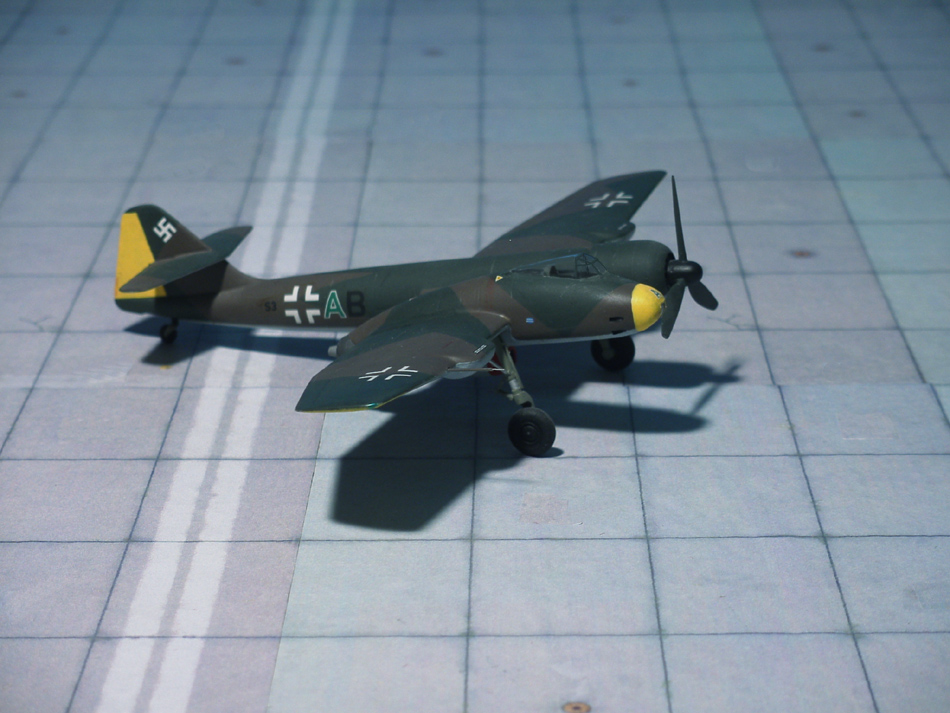
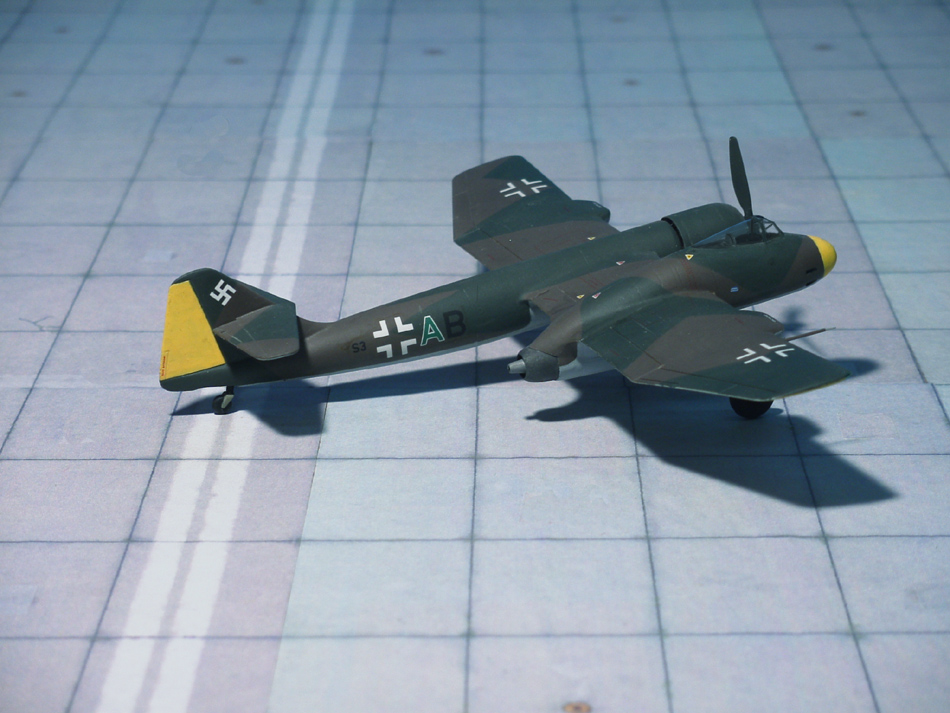
Blohm und Voss Bv. P.194.01-02 (Revell)

TYPE: Fighter, Dive bomber, Ground attack, and Reconnaissance aircraft. Project.

ACCOMMODATION: Pilot only

POWER PLANT: One BMW 801D engine, rated at 1,700 hp and one BMW 003 turbojet, rated at 800 kp

PERFORMANCE: 423 mph at 13,600 ft (estimated)

COMMENT: The Blohm & Voss Company had a great experience in designing asymmetrical aircraft as the Blohm  & Voss Bv 141,  Bv P.   176, Bv P.179, Bv P.204, and Bv P.237. In 1944 Blohm & Voss proposed new asymmetrical design to the RLM, which could be used as fighter, destroyer, dive bomber and reconnaissance, respectively. The design featured a mixed propulsion system with a piston engine in the main fuselage/ tail boom and a turbojet under a separated gondola that housed the cockpit.  The main advantage of that arrangement was an excellent and unobstructed view for the pilot and the reduction of torque moments along the vertical axis induced by the propeller of single engine aircraft. Several different designs were proposed, the Bv P.194.01-02, the Bv P.194.03-01, and the Bv P.194.00-101, changes regarding mainly in the layout of the turbojet engine. Due to the threatening defeat of Germany the Bv P.194 development was not pursued (Ref.: 16).

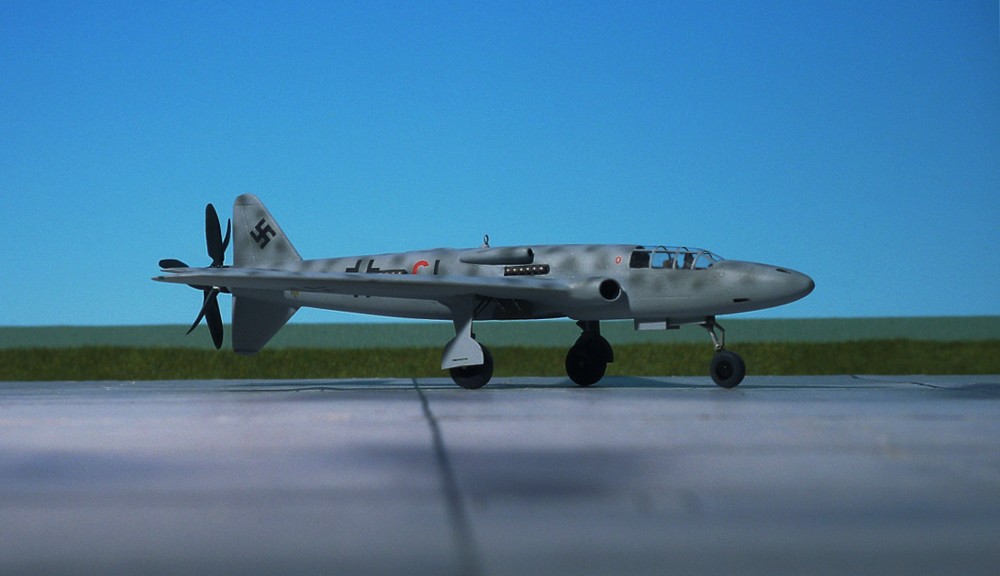
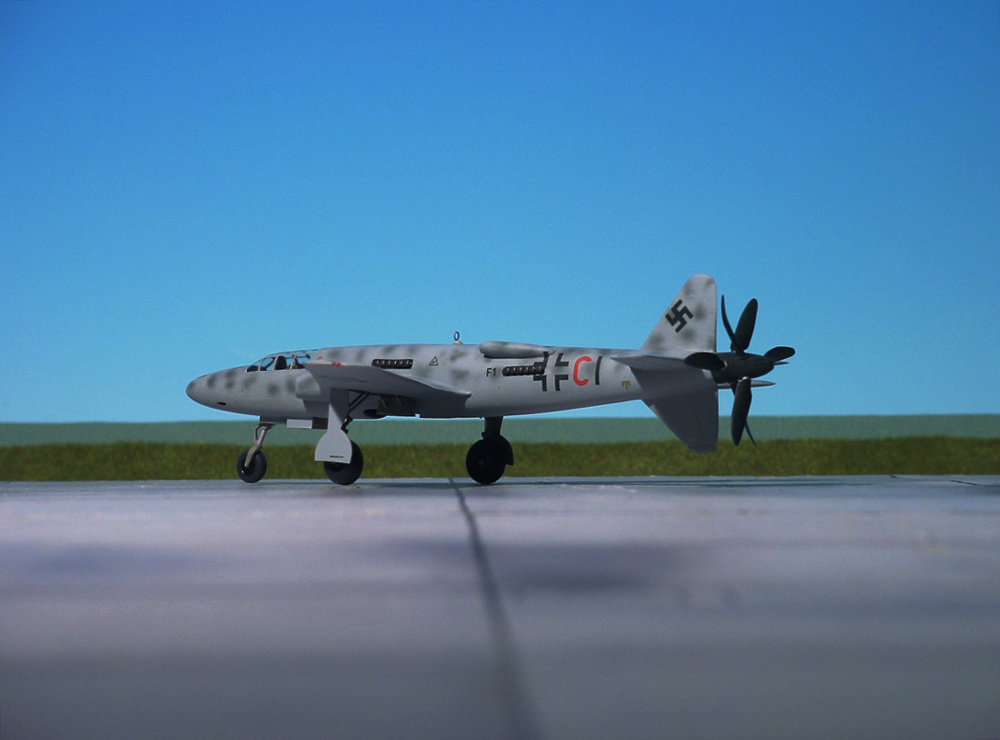
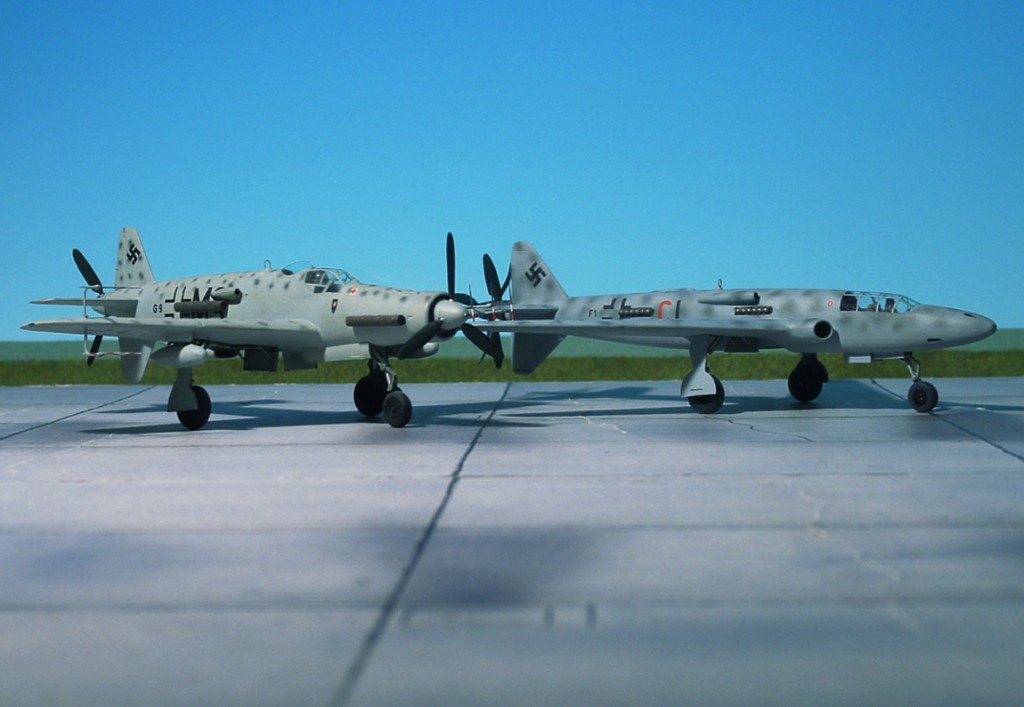
Dornier Do P.252/2 (Unicraft, Resin)

TYPE: Long range Bad-weather/Night Fighter. Project.

ACCOMMODATION: Crew of three

POWER PLANT: Two Junkers Jumo 213J, rated at 1,750 hp each

PERFORMANCE: 577 mph (estimated)

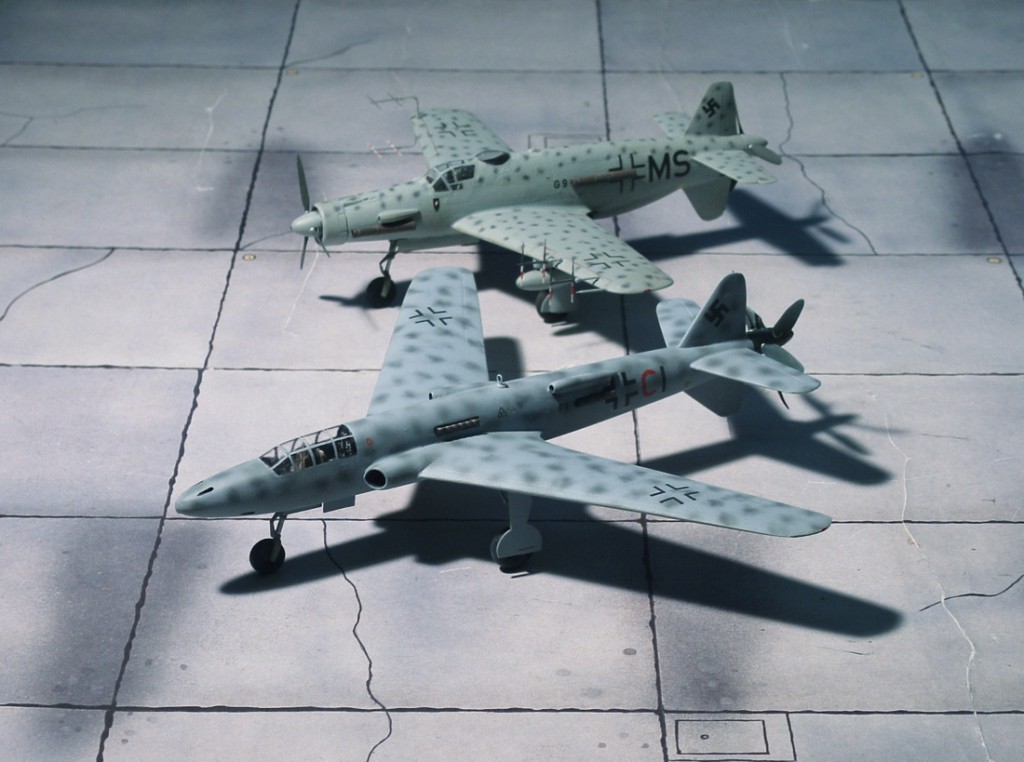
COMMENT: The Dornier Do P.252 project dates back to 1943 as replacement of the Do 335 “Pfeil” (Arrow).  In January 1945 the design, that based on the Dornier Do P.247/6 project,  was submitted for the optimum Luftwaffe night fighter contract specification. Three studies P.252/1, P.252/2, and P.252/3 were made from this design, all were very similar despite little differences in dimensions and wing plan forms (straight, 35 and 22.5 degree, respectively). Two Junkers Jumo 213J , rated at 1750 hp each were located in tandem within the fuselage and coupled to an extension shaft that drove two  contra-rotating three bladed propellers that featured a blade sweep of 50 degrees, a novelty at that time. The P.252/2 had a slightly elongated fuselage and room for a crew of three. The wings were swept back at 35 degrees. Although the Dornier Do P.252 promised an excellent performance, equivalent to upcoming turbojet powered aircraft the design was abandoned reluctantly.

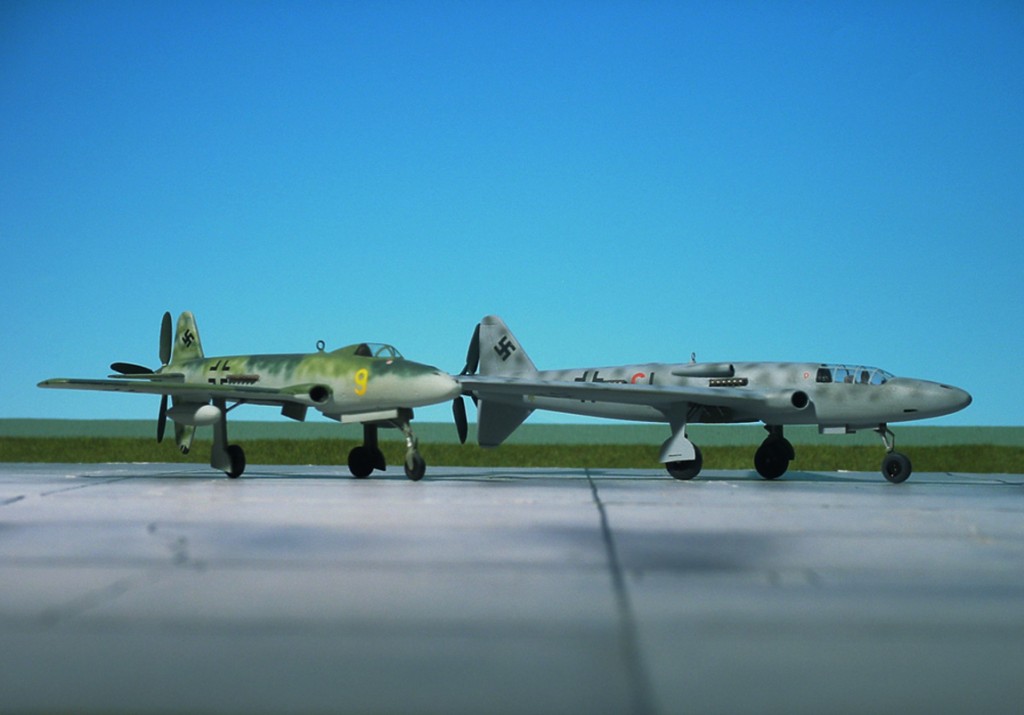
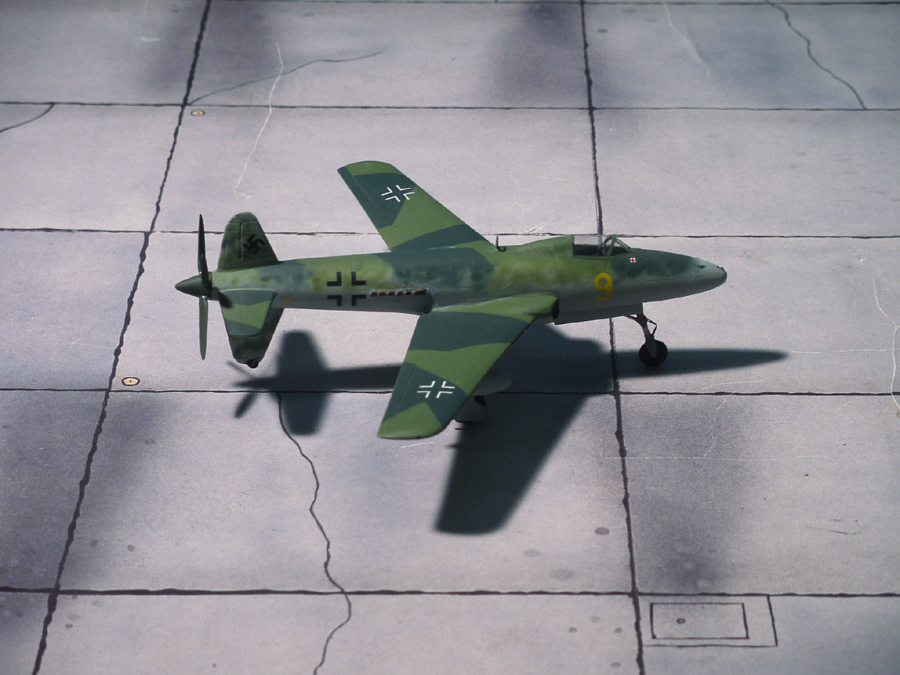
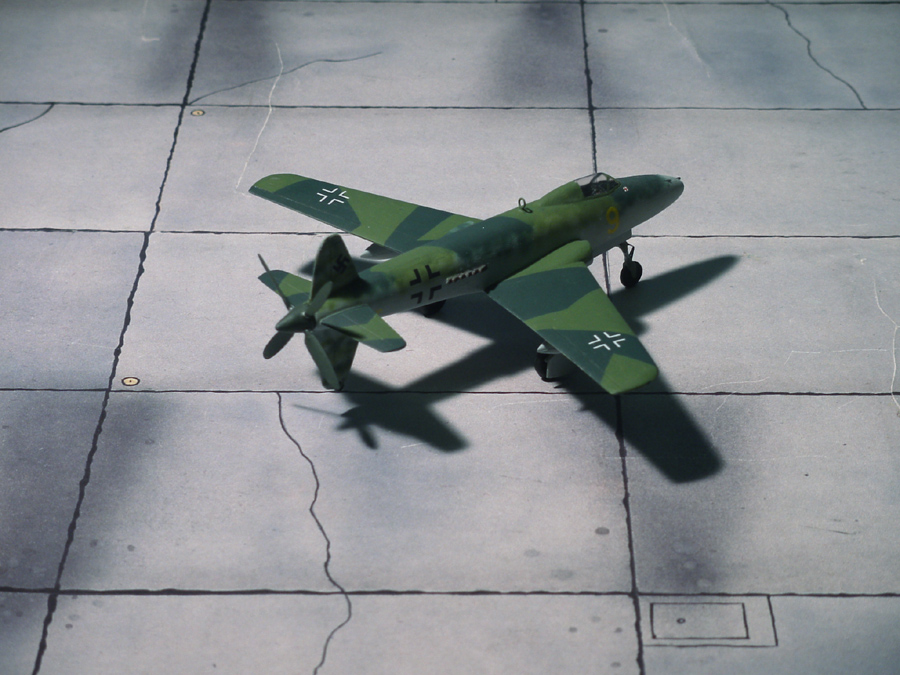
Dornier Do P.247/6 (Unicraft, Resin)

TYPE: Fighter/Fighter bomber. Project

ACCOMMODATION:Pilot only

POWER PLANT: One Junkers Jumo 213T, rated at 2,000 hp, driving four bladed pusher propeller

PERFORMANCE: 520 mph (estimated)

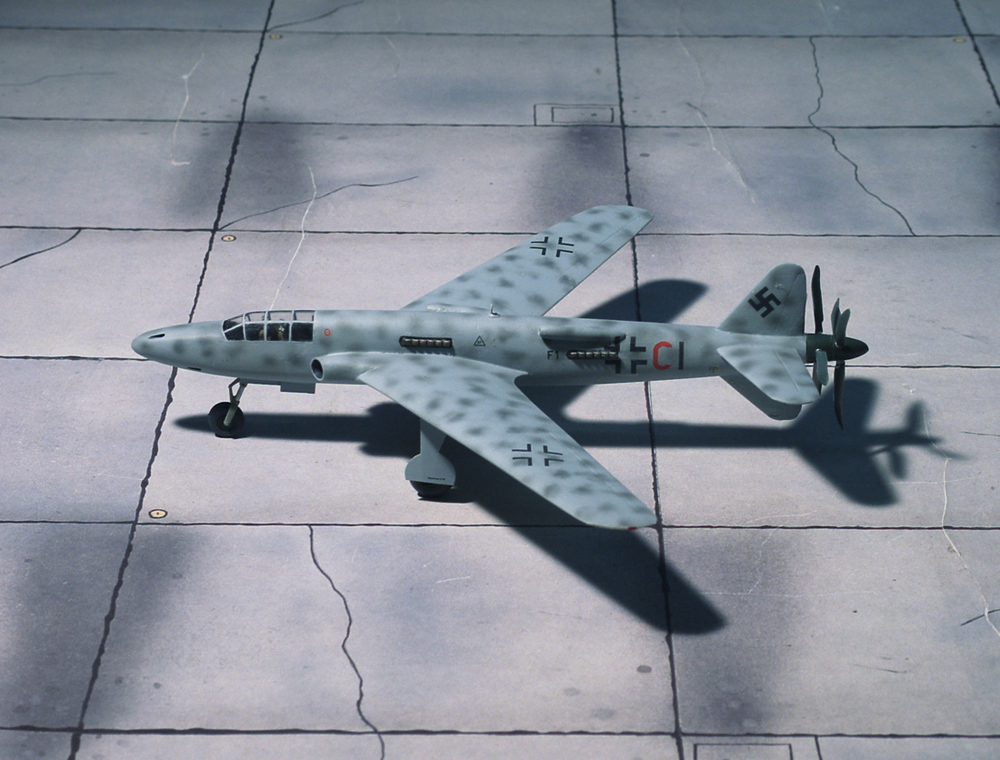
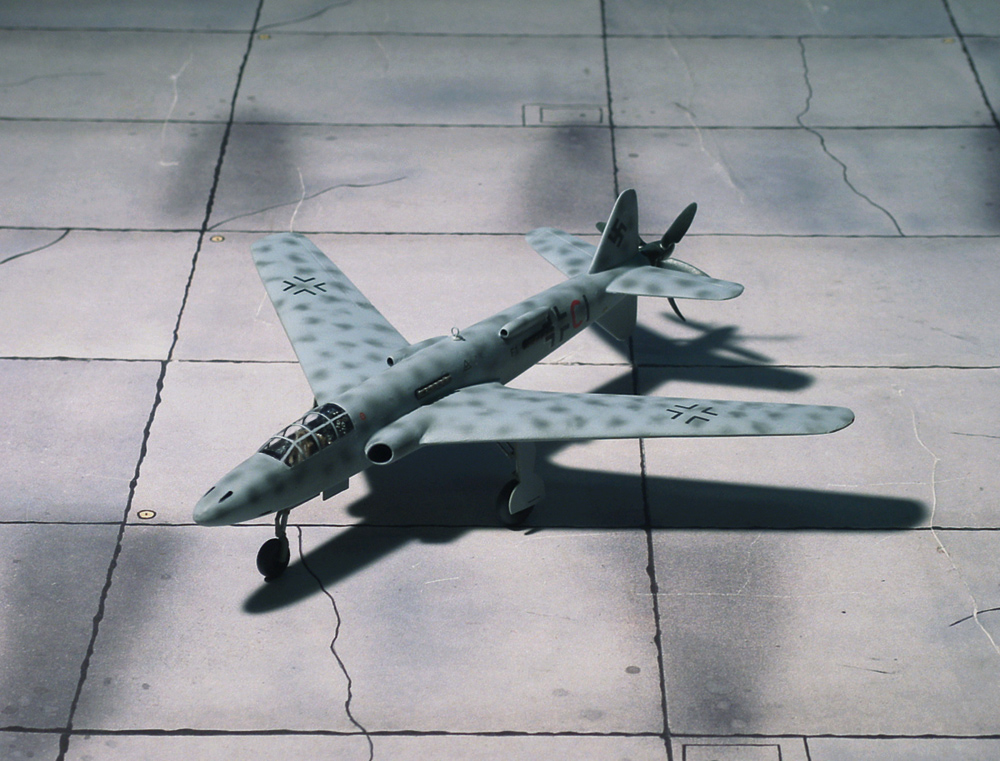
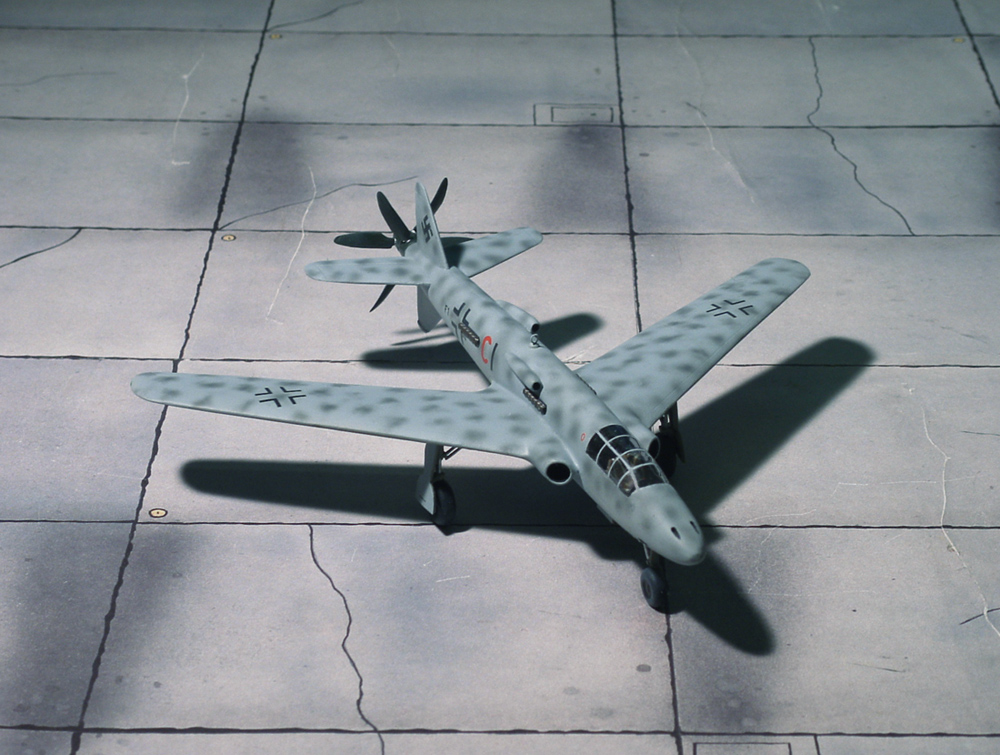
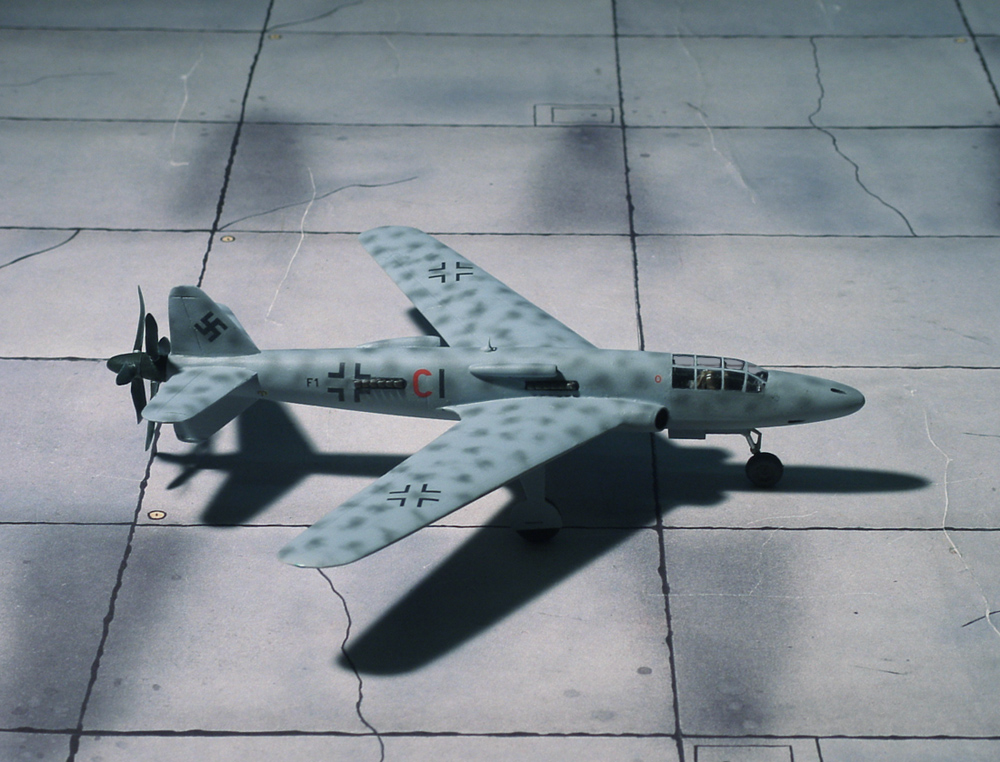
COMMENT: The excellent performance of the Dornier Do 335 Pfeil (Arrow) proceeded to several Dornier designs of pusher type fighters and fighter bombers. Among these is this Do P.247/6 project from autumn 1944. The swept back wing together with a powerful engine promised an excellent performance and the pusher type propeller offered an excellent visibility and allowed the installation of radar antennas for the adoption as a bad weather/night fighter. This furher development was the Dornier Do P.252 but the project was never realized.

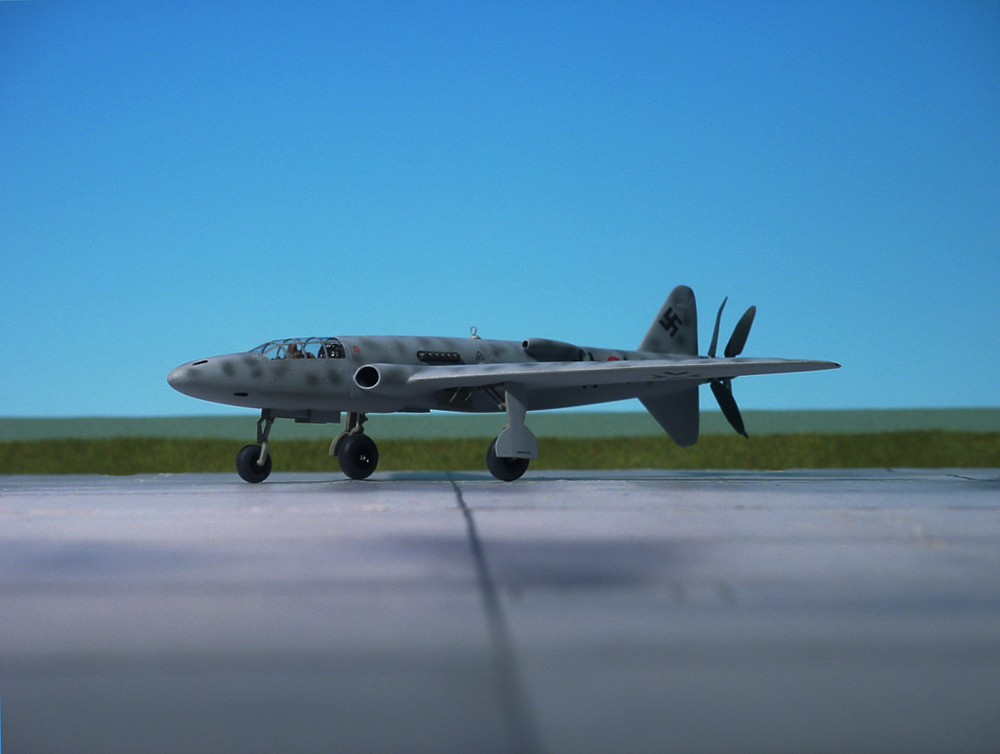
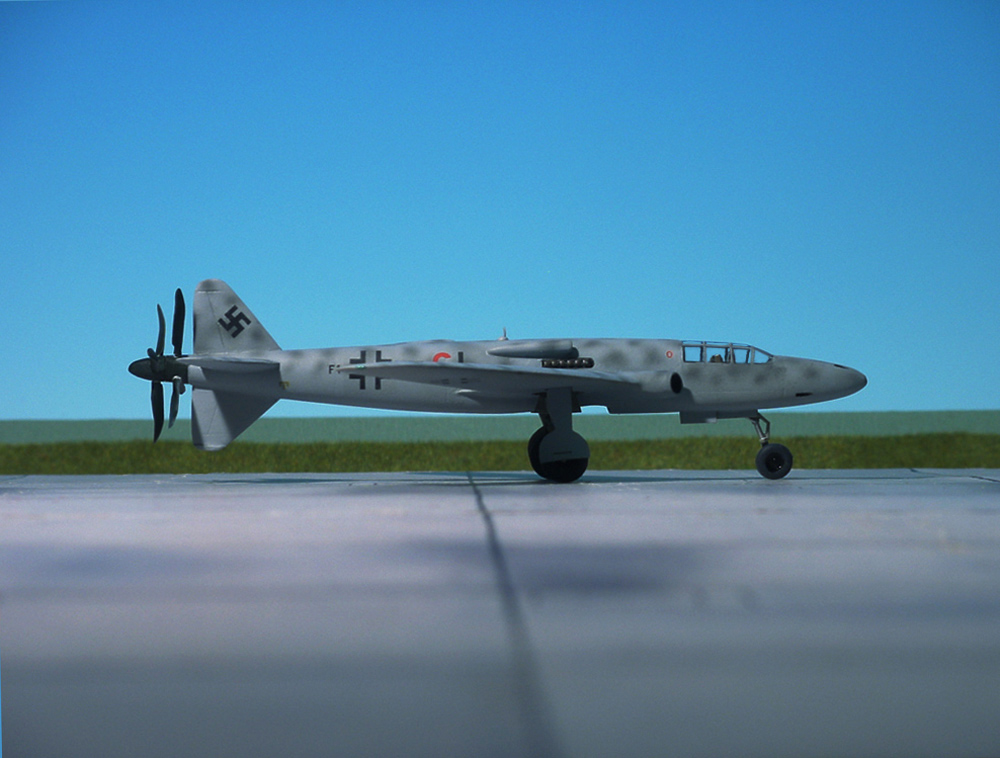
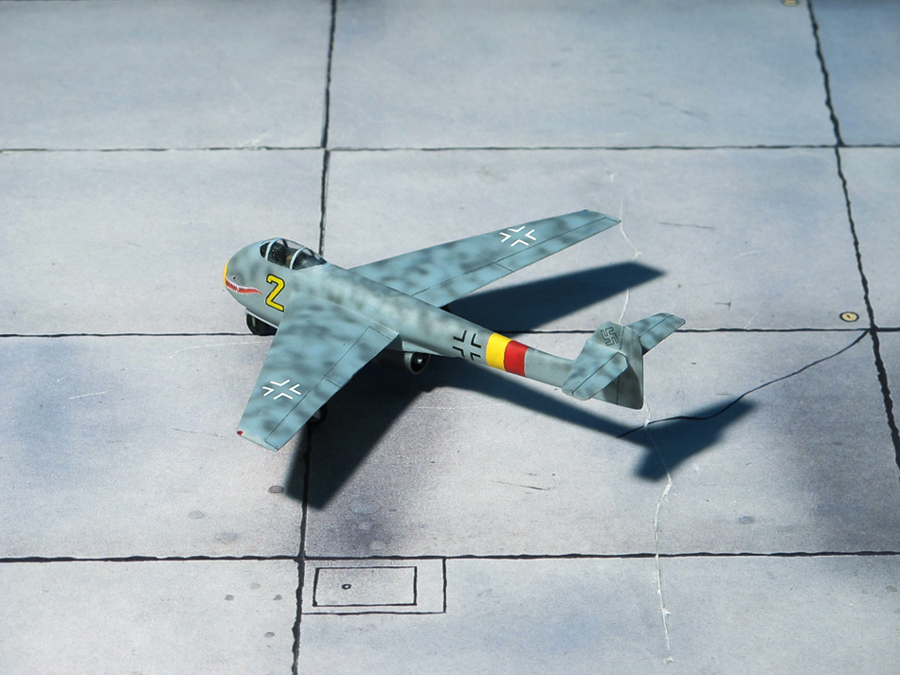
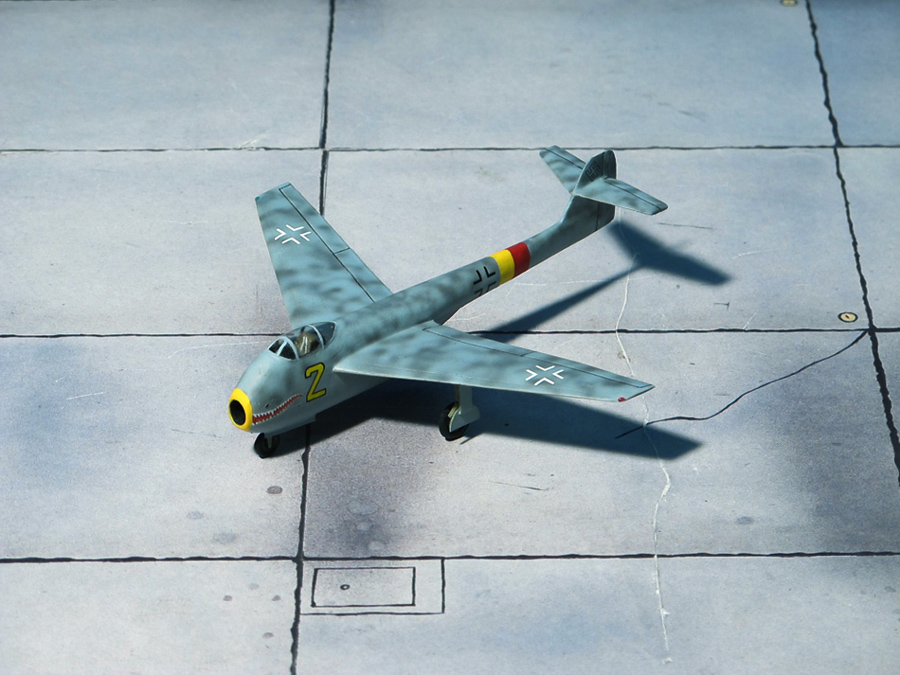
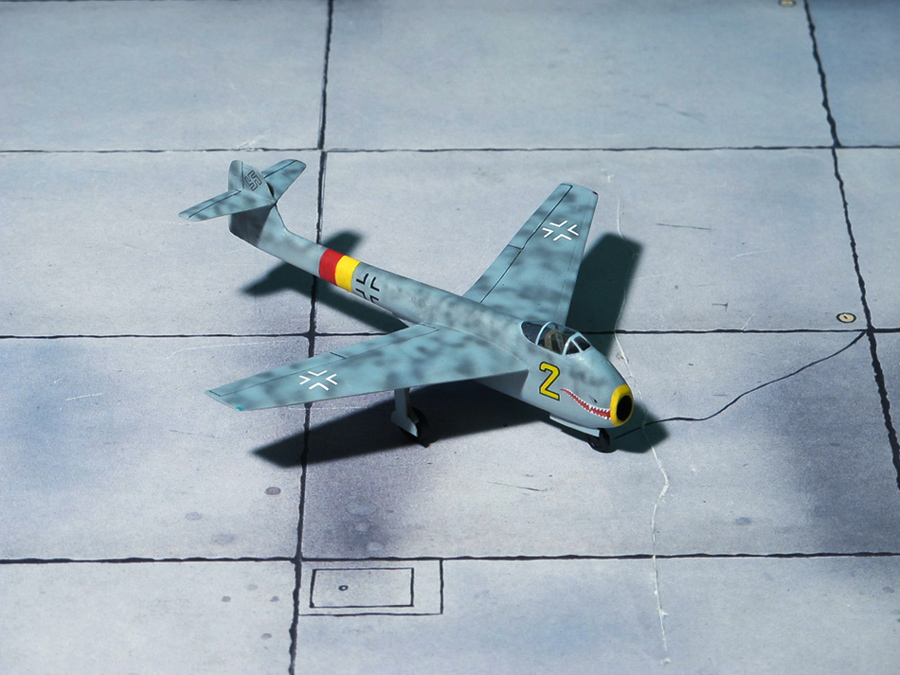
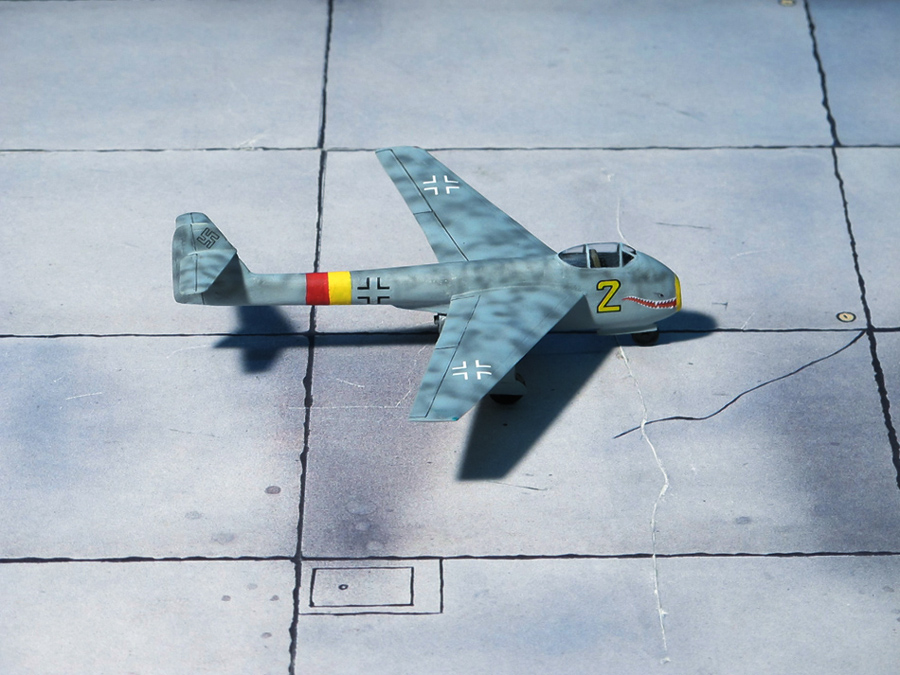
BMW Strahljaeger P. IV (Unicraft, Resin)

TYPE: Interceptor Fighter. Project

ACCOMMODATION: Pilot only

POWER PLANT: BMW 018 Turbojet, rated at 3,500 kp

PERFORMANCE: Not available

COMMENT: BMW (Bayrische Motoren-Werke, Bavarian Engines Factory) was well known as an engine-building company. In the last stages of WW II BMW took part in aircraft designing via a construction company EZS, a subsidiary of BMW. Four designs of simple and easy to built interceptor projects were submitted to the RLM. The largest and most powerful design was the Strahljägerprojekt P.IV, powered by BMW 018 turbojet. No project was realised.

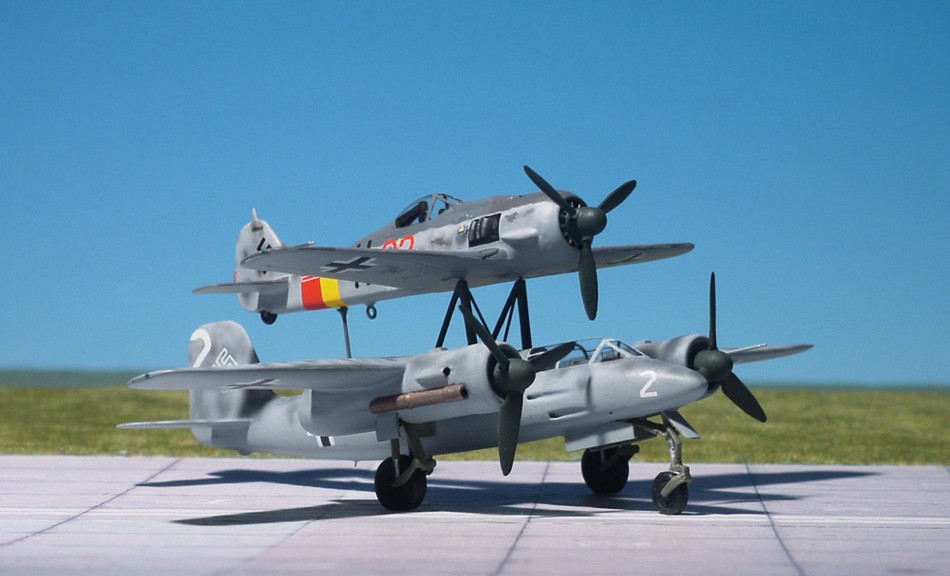
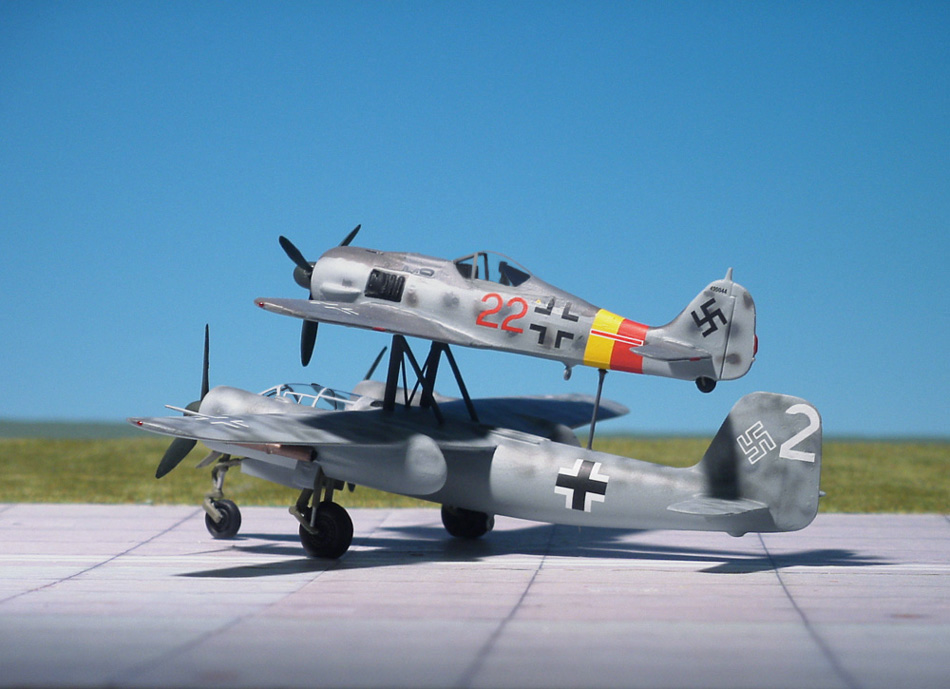
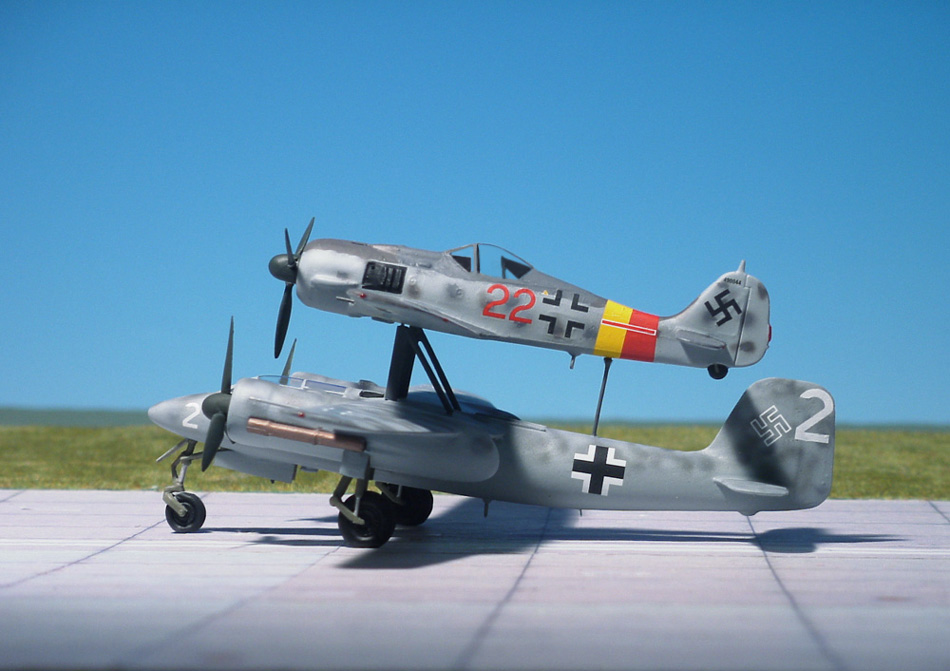
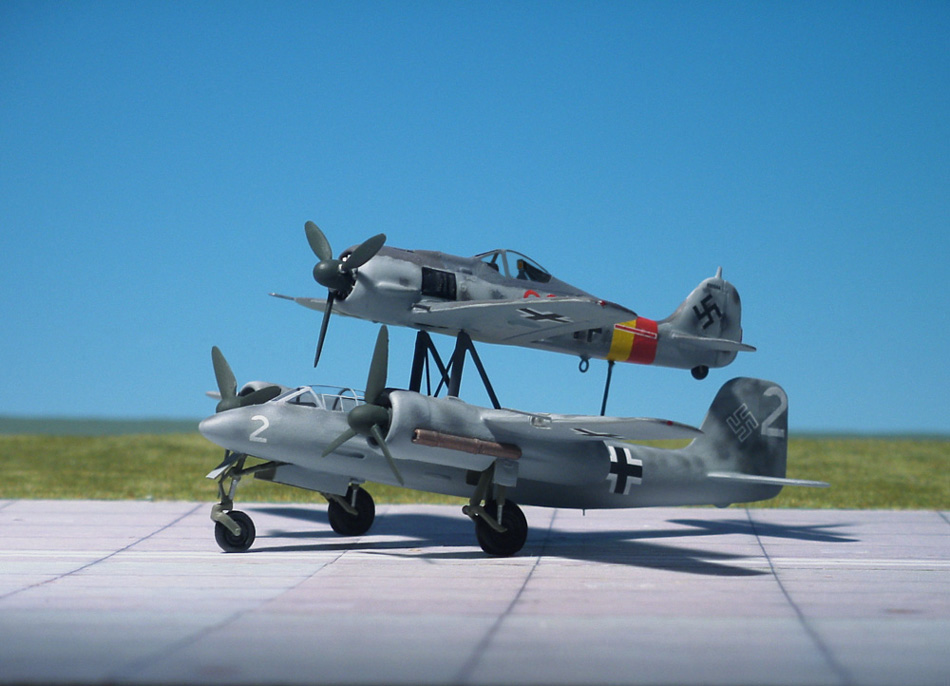
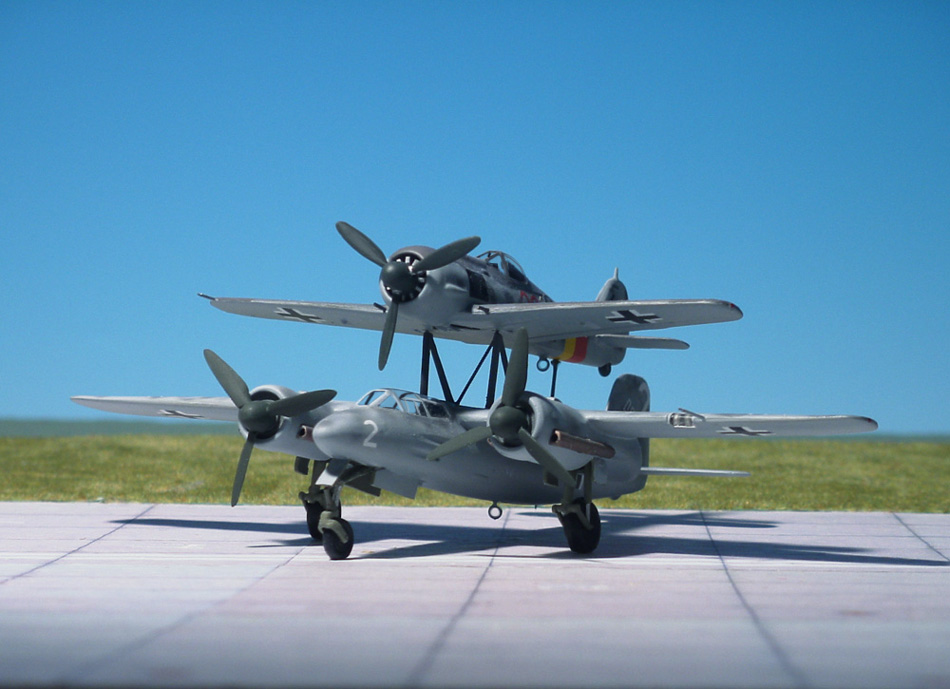
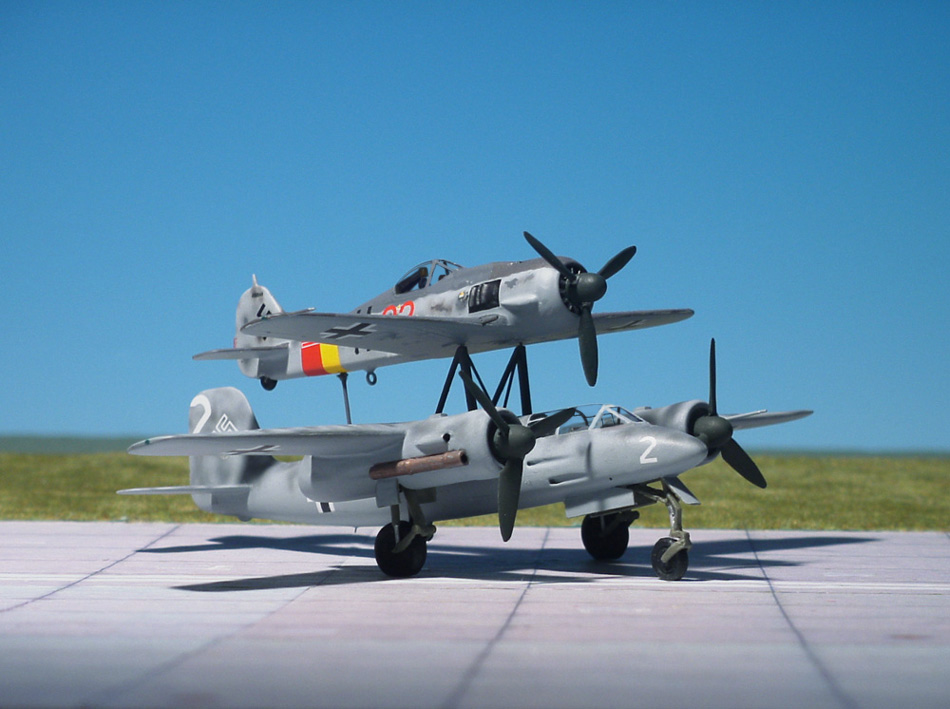
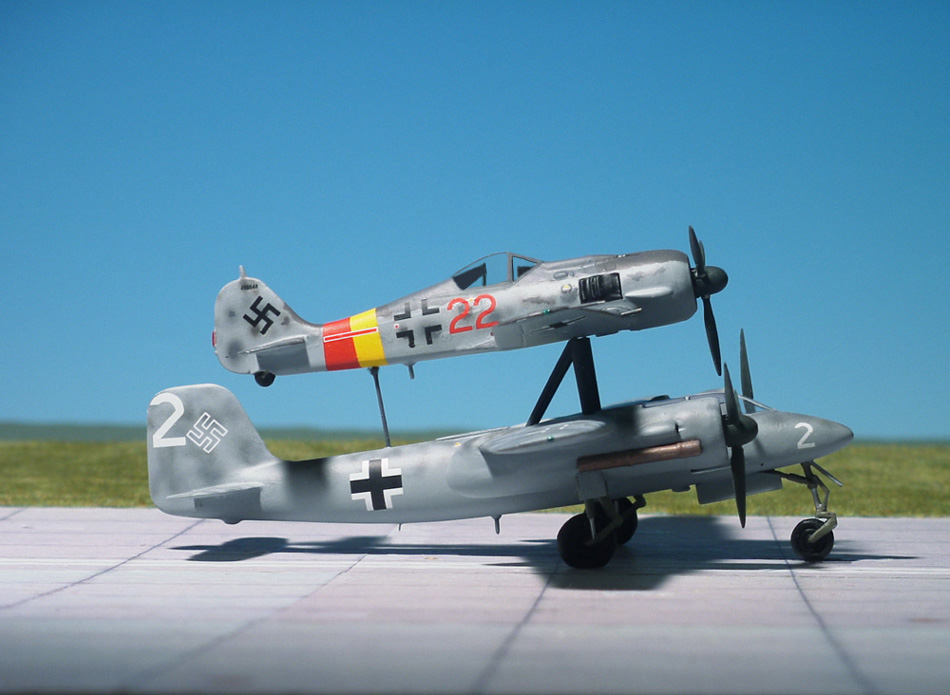
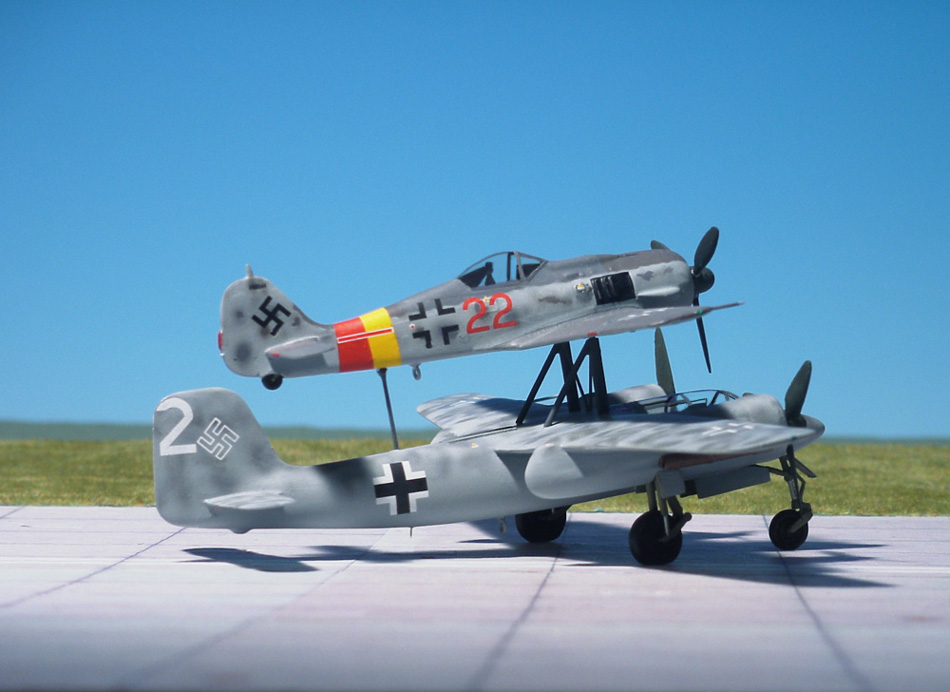
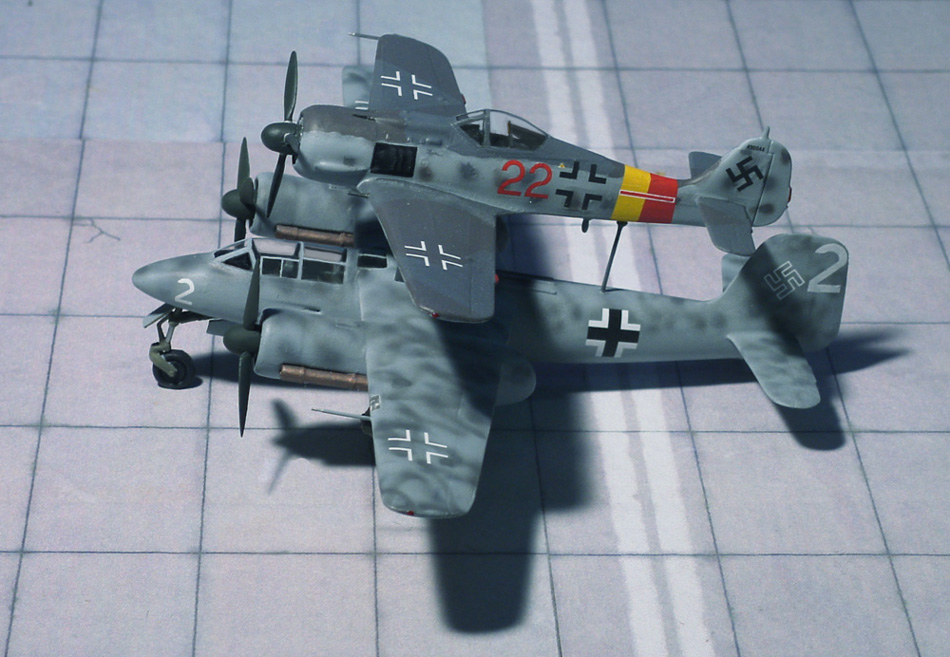
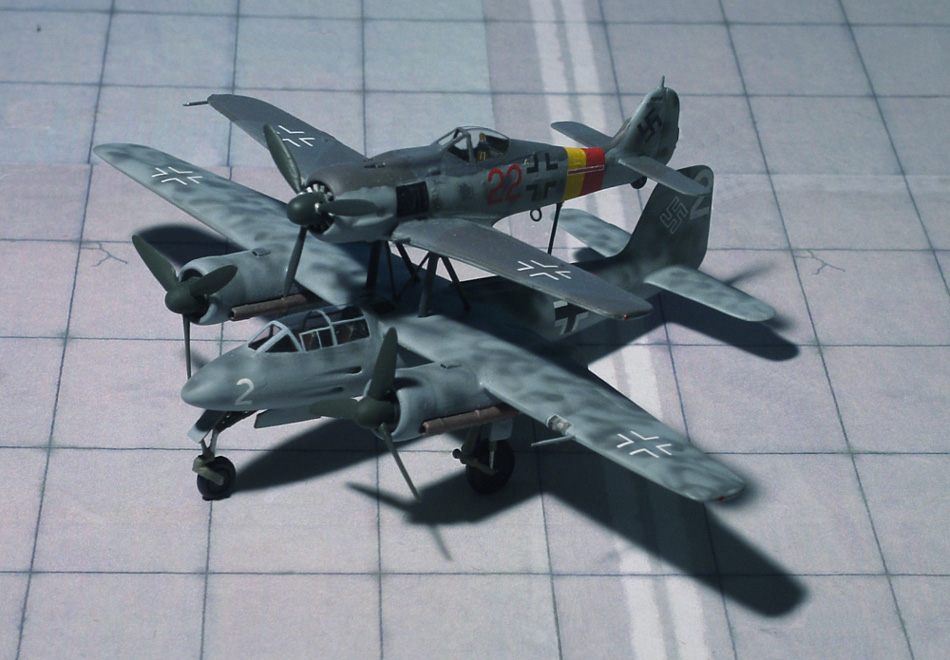
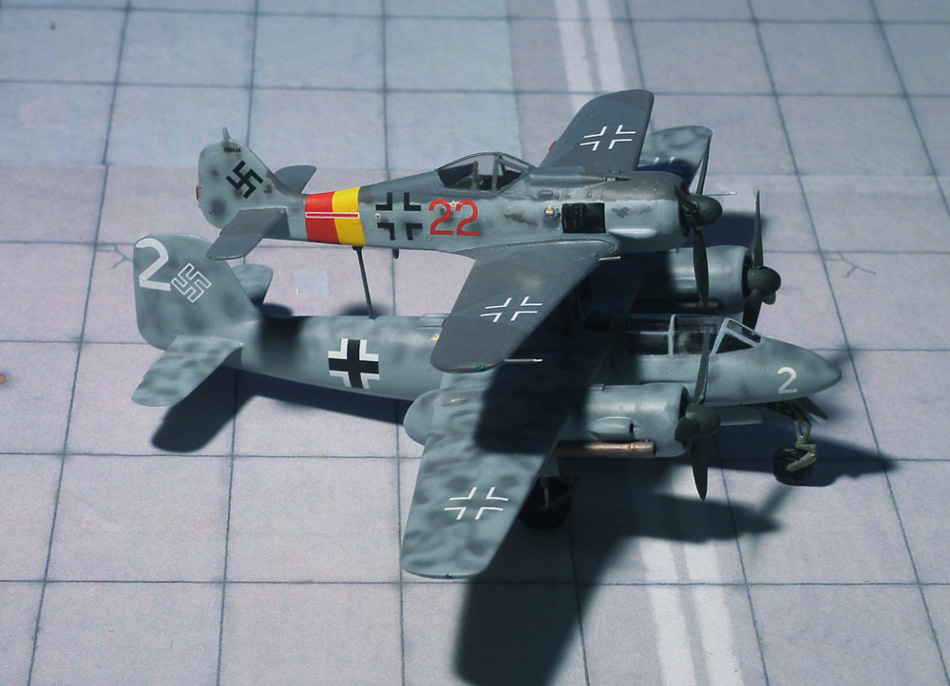
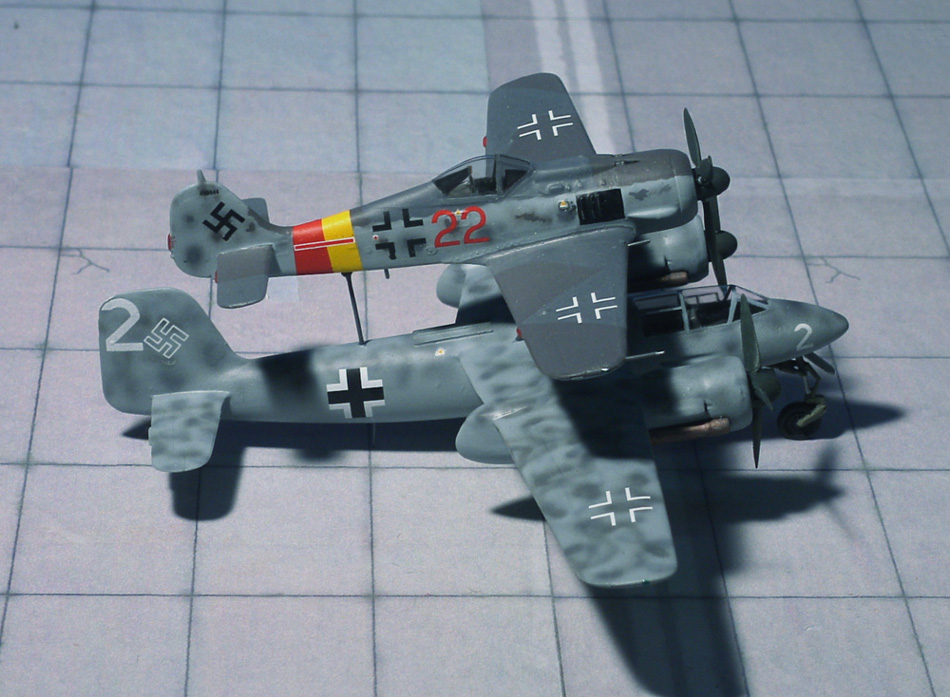
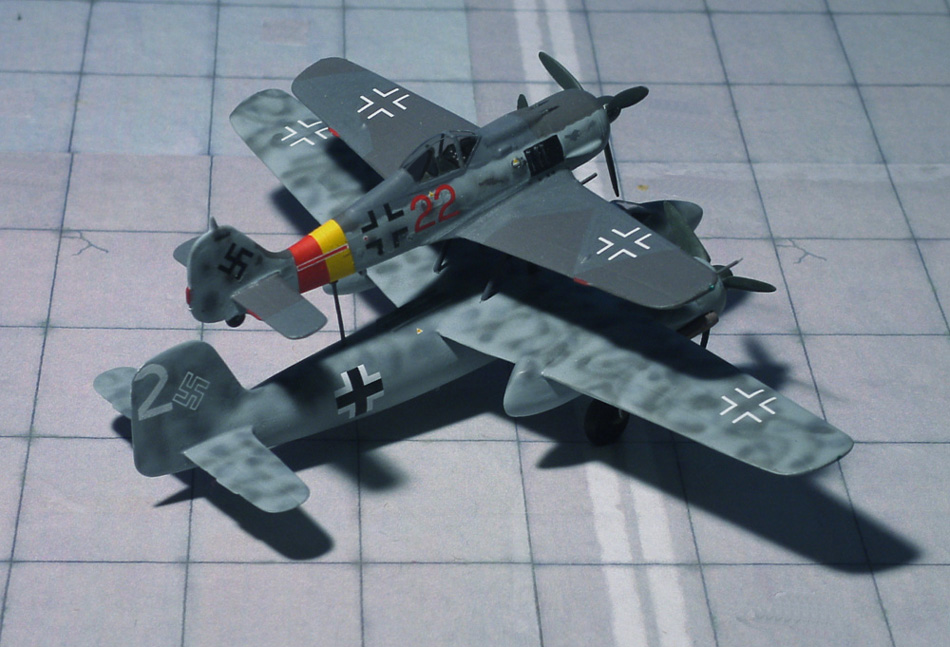
Focke-Wulf Ta 154A-0 (Pioneer) with Fw 190F-8 (Revell) “Mistel 7”, Mistletoe 7)

TYPE: Bomber Formation Destroyer (” Pulkzerstörer”) as as pickaback (“Mistel”) combination of a Ta 154 and a Fw 190

ACCOMMODATION: Pilot only in the Fw 190

POWER PLANT: Two Junkers Jumo 213E, rated at 1,750 h.p. (Ta 154) and BMW 801D-2, rated at 1,700 h.p. (Fw 190)

PERFORMANCE: Not available

COMMENT: Six  Ta 154 pre-production aircraft should be adapted for the “Huckepack” composite role. The Ta 154 had an explosive charge in the forward fuselage and was piloted by a Focke Wulf Fw 190 . It was proposed that the Mistel combination – reportedly designated “Mistel 7” (“Mistletoe 7”) – should be aimed at the bomber formation, the pilot detached his aircraft from the superstructure and then detonated the charge by radio signal. None combination was realized.

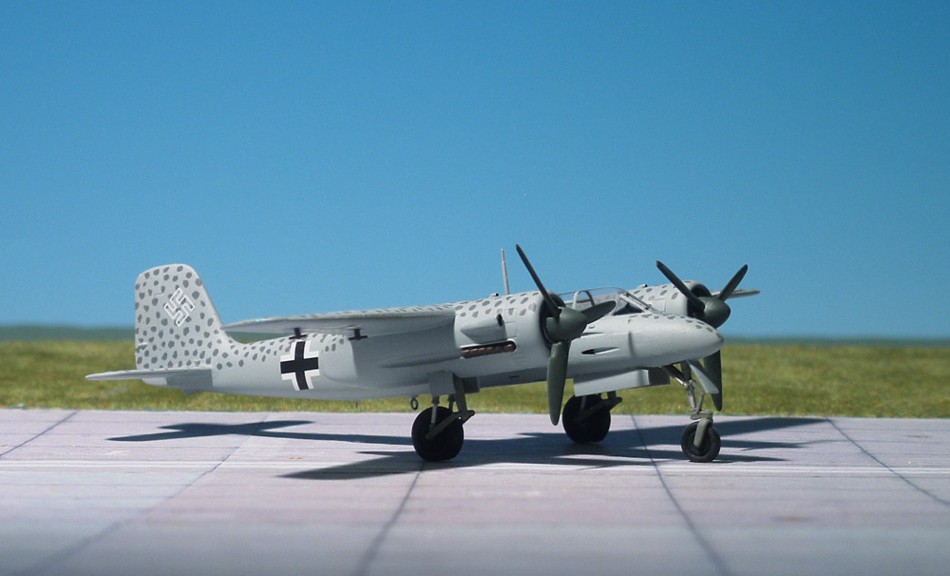
Focke-Wulf Ta 154A1-R1 (Hasegawa)

TYPE: Fighter-bomber, close support aircraft

ACCOMMODATION: Pilot and observer/radio operator

POWER PLANT: Junkers Jumo 213E, rated at 1,750 h.p. each

PERFORMANCE:  332 m.p.h. at sea level

COMMENT: Projected close support fighter bomber on the basis of the Ta 154A-1. None built