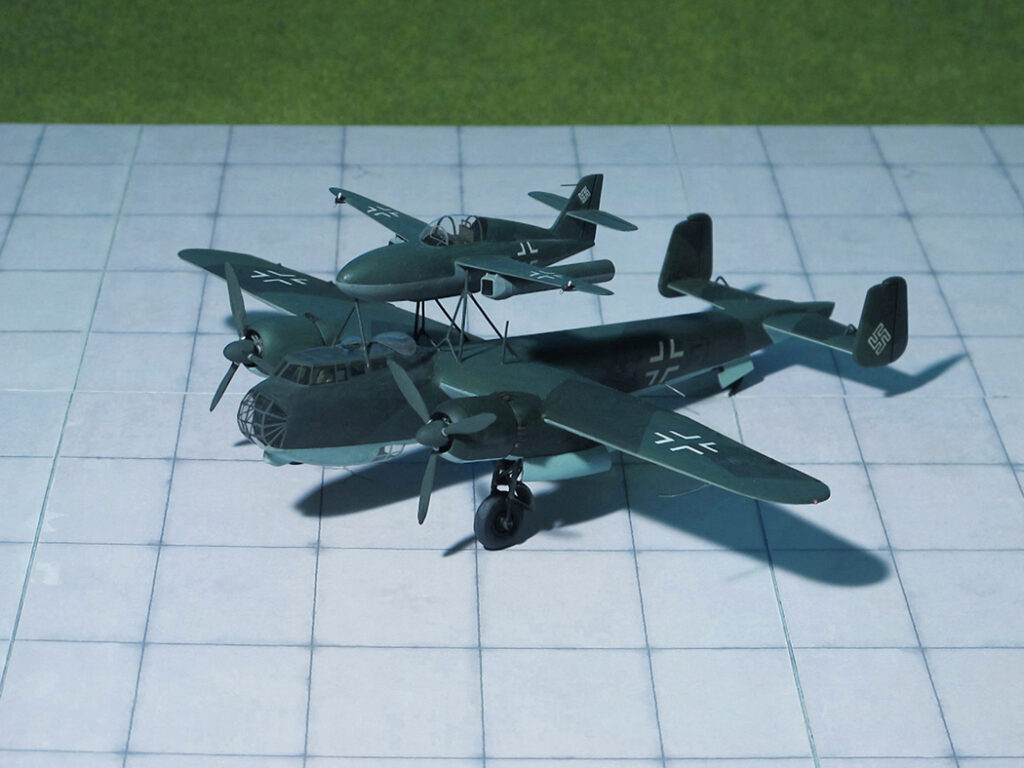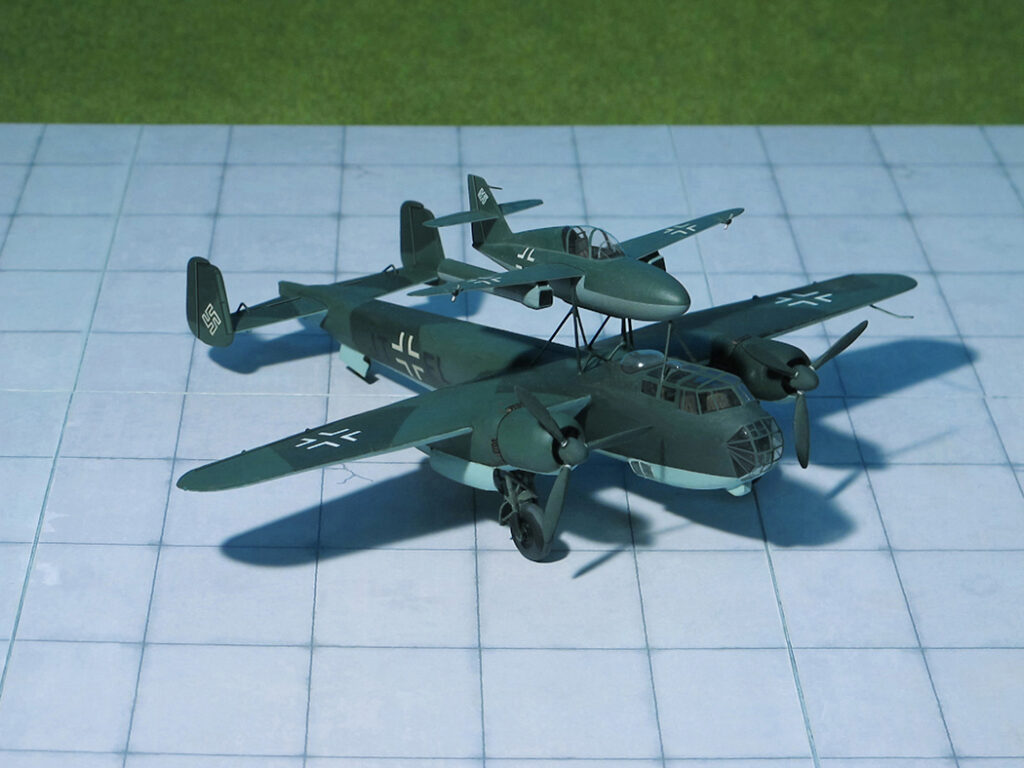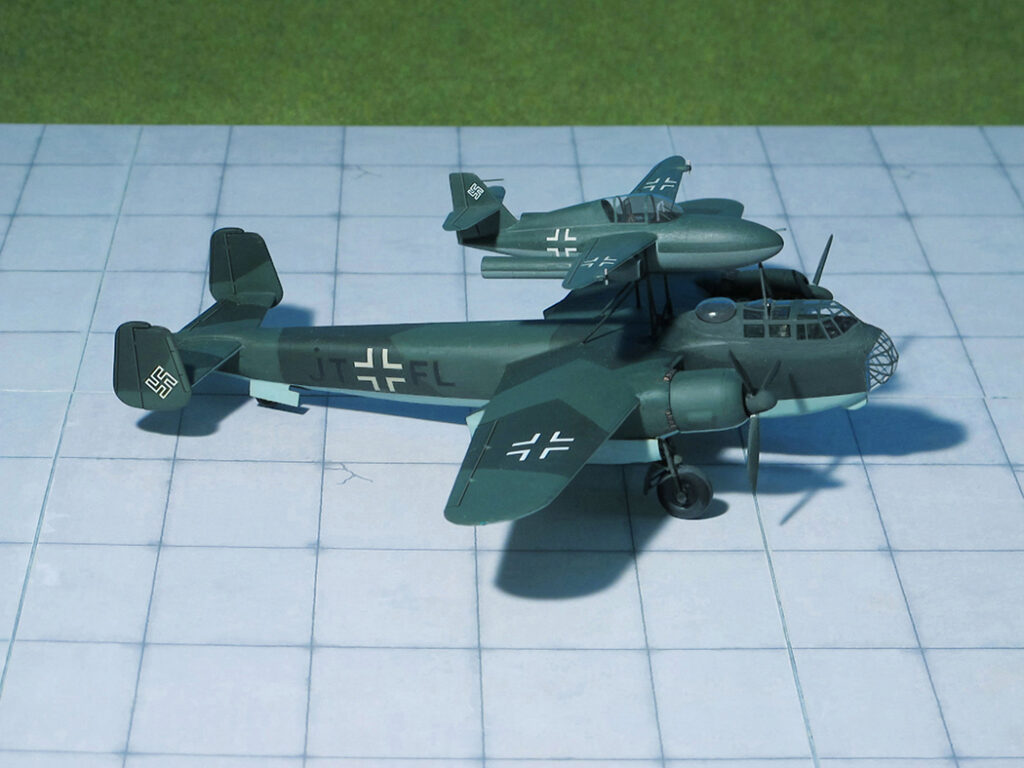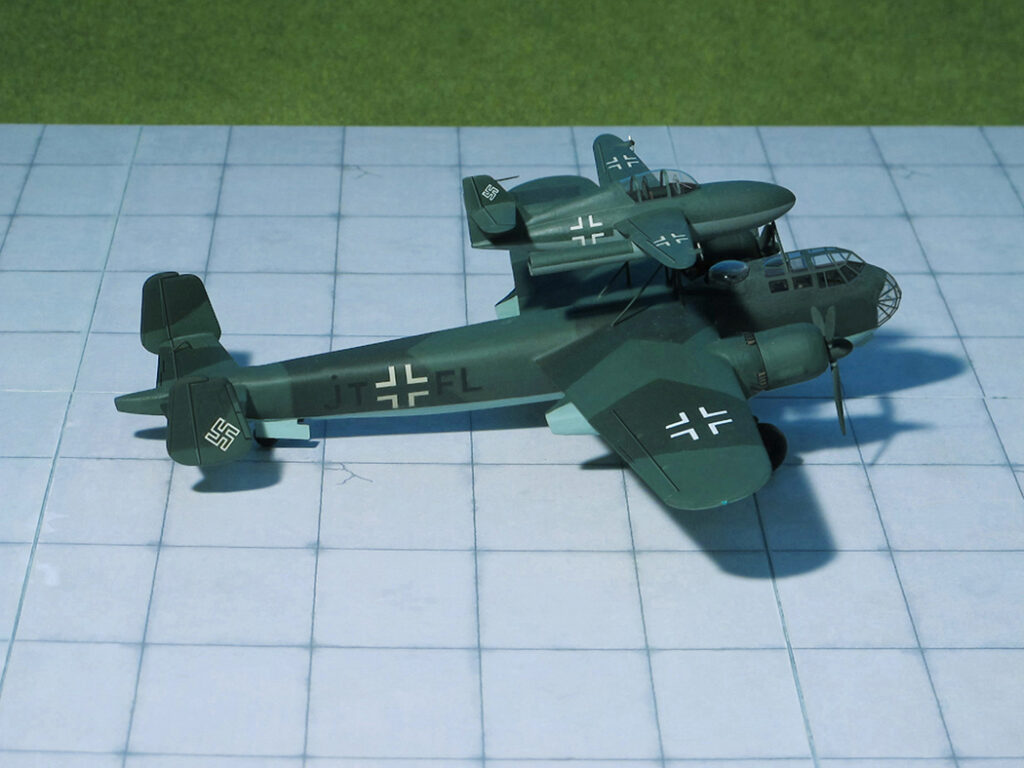
TYPE: Pulsejet-powered fighter and fighter bomber
ACCOMMODATION: Pilot only
POWER PLANT: Two Argus As 014 pulsejet, rated at 300 kp thrust each
PERFORMANCE: 500 mph
COMMENT: The Messerschmitt Me 328 was a prototype pulsejet-powered fighter aircraft designed and produced by the German aircraft manufacturer Messerschmitt AG.
Work on what would become the Me 328 can be traced back to early 1941 and an approach by the German engine manufacturer Argus Motoren to the aircraft company Messerschmitt AG to inform the latter of its recent advances with pulsejet technology. While the projected 1,100 lb of thrust output was less than the 1,300 lb output projected for early turbojet engines, it was a far lighter engine at 180 lb versus 1,300 lb. Messerschmitt was suitably impressed, so that efforts to incorporate the Argus As 014 pulsejet engine into its aircraft designs was promptly initiated. Design work was centered around applying pulsejets to a small and cheap fighter and fighter-bomber aircraft . By May 1941, no less than 21 different designs had been drafted by the company’s project office, which had internally designated them as Messerschmitt Me P.1079.
Under project number Messerschmitt Me P. 1079/17, the Messerschmitt AG initiated a series of studies for e cheap, high-performance fighter that could also be used on low-level attack missions. The first variant of the Me P. 1079/17, which had in the meantime been accorded the RLM designation Messerschmitt Me 328, according to the RLM decision of March 1941, was handed over for further development and construction of the Me 328 by the Deutsche Forschungsanstalt für Segelflug (DFS , German Research Institute for Sailplane Flight) in co-operation with the Jacobs-Schweyer Flugzeugbau of Darmstadt. The envisaged Me 328 was forecast to be several times cheaper than the cost of traditional German fighter aircraft, such as the Focke-Wulf Fw 190 or Messerschmitt Bf 109.
The Me 238 featured a wooden circular section and the fuel tank occupied the entire fuselage nose and two simular tanks were housed in the rear fuselage. A 15 mm armour bulkhed separated the cockpit from the foreward fuel compartment and 15 mm armor plate was mounted immediately ahead of the pilot, and some additional protection was furnished by a 80 mm armour-glass windscreen. Instrumentation was rudimentary, and the cockpit canopy hinged to starboard. Space did not permitt provision for an ejection seat, but the whole rear of the fuselage aft of the pilot could be jettisoned by means of explosive bolts to facilitated escape.
Various wing positions were investigated, ranging from close inboard to mid-span, and tests were made with power plants projecting well foreward of the wing leading edges, with the air intakes well aft at approximately one-third cord and the ducts exhausting beneath the tailplane, and with air intakes immediately beneath the leading edges.
A twin pulsejet-engines arrangement was selected for greater flight performance, the engine configuration used also permitted the propulsion units to be easily interchanged. Each pulsejet could be individually controlled by the pilot, including a quick-stop function; gauges indicating fuel-flow, fuel capacity, and pressure were present alongside controls for power distribution and safety alongside standard apparatus.
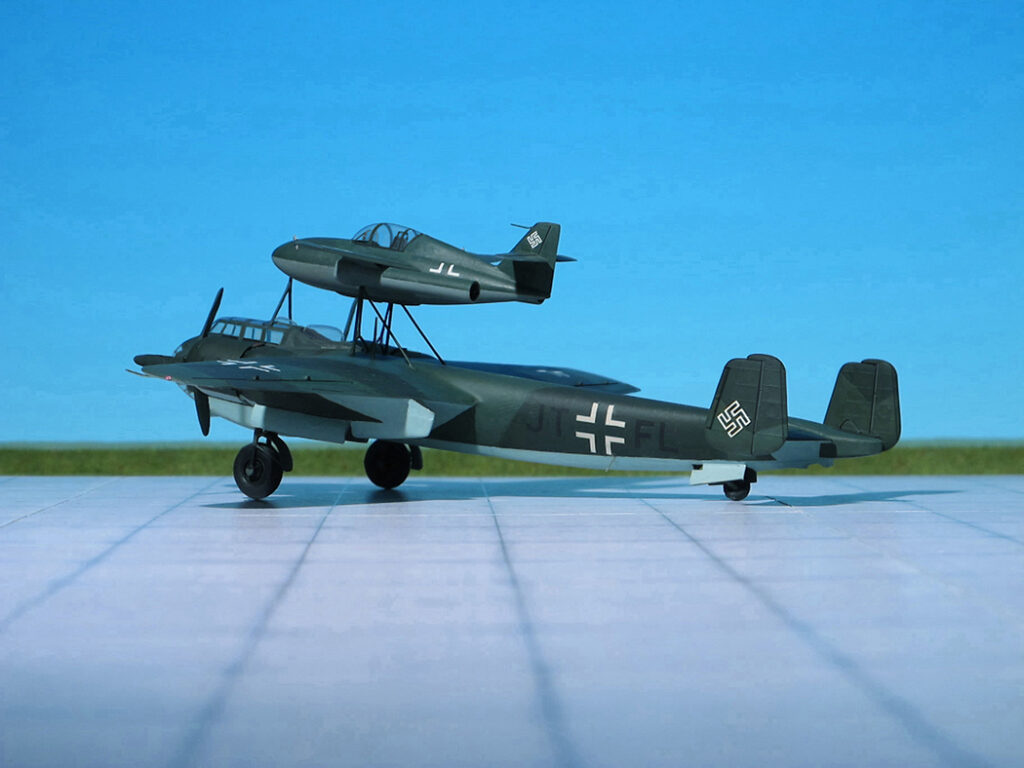
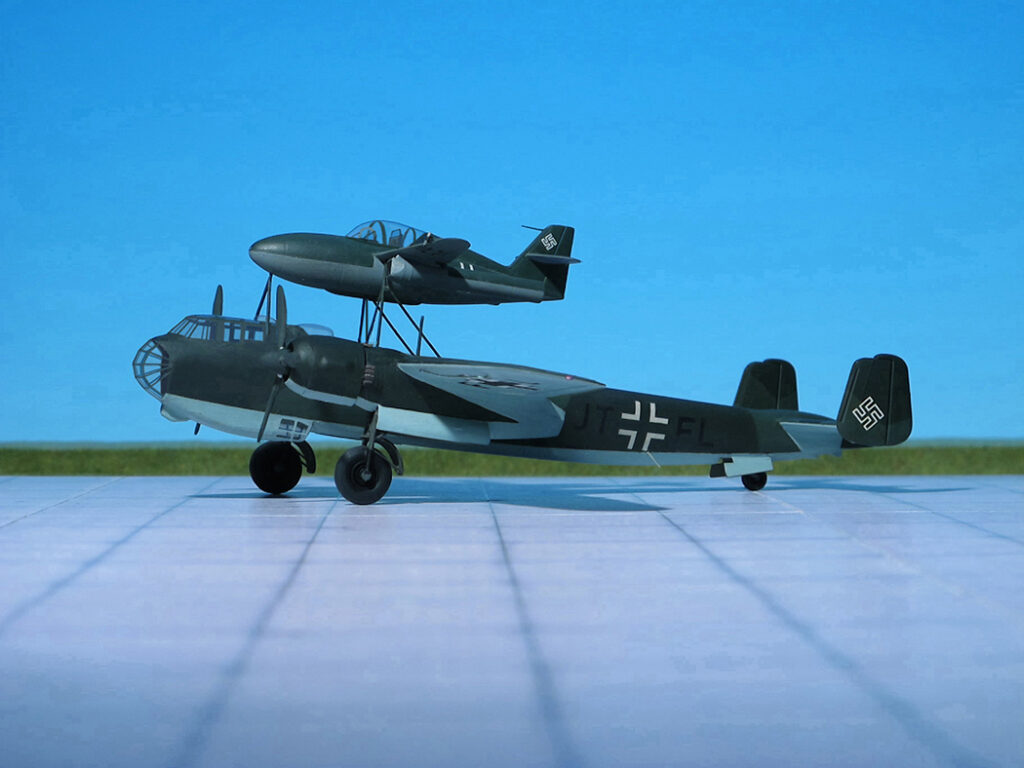
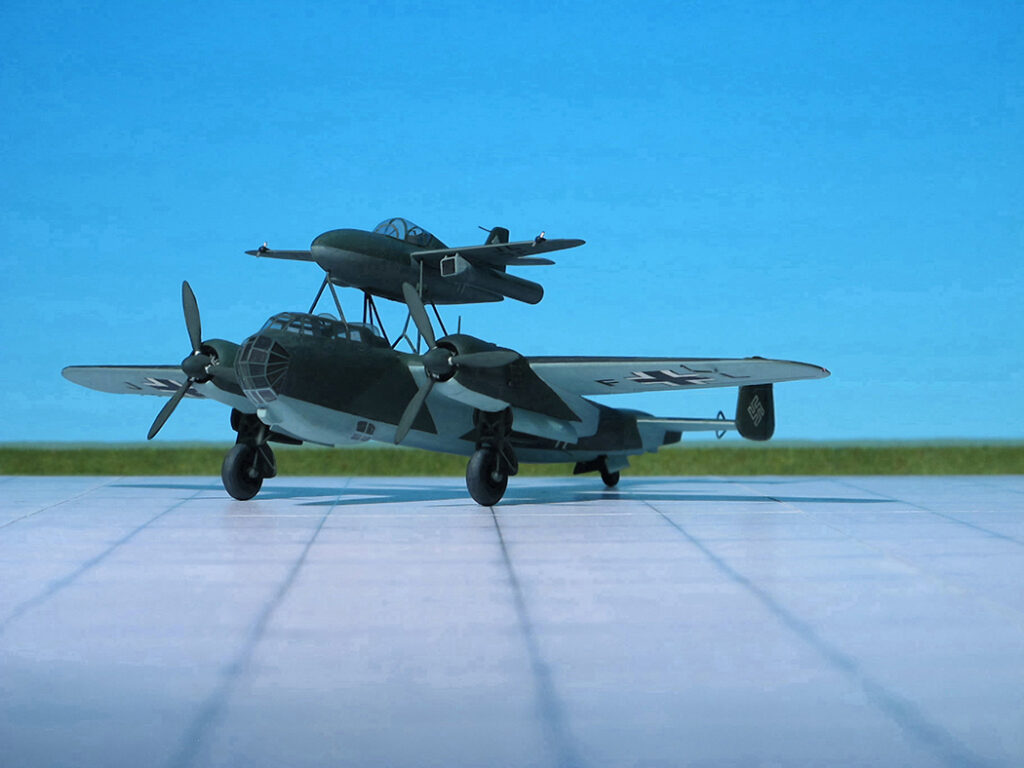
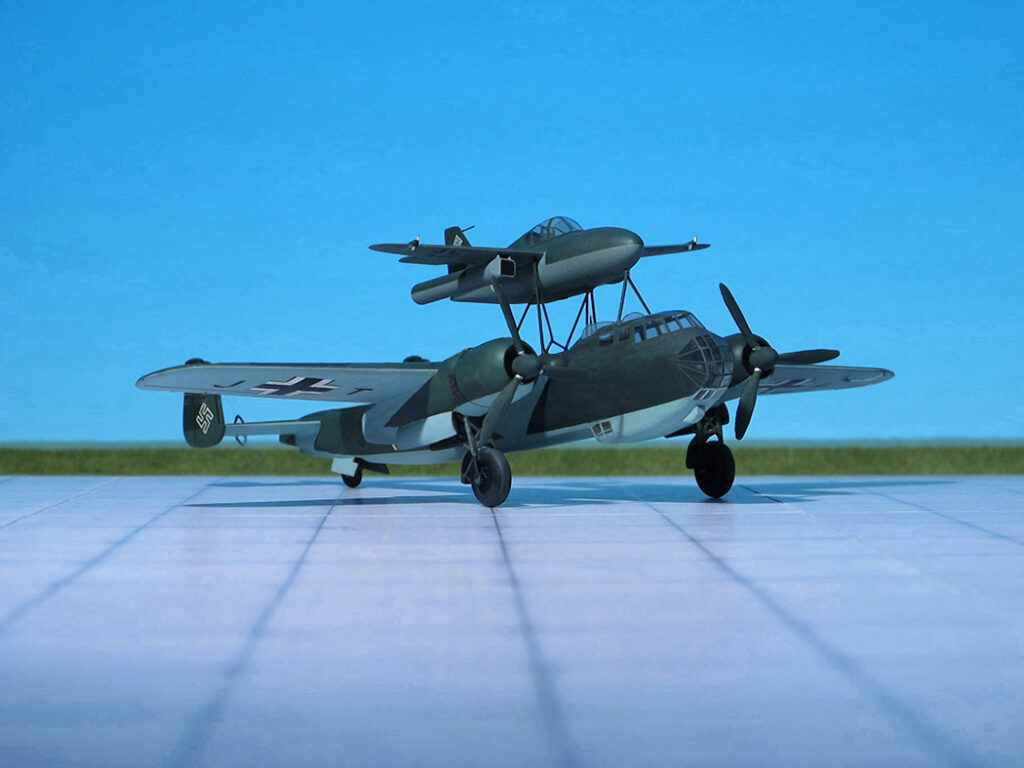
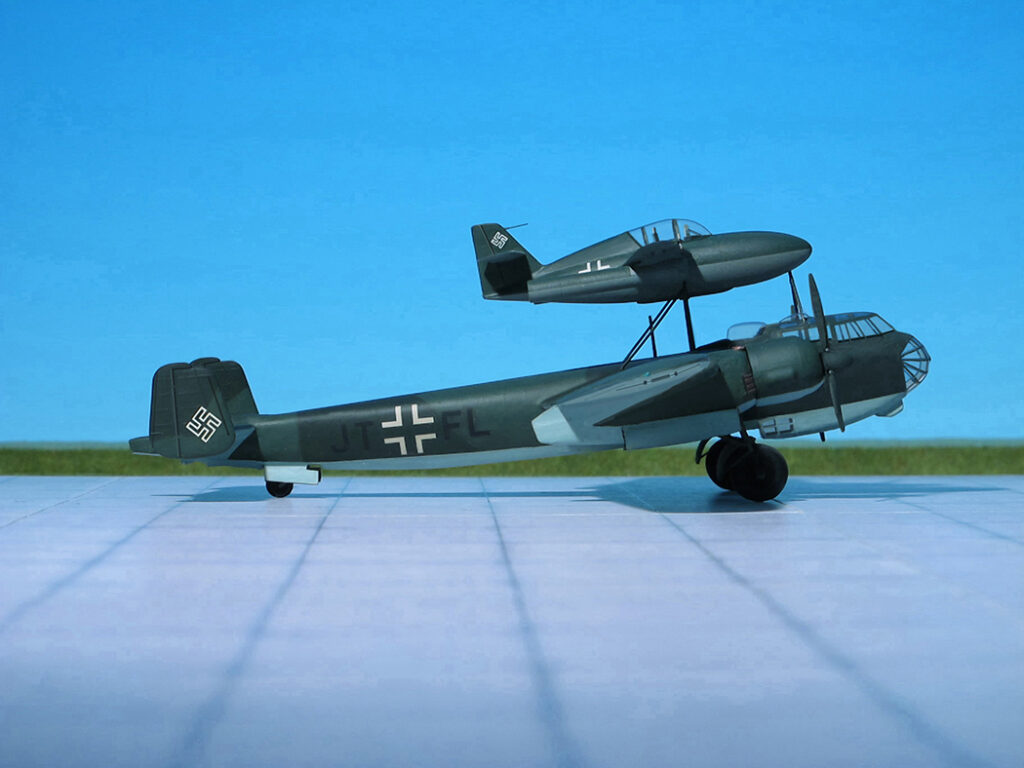
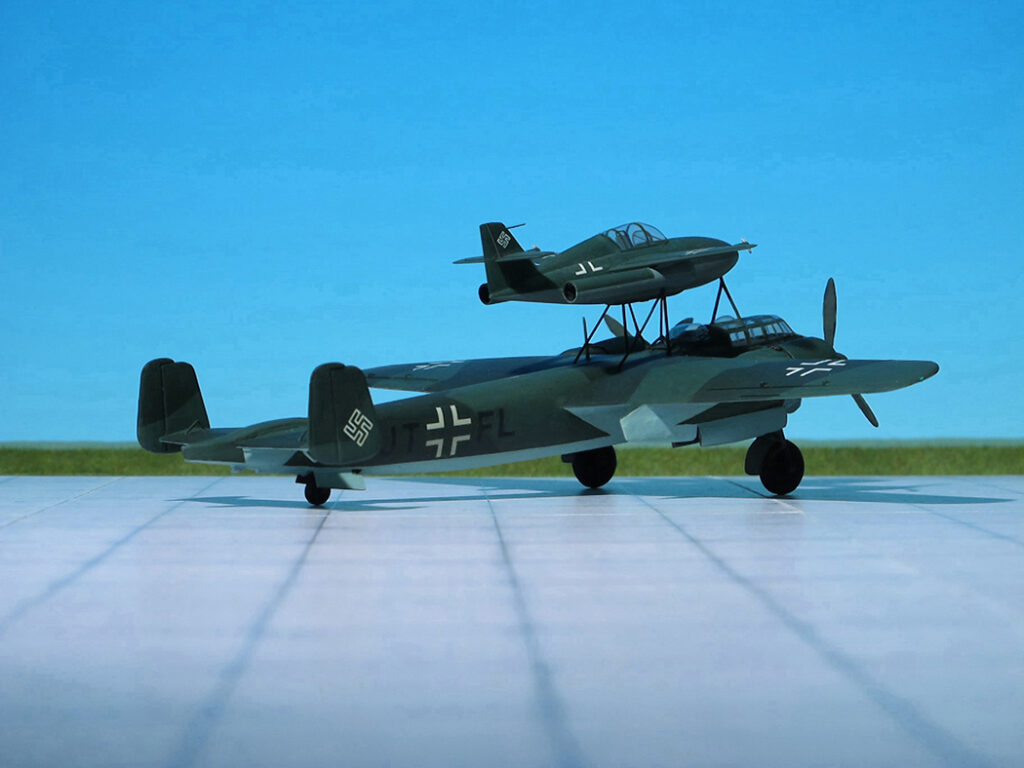
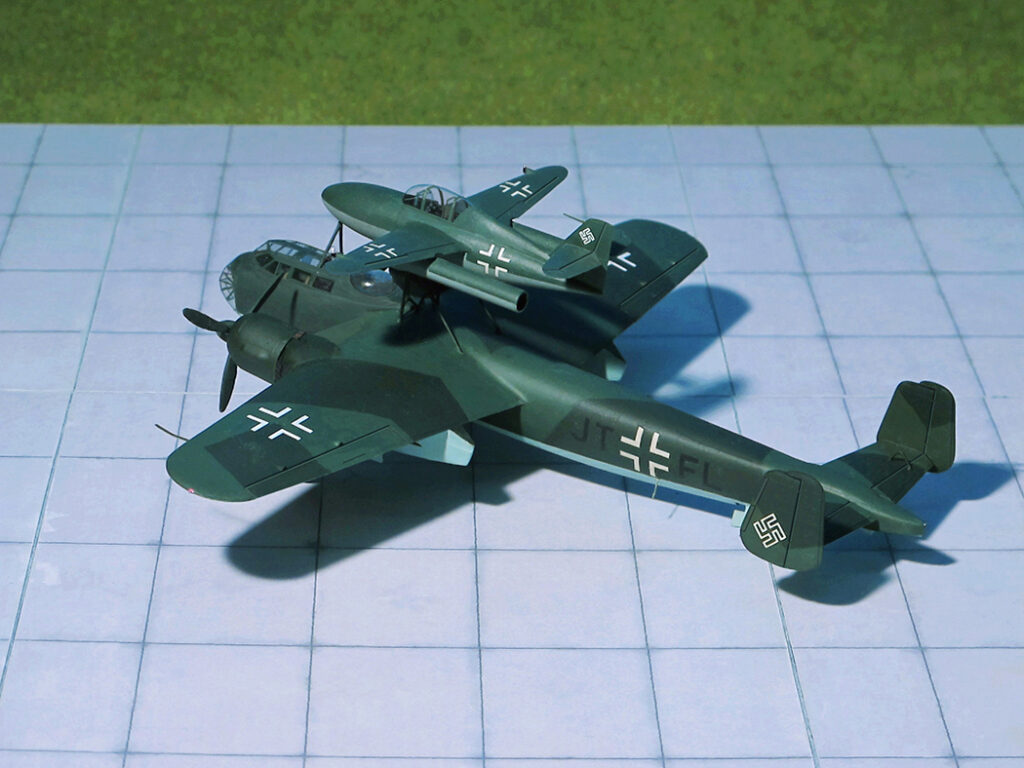
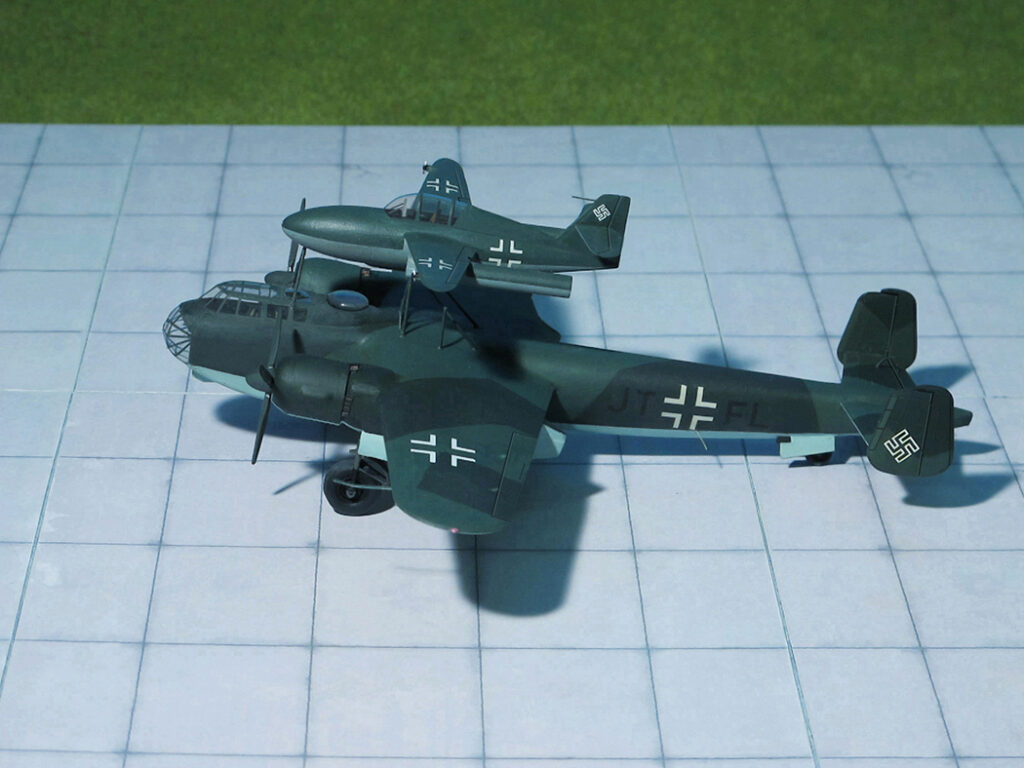
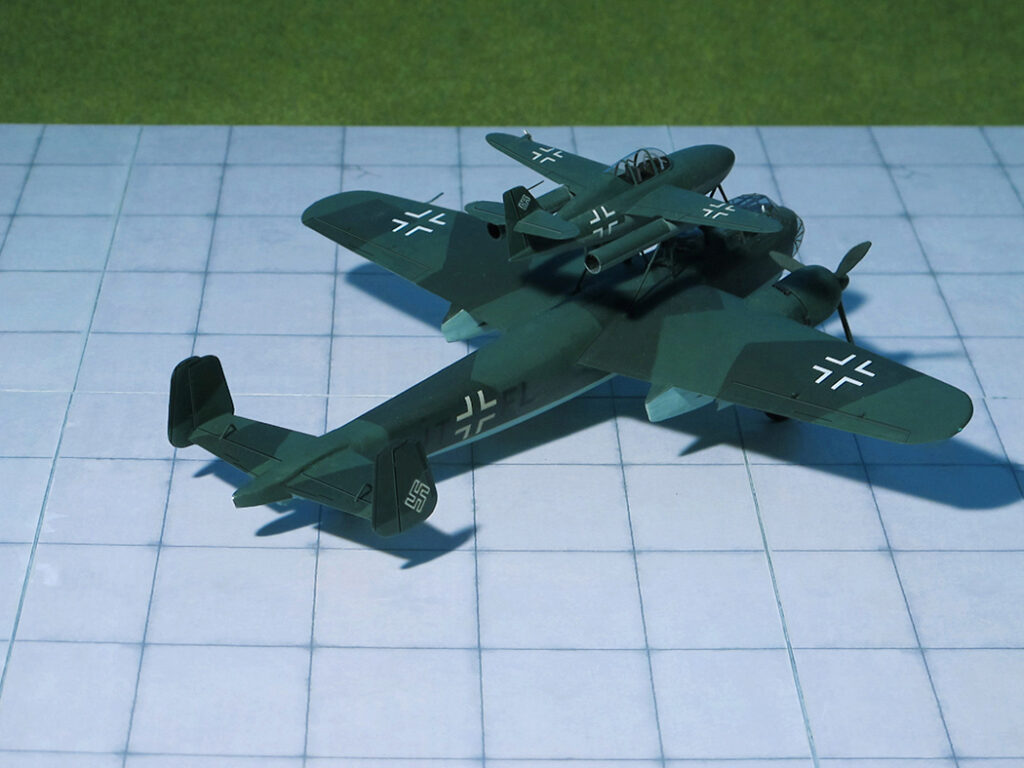
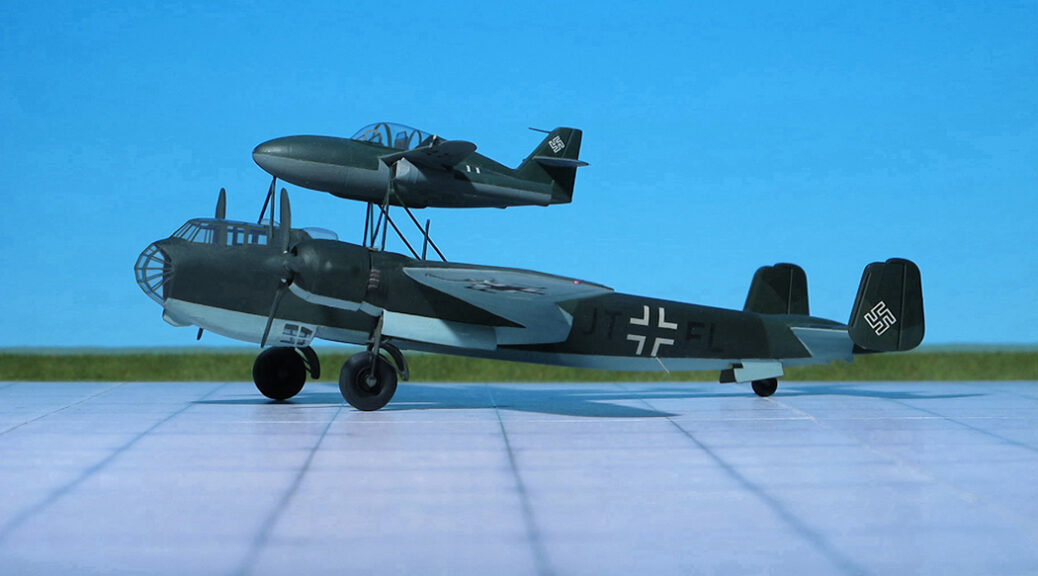
Various methods of taking-off were proposed, ranging from a Mandelung KL 12 catapult and a Borsig-designed rocket propelled rail carriage, to a Lippisch-designed three-wheel take-off trolley which could be used in conjunction with a cable-type catapult or a tug aicraft. For early experiments the Me 328 was mounted on a special rig above a Dornier Do 217E.
A retractable central skid was attached to the fuselage mainframes and was retracted and locked against the uderside oft he fuselage so that, although the bomb was carried by the skid, all loads were transferred to the main structure. The skid could only be extended after the bomb had been dropped.
Fighter aircraft version was the Me 328A and prototypes Me 328 V1 to V10 were planned, with first three built by DFS. Prototypes V1 and V2 were first flown in unpowered form as glider and later fitted with two Argus As 014 pulsejets.
Twenty prototypes Me 328B V1 to V20 ordered were built Jacobs-Schweyer Flugzeugbau, Darmstadt. Only the Me 328B V1 was completed, while Me 328B V2 was incomplete before war’s end.
During test flight the unpowered Me 328 glider showed good handling characteristics and satifying results. In contrast, the results of the Me 328 powered by a pair of As 014 pulsejets were disappointing The engines were fairly unsuitable, producing excessive resonance, asymetry, and noise.
Accordingly, the manned flight programme was suspended after only a few test flights.
But during 1944, moves were made to revive the Me 328 again, this time as a piloted flying bomb. Based on the Me 328B, the aircraft was fitted with a 2,000 lb bomb and according to some literatur proposed as a suicide weapon. However, the aircraft was not developed with any such use being intended. So all further work on the Me 328 was stopped. The RLM decided to increase all efforts on the development of the manned flying bomb Fieseler Fi 104R-4 Reichenberg (Ref.: 7, 24).
Dornier Do 217E-4
TYPE: Medium bomber, Composite aircraft
ACCOMMODATION: Crew of three
POWER PLANT: Two BMW 801C radial engines, rated at 1.380 hp each
PERFORMANCE: 320 mph at 17,060 ft
COMMENT: The Dornier Do 217 was a bomber used by the German Luftwaffe during World War II. It was a more powerful development of the Dornier Do 17, known as the Fliegender Bleistift (“flying pencil”). Designed in 1937–1938 as a heavy bomber but not meant to be capable of the longer-range missions envisioned for the larger Heinkel He 177, the Do 217 design was refined during 1939 and production began in late 1940. It entered service in early 1941 and by the beginning of 1942 was available in significant numbers.
The Dornier Do 217 had a much larger bomb load and a much greater range than the Do 17. In later variants, dive bombing and maritime strike capabilities using glide bombs were experimented with, considerable success being achieved. Early Do 217 variants were more powerful than the contemporary Heinkel He 111 and Junkers Ju 88, having a greater speed, range and bomb load. Owing to this it was called a heavy bomber rather than a medium bomber. The Do 217 served on all fronts in all roles. On the Eastern Front and Western Front it was used as a stategic bomber,torpedo bomber and reconnaissance aircraft. It was also used for tactical operations, either direct ground assault or anti-shipping strikes. The Do 217 was also converted to become a night fighter and saw considerable action in the Defence oft he III Reich campaign until late in the war.
Furthermore, the Dornier Do 215E as well as Dornier Do 217K were used as carrier aircraft for smaler, most experimental and sometimes called parasite aircraft, e. g. DFS 228V-1, DFS 228A-0, Lippisch Li P.12 and Lippisch Li P.13A. Shown here is a Messerschmitt Me 328B V1 mounted on a Dornier Do 217E (Ref.: 24).