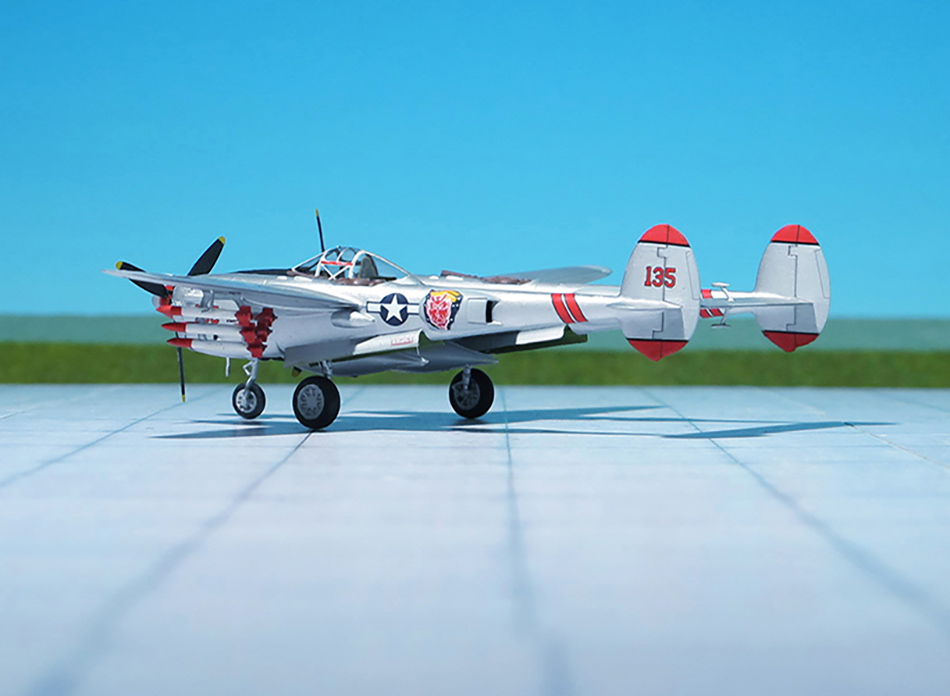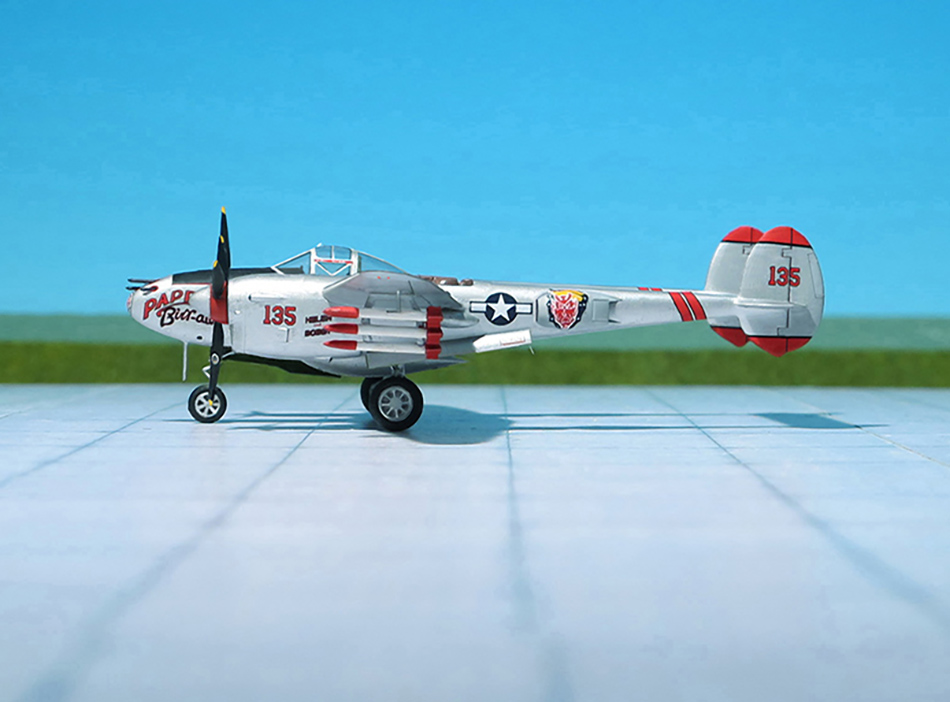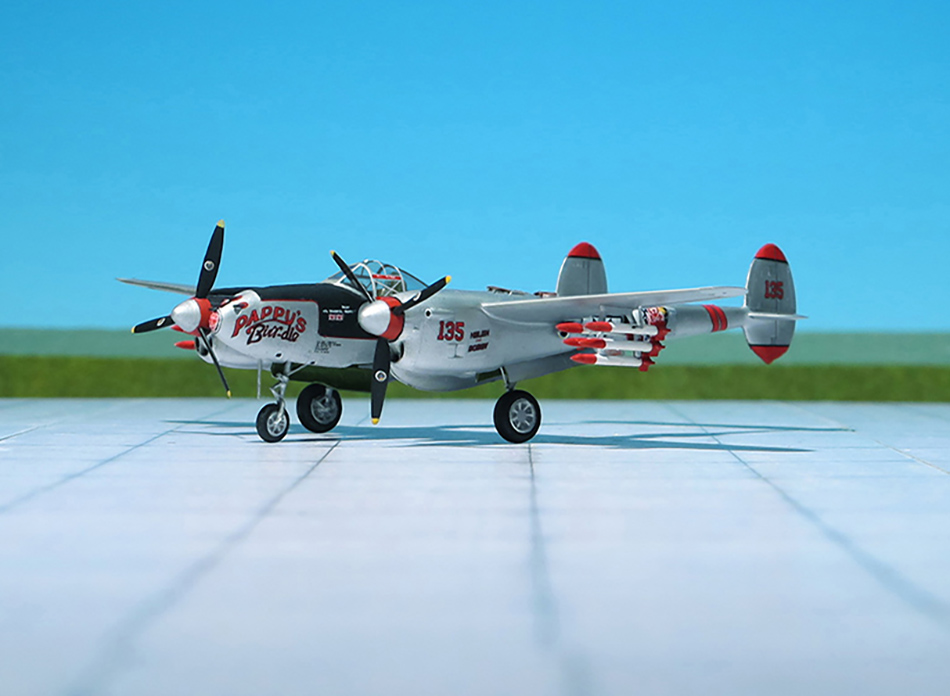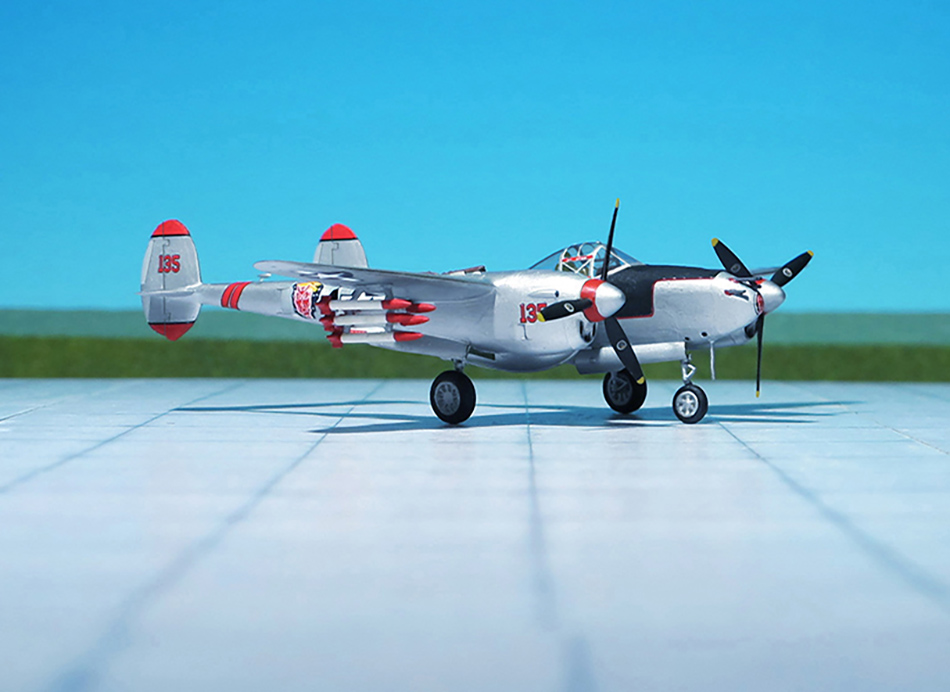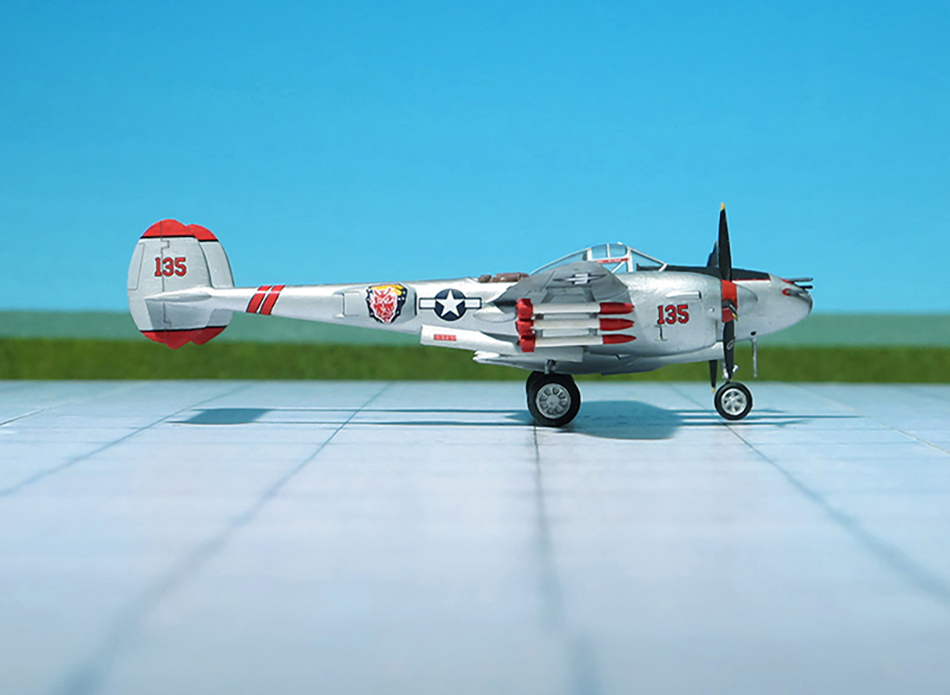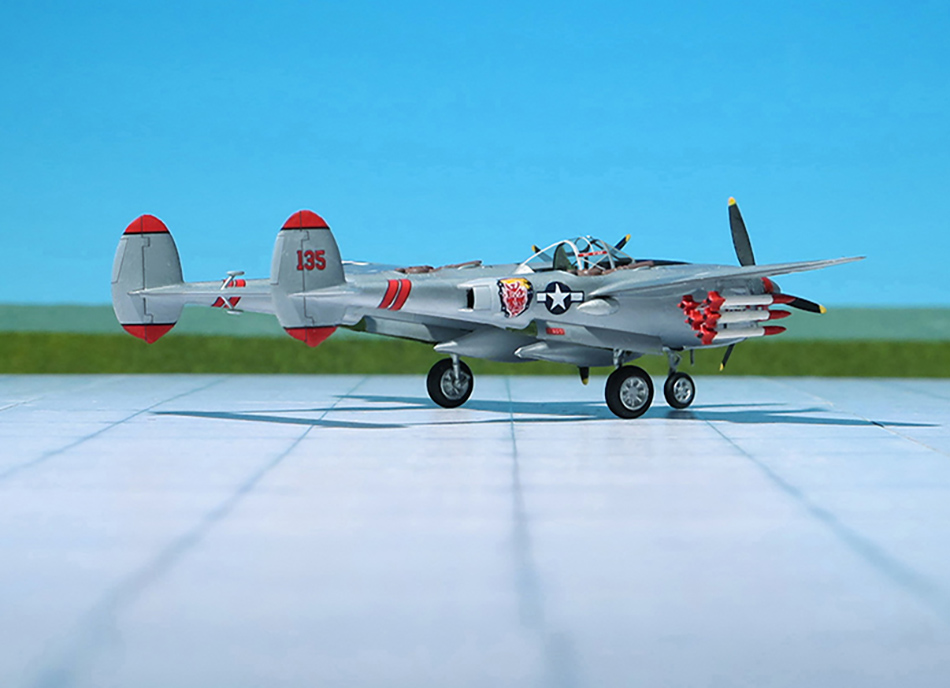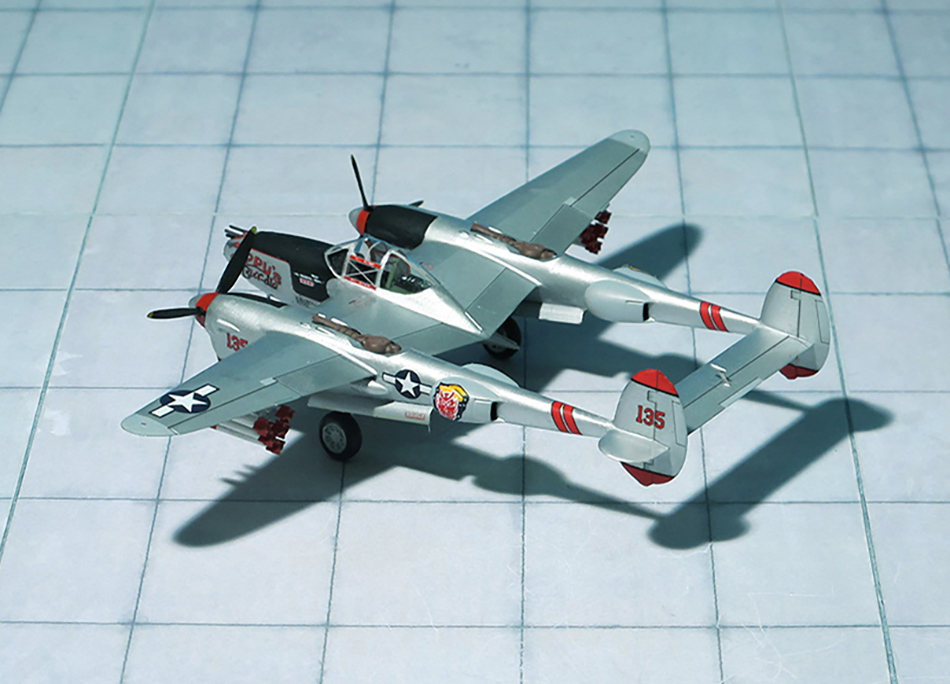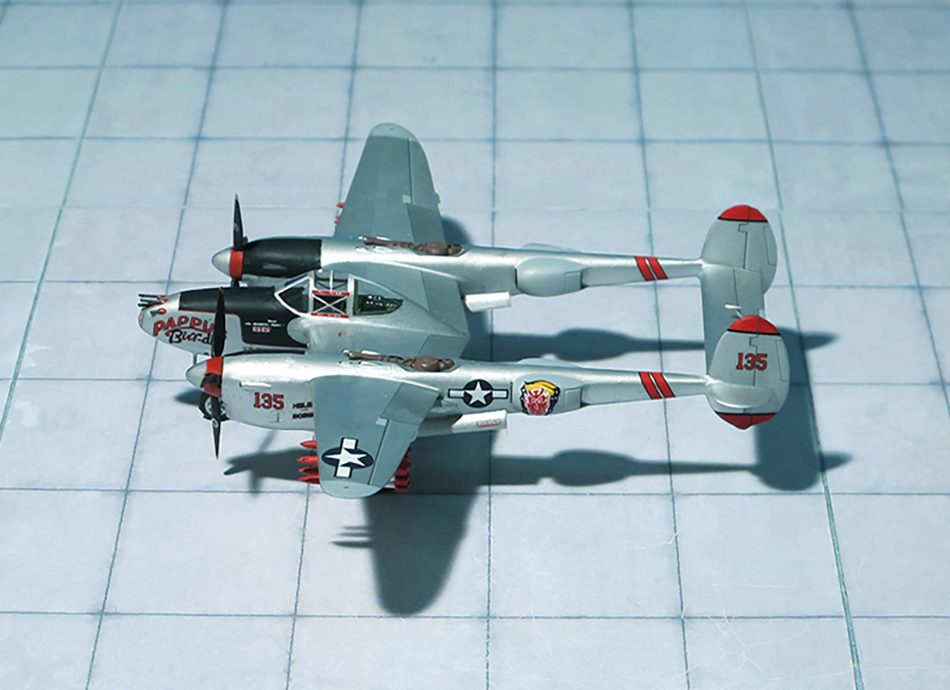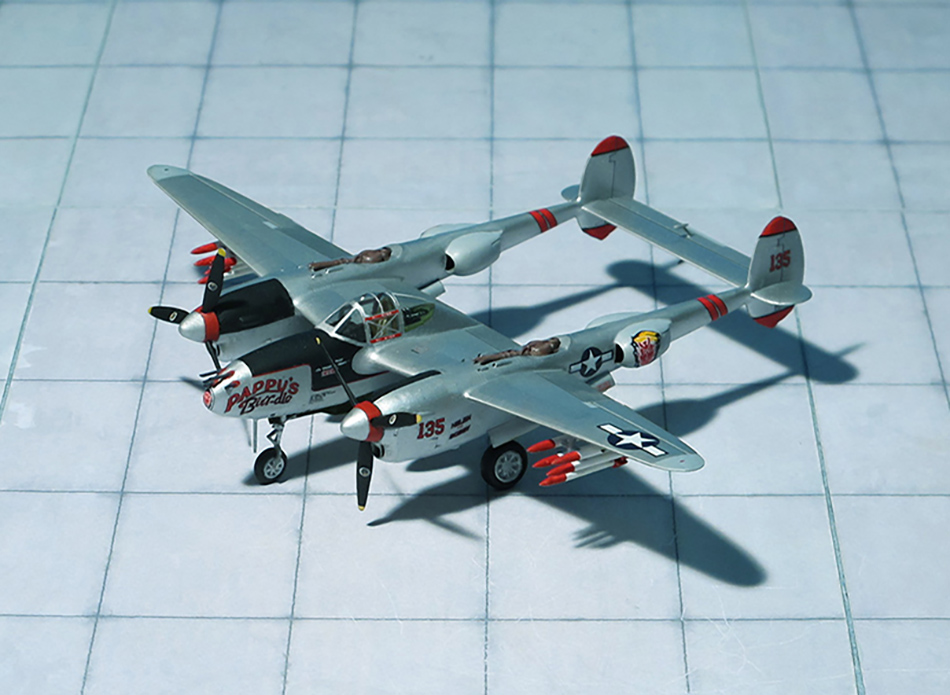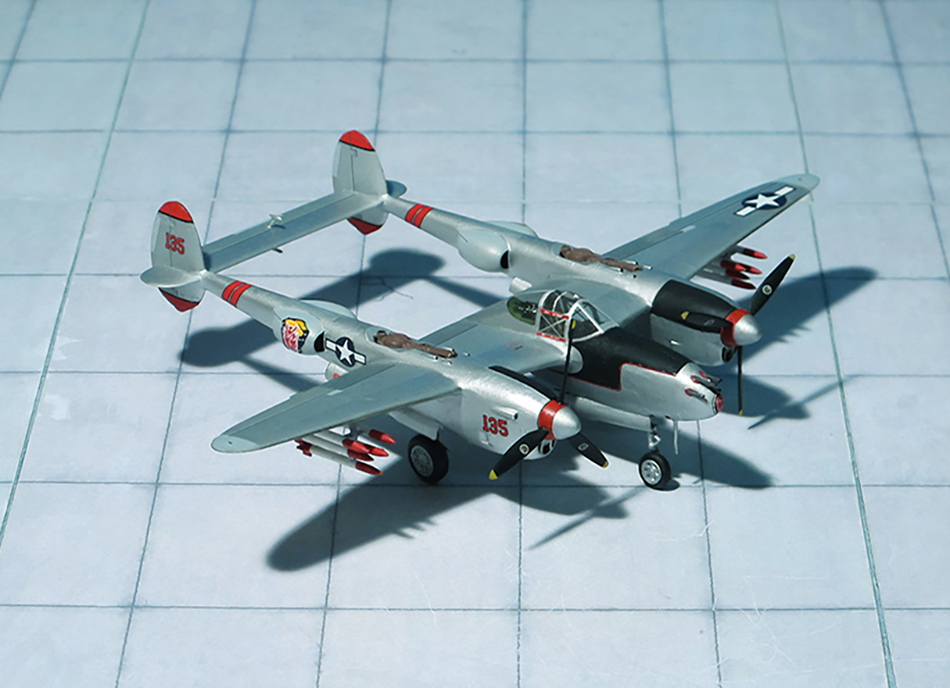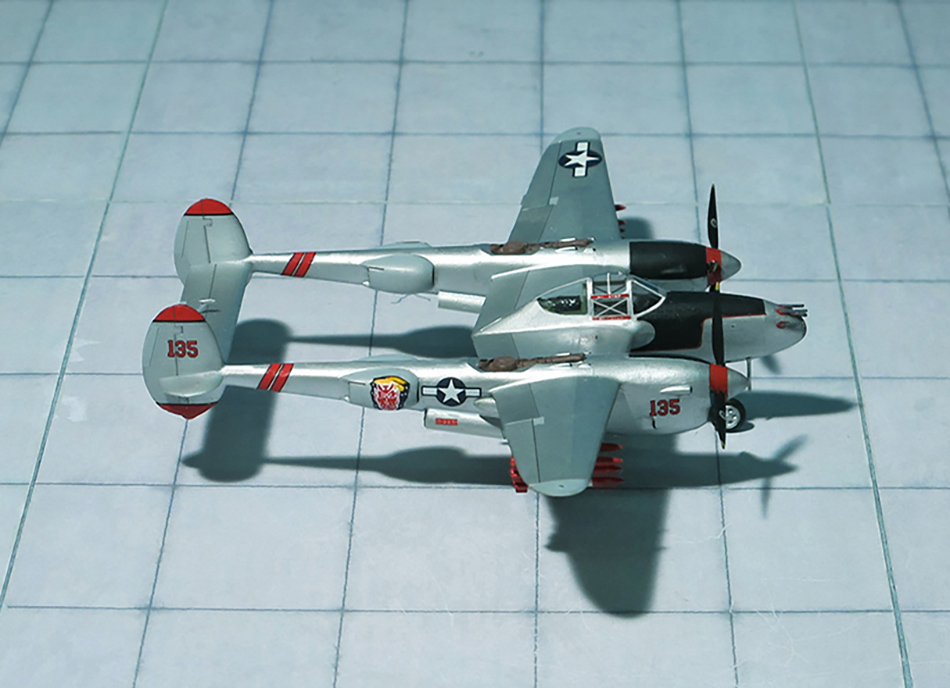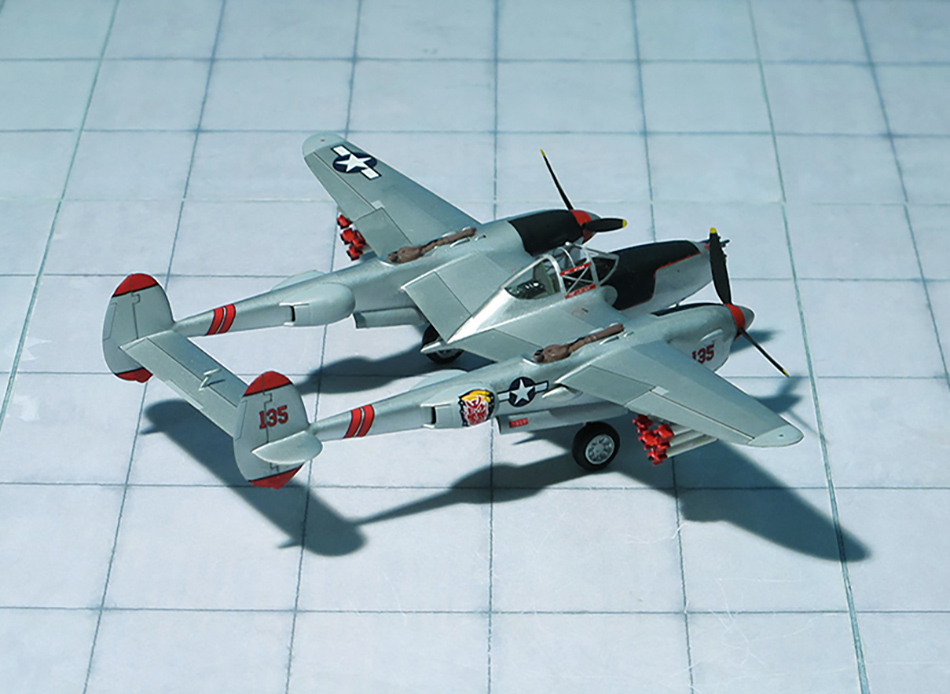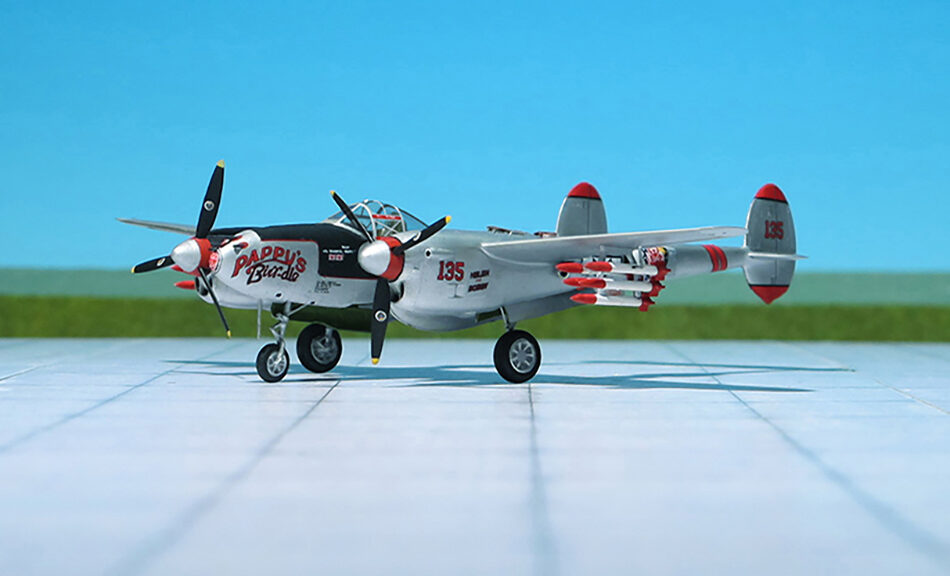
TYPE: Long-range fighter and –fighter bomber
ACCOMMODATION: Pilot only
POWER PLANT: Two Allison V-1710-112/113 (F30R/L) liquid-cooled turbo-supercharged piston engines, rated at 1,600 hp at 26,500 ft
PERFORMANCE: 414 mph
COMMENT: The Lockheed P-38 Lightning was an American single-seat, twin piston-engined fighter aircraft that was used during World War II. Developed for the United States Army Air Corps (USAAC) by the Lockheed Corporation, the P-38 incorporated a distinctive twin-boom design with a central nacell containing the cockpit and armament. Along with its use as a general fighter, the P-38 was used in various aerial combat roles, including as a highly effective fighter-bomber, a night-fighter (Lockheed P-38M) , and a long-range escort fighter when equipped withdrop tanks The P-38 was also used as a bomber-pathfinder, guiding streams of medium and heavy bpmbers, or even other P-38s equipped with bombs, to their targets (Lockheed P-38J Droop Snoot). Used in the aerial reconnaissance role, the P-38 (Lockheed F-4A) accounted for 90 percent of American aerial film captured over Europe. Although it was not designated a heavy fighter or a bomber destoyer by the USAAC, the P-38 filled those roles and more; unlike German heavy fighters crewed by two or three airmen, the P-38 with its lone pilot was nimble enough to compete with single-engine fighters.
The P-38 Lightning was used most successfully in the Pacific and the China-Burma-India Theaters of Operation. In the South-West Pacific Theater, the P-38 was the primary long-range fighter of USAAF until the introduction of large numbers of North American P-51 Mustangs toward the end of the war.
The Lockheed P-38L Lightning was the most numerous variant of the Lightning, with 3,923 built, 113 by Consolidated-Vultee in their Nashville plant. It entered service with the USAAF in June 1944, in time to support the Allied invasion of France on D-Day. Lockheed production of the Lightning was distinguished by a suffix consisting of a production block number followed by “LO,” for example “P-38L-1-LO”, while Consolidated-Vultee production was distinguished by a block number followed by “VN,” for example “P-38L-5-VN.”
The Lockheed P-38L was the first Lightning fitted with zero-length rocket launchers. Seven High Velocity Aircraft Rockets (HVARs) on pylons were placed beneath each wing, and later, five rockets were on each wing on “Christmas tree” launch racks, which added 619 kg to the aircraft. The P-38L also had strengthened stores pylons to allow carriage of 900 kg bombs or 1,100 L drop tanks.
Late-model Lightnings were delivered unpainted, per USAAF policy established in 1944. At first, field units tried to paint them, since pilots worried about being too visible to the enemy, but the reduction in weight and drag turned out to be a minor advantage in combat.
The Lockheed P-38L-5 Lightning, the most common subvariant of the P-38L, had a modified cockpit heating system consisting of a plug-socket in the cockpit into which the pilot could plug his heat-suit wire for improved comfort. These Lightnings also received the uprated V-1710-112/113 (F30R/L) engines, and this dramatically lowered the number of engine-failure problems experienced at high altitude so commonly associated with European operations (Ref.: 24).