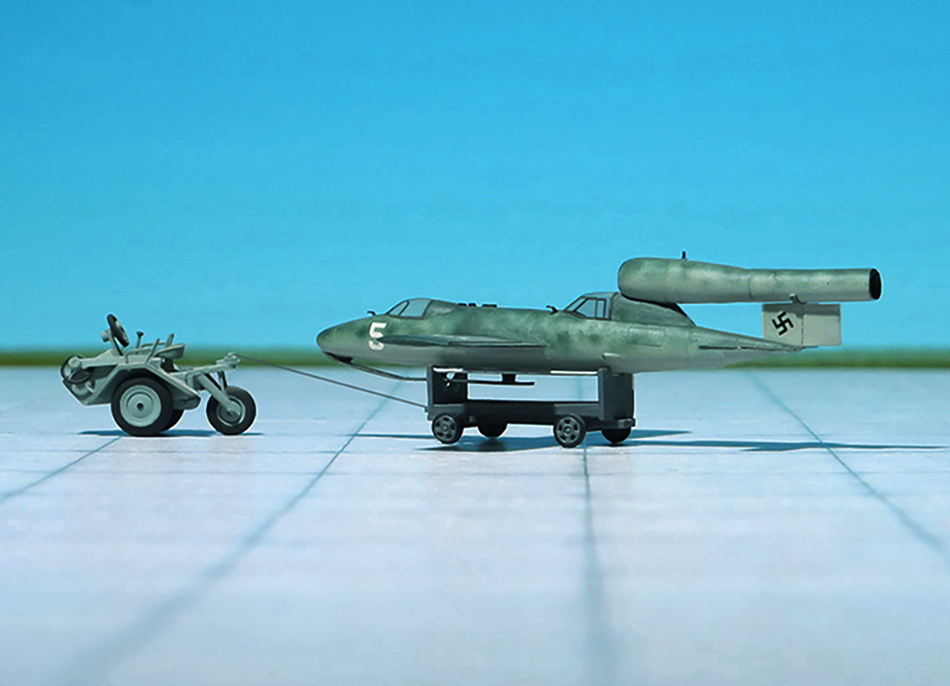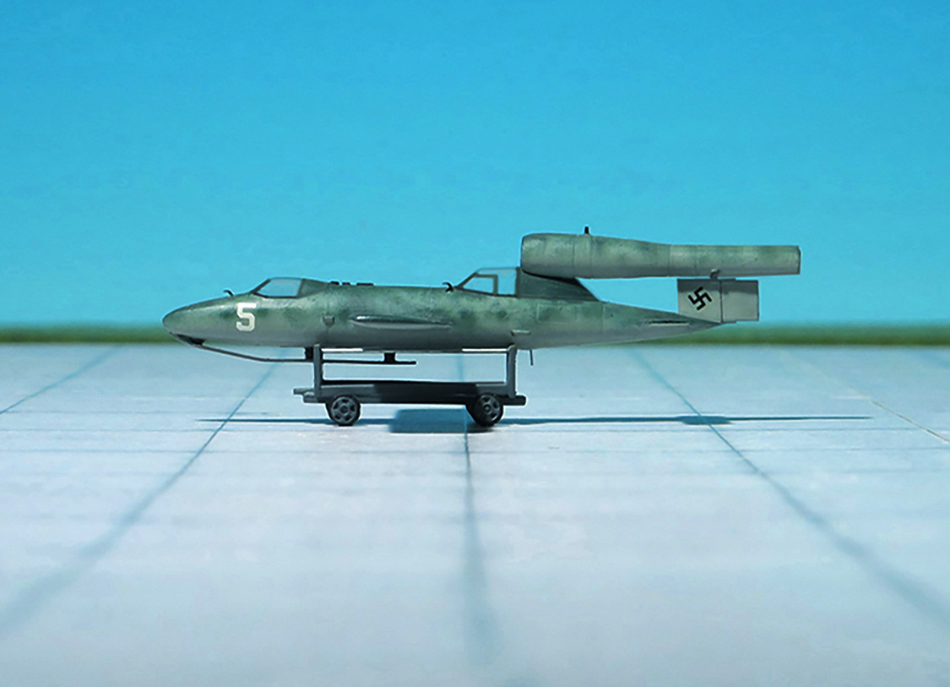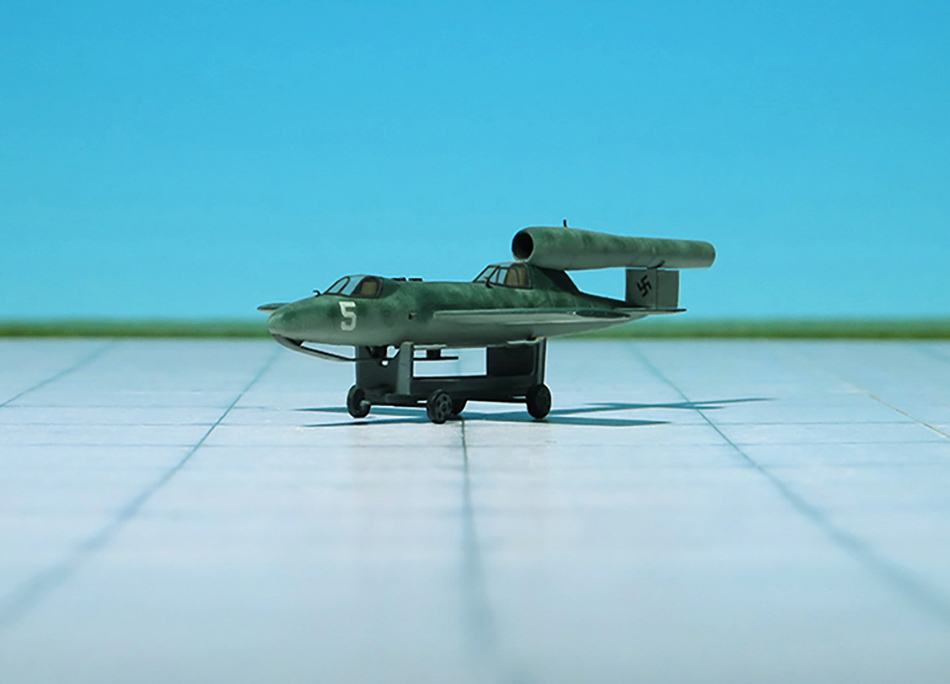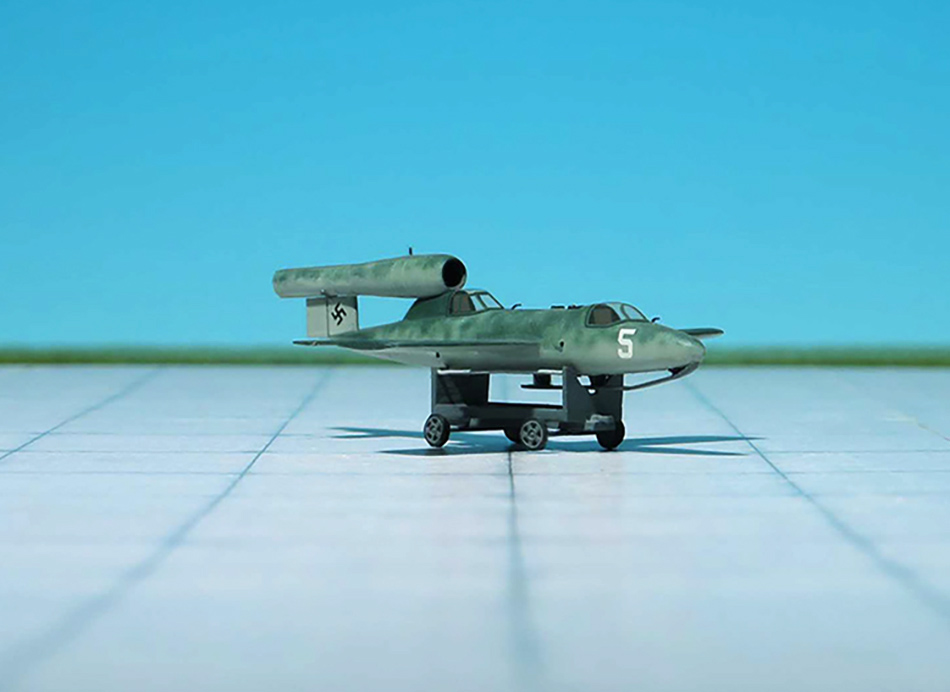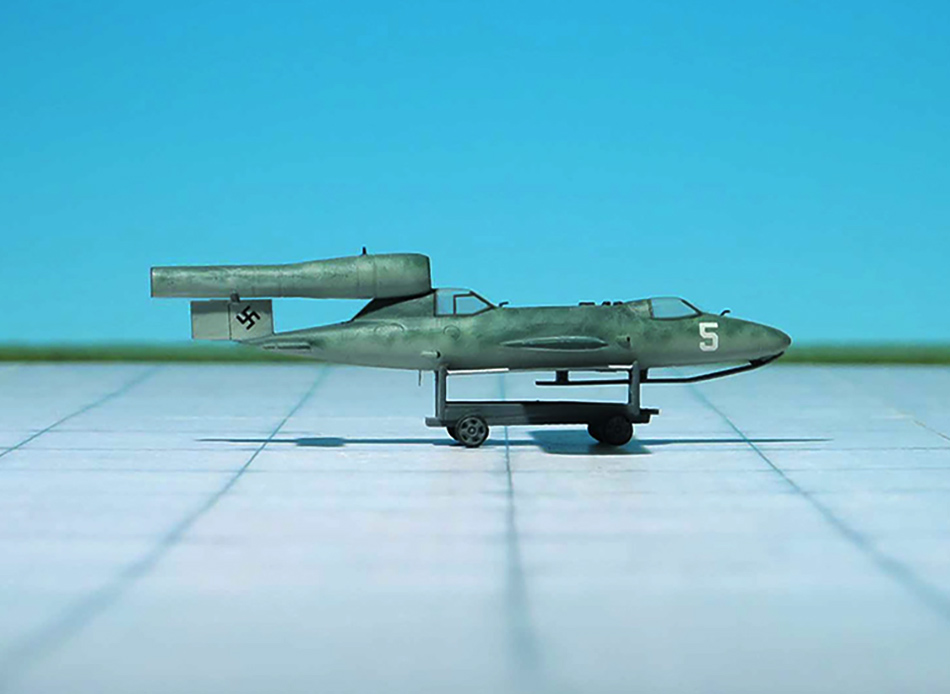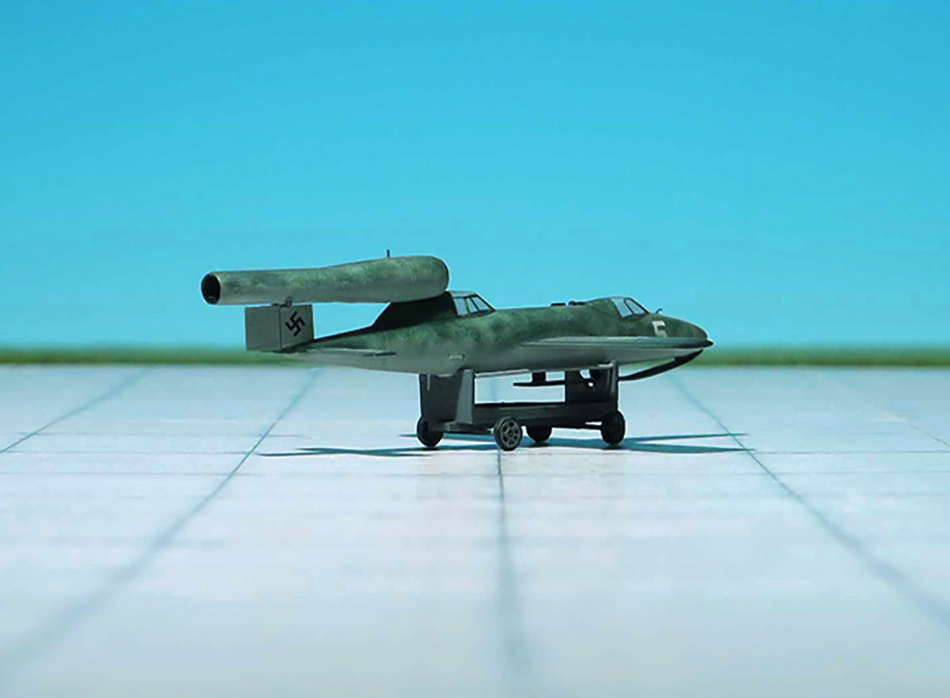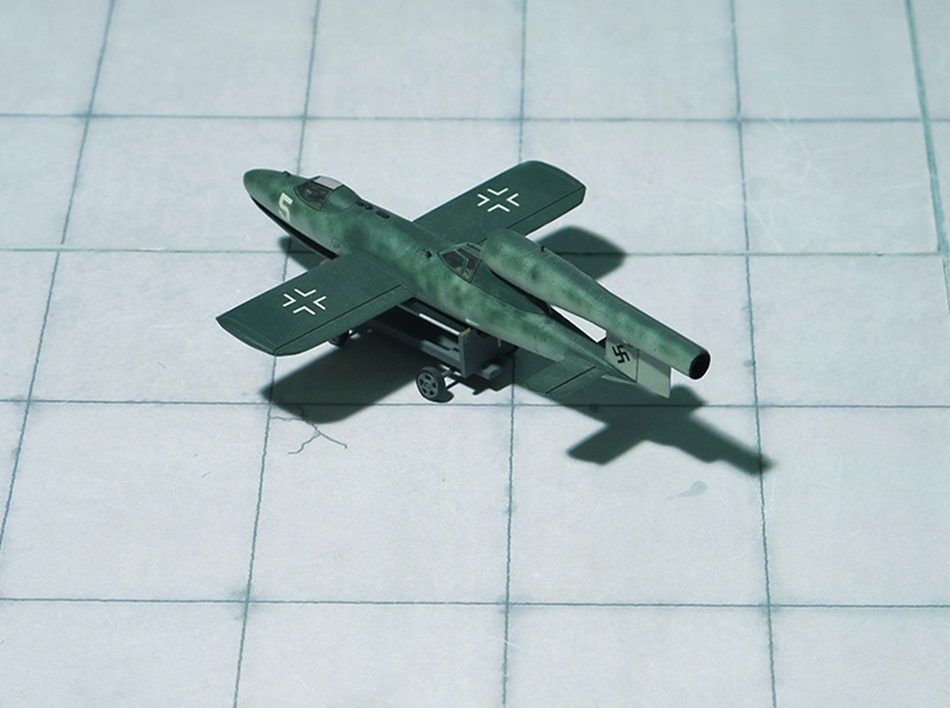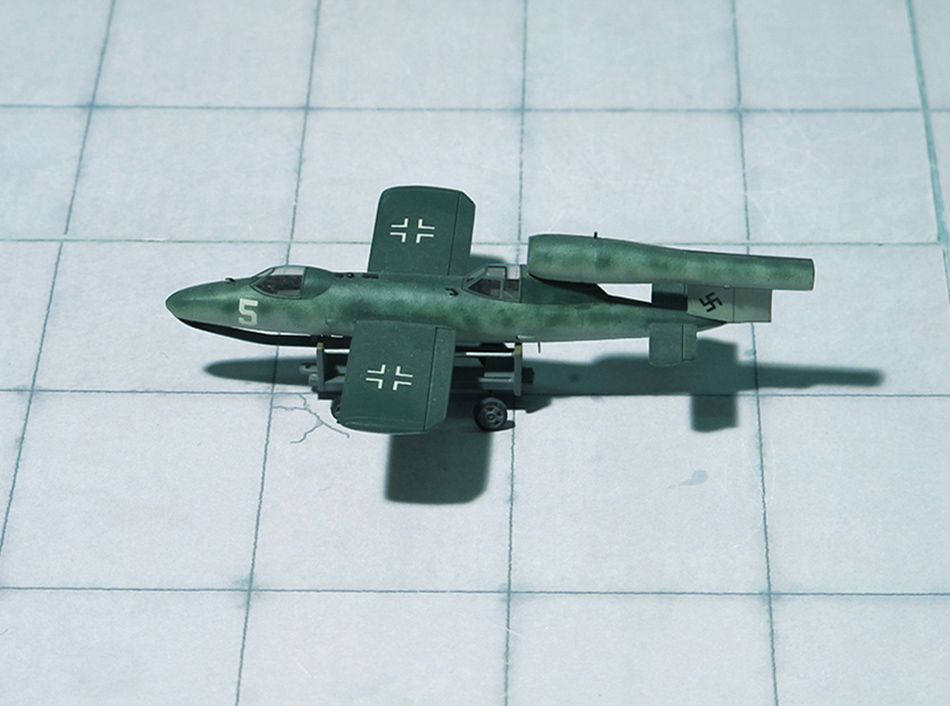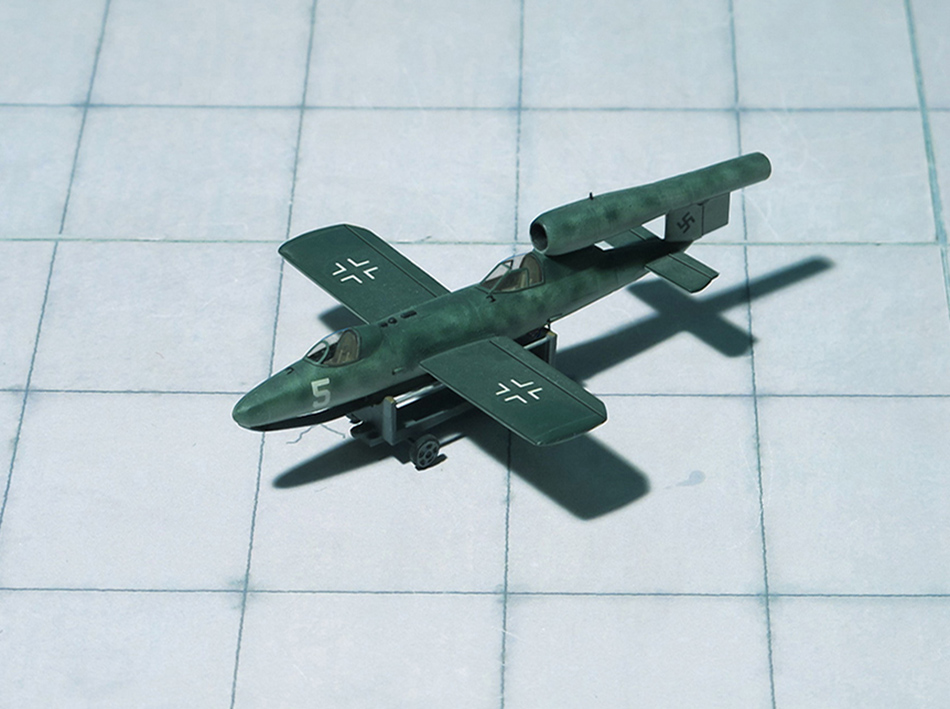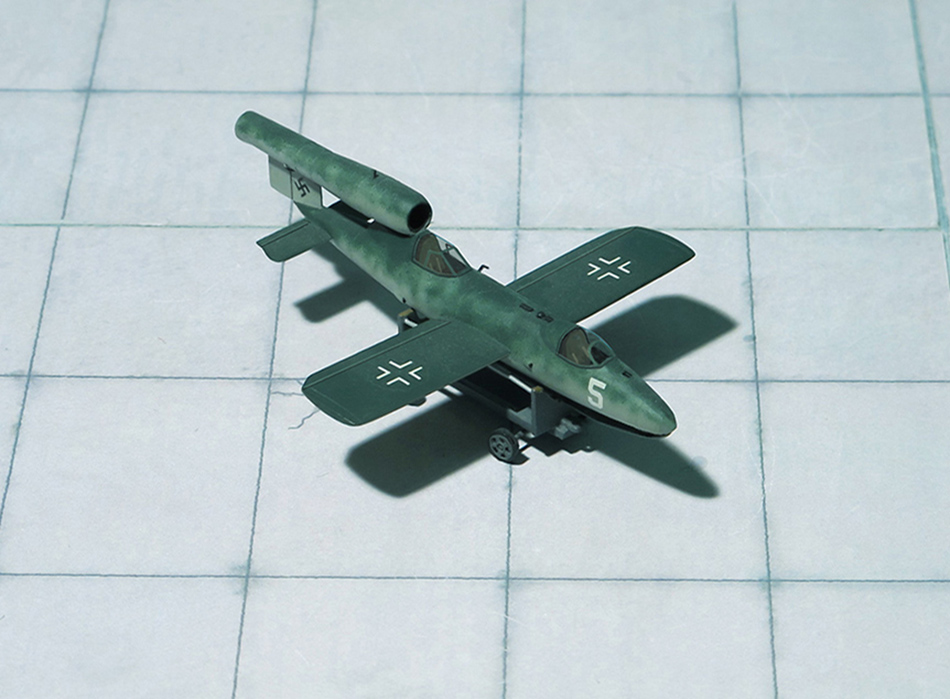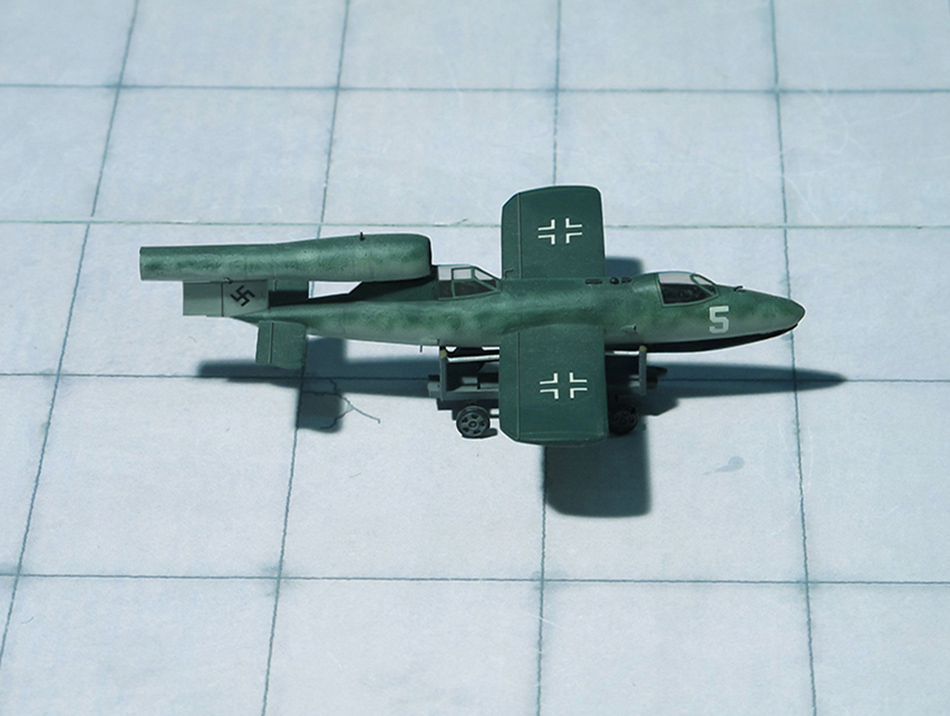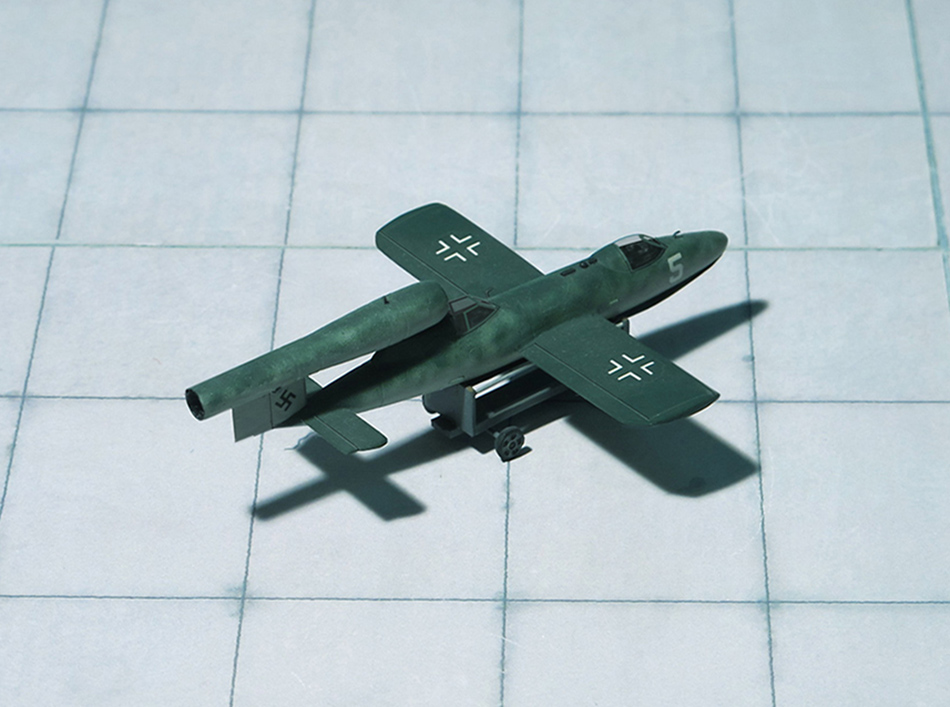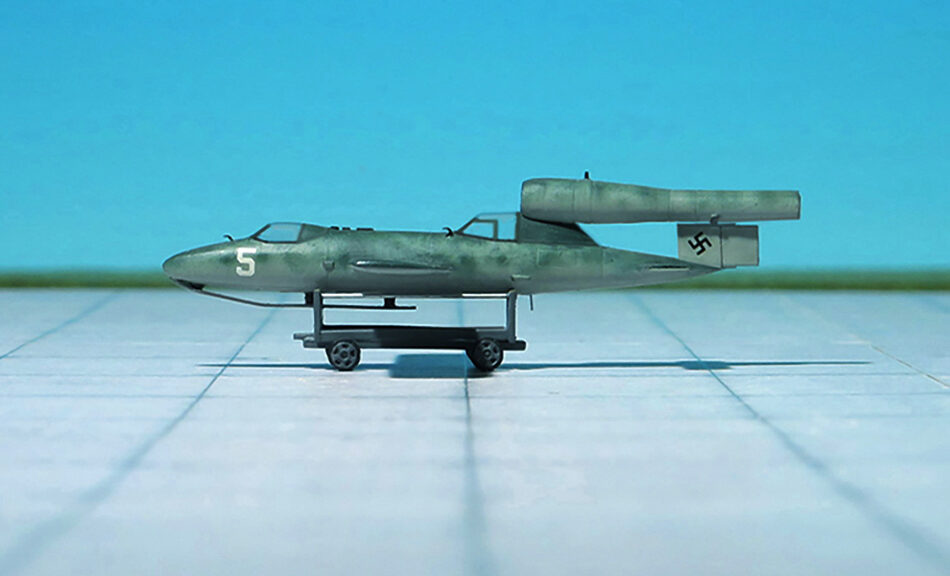
TYPE: Manned V-1 Flying bomb, Trainer
ACCOMMODATION: Pilot and trainer
POWER PLANT: One Argus As 109-014 pulsejet, max 367 kp thrust
PERFORMANCE: 400 mph at 8,000 ft
COMMENT: The Fieseler Fi 103 Re, code-named Reichenberg, was a German manned version of the V-1 Flying bomb (more correctly known as the Fieseler Fi 103). It was developed towards the end of the WW II and was intended to be used as a human-guided bomb in suicidal attacks against the advancing Allies.
The Fi 103 Re started development in 1944 at a time when Germany was anticipating a major naval landing by the Allies in Western Europe. It was believed that a disposable aircraft armed with 2,000 lb of explosives would potentially inflict heavy damage on important targets such as enemy shipping. However, these attacks would have very likely involved the death of the pilot, who was expected to exit the aircraft and parachute away mere moments before the aircraft’s impact. These pilots were reportedly to be volunteers and aware of the risk to their own lives.
The concept called for an aircraft that would be armed with a single 2,000 lb explosive device that would detonate upon impact with the target, which was typically envisioned to be Allied shipping. Two different aircraft were quickly considered to be the most suitable options available, the Messerschmitt Me 328 and the Fieseler Fi 103, better known as the V-1 flying bomb, although both required development work. Officials opted to pass over the Fi 103 in favour of the Me 328. Being largely composed of wood and conceived of as potentially suitable for using multiple means of propulsion, the Me 328 had been worked on since 1941.
However, difficulties were encountered in the Me 328 during prototype testing, the vibration caused by its pulsejet engines having been a particular source of issues, leading to work being suspended.
It has been claimed that one reason for the switch towards the Fi 103 Re was its ability to offer the pilot a slim chance of survival.
During September 1944, the first real flight was performed at the Erprobunsstelle Rechlin, the Reichenberg Re 1 unpowered glider being dropped from a Heinkel He 111. However, this flight ended in a crash, which was attributed to the pilot having lost control of the aircraft after accidentally jettisoning the canopy. The next day, a second flight was conducted that also ended in a crash. The technical department struggled to explain these losses, although there were suspicions that the Fi 103 R’s flight characteristics could make landing particularly challenging.
Seeking to avoid further accidents while also hoping to uncover the source of these difficulties, further test flights were carried out by Heinz Kensche and Hanna Reitsch, both of whom were particularly accomplished test pilots. Reitsch herself experienced several crashes, which she survived unscathed. On 5 November 1944, during the second test flight of the Re 3, a wing detached from the aircraft due to the vibrations; Kensche managed to parachute to safety, albeit with some difficulty due to the cramped cockpit. It was concluded that the Fi 103 Re had a relatively high stall speed and that pilots, unaware of this, had been attempting to land at speeds that were too slow for the aircraft to maintain stable flight.
There were five Reichenberg-variants under development and by October 1944 about 175 R 4 were ready for action.
Reichenberg Re 1 – The basic single-seat unpowered glider.
Reichenberg Re 2 – Unpowered glider with a second cockpit fitted where the warhead would normally be.
Reichenberg Re 3 – A pulsejet-powered two-seater.
Reichenberg Re 4 – The standard-powered operational model.
Reichenberg Re 5 – Powered trainer for the Heinkel He 162 (shorter nose).
The Fieseler Fi 103 Re 3 was a pulsejet powered two-seat trainer version. For this purpose, the fuselage was lengthened by 59 inch to approximately 393 inch , and one of the two compressed-air tanks – required for the pneumatic supply and autopilot operation – was removed. The remaining tank was relocated to the autopilot’s former position, and a plywood shell with a padded headrest was installed. In the space that had become available a second pilot seat for the student pilot was prvided. A spring-mounted landing skid was attached under the fuselage to serve as the landing gear.
At least ten units were produced and used for training flights. The maiden flight took place on November 4, 1944, once again with Heinz Kentzsche at the control. A day later, during a further test flight, parts of the left wing’s skin came separated due to vibrations from the propulsion system, and Kentsche had to bail out. The subsequent flights took place without further incident; the designer of the Reichenbach device, Willi Fiedler, as well as Hanna Reitsch, flew the Fieseler Fi 103 Re 3.
The last flight of a Reichenberg aircraft took place on March 5, 1945. During flight both wings sheared off in succession at a speed of approximately 250 to 319 mph for unknown reasons, and the aircraft plunged vertically into a sea. The pilot lost his life in the process and subsequently, all further work on the program was halted (Ref.: 24).