TYPE: High Performance Fighter, Project
ACCOMMODATION: Pilot only
POWER PLANT: Two Junkers Jumo 004B-1 turbojet engines, rated at 902,45 kp thrust each
PERFORMANCE: 628 mph (estimated)
COMMENT: The Jägernotprogramm (Emergency Fighter Program) was the program that resulted from a decision taken on July 1944 by the Luftwaffe regarding the German aircraft manufacturing companies during the last year of the Third Reich.
This project was one of the products of the latter part of 1944, when the Luftwaffe High Command saw that there was a dire need for a strong defense against Allied bombing raids. Although opposed by important figures such as Luftwaffe fighter force leader Adolf Galland, the project went ahead owing to the backing of Reichsmarschall Hermann Göring. Most of the designs of the Emergency Fighter Program never proceeded past the project stage.
In September 1944, the Volksjäger (Peoples’ Fighter) design competition was initiated to create a lightweigh high-speed fighter/interseptor using a single BMW 003 turbojet engine, and intended for rapid mass-production while made primarily of wood as metals were in very short supply and prioritised for other aircraft. The Volksjäger was intended to be disposable, with damaged aircraft being discarded rather than repaired, and was to be flown by pilots hastily trained on gliders.
A hurried design competition involving almost all German aircraft companies was started with companies such as Blohm & Voss, Fieseler, Focke-Wulf, Heinkel and Junkers.
The specification stipulated various performance requirements, including a maximum weight of 4,400 lb, a maximum speed of 470 mph at sea level, an operational endurance of at least a half hour, while the takeoff distance was to be no greater than 1,640 ft. Provisions for armour plating in areas such as the fuel tanks and around the pilot were also to be made. Furthermore, the Volksjäger needed to be easy to fly.
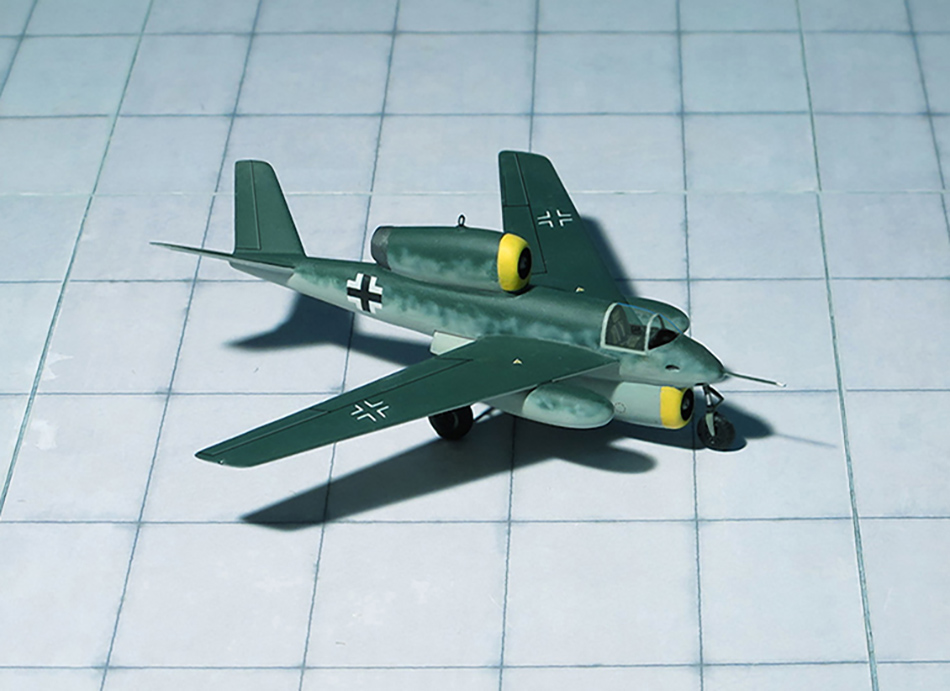
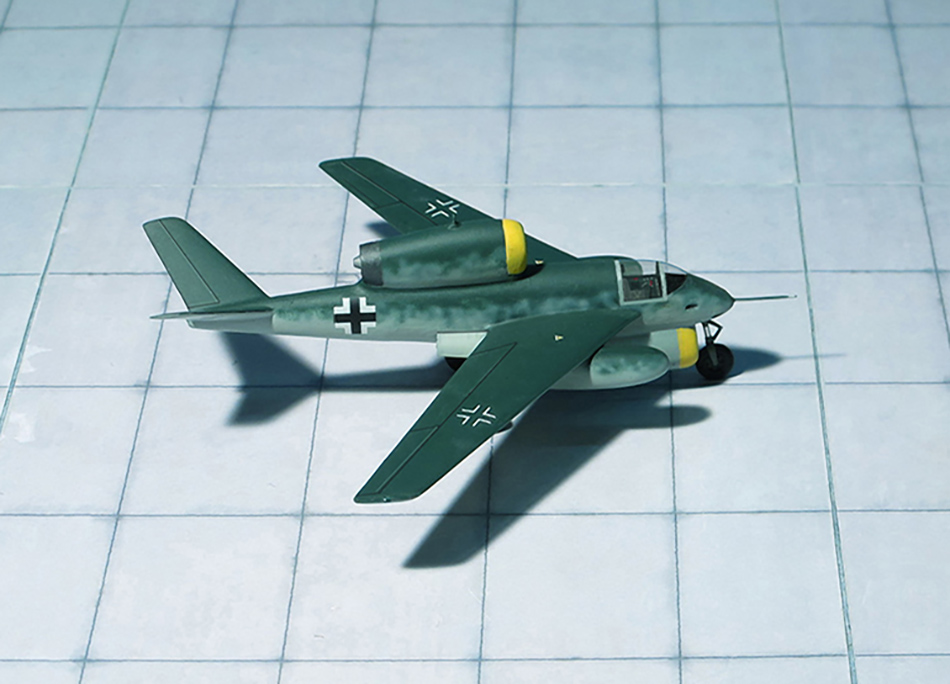
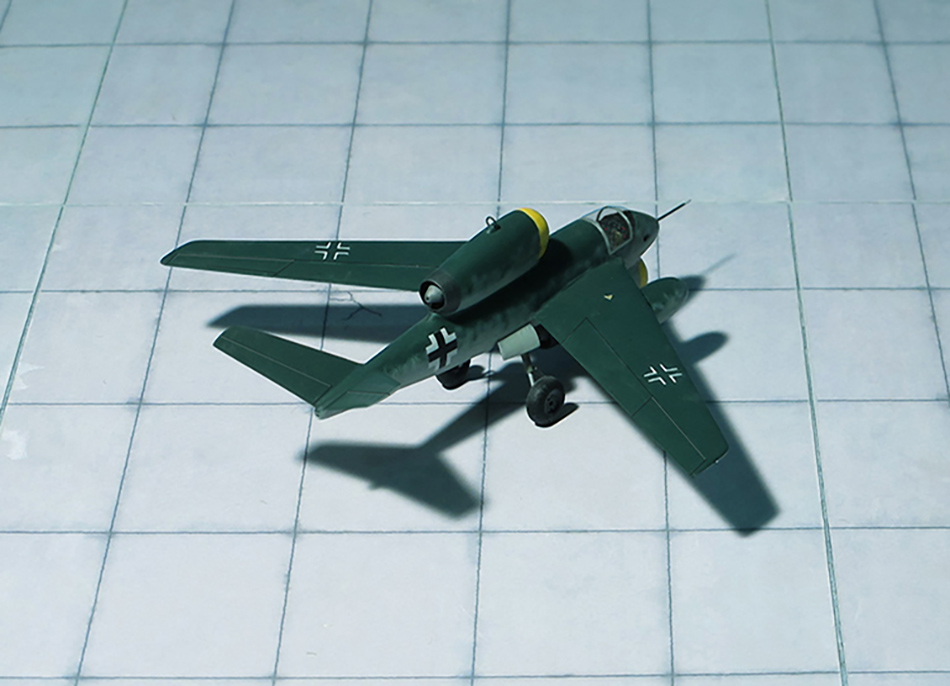
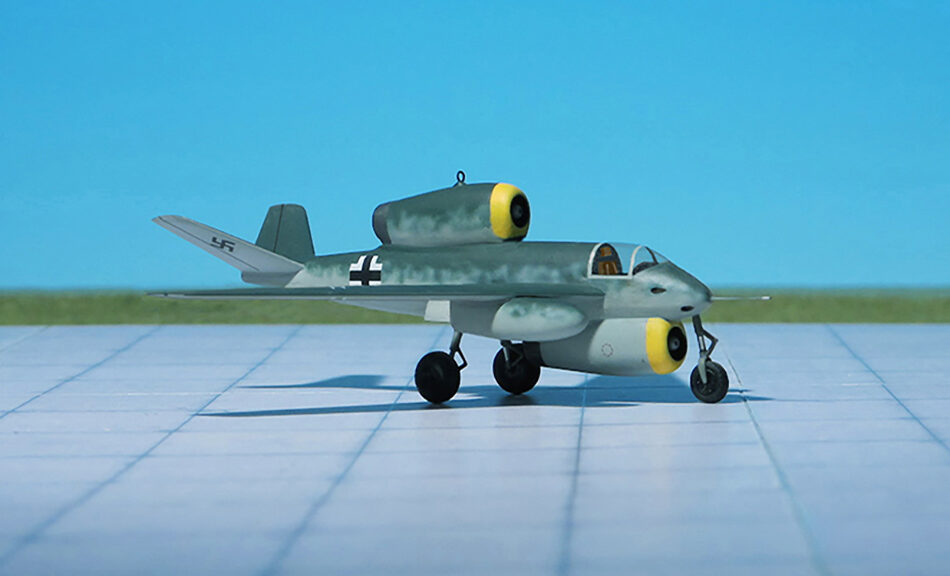
Immediately, Heinkel carried out some design work of a new fighter with one turbojet engine placed on top of the aircraft centered directly over the wing’s center section. Some other designs had asecond turbojet engine slung under the fuselage.
The Heinkel design team prepared several scetches of a small aircraft with a conventional fuselage, powered by one or two turbojet engines and with different wing and tailplane configurations. One design was the He P.1073.01-04 from 10.07.1944 that finally led to the later winner of the Volksjäger competition, the Heinkel He 162 Salamander.
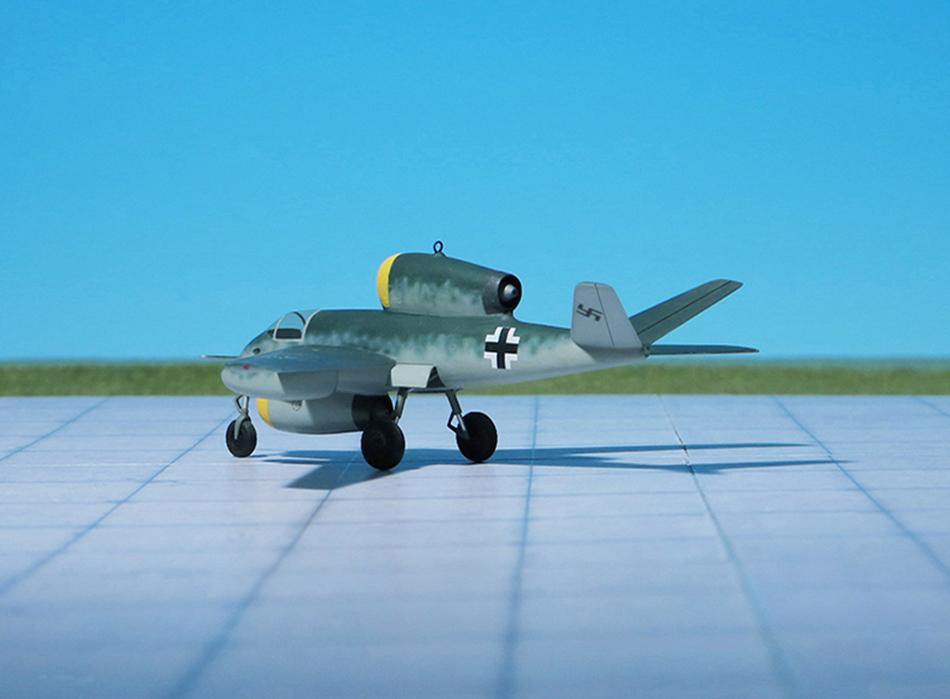
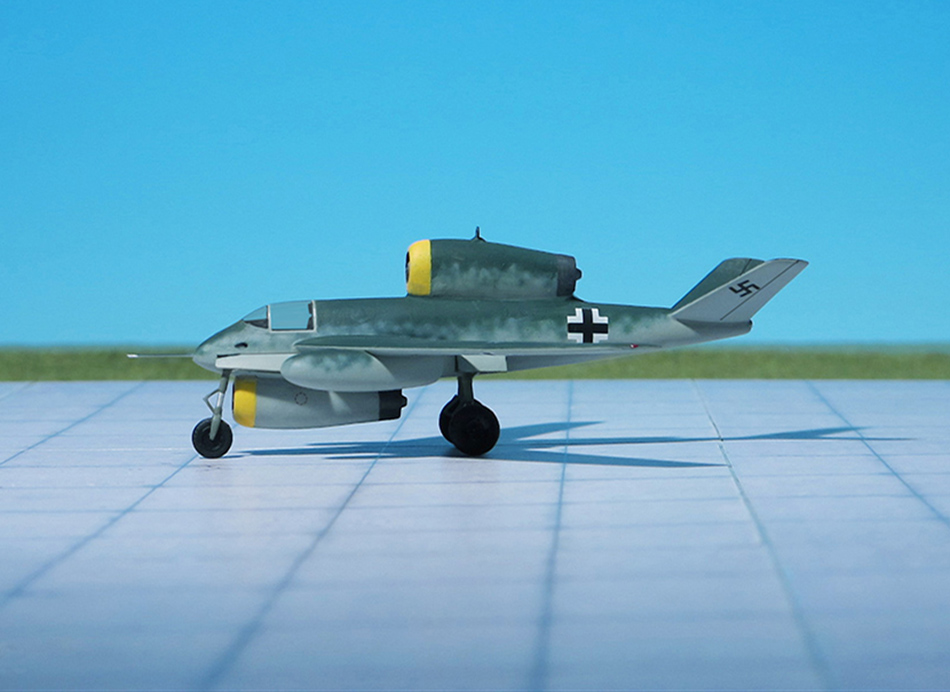
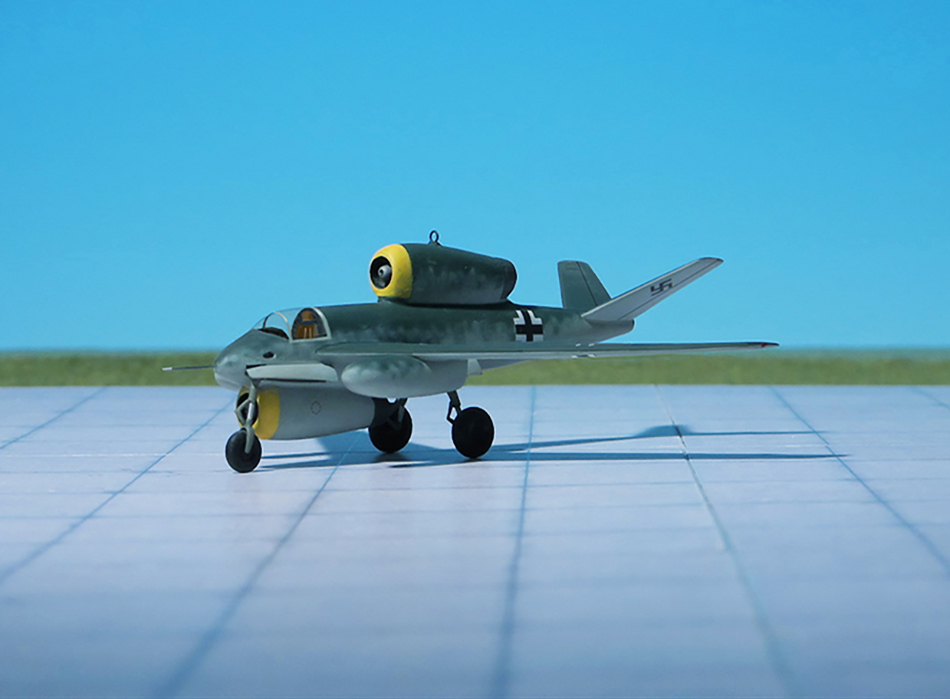
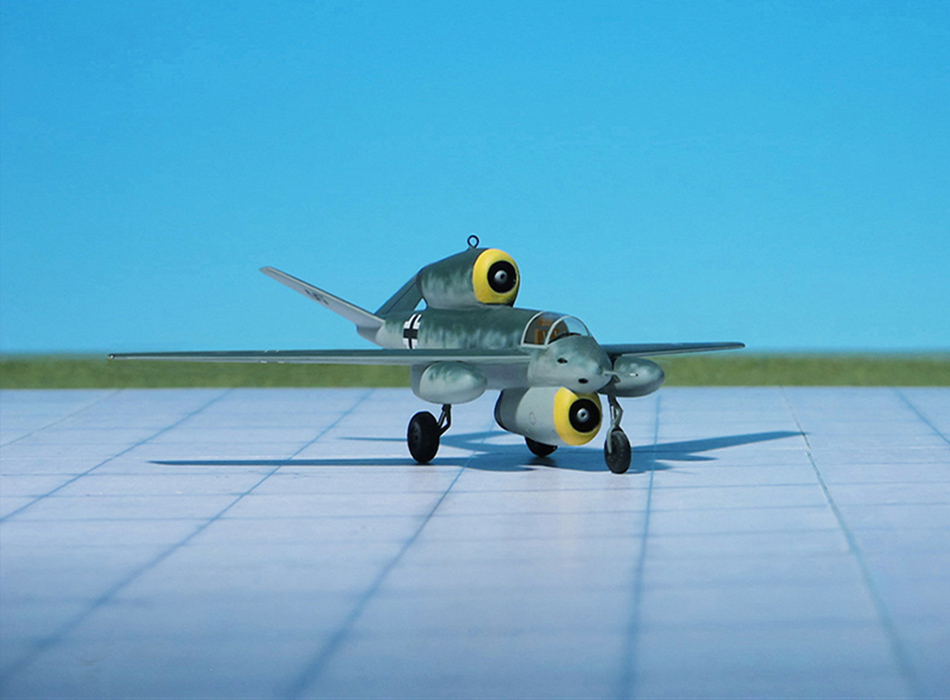
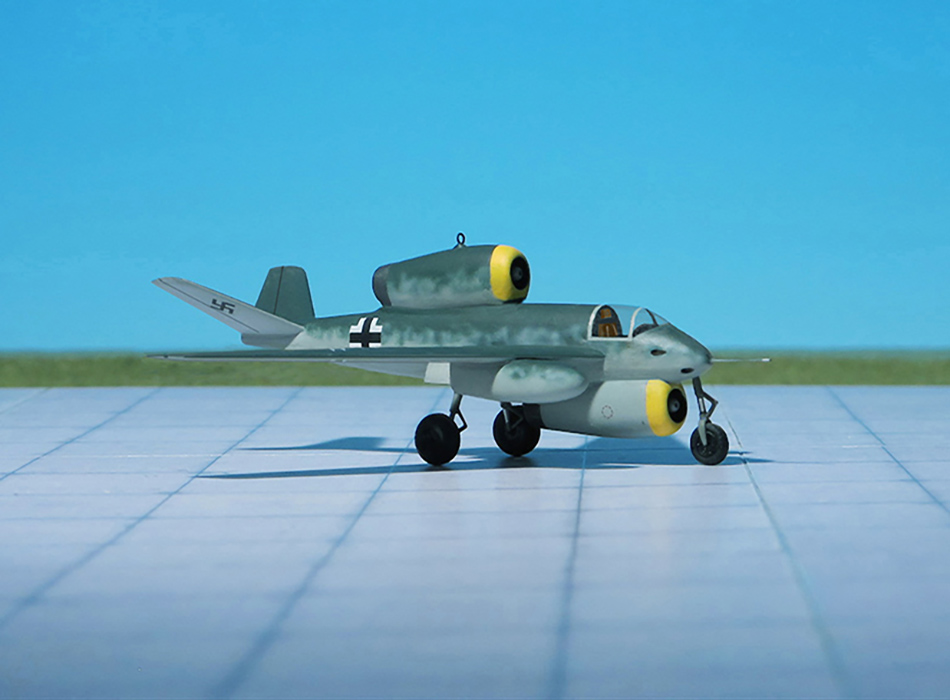
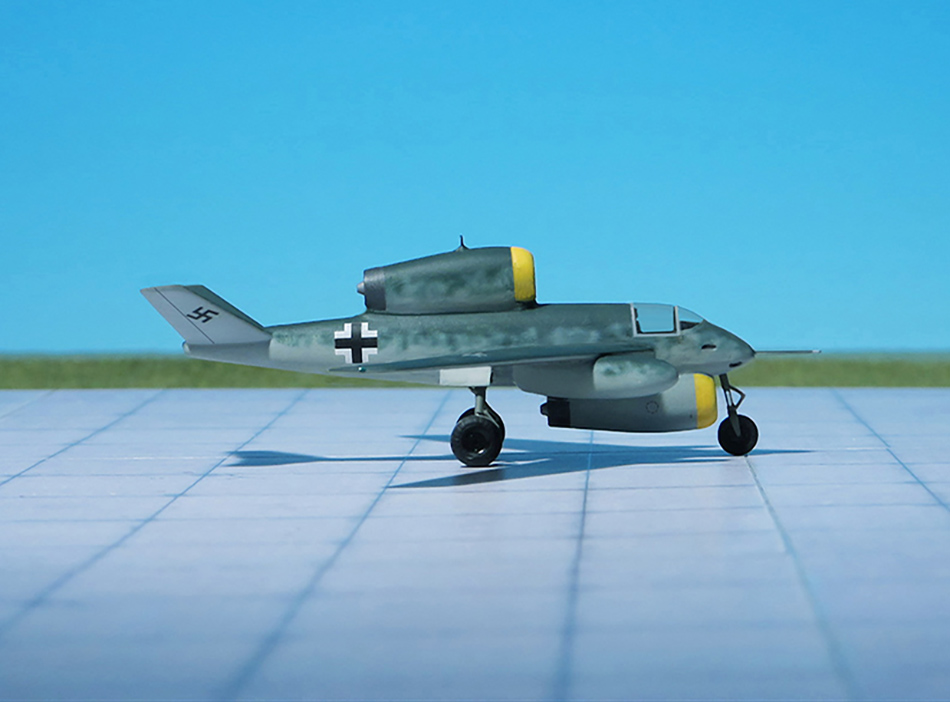
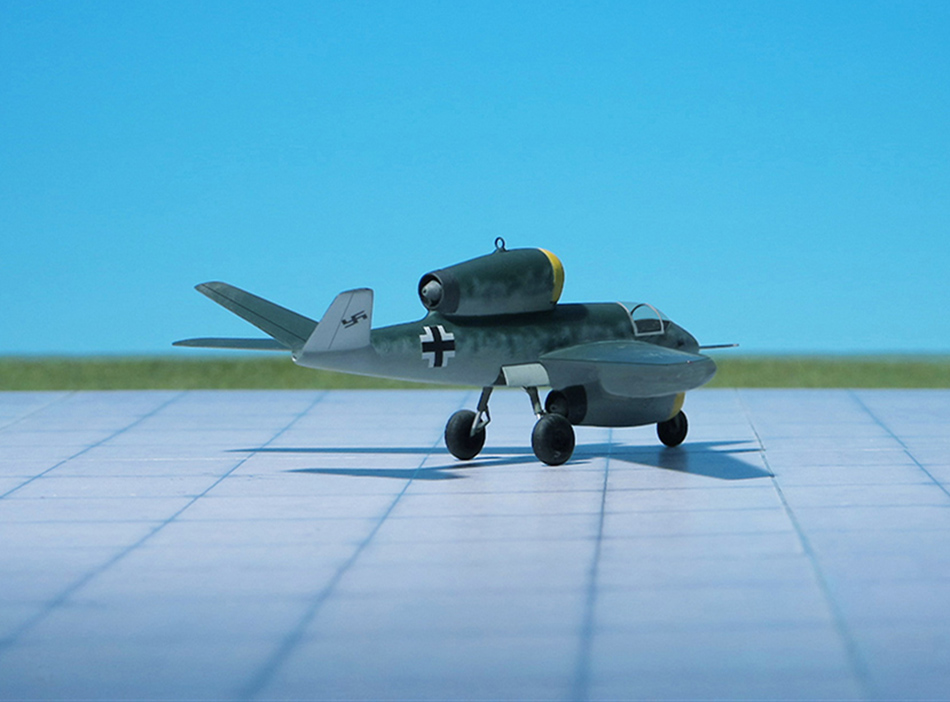
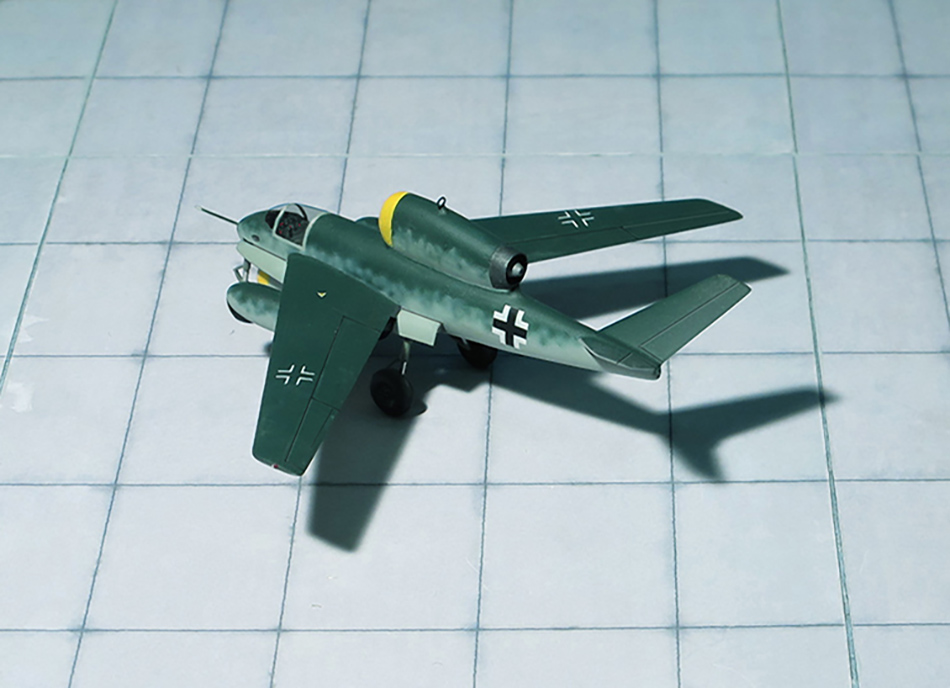
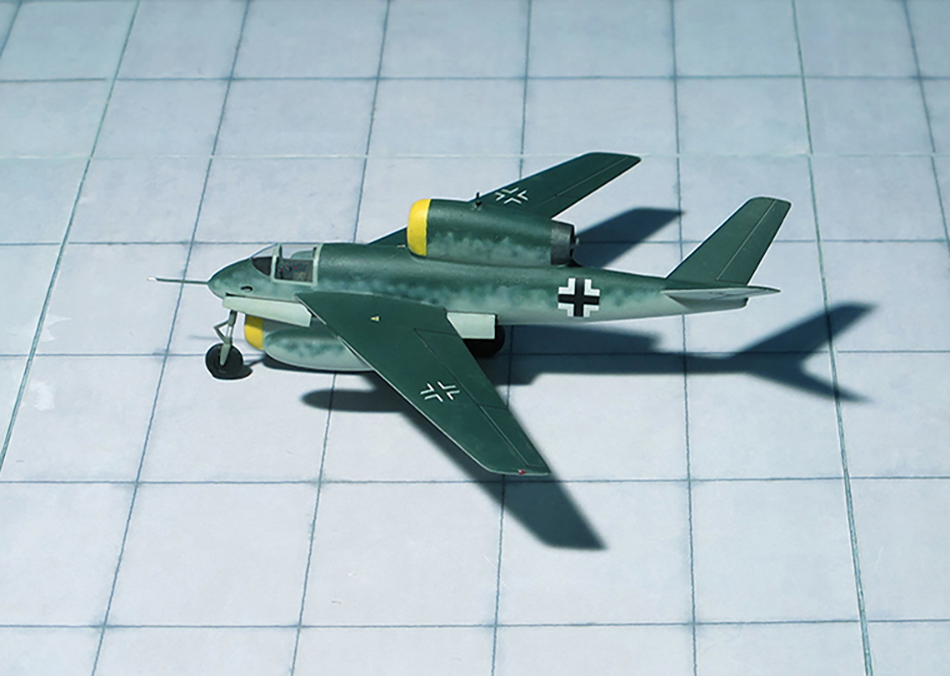
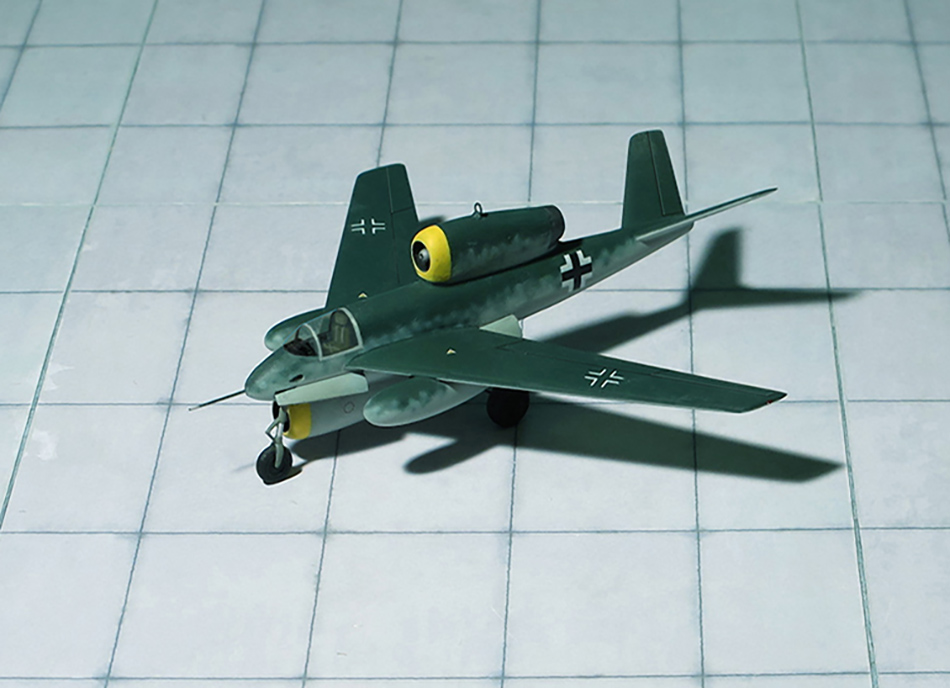
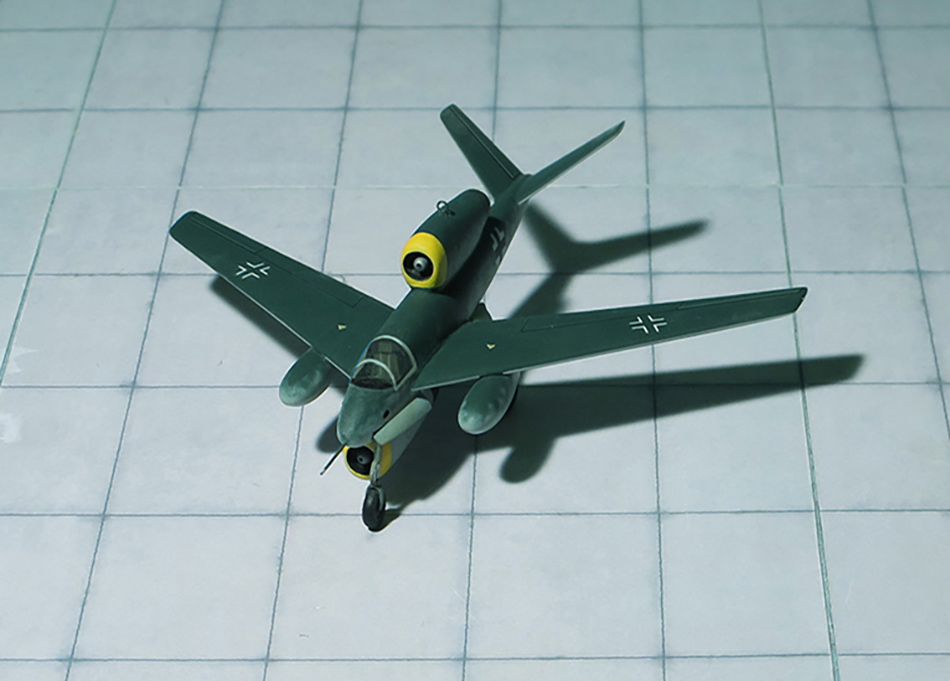
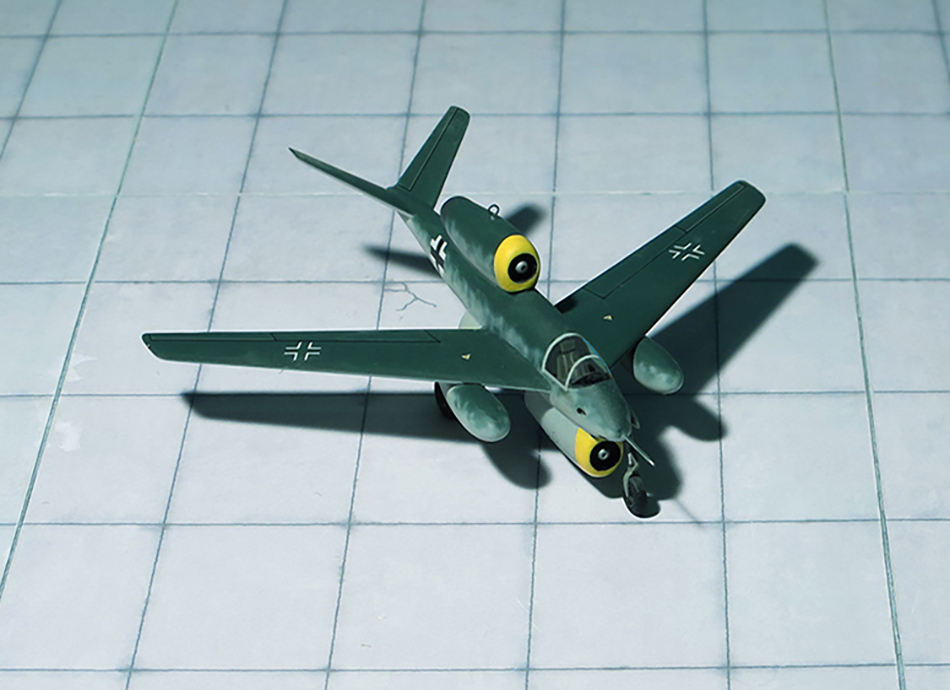
The He P.1073.01-04 was powered by two Junkers Jumo 004 turbojet engines, one engine mounted on top of the fuselage, the second engine was placed under the cockpit floor right to the center line. Provision was made to install the more powerful Heinkel/Hirth HeS-011 turbojet engines. The thin wings were swept back to app. 35 degree and had conventional ailerons. The turbojet exhaust would pass directly over the upper rear fuselage and the tail area. For that reason the tailplane was planned as a V- type butterfly configuration. A tricycle gear was adopted, the nose wheel was positioned asymetrically left of the center line close to the air intake for the lower turbojet engine and retracted backwards. The main wheels were retracted into the fuselage. In case of emergency the pilot could be ejected by a pneumaric driven ejection seat. Additional fuel tanks were fixed mounted close to the wing roots. The armament consisted of three 20mm MG 151/20 machnine guns.
Another design was the Heinkel He P.1073.09-44. However, both designs were not adopted by the Luftwaffe and were not actually produced, but these sub-concepts had some influence on the final design of the Heinkel He 162 Salamander or Spatz (Sparrow) fighter aircraft that entered service in October 1944 (Ref.: 24).