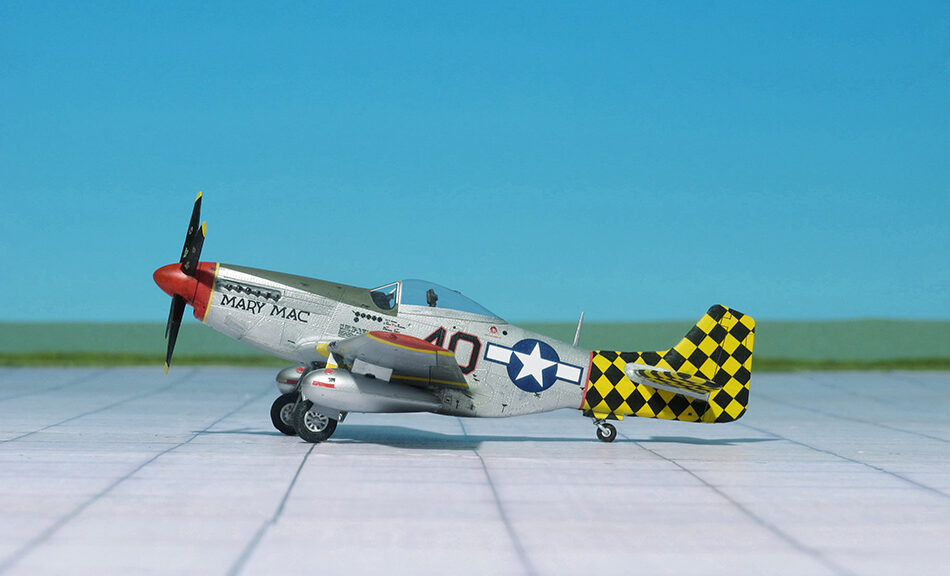
TYPE: Long-range fighter and fighter bomber
ACCOMMODATION: Pilot only
POWER PLANT: One Packard (Rolls Royce) V-1650-7 Merlin liquid-cooled engine, rated at 1,720 hp at WEP (War Emergency Power)
PERFORMANCE: 440 mph
COMMENT: The North American Aviation P-51 Mustang was an American long-range, single-seat fighter and fighter-bomber used during World War II and the Korean War, among other conflicts. The Mustang was designed in 1940 by a team of North American Aviation (NAA) in response to a requirement of the British Purchasing Commission. The commission approached NAA to build Curtiss P-40 fighters under license for the Royal Air Force (RAF). Rather than build an old design from another company, NAA proposed the design and production of a more modern fighter. The prototype NA-73X airframe was completed on 9 September 1940, 102 days after contract signing, achieving its first flight on 26 October.
The P-51 Mustang was among the best and most well-known fighters used by the U.S. Army Air Forces during World War II. Possessing excellent range and maneuverability, the P-51 operated primarily as a long-range escort fighter and also as a ground attack fighter-bomber. The Mustang served in nearly every combat zone during WWII, and later fought in the Korean War.
In 1940 the British approached North American Aviation to license-build Curtiss P-40 fighters for the Royal Air Force. North American offered to design a better fighter, which flew as the NA-73X in October 1940. Production of the aircraft — named Mustang I by the British — began the following year.
In the summer of 1941, the USAAF received two Mustang Is under the designation XP-51. Although flight tests of the new fighter showed promise, the USAAF did not immediately order the Mustang. After the personal intervention of Gen. Hap Arnold, however, the USAAF retained 55 Mustangs from a British order. Most of these became F-6A photo-reconnaissance aircraft, which equipped the first USAAF Mustang units, the 154th and 111th Observation Squadrons in North Africa in the spring of 1943.
In March 1942 the USAAF accepted the first production P-51A fighters. Although excellent at lower levels, the P-51A’s Allison engines severely limited performance at high altitude. The USAAF employed P-51As in the China-Burma-India theater, where most combat took place at low altitude.
In April 1942 the USAAF ordered an attack version equipped with dive brakes and bomb racks, the A-36 Apache. A-36s entered combat in June 1943 and served in North Africa, Italy and India.
In the fall of 1942, Mustangs in the United States and Great Britain were experimentally fitted with British Rollce-Royce Merlin engines. One in the United States flew a remarkable 441 mph at 29,800 feet — about 100 mph faster than the P-51A at that altitude. Mass production of the Merlin-powered P-51B and P-51C soon followed (nearly identical, North American produced the “B” in Inglewood, Calif., and the “C” in Dallas, Texas).
In December 1943 the first P-51B/C Mustangs entered combat in Europe with the 354th Fighter Group “Pioneers.” By the time of the first U.S. heavy bomber strike against Berlin in March 1944, the USAAF fielded about 175 P-51B/C Mustangs. Along with Lockheed P-38 Lightnings, these P-51s provided sorely needed long-range, high-altitude escort for the U.S. bombing campaign against Germany.
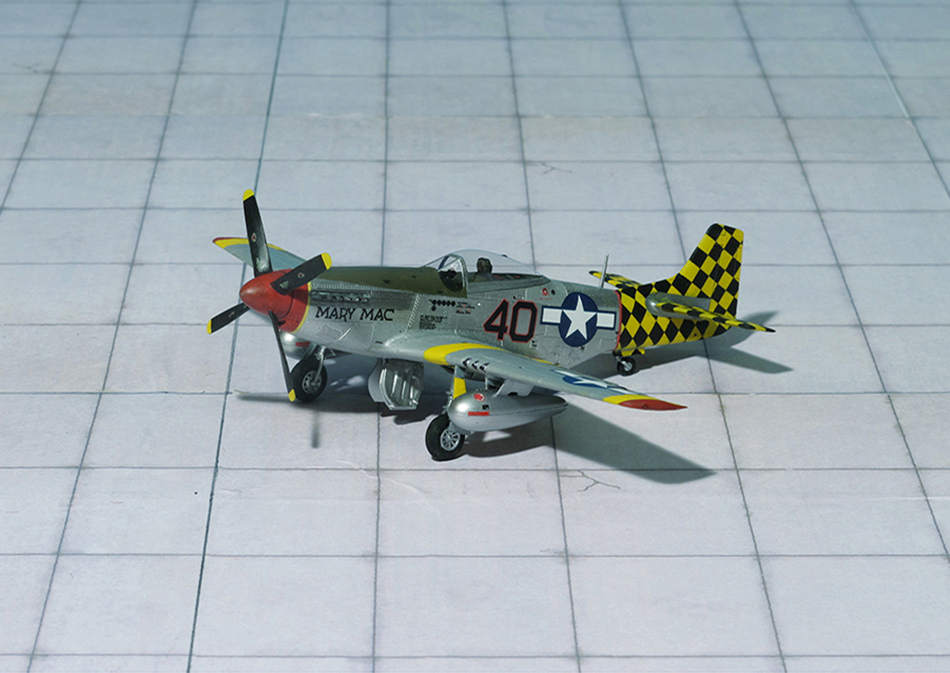
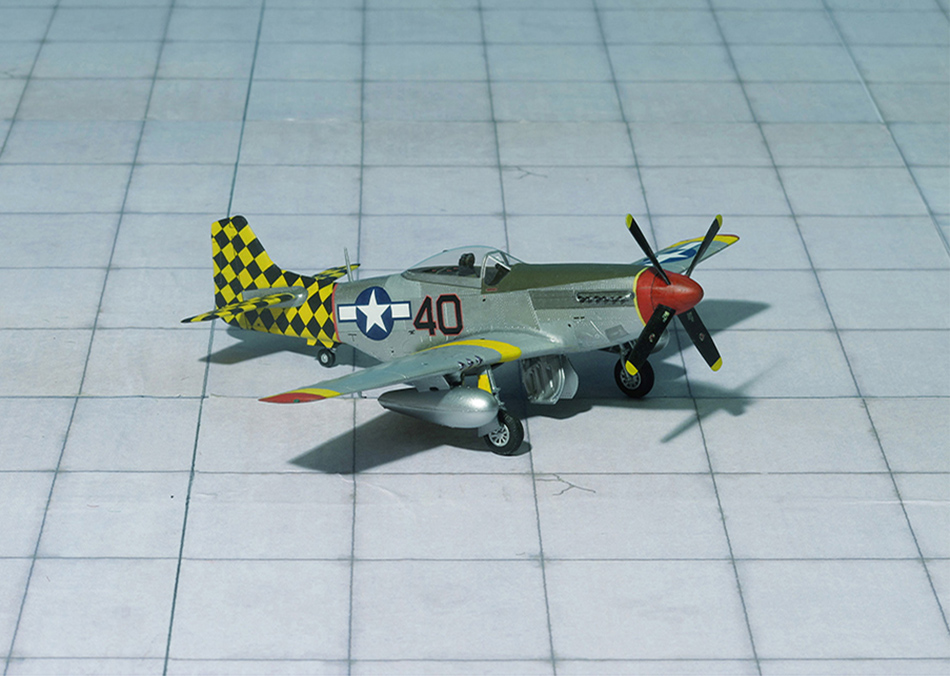
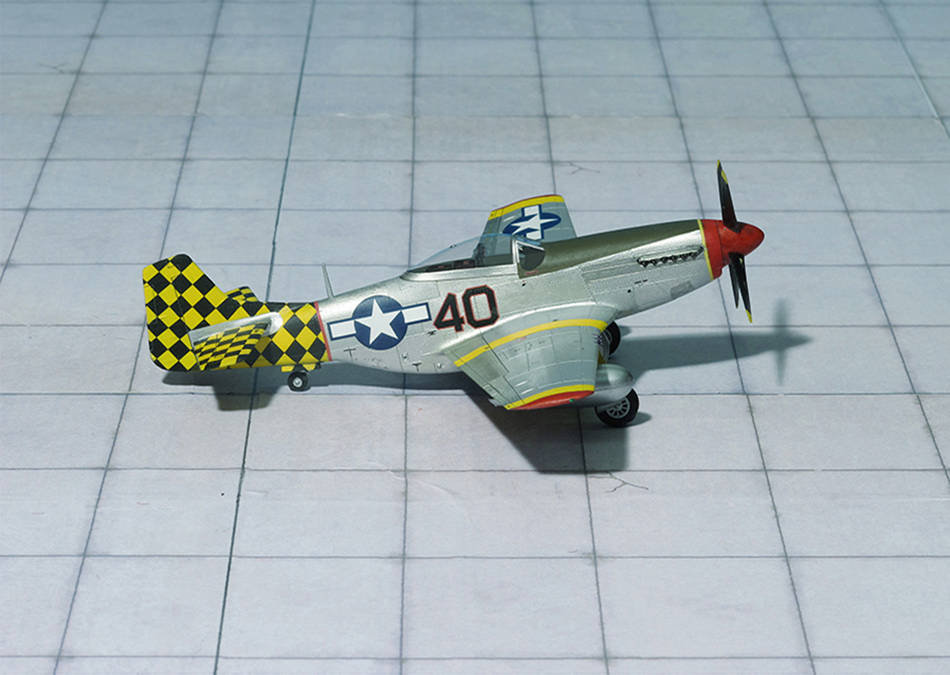
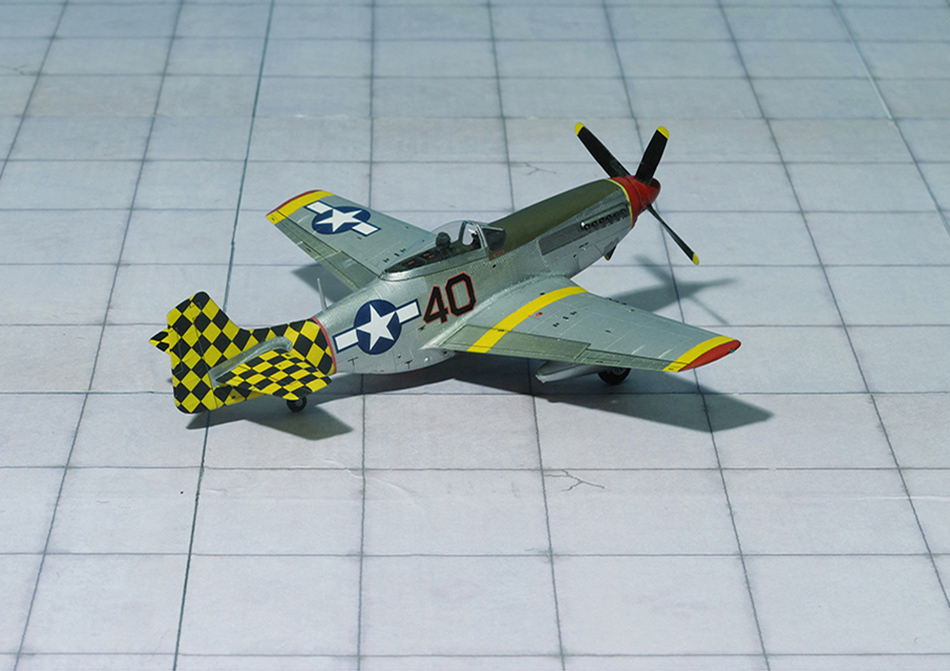
A further variont oft he Mustang was th P-51D. The P-51D incorporated several improvements, and it became the most numerous variant with nearly 8,000 being built. The most obvious change was a new “bubble-top” canopy that greatly improved the pilot’s vision. The P-51D also received the new K-14 gunsight, an increase from four to six .50-cal machine guns, and a simplified ammunition feed system that considerably reduced gun jams.
The P-51D arrived in quantity in Europe in the spring of 1944, becoming the USAAF’s primary long range escort fighter. The versatile Mustang also served as a fighter-bomber and reconnaissance aircraft. Only few Luftwaffe aircraft could match the P-51D — by the end of the war, Mustangs had destroyed 4,950 enemy aircraft in the air, more than any other USAAF fighter in Europe.
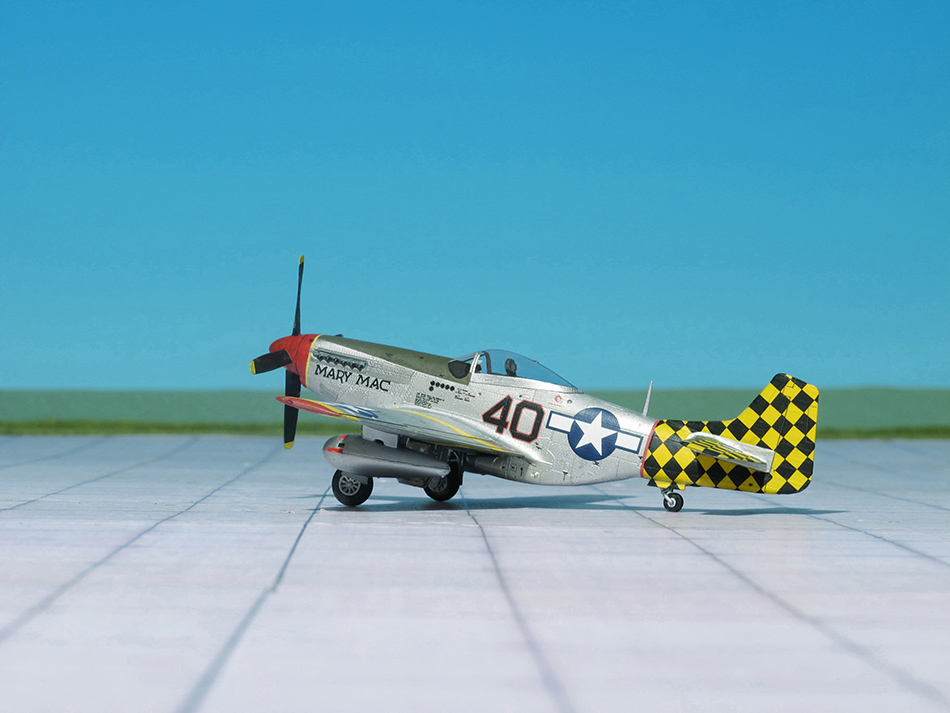
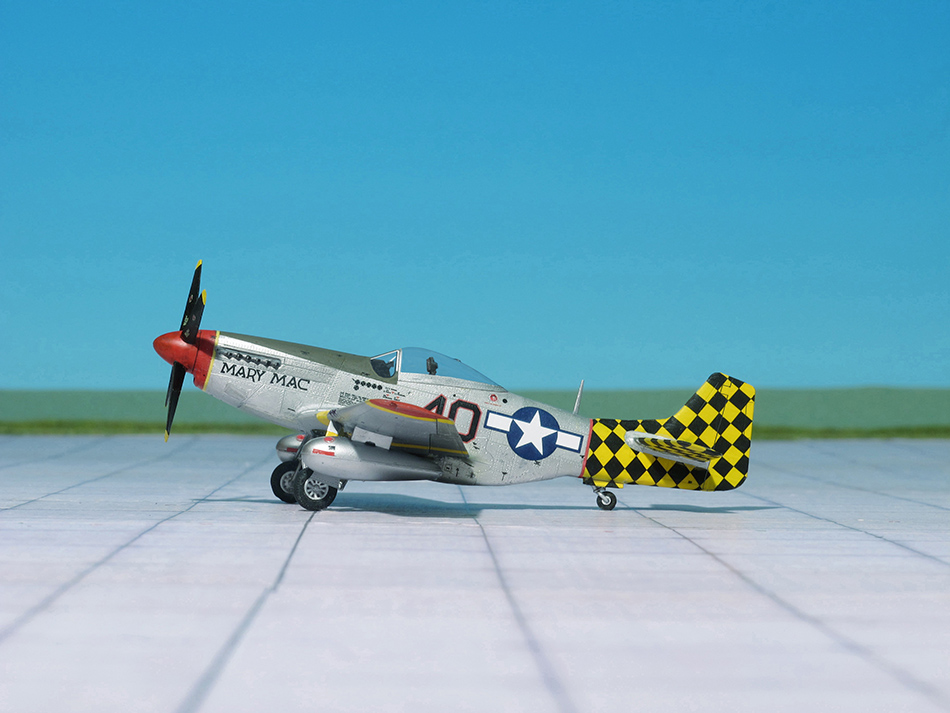
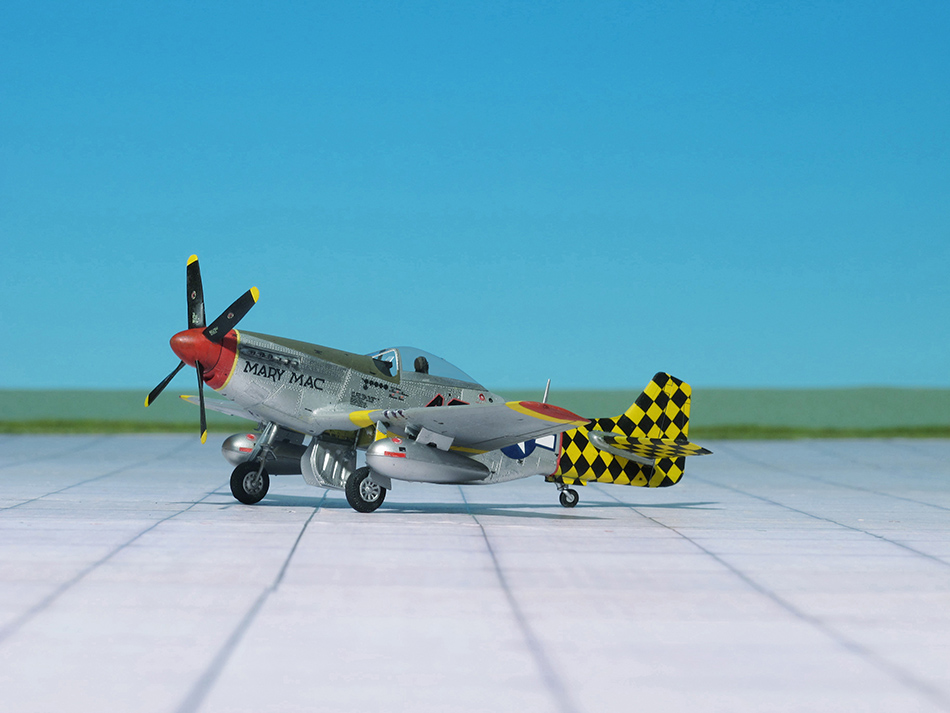
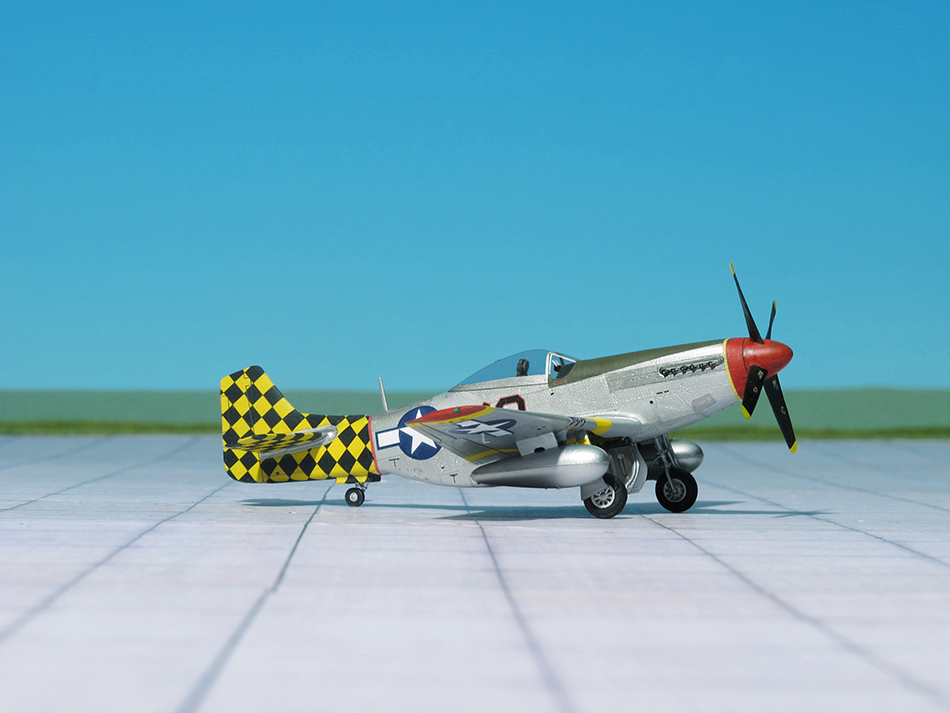
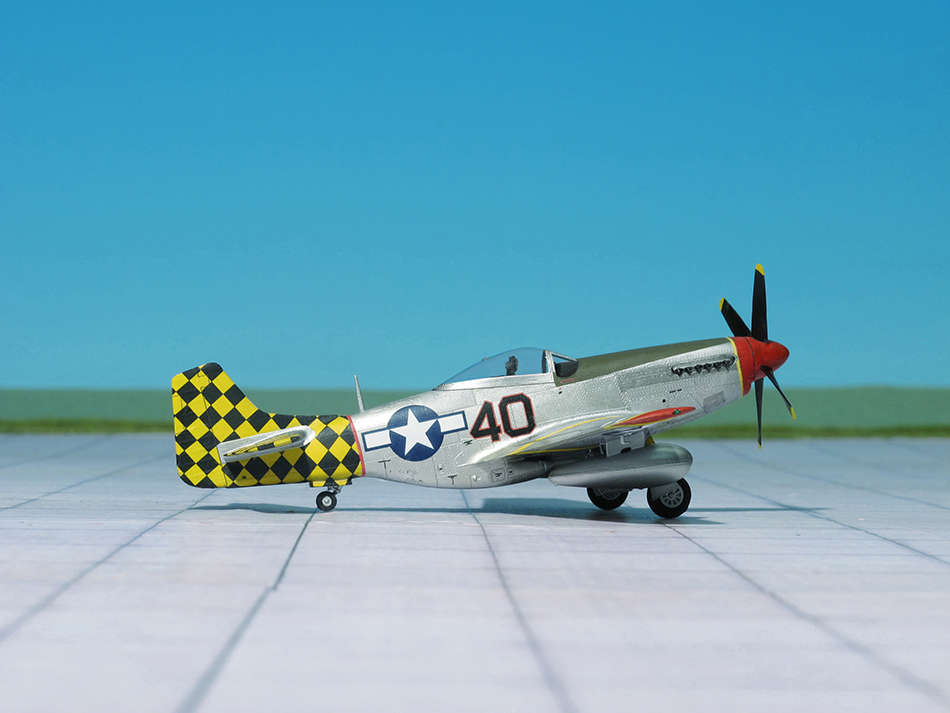
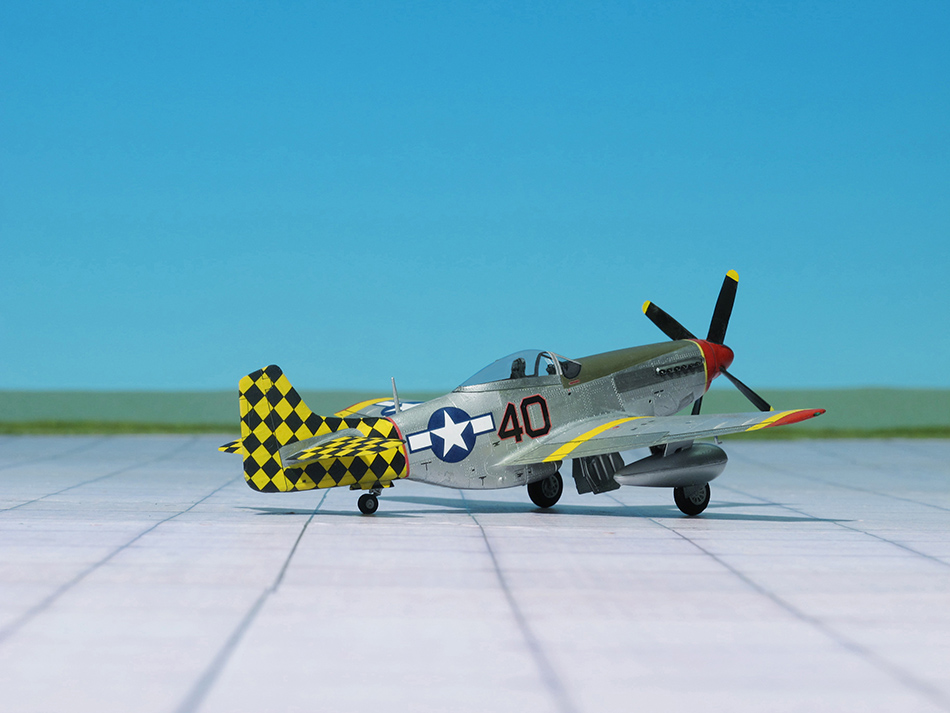
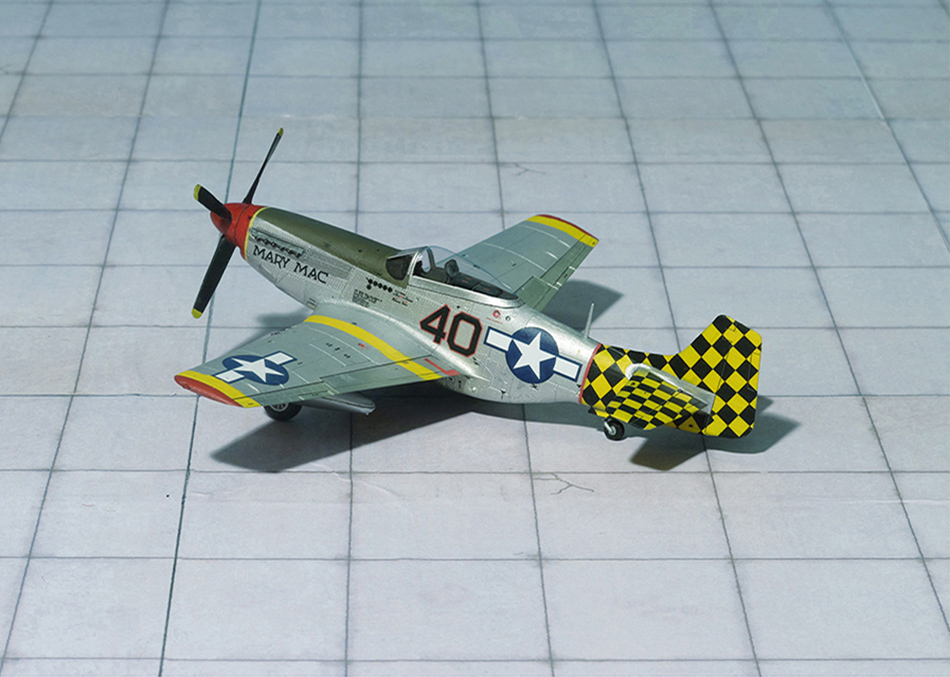
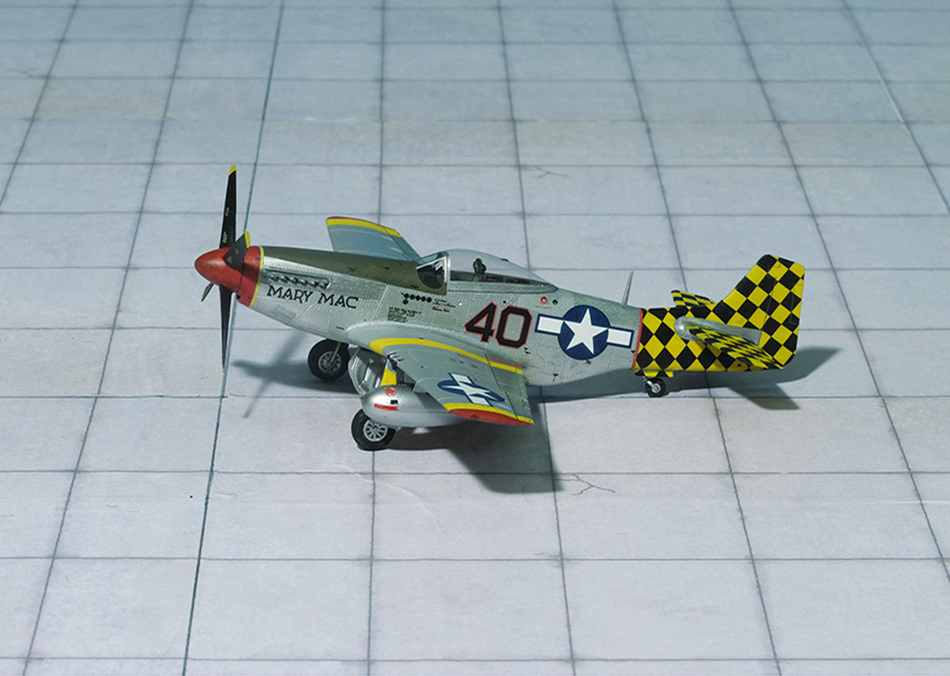
The aircraft shown here belonged to the 318th FS, 325th FG, 15th AF, stationed at Rimini, Italy, in February 1945 (Ref.: National Museum of the United States Air Force).