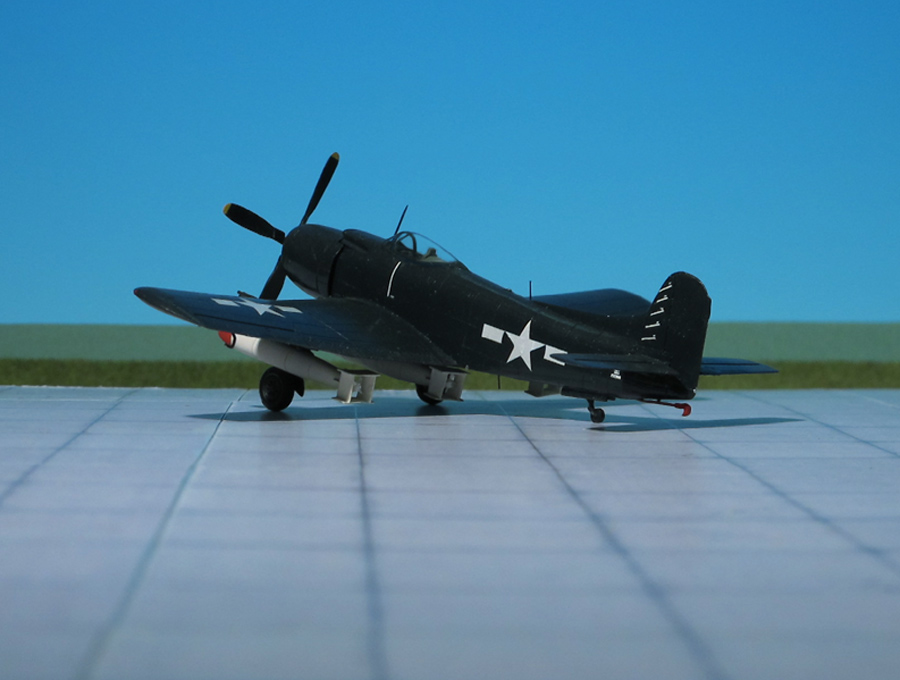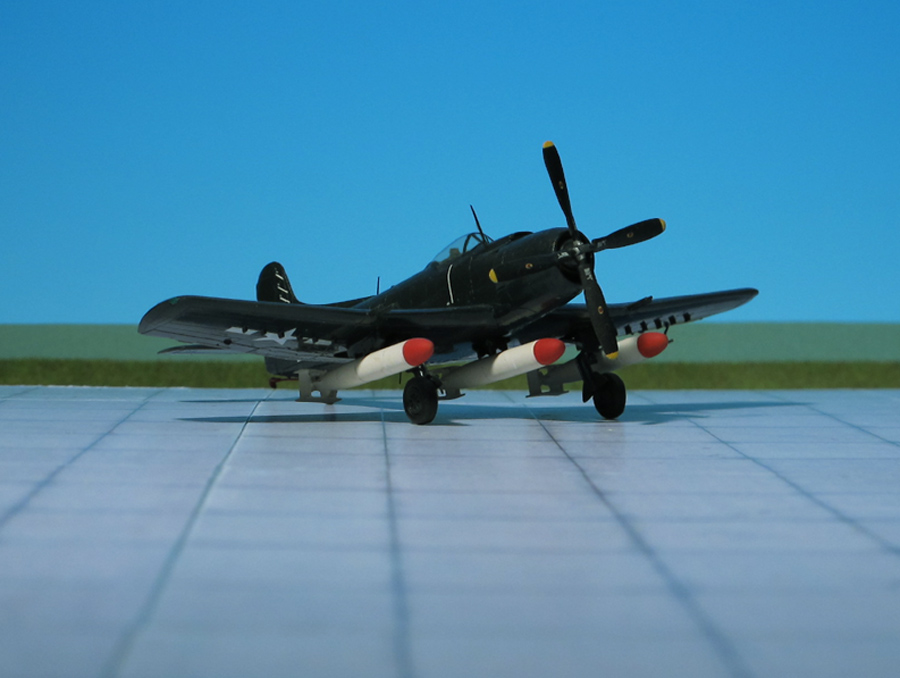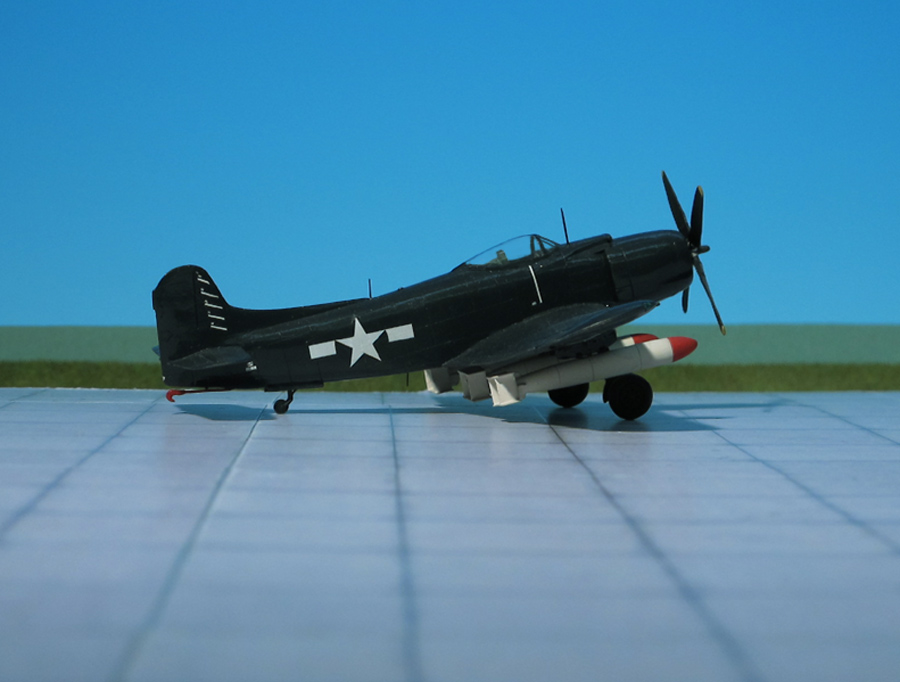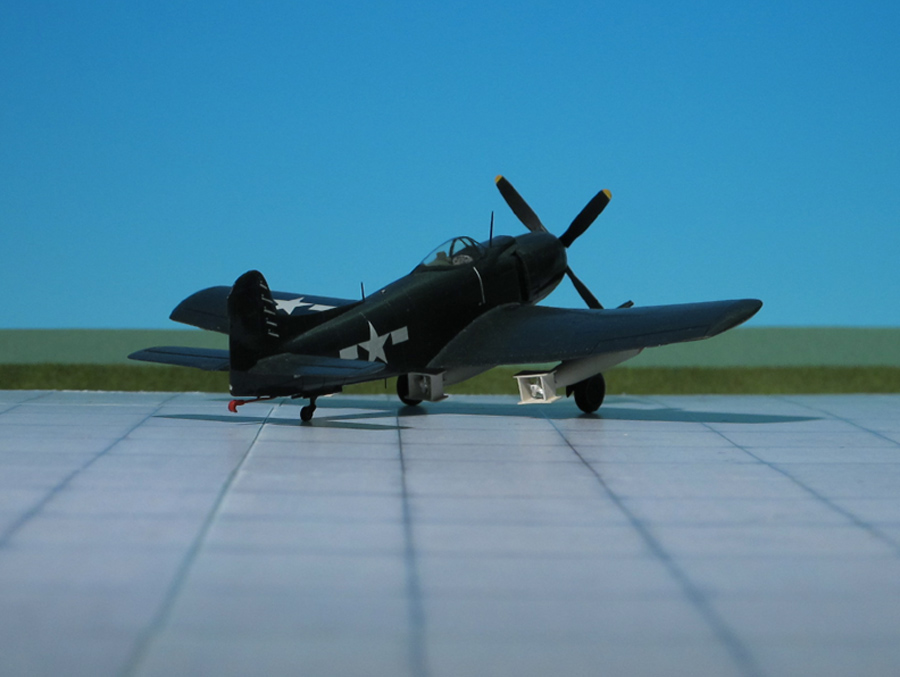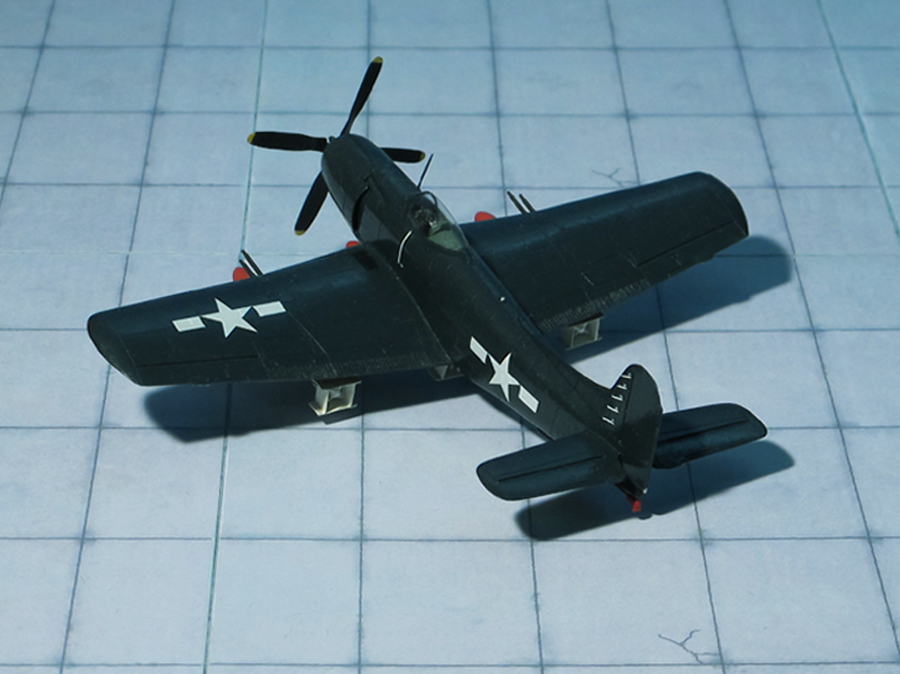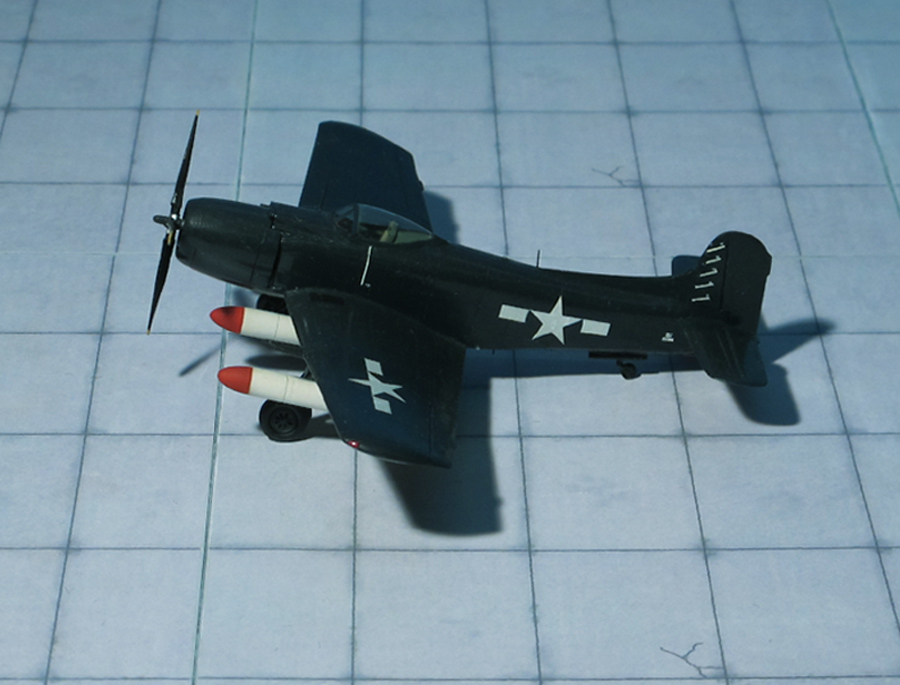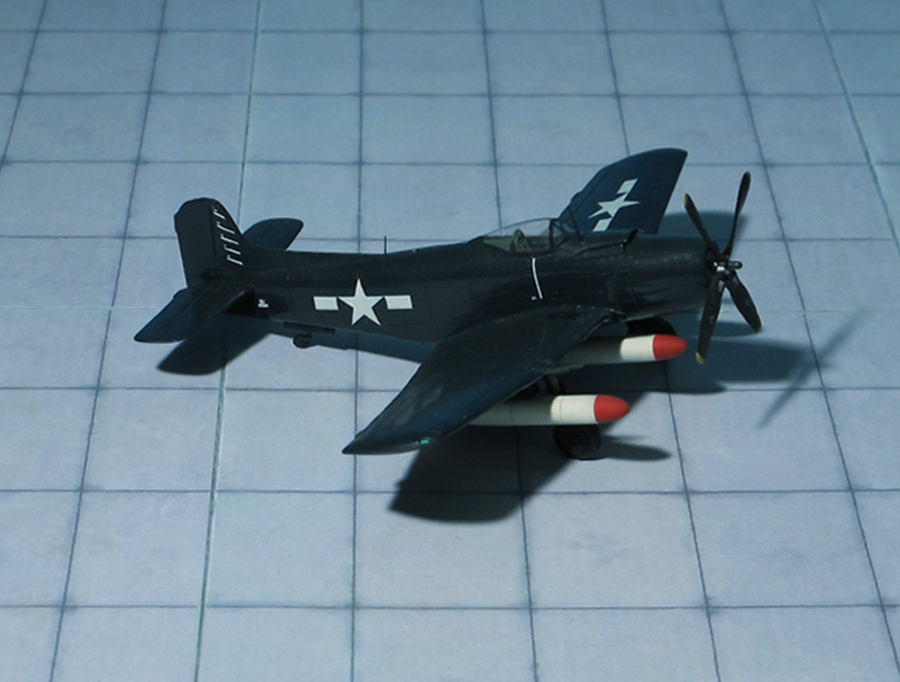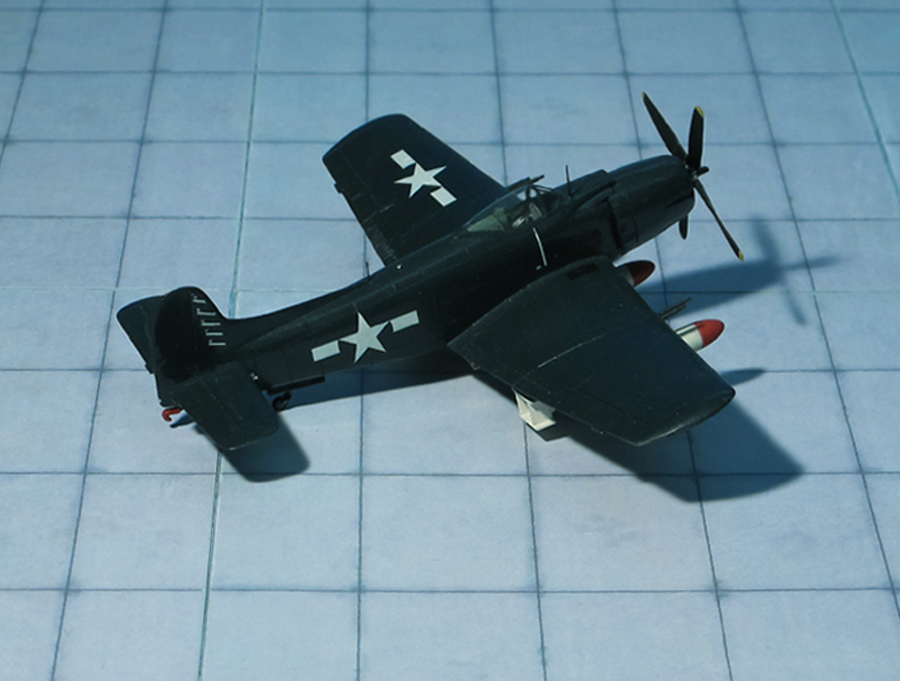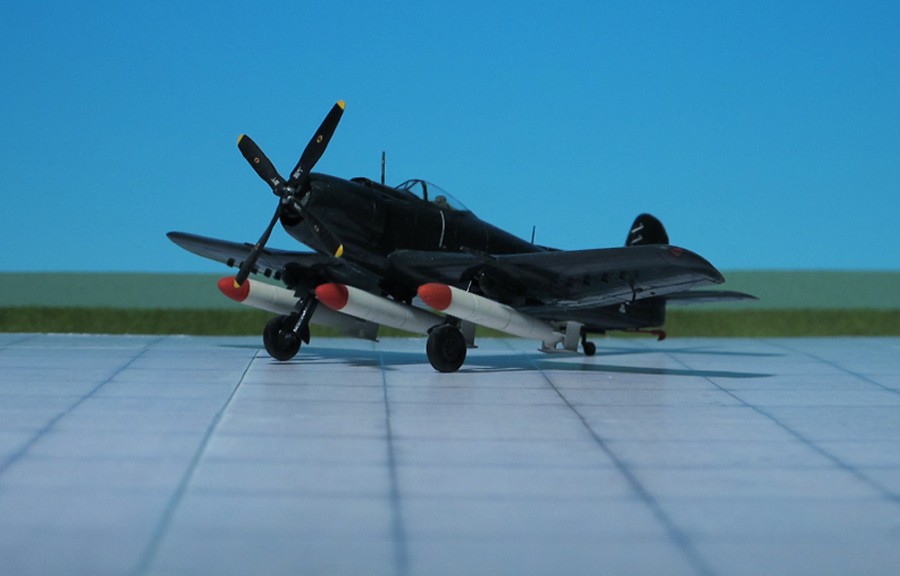
TYPE: Carrier-based attack aircraft
ACCOMMODATION: Pilot only
POWER PLANT: One Pratt & Whitney R-4360-4 Wasp Major, rated at 3,000 hp
PERFORMANCE: 334 mph at 11,600 ft
COMMENT: The Martin AM Mauler (originally XBTM) was a single-seat carrier-based attack aircraft built for the United States Navy. Designed during World War ii, the Mauler encountered development delays and did not enter service until 1948 in small numbers. The aircraft proved troublesome and remained in frontline service only until 1950, when the Navy switched to the smaller and simpler Douglas AD Skyraider.
In the 1930s and early 1940s, the Navy divided carrier-borne bombers into two types: the torpedo bomber and the dive bomber, each with crews of two or three men. Wartime experience showed that pilots could aim bombs and torpedoes without assistance from other crewmembers as well as navigate with the aid of dadio beacons, and the development of more powerful engines meant that faster aircraft no longer needed a rear gunner for self-defense. Furthermore, the consolidation of the two types of bombers greatly increased the flexibility of a carrier’s air group and allowed the number of fighters in an air group to be increased.
In 1943, the US Navy invited proposals for a new multi-purpose bomber and selected four designs in September: the Curtiss XBTC, Douglas XBT2D, Kaiser-Fleetwings BTK and the Martin XBTM. Martin was tasked to provide a backup to the Curtiss design which had been selected as a replacement to the Curtiss SB2C Helldiver. Due to the US Navy’s concern that the Curtiss design was overly complex and that the company’s record was particularly poor during the Helldiver’s development, Martin was instructed to create an “unexperimental” design that would be a reliable platform for the Pratt & Whitney R-4360 Wasp Major radial engine that powered both aircraft. Two prototypes were ordered from Martin on May 1944 with the internal designation of Model 210.
The XBTM-1 was a low-wing, all-metal monoplane with folding wings to allow more compact storage in carrier hangar decks, and conventional landing gear. Its fuselage was an oval-shaped stressed-skinsemi-monocoque with the single-seat cockpit and its teardrop-shaped canopy positioned just aft of the air-cooled engine. Just behind the cockpit was a 150-US-gallon fuel tank. The large wing consisted of a two-spar center section with hydraulically folded three-spar outer panels. A large dive brake was positioned on the trailing edge of the wing. When closed it could be lowered for use as a landing flap or it could be split into alternating upper and lower sections, with intermeshing “fingers” for use in its intended role. It was very effective in this role, mainly due to its great surface area, but this was at the cost of the width of the ailerons, which significantly reduced their efficiency. A pair of 180-US-gallon fuel tanks were positioned in the roots of the center section. All fuel tanks were self-sealing and the pilot and oil cooler were protected by 297 pounds of armor.[
The first XBTM-1 made its maiden flight on August 1944 and began flight testing after it reached the Naval Air Test Center on 11 December. The Navy ordered 750 more aircraft on January 1945, although this was reduced to 99 aircraft after the surrender of Japan in August. The second prototype made its first flight on 20 May. Initial flight tests conducted with the first two prototypes revealed significant problems with the engine, its cowling, the vertical stabilizer and rudder. In response, the cowling was lengthened 6 inches and the engine mount was canted two degrees to the right to offset the engine’s tremendous torque. The length of the caburetor airscoop was extended and the propeller spinner, rudder, and the vertical stabilizer were redesigned. In April 1946 the aircraft designation was changed to AM-1 when the Navy replaced its Bomber-Torpedo classification with Attack, well before the redesign was completed in early 1947.
First deliveries began in March 1947 and a flight test program began that month that lasted three years before the major deficiencies identified were fully corrected. Carrier landing trials revealed a structural weakness of the rear fuselage when one aircraft was broken in half during a heavy landing. Severe vibrations in the tail upon engaging the arresting wire were cured by adding a roller bearing to the tailhook to counter the sideways forces placed on the tailhook. Other necessary changes were the addition of spoiler ailerons and an elevator control boost to improve the aircraft’s poor controllability at low speeds. In addition, the cockpit layout was unsatisfactory and had to be redesigned. The NATC finally deemed the Mauler acceptable for carrier landings in August 1948 even though aircraft had been issued to one squadron earlier in the year and a new batch of 50 aircraft had been ordered in May. Despite all the modifications to the aircraft over its short life, it remained a maintenance nightmare, especially the leaky hydraulic systems.
Pilots found the Mauler a heavy-handling aircraft which was difficult to fly in formation and hard to land aboard a carrier because a less-than-perfect landing often caused the aircraft to bounce over the arresting wires and into the safety barrier. It was a very stable dive bomber, more so than the Skyraider, and could carry more ordnance. Maintenance problems and the difficulty of landing aboard a carrier caused some pilots to give it the nickname of “Awful Monster” (Ref.: 24).