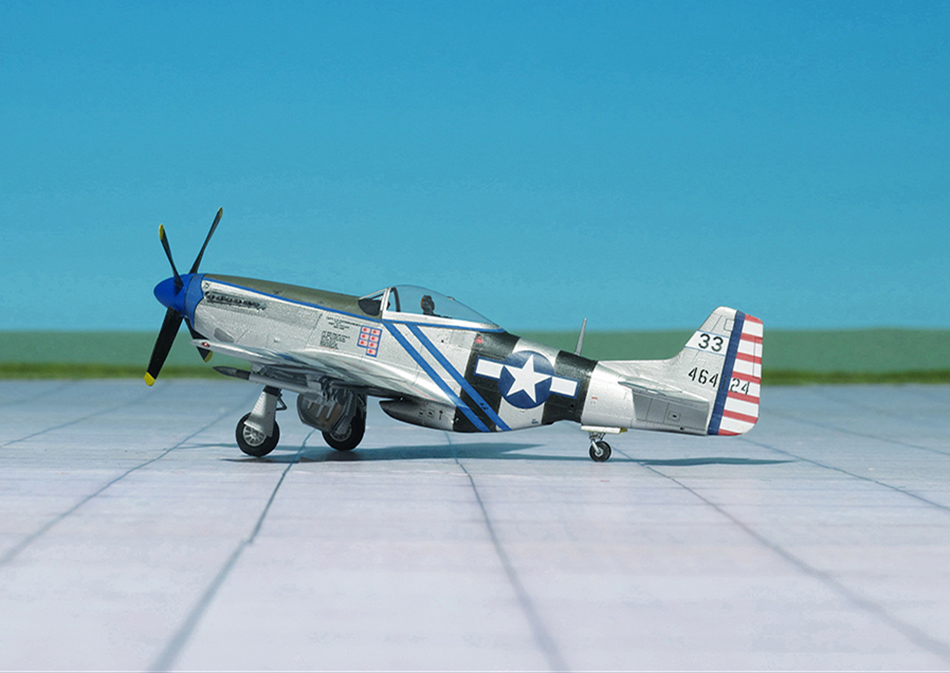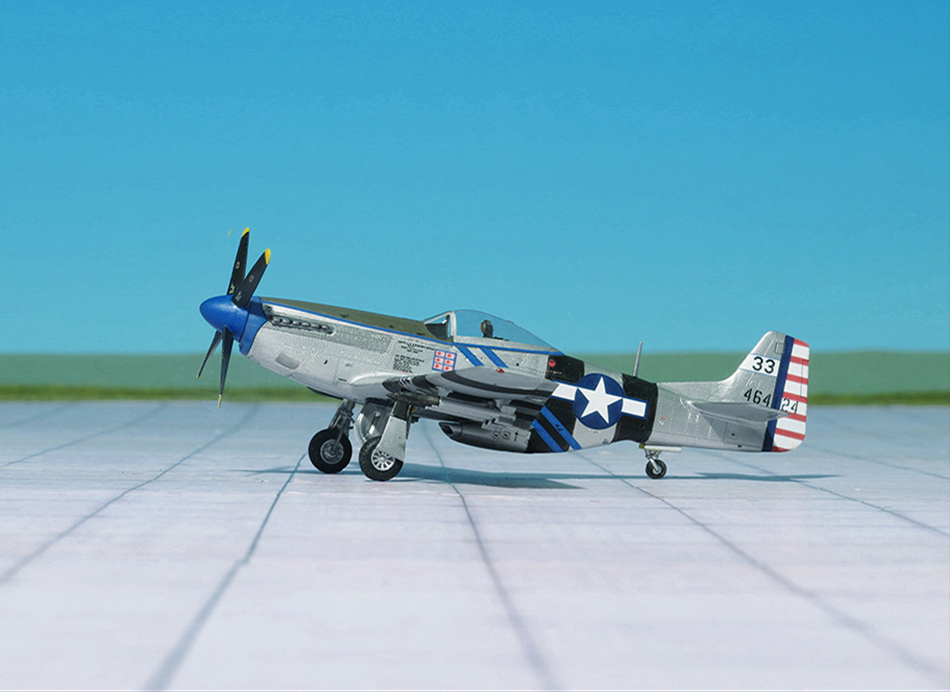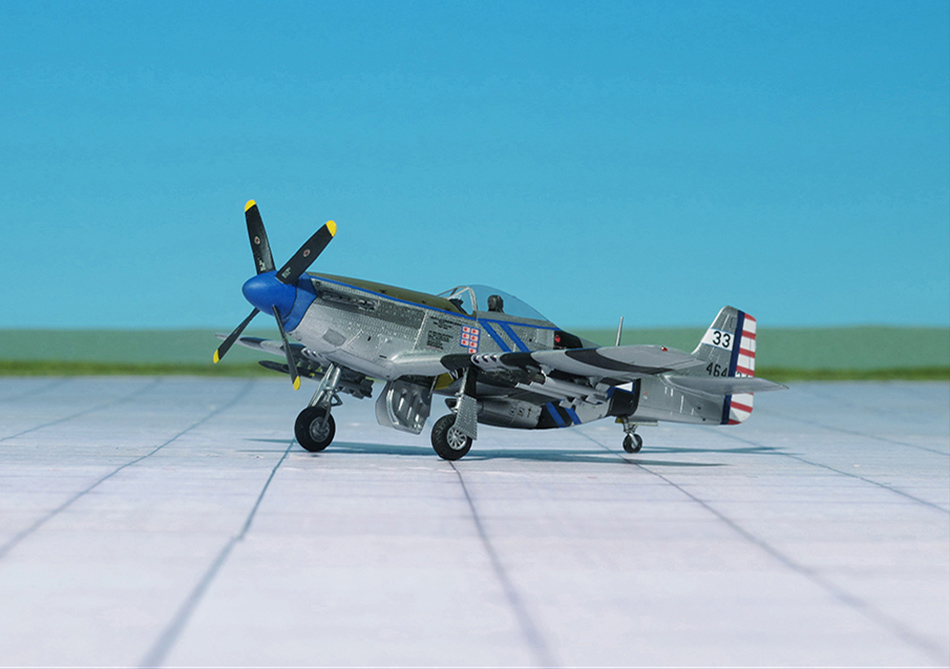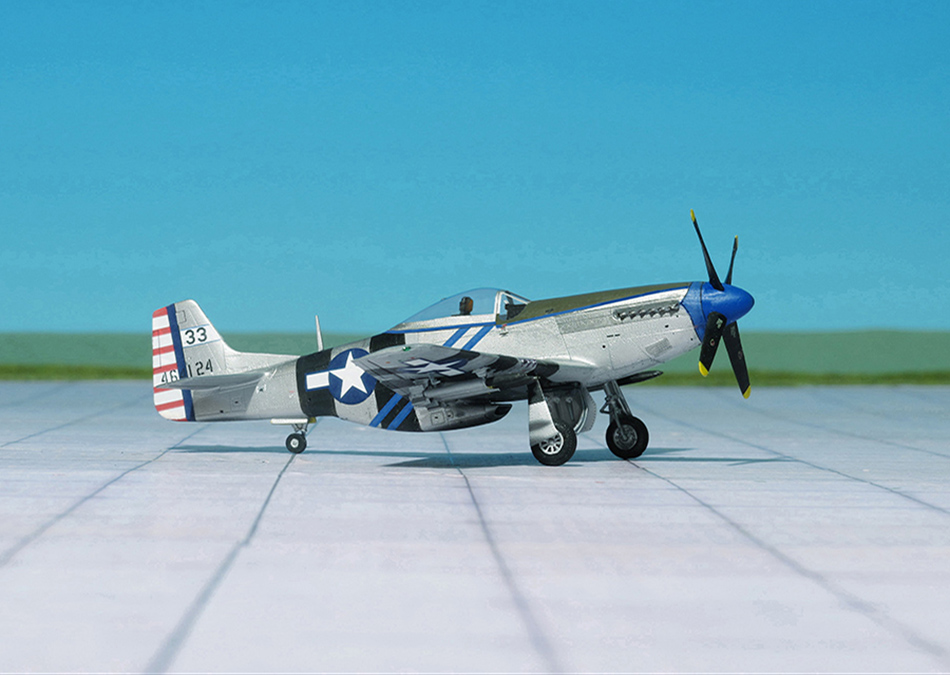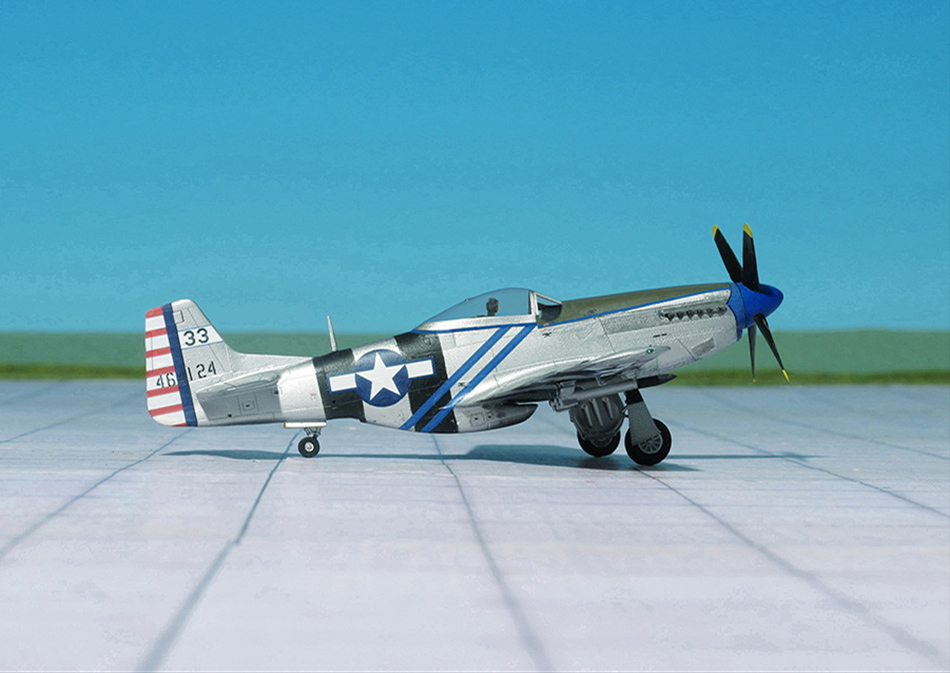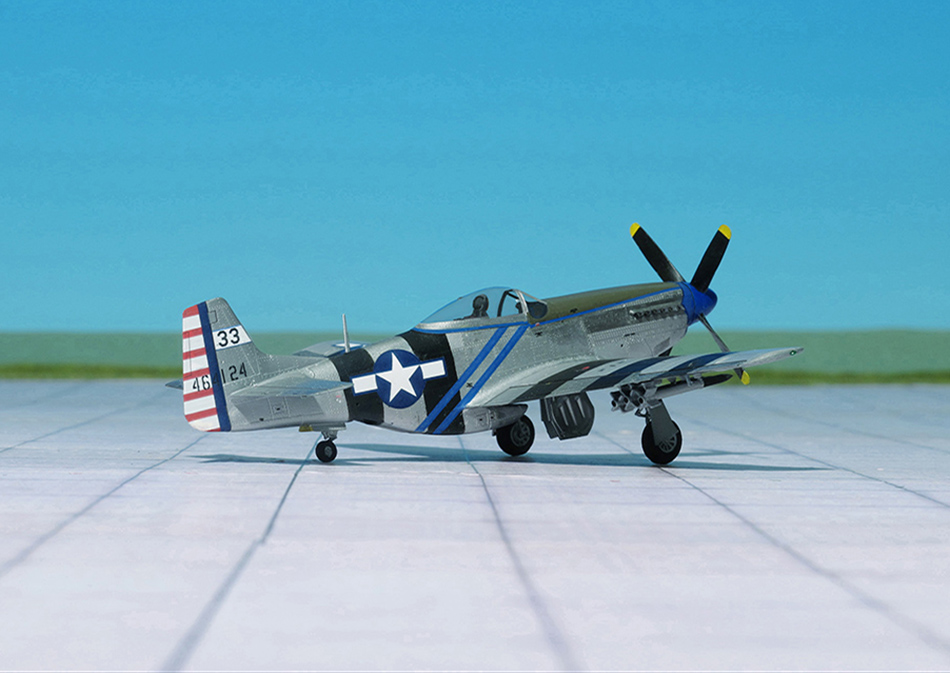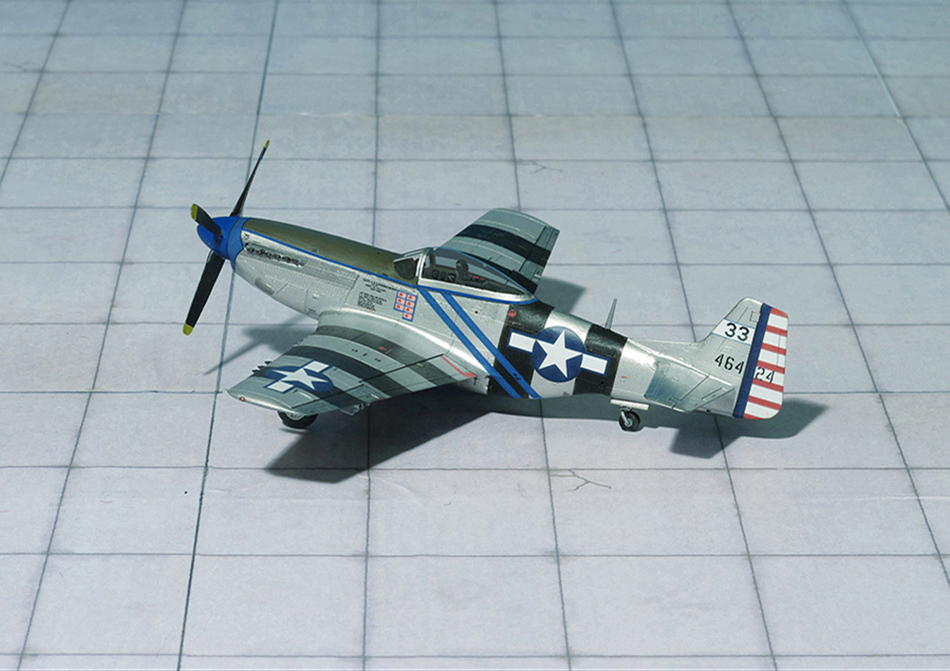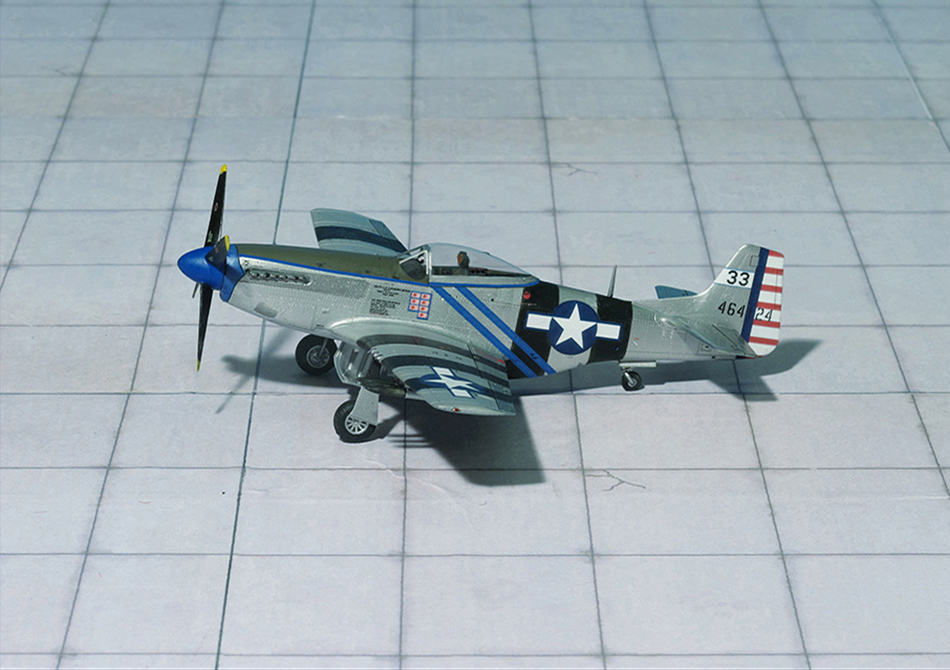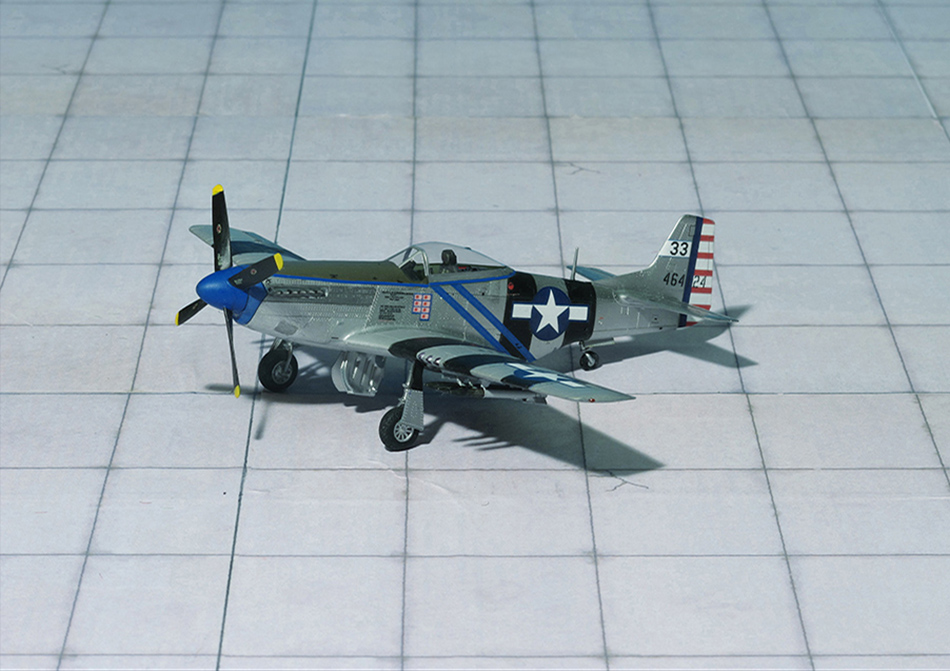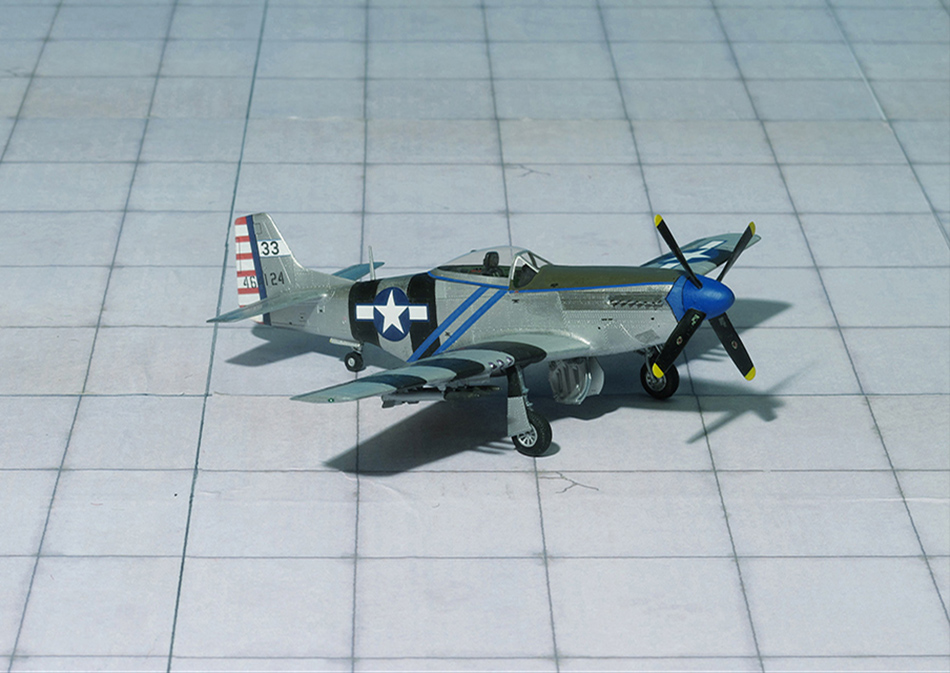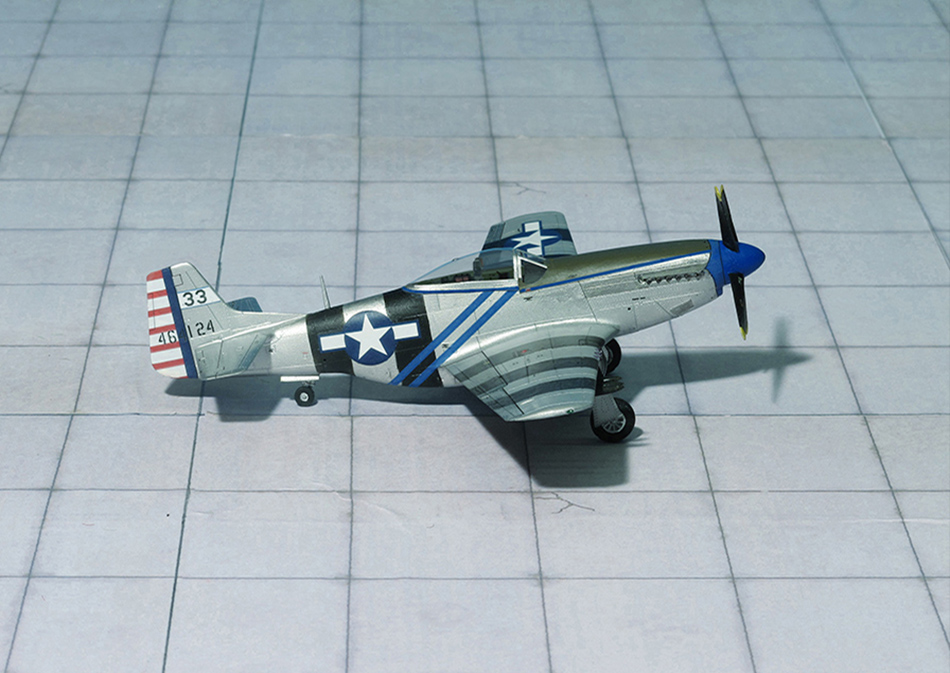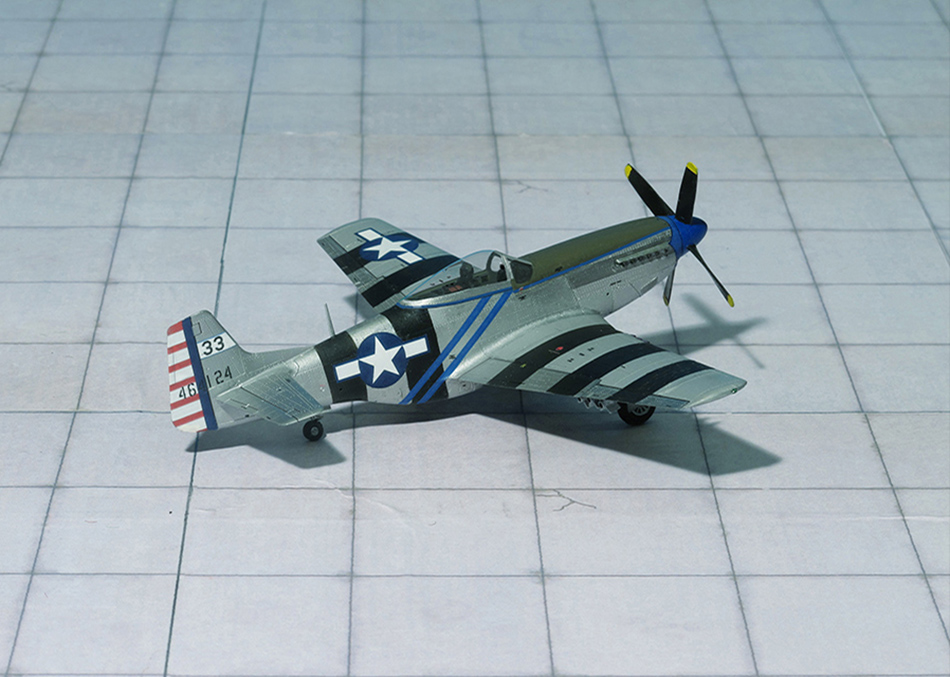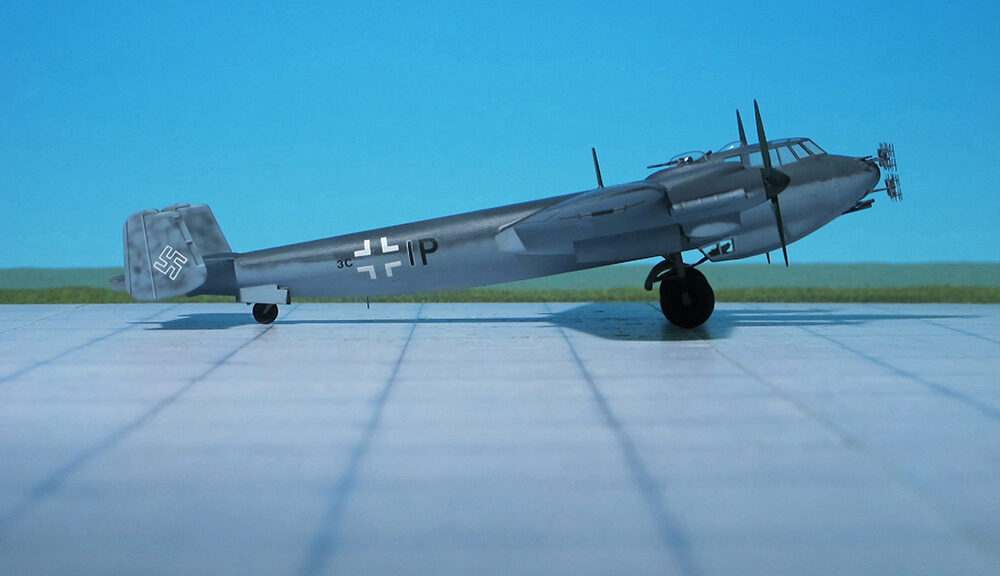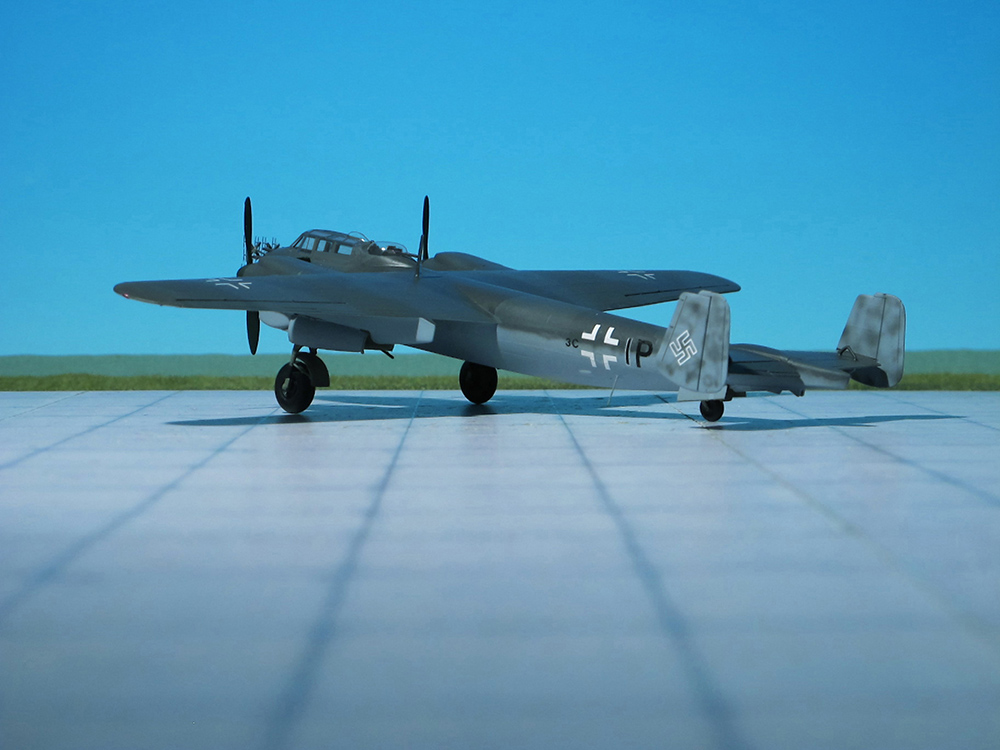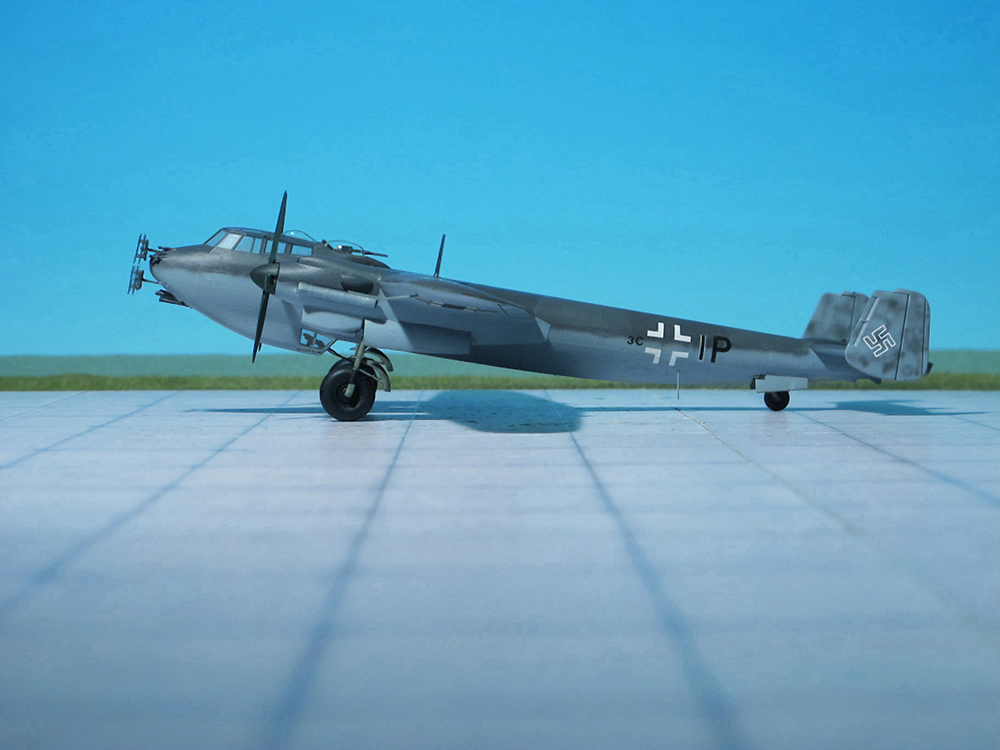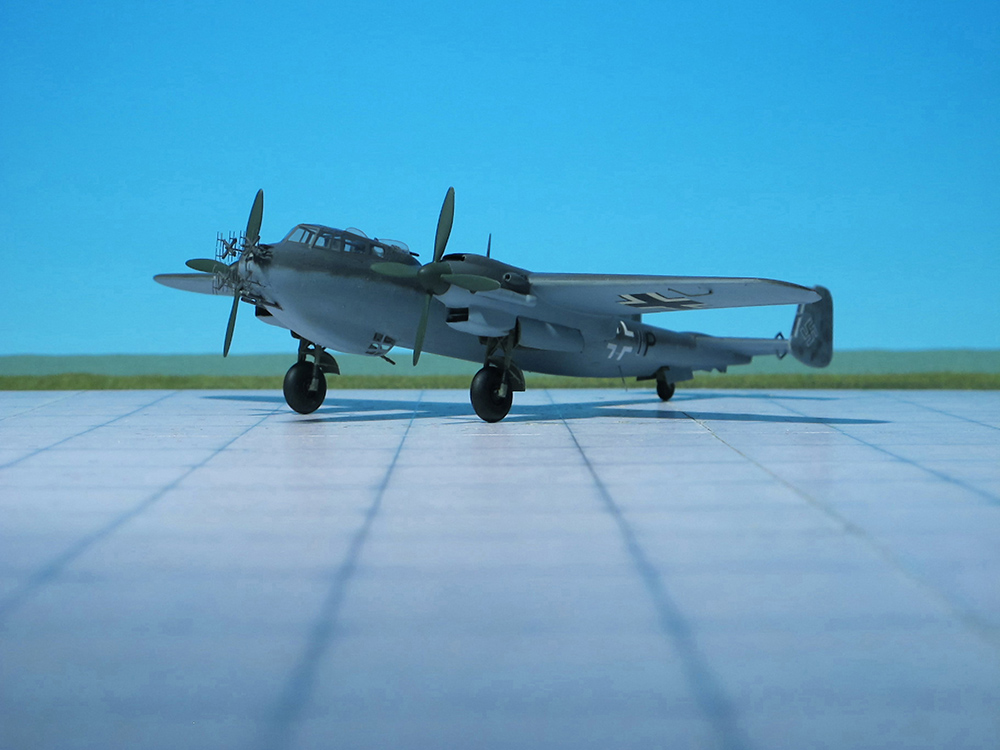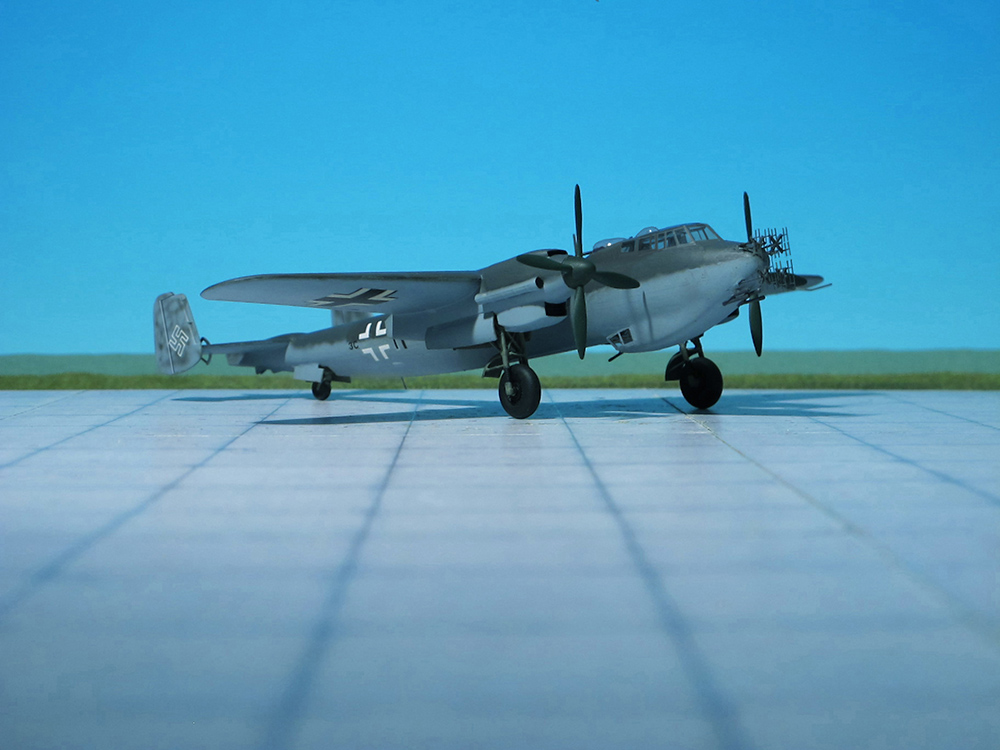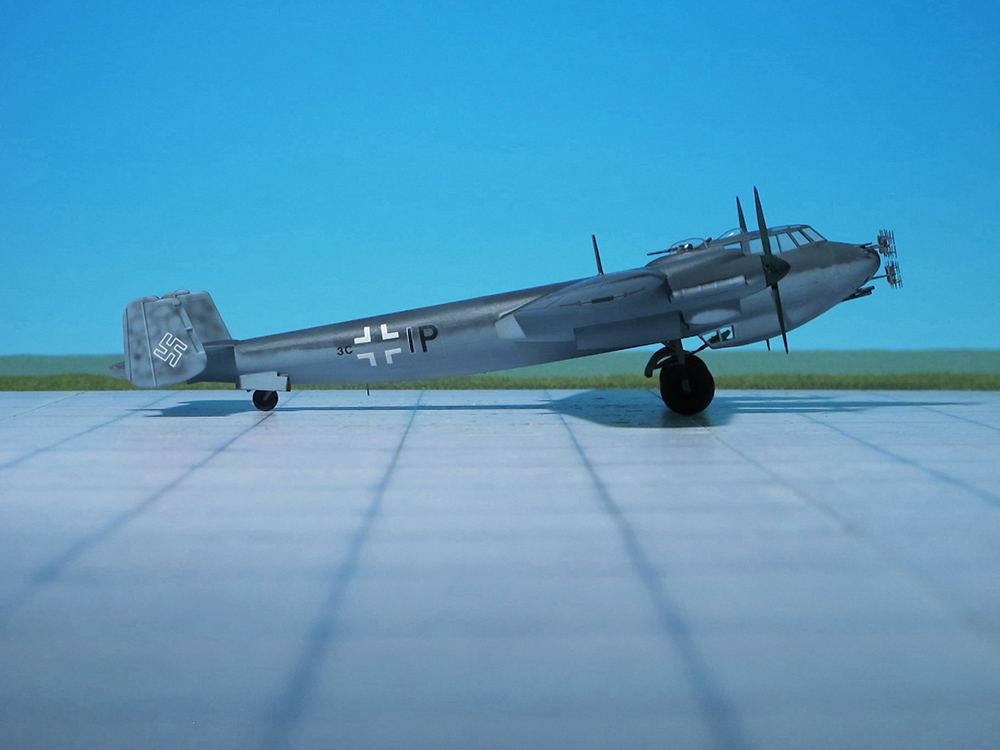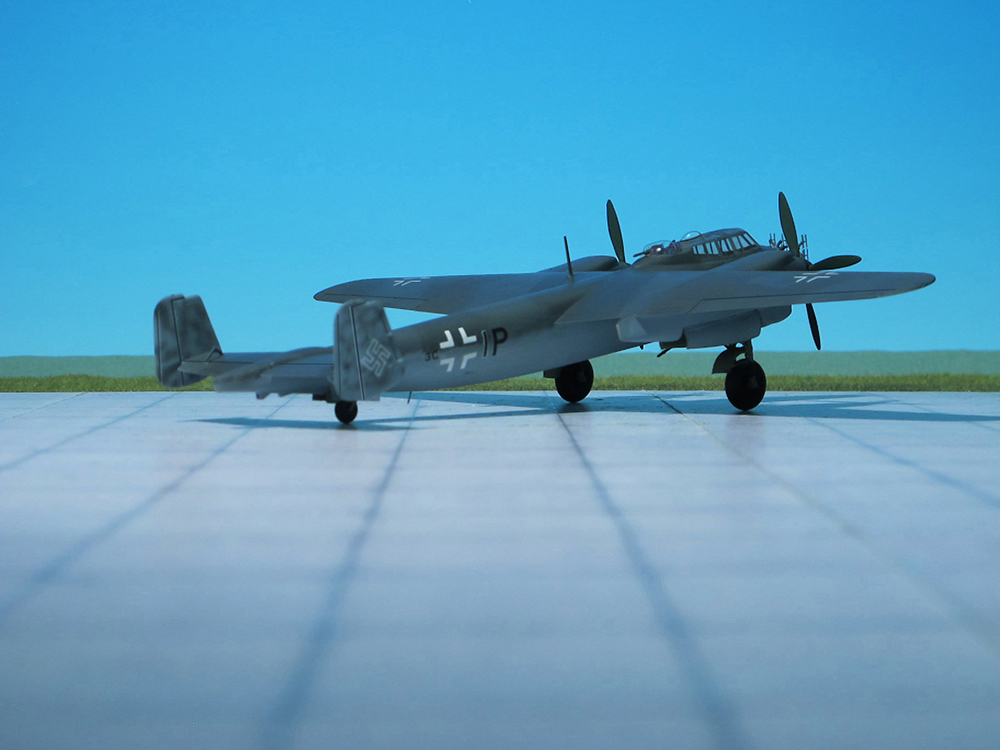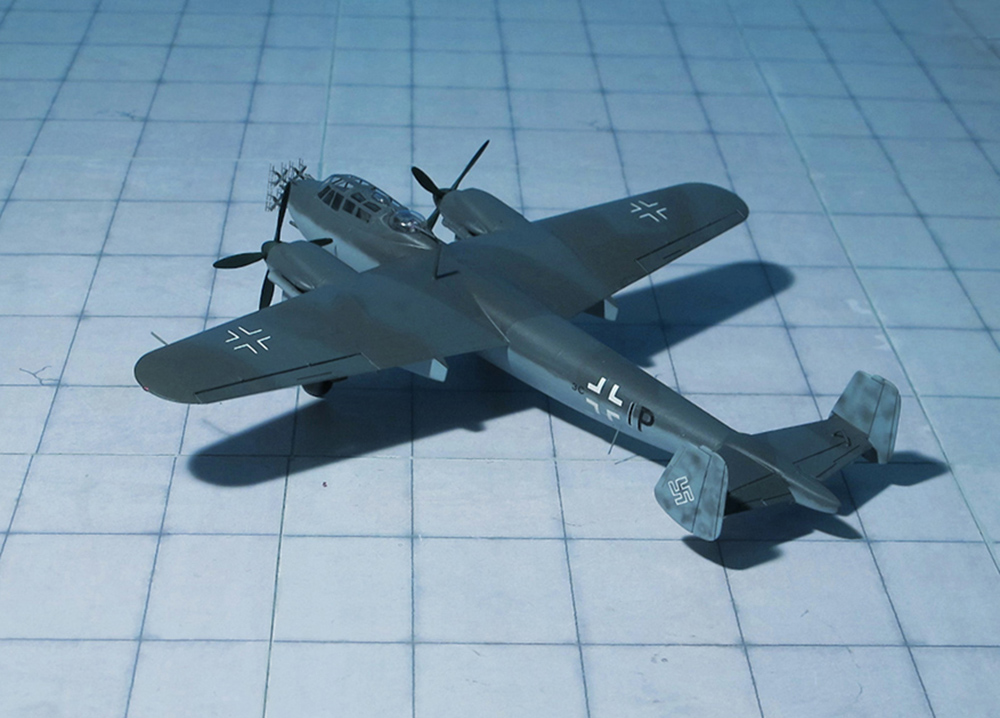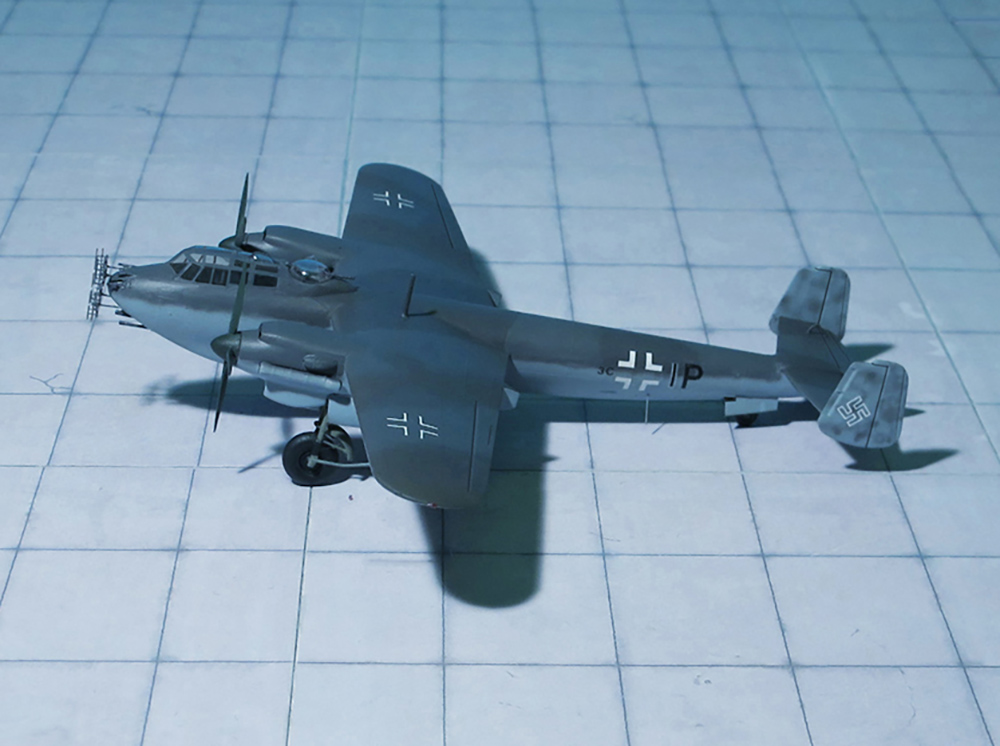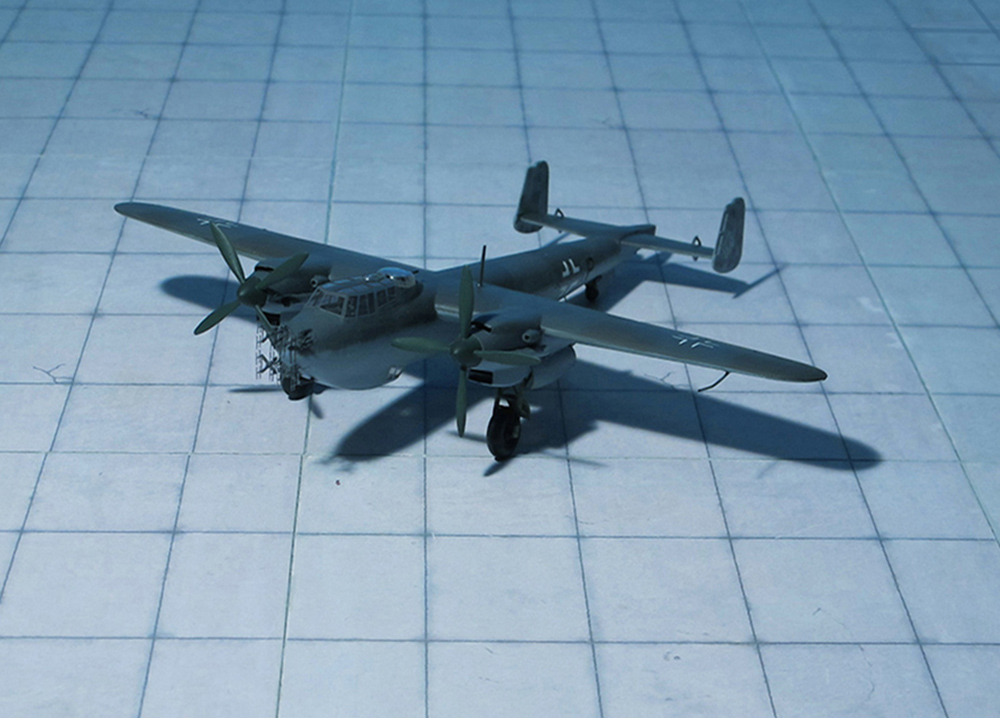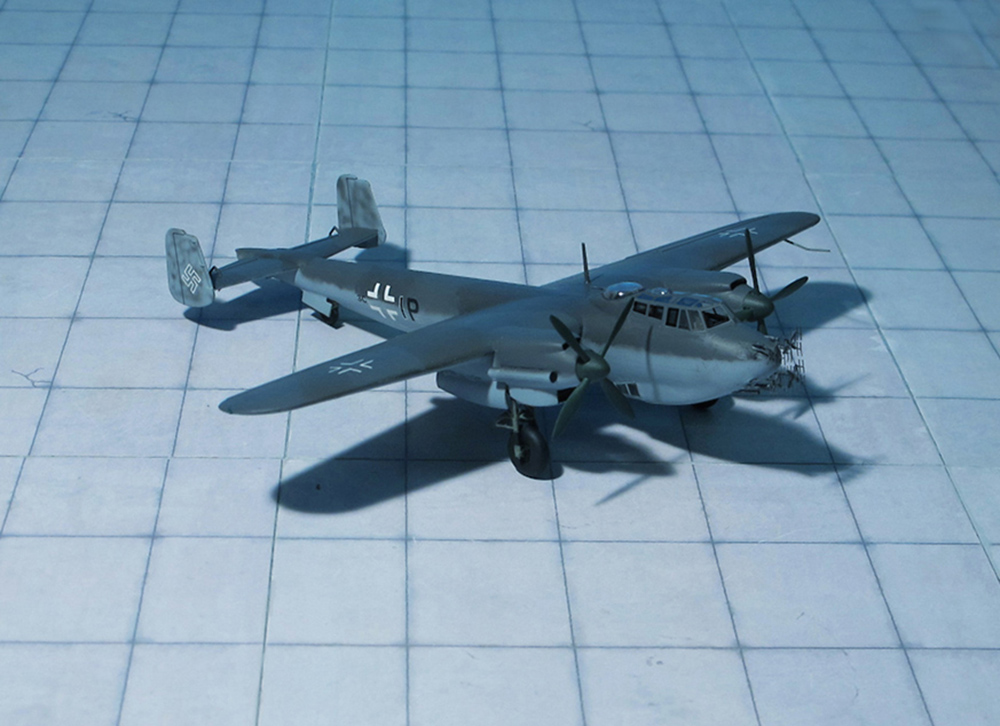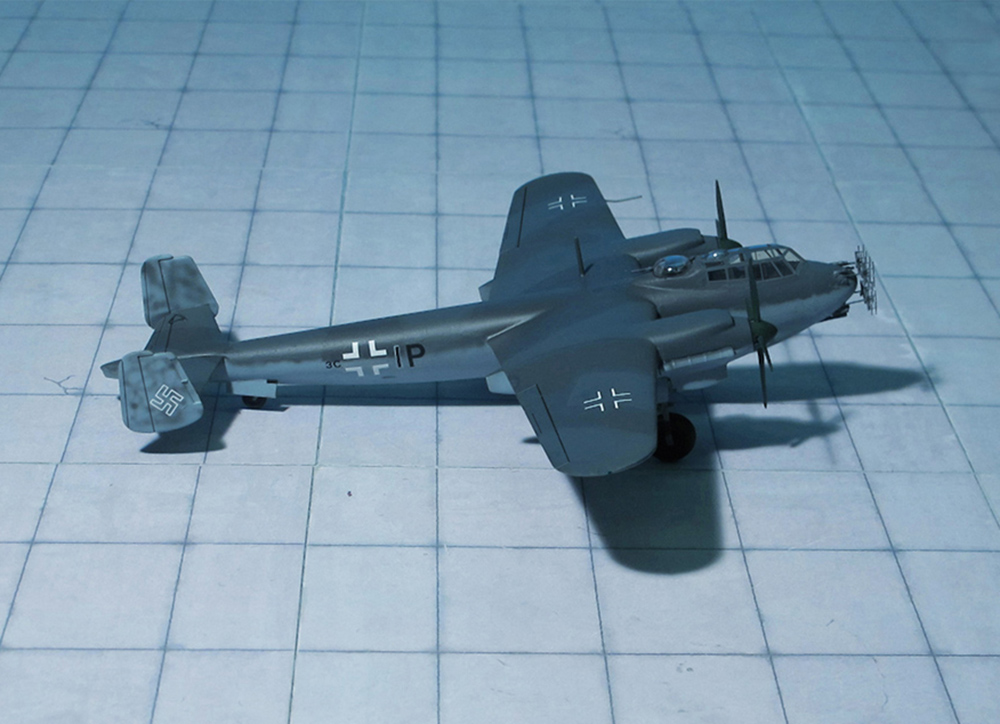
TYPE: Long-range fighter and fighter bomber
ACCOMMODATION: Pilot only
POWER PLANT: One Packard (Rolls Royce) V-1650-7 Merlin liquid-cooled engine, rated at 1,720 hp at WEP (War Emergency Power)
PERFORMANCE: 440 mph
COMMENT: The origins of the North American P-51 Mustang can be traced back to a request from the British Purchasing Commission in 1940, indicating their interest in acquiring an American aircraft. Seeking advanced fighters, they sought American manufacturers to create high-altitude, long-range aircraft. Rather than continuing the production of the older Curtiss P-40 fighters under license, North American Aviation took a forward-thinking approach. They proposed to pivot away from the replication of antiquated designs, advocating instead for the conceptualization and manufacturing of a more innovative model – the P-51 Mustang.
The North American Aviation design team developed the initial version of the P-51 Mustang, a trim low-wing monoplane, equipped with an Allison V-1710 engine. However, it was the incorporation of the British Rolls-Royce Merlin engine into later versions that truly transformed the aircraft into a formidable machine and led to its exceptional performance. The P-51 Mustang was designed as a single-seat aircraft, accommodating only one pilot.
The prototype, known as NA-73X, was first unveiled on September 9, 1940, and it completed its inaugural flight later that year, on October 26, 1940.
he P-51 Mustang played a vital role in various theaters of World War II as well as the Korean War. It was initially designed as a long-range bomber escort, at which it excelled, providing crucial protection for Allied bombers on missions deep into enemy territory. Its ability to accompany bombers for extended distances and engage enemy fighters in dogfights made it a formidable adversary. The P-51 also proved highly effective in ground attack and reconnaissance missions, showcasing its versatility.
While it was in production, the P-51 Mustang went through numerous noteworthy variants, each enhancing the design and performance of the preceding model. From 1940 onwards and extending beyond the end of the war, more than 20 different variants of the P-51 Mustang were manufactured.
In particular, the P-51D became the most widely produced and recognized variant, featuring a bubble canopy for improved visibility and the ability to carry a heavy payload of bombs or rockets. The P-51 Mustang boasted impressive technical characteristics that set it apart from its contemporaries.
Equipped with a powerful Rolls-Royce Merlin engine, it had exceptional speed and altitude capabilities. Its maximum speed exceeded 400 miles per hour, and it could reach altitudes of over 40,000 feet. The Mustang’s agile maneuverability made it a nimble and lethal opponent in aerial combat. The P-51D Mustang was also equipped to carry six 12.7 mm AN/M2 Browning machine guns, a payload of 450 kg of bombs, and either six or ten 127 mm T64 H.V.A.R rockets.
P-51Ds arrived in the Pacific and CBI theaters by the end of 1944. In the spring of 1945, Iwo Jima-based P-51Ds started flying long-range Boeing B-29 Superfortress escort and low-level fighter-bomber missions against ground targets in Japan.
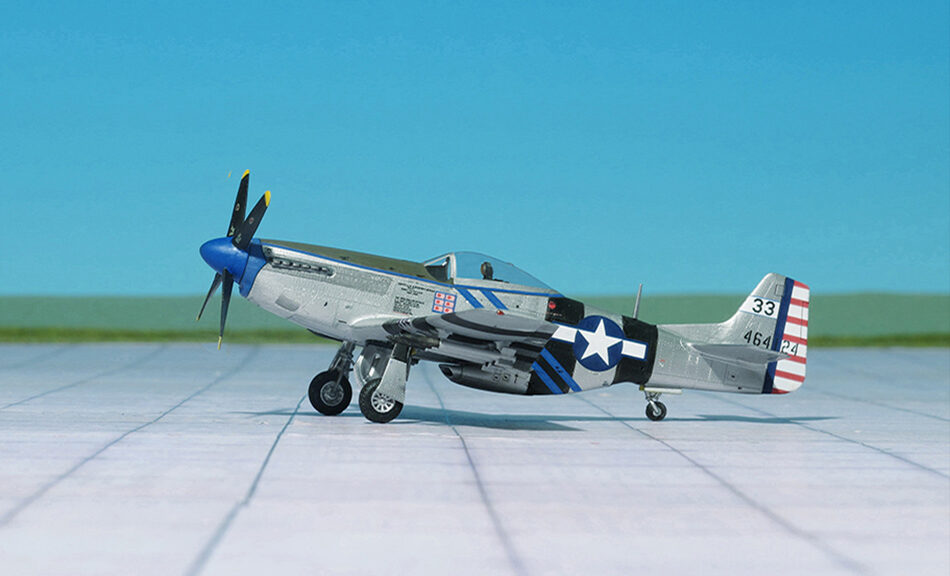
The aircraft shown here belonged to the 39th FG, 35th FG, 5th AF, stationed in July 1945 at Iwo Jima (Ref.: https://www.aerotime.aero/articles/the-p-51-mustang-a-legendary-fighter-plane)